
Gravitational Field Aesthetics: How Mass and Density Construct Spatial Attractors in Jewelry Display
在爱因斯坦的广义相对论中,引力不是一种力,而是质量对时空几何的弯曲——大质量物体在其周围创造了一个引力势阱,使周围的物体沿着弯曲的时空测地线向其坠落。这一物理学图景为珠宝摆台的空间设计提供了一个深刻的隐喻框架:在陈列空间中,每一件珠宝和每一个展示道具都具有"视觉质量"——它们通过尺寸、色彩对比度、材质反光度和空间位置等属性,在消费者的视觉场域中创造出"视觉引力势阱"。消费者的注意力如同在弯曲时空中运动的粒子,沿着视觉引力的测地线被吸引向视觉质量最大的区域。
In Einstein general relativity, gravity is not a force but the curvature of spacetime geometry by mass—massive objects create gravitational potential wells in their surroundings, causing nearby objects to fall toward them along curved spacetime geodesics. This physical picture provides a profound metaphorical framework for jewelry display platform spatial design: in display space, each jewelry piece and display prop possesses "visual mass"—through size, color contrast, material reflectivity, and spatial position, they create "visual gravitational potential wells" in the consumer visual field. Consumer attention, like particles moving in curved spacetime, is drawn along visual gravitational geodesics toward regions of greatest visual mass.
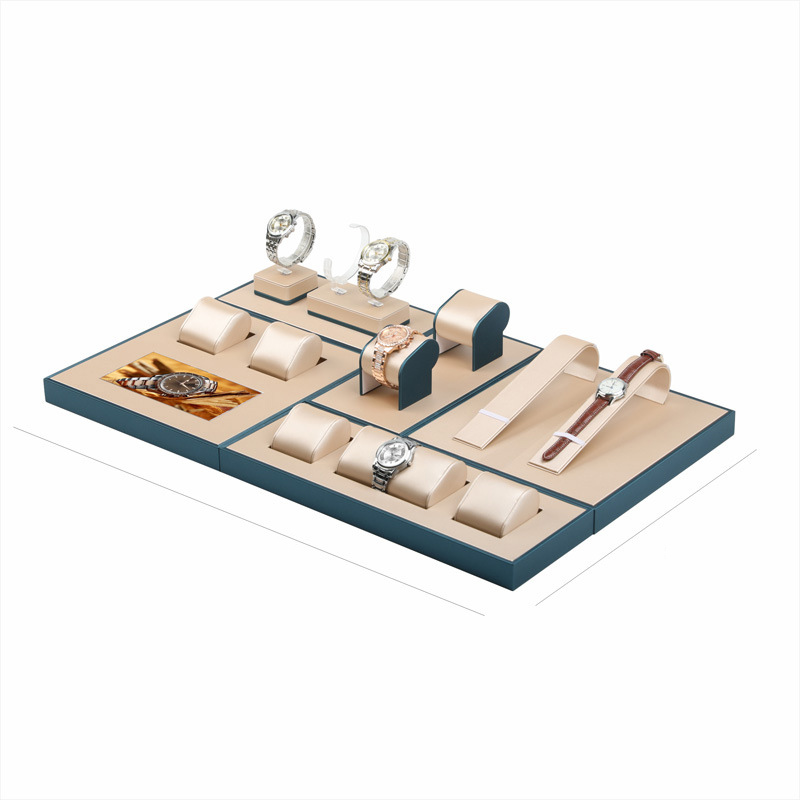
视觉质量的计算模型
Computational Model of Visual Mass
在引力场美学中,"视觉质量"是可以被计算的。一个展示元素的视觉质量M等于其投影面积A乘以色彩对比度系数C乘以材质反光系数R乘以位置权重P。其中投影面积反映元素的物理存在感,色彩对比度反映元素与背景之间的视觉张力,材质反光系数反映元素捕获和反射光线的能力,位置权重则反映元素在陈列面坐标系中的战略价值。在珠宝陈列架的布局设计中,设计师可以通过调整这四个变量来精确控制每个展示元素的视觉质量,进而调控整个陈列面的引力场分布。
In gravitational field aesthetics, "visual mass" is computable. The visual mass M of a display element equals its projected area A times color contrast coefficient C times material reflectivity R times position weight P. Projected area reflects the element physical presence, color contrast reflects visual tension between element and background, material reflectivity reflects the element ability to capture and reflect light, and position weight reflects the element strategic value in the display face coordinate system. In jewelry display rack layout design, designers can precisely control each element visual mass by adjusting these four variables, thereby regulating the gravitational field distribution across the entire display face.
引力势阱与视觉焦点设计
Gravitational Potential Wells and Visual Focal Design
高视觉质量的元素在其周围形成引力势阱——视觉质量越大,势阱越深,吸引消费者注意力的范围越广。在陈列面布局中,主推产品应当具有最大的视觉质量,形成最深的引力势阱,作为整个陈列面的"视觉太阳"。围绕主推产品排列的次级产品则具有递减的视觉质量,形成围绕"太阳"旋转的"行星"——它们被主推产品的引力捕获,同时自身也具有微弱的引力效应。这种"太阳系式"陈列布局比均匀分布的"星云式"布局更能引导消费者的注意力流动路径。
High visual mass elements form gravitational potential wells in their surroundings—the greater the visual mass, the deeper the well, the wider the range of attracting consumer attention. In display face layout, the flagship product should have the greatest visual mass, forming the deepest potential well as the "visual sun" of the entire display face. Secondary products arranged around the flagship have decreasing visual mass, forming "planets" orbiting the "sun"—captured by the flagship gravitational pull while exerting their own weak gravitational effects. This "solar system" display layout guides consumer attention flow paths far better than uniformly distributed "nebula" layouts.
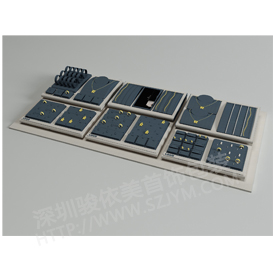
密度梯度与时空弯曲
Density Gradients and Spacetime Curvature
在广义相对论中,时空弯曲的程度取决于物质密度的分布。在陈列设计中,展示元素的密度分布同样决定了视觉场域的"弯曲"程度。高密度区域——多个视觉质量集中的区域——创造了强烈的视觉引力,但同时也产生了"视觉事件视界"效应:密度过高的区域会像黑洞一样吞噬消费者的注意力,使其无法逃离去关注周围的产品。在手表陈列道具的布局中,如果多只高反光度腕表紧密排列,消费者注意力会被锁定在该区域而忽略其他陈列面。解决方案是创造密度梯度——从高密度核心区向低密度边缘区平滑过渡——使消费者的注意力能够沿着梯度自然扩散。
In general relativity, the degree of spacetime curvature depends on matter density distribution. In display design, the density distribution of display elements similarly determines the "curvature" degree of the visual field. High-density regions—where multiple visual masses concentrate—create strong visual gravity but also produce a "visual event horizon" effect: regions of excessive density swallow consumer attention like black holes, preventing escape to surrounding products. In watch display prop layout, if multiple high-reflectivity watches are tightly arranged, consumer attention gets locked in that area, ignoring other display faces. The solution is creating density gradients—smooth transitions from high-density core to low-density periphery—enabling consumer attention to naturally diffuse along the gradient.
引力波与陈列动线的共振
Gravitational Waves and Display Circulation Resonance
引力波是时空本身的涟漪——大质量物体的加速运动在时空中传播的波动。在陈列设计的动态维度上,当消费者在门店中行走时,其视线扫过不同视觉质量区域的过程类似于在弯曲时空中穿行——视觉质量大的区域"拖拽"着消费者的注意力,使其行走速度在该区域附近减慢。通过在消费者行走动线上安排递进式的视觉质量峰值——如入口处一个中等引力的预热区,中部一个高引力的核心展示区,出口处一个回归平静的低引力收尾区——设计师可以创造出如同引力波般有节奏的注意力波动体验。在珠宝包装的展示区域,包装本身的视觉质量也需要纳入引力场计算——过于引人注目的包装可能"窃取"本应属于首饰的注意力。
Gravitational waves are ripples in spacetime itself—waves propagated by the accelerated motion of massive objects. In the dynamic dimension of display design, as consumers walk through a store, their gaze sweeping across different visual mass regions resembles traveling through curved spacetime—high visual mass regions "drag" consumer attention, slowing their walking speed near those areas. By arranging progressive visual mass peaks along the consumer walking path—such as a medium-gravity warm-up zone at the entrance, a high-gravity core display zone in the center, and a calming low-gravity conclusion zone at the exit—designers can create rhythmic attention wave experiences like gravitational waves. In jewelry packaging display areas, the packaging visual mass itself must be included in gravitational field calculations—overly attention-grabbing packaging may "steal" attention that should belong to the jewelry.
从引力场到设计与定制的转化
From Gravitational Field to Design and Customization
引力场美学的最终价值在于其可转化性——从抽象的物理隐喻转化为具体的陈列设计参数。在设计与定制实践中,设计师可以将引力场模型输出为一份"视觉质量分布图",标注陈列面上每个位置的推荐视觉质量值。道具制造商则根据这份分布图选择不同尺寸、材质和色彩的道具,使最终陈列面的实际引力场分布与设计目标之间的偏差最小化。这种从物理隐喻到工程参数的转化链条,使引力场美学从一种诗意的设计哲学升级为可验证、可复制的陈列科学。
The ultimate value of gravitational field aesthetics lies in its transformability—from abstract physical metaphor to concrete display design parameters. In design and customization practice, designers can output the gravitational field model as a "visual mass distribution map" annotating recommended visual mass values for each position on the display face. Prop manufacturers then select props of different sizes, materials, and colors according to this distribution map, minimizing deviation between the actual display face gravitational field distribution and the design target. This transformation chain from physical metaphor to engineering parameters elevates gravitational field aesthetics from a poetic design philosophy to a verifiable, replicable display science.
本文为骏依美包装原创内容,转载请注明出处 / This article is original content by Junyimei Packaging, please indicate the source when reprinting
- 上一篇:没有啦
- 下一篇:Spectral Narrative: How Wavele 2026/7/17


