
Topological Psychology of Retail Space: How Boundary Theory Rewrites Jewelry Display Architecture
库尔特·勒温的拓扑心理学将人类行为视为个体与其所处空间场域之间动态交互的产物。在这一理论框架中,空间不是中性的物理容器,而是充满"力线"的心理场域——每个区域都有其吸引力或排斥力,每条边界都调节着个体的通行意愿和情绪状态。当我们用拓扑心理学的视角来审视珠宝陈列架的布局和零售终端的空间结构时,会发现每一个设计决策——通道宽度、陈列密度、边界通透性——都在无声地编织着一张引导消费者行为的心理力场网络。
Kurt Lewin's topological psychology views human behavior as the product of dynamic interaction between the individual and their spatial field. In this theoretical framework, space is not a neutral physical container but a psychological field filled with "force lines"—each region possesses attraction or repulsion forces, and each boundary regulates the individual's passage willingness and emotional state. When we examine the layout of jewelry display racks and the spatial structure of retail terminals through the lens of topological psychology, we discover that every design decision—aisle width, display density, boundary permeability—silently weaves a network of psychological forces that guides consumer behavior.
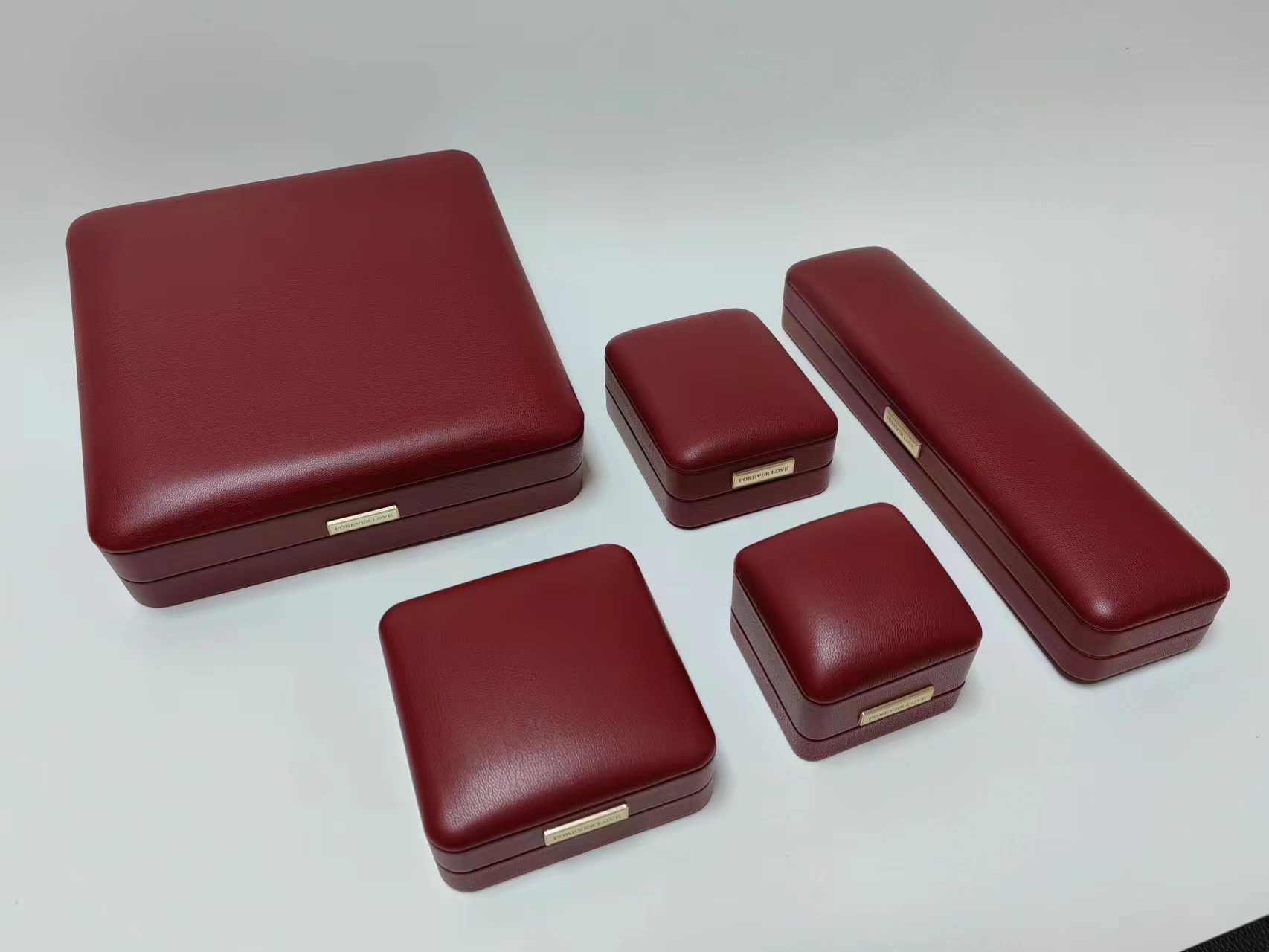
心理边界的通透性与探索意愿
Permeability of Psychological Boundaries and Exploration Willingness
在拓扑心理学中,"边界"是分隔两个心理区域的可渗透屏障。边界的通透性决定了个体从一个区域移动到另一个区域的心理阻力。在珠宝门店中,入口区域的边界通透性直接影响消费者是否愿意踏入店内。全开放的入口(无门、无门槛、宽阔通道)传递"欢迎进入"的心理信号,边界通透性高,消费者的进入阻力低。装有厚重玻璃门或狭窄入口的门店则传递"选择性准入"的信号,边界通透性低,虽然提升了高端感但也提高了进入的心理门槛。
In topological psychology, "boundaries" are permeable barriers separating two psychological regions. Boundary permeability determines the psychological resistance an individual experiences when moving from one region to another. In jewelry stores, the boundary permeability of the entrance area directly influences whether consumers are willing to enter. Fully open entrances (no doors, no thresholds, wide aisles) transmit "welcome" psychological signals with high boundary permeability and low consumer entry resistance. Stores with heavy glass doors or narrow entrances transmit "selective admission" signals with low boundary permeability—though enhancing the premium feel, they also raise the psychological threshold for entry.
在珠宝摆台的层面,每件首饰周围的"个人空间气泡"也构成了一种微观心理边界。当陈列密度过高时,首饰之间的心理边界被压缩,消费者在伸手触碰某件首饰时会感到"侵犯"了相邻首饰的空间,产生心理不适。相反,当陈列密度适中且每件首饰周围有充足的负空间时,消费者可以毫无心理障碍地伸手触摸——这种"触摸友好"的陈列密度直接关联到试戴率和转化率。
At the level of jewelry display platforms, the "personal space bubble" around each piece of jewelry also constitutes a micro-psychological boundary. When display density is too high, the psychological boundaries between pieces are compressed, and consumers feel they are "invading" the space of adjacent jewelry when reaching to touch a piece, creating psychological discomfort. Conversely, when display density is moderate with ample negative space around each piece, consumers can reach out to touch without psychological barriers—this "touch-friendly" display density directly correlates with try-on rates and conversion rates.
力场分析与消费者动线预测
Force Field Analysis and Consumer Flow Prediction
勒温的力场分析理论可以精确应用于珠宝门店的动线设计。在拓扑心理学的框架中,门店中的每个区域都具有正向吸引力(如视觉焦点、灯光亮点、促销展示)或负向排斥力(如拥挤区域、暗角、通道死角)。消费者的行走轨迹是所有力场矢量叠加的结果——他们被吸引力拉向特定区域,同时被排斥力推离不舒适区域。
Lewin's force field analysis theory can be precisely applied to jewelry store circulation design. In the topological psychology framework, each area in the store possesses positive attraction forces (such as visual focal points, lighting highlights, promotional displays) or negative repulsion forces (such as crowded areas, dark corners, aisle dead ends). Consumers' walking trajectories result from the vector superposition of all force fields—they are pulled toward specific areas by attraction forces while being pushed away from uncomfortable areas by repulsion forces.
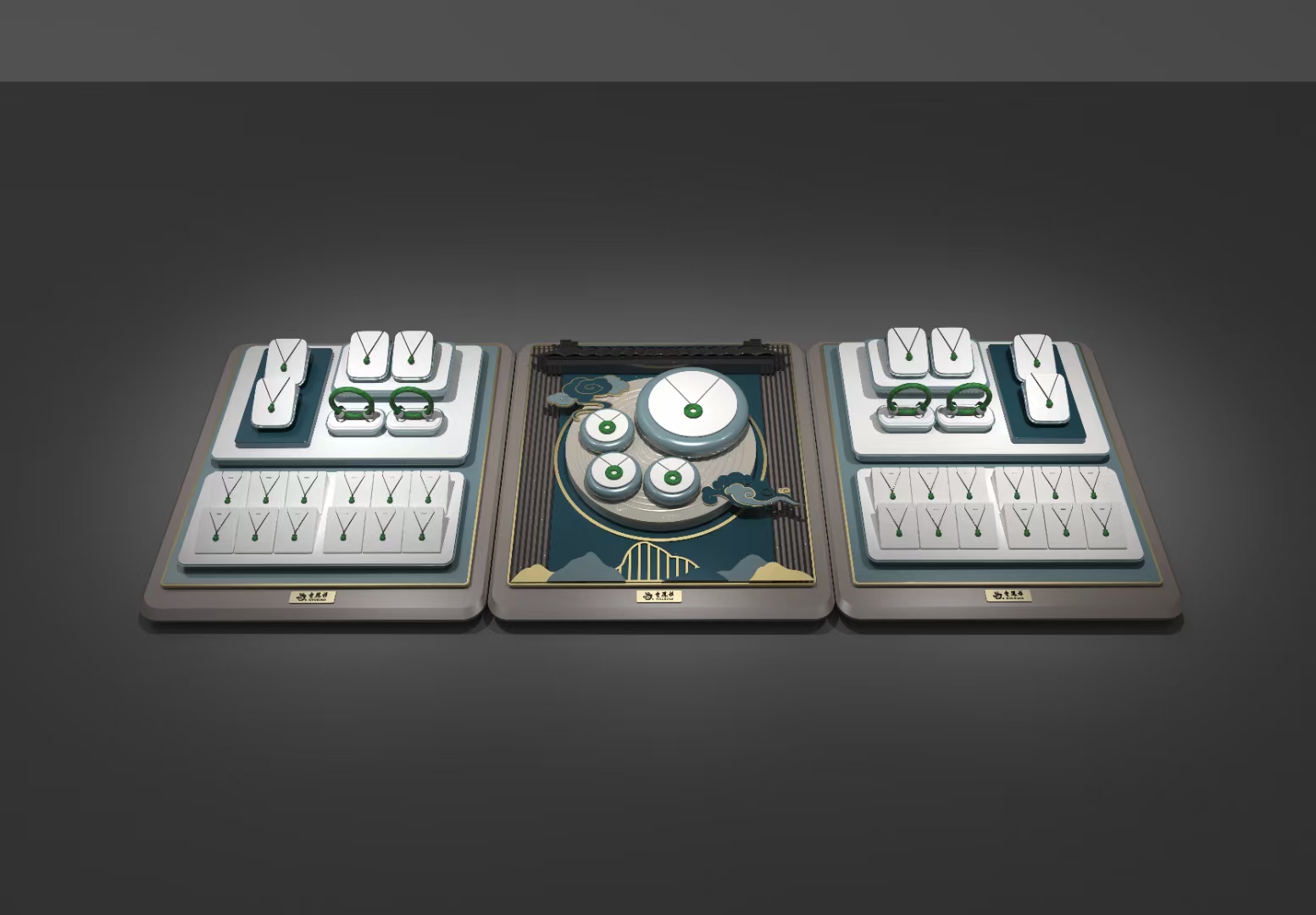
通过绘制门店的"心理力场地图",设计师可以预测消费者最可能的行走路径,并在关键节点部署高价值陈列。力场地图的绘制需要量化每个区域的吸引力值——综合考虑照明亮度、色彩对比度、陈列密度和空间开阔度等因素。在设计与定制陈列方案时,力场分析可以帮助设计师识别"力场真空区"——即既无强吸引力也无强排斥力的区域——这些区域通常是消费者快速通过而不驻留的"盲区",需要通过增加视觉焦点或调整照明来提升吸引力。
By mapping the store's "psychological force field map," designers can predict the most likely consumer walking paths and deploy high-value displays at key nodes. Force field mapping requires quantifying the attraction value of each area—comprehensively considering factors such as lighting brightness, color contrast, display density, and spatial openness. In design and customization of display schemes, force field analysis helps designers identify "force field vacuum zones"—areas with neither strong attraction nor strong repulsion—typically "blind spots" where consumers pass through quickly without lingering, requiring enhanced attraction through added visual focal points or adjusted lighting.
区域化心理与商品关联感知
Regionalization Psychology and Product Association Perception
拓扑心理学中的"区域化"概念指出,同一物理空间内的不同心理区域会影响人们对区域间物品关联性的感知。在珠宝门店中,如果首饰袋和高端首饰被放置在同一心理区域内(通过一致的地板材质、照明色温和空间围合来界定),消费者会感知到两者之间的关联性——首饰袋被视为高端首饰的"配套配件",其感知价值随之提升。反之,如果两者被放置在不同的心理区域中(如地板材质变化、照明差异、物理隔断),消费者会将它们视为独立品类,首饰袋的附加值效应消失。
The concept of "regionalization" in topological psychology suggests that different psychological regions within the same physical space influence people's perception of the relatedness of items across regions. In jewelry stores, if jewelry pouches and high-end jewelry are placed within the same psychological region (defined by consistent flooring material, lighting color temperature, and spatial enclosure), consumers perceive relatedness between the two—the pouches are seen as "complementary accessories" to the high-end jewelry, and their perceived value rises accordingly. Conversely, if placed in different psychological regions (through flooring changes, lighting differences, physical partitions), consumers treat them as independent categories, and the value-added effect of the pouches disappears.
从批发到终端的空间策略传导
Spatial Strategy Transmission from Wholesale to Terminal
拓扑心理学的洞察对于珠宝盒批发商同样具有战略意义。批发商在为零售商提供包装和陈列方案时,如果能够附带基于拓扑心理学的空间布局建议——包括陈列架的推荐位置、包装与首饰的区域化关联方案、消费者动线的力场分析——其提供的就不再仅仅是物理产品,而是经过心理学验证的零售空间解决方案。这种从产品供应商到空间策略顾问的角色升级,可以使批发商在竞争激烈的市场中获得显著的服务差异化优势。
Topological psychology insights also hold strategic significance for jewelry box wholesale distributors. When providing packaging and display solutions to retailers, if wholesalers include topology-based spatial layout recommendations—including recommended display rack positions, packaging-jewelry regionalization schemes, and consumer flow force field analysis—they provide not merely physical products but psychologically validated retail space solutions. This role upgrade from product supplier to spatial strategy consultant can give wholesalers a significant service differentiation advantage in competitive markets.
总而言之,拓扑心理学为珠宝零售空间设计提供了一套从边界通透性到力场分析、从区域化感知到批发策略传导的系统性理论工具。在这个空间与心理深度交织的零售时代,能够用拓扑心理学原理重新定义空间设计的品牌,将在消费者行为引导上获得深层的结构性优势。每一寸零售空间都不是中性的——它是一个充满心理力量的拓扑场域,等待着被精确设计和激活。
In conclusion, topological psychology provides jewelry retail space design with a systematic theoretical toolkit spanning from boundary permeability to force field analysis, from regionalization perception to wholesale strategy transmission. In this retail era where space and psychology are deeply intertwined, brands that can redefine spatial design through topological psychology principles will gain deep structural advantages in guiding consumer behavior. Every inch of retail space is not neutral—it is a topological field filled with psychological forces, awaiting precise design and activation.
— 本文为骏依美包装原创内容,转载请注明出处 / This article is original content by Junyimei Packaging, please indicate the source when reprinting —
- 上一篇:没有啦
- 下一篇:Biomimetic Geometry in Jewelry 2026/7/15


