
The Silent Salesmanship of Acoustic Design: How Sound Architecture Shapes Jewelry Display Experiences
在珠宝零售空间的设计中,声音是最容易被忽视却又最具渗透力的感官维度。当消费者踏入一家珠宝门店时,他们首先感知到的往往不是视觉信息,而是声音环境——脚步在地板上的回响、背景音乐的节奏、玻璃门开合时的声响。这些声音信号在消费者尚未看到任何珠宝道具之前,就已经在潜意识层面设定了他们对品牌定位的心理预期。声学设计在珠宝陈列中的应用,远不止于背景音乐的选择——它是一门融合建筑声学、心理声学和空间美学的交叉学科,正在悄然改变珠宝零售终端的体验逻辑。
In the design of jewelry retail spaces, sound is the most easily overlooked yet most permeating sensory dimension. When consumers step into a jewelry store, what they first perceive is often not visual information but the sonic environment—footsteps echoing on the floor, the rhythm of background music, the sound of glass doors opening and closing. These acoustic signals set consumers' psychological expectations for brand positioning at the subconscious level before they see any jewelry display props. The application of acoustic design in jewelry display goes far beyond background music selection—it is an interdisciplinary field combining architectural acoustics, psychoacoustics, and spatial aesthetics that is quietly transforming the experience logic of jewelry retail terminals.
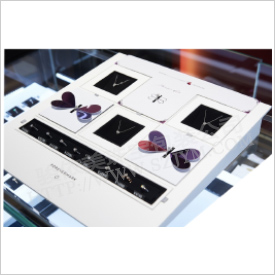
材料声学:陈列道具的吸音与反射
Material Acoustics: Sound Absorption and Reflection of Display Props
每一种珠宝陈列架材料都具有独特的声学特性。玻璃和金属是高反射率材料,它们会将声波几乎完全反射回空间,增加环境的"明亮度"但同时也提升噪音水平。丝绒和木材是高吸收率材料,它们能有效吸收中高频声波,营造"温暖"和"私密"的声学氛围。在珠宝门店的声学设计中,不同材料的比例分布直接决定了空间的声学性格。
Every jewelry display rack material possesses unique acoustic properties. Glass and metal are high-reflectivity materials that bounce nearly all sound waves back into the space, increasing environmental "brightness" while also raising noise levels. Velvet and wood are high-absorption materials that effectively absorb mid-to-high frequency sound waves, creating a "warm" and "intimate" acoustic atmosphere. In jewelry store acoustic design, the proportional distribution of different materials directly determines the acoustic character of the space.
高端珠宝品牌通常偏好"低混响、高吸音"的声学环境——在这种环境中,每一句话语都清晰可辨,消费者的注意力不会被环境噪音分散。为了实现这一目标,珠宝摆台的底座材料选择至关重要。实木底座不仅提供视觉上的厚重感,其多孔的纤维结构还能有效吸收低频驻波,减少空间中的"嗡嗡感"。金属底座虽然视觉精致,但其声学反射特性会在小空间中产生不 desirable 的回声效应,需要通过在底座底部加装吸音毡来补偿。
High-end jewelry brands typically prefer a "low reverberation, high absorption" acoustic environment—in which every word is clearly distinguishable and consumer attention is not distracted by environmental noise. To achieve this goal, the base material selection for jewelry display platforms is critical. Solid wood bases not only provide visual heft but their porous fiber structure effectively absorbs low-frequency standing waves, reducing the "buzzing" sensation in the space. Metal bases, while visually refined, produce undesirable echo effects in small spaces due to their acoustic reflection properties, requiring compensation through acoustic felt installed at the base bottom.
心理声学:声音对购买行为的隐性影响
Psychoacoustics: The Implicit Influence of Sound on Purchasing Behavior
心理声学研究揭示了声音参数与消费者情绪状态之间的精确映射关系。低于60分贝的环境音量使消费者感到放松和舒适,适合高单价产品的深度沟通;70至75分贝的音量则会激活消费者的交感神经系统,提升兴奋度但缩短决策时间,适合快时尚珠宝的冲动购买场景。音调方面,大调式音乐激发积极情绪和购买意愿,小调式音乐则触发沉思和审美深挖——前者适合促销活动,后者适合高端定制珠宝的展示场景。
Psychoacoustic research reveals precise mapping relationships between sound parameters and consumer emotional states. Environmental volume below 60 decibels makes consumers feel relaxed and comfortable, suitable for in-depth communication about high-ticket products; volume between 70 and 75 decibels activates the consumer's sympathetic nervous system, increasing excitement but shortening decision time, suitable for impulse purchase scenarios in fast-fashion jewelry. In terms of tonality, major key music stimulates positive emotions and purchase intention, while minor key music triggers contemplation and aesthetic deep diving—the former suits promotional events, the latter suits display scenarios for high-end custom jewelry.
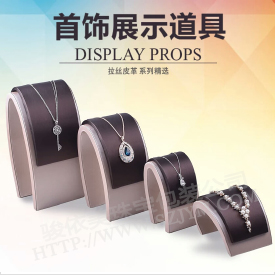
手表陈列道具的声学微环境
Acoustic Micro-Environment of Watch Display Props
手表陈列道具的声学设计有其独特的挑战和机遇。机械腕表的摆陀转动声和擒纵机构的滴答声是品牌价值的重要听觉符号——这些细微的声音在安静的环境中可以被感知到,成为"精密工艺"的声学证明。然而,在嘈杂的零售环境中,这些声音往往被淹没。解决方案是设计具有"声学聚焦"功能的展示道具——通过在道具内部创建小型的声学共鸣腔体,将腕表运转的微弱声音放大并定向投射到消费者耳位高度。
Acoustic design for watch display props presents unique challenges and opportunities. The rotor rotation sound and escapement ticking of mechanical watches are important auditory symbols of brand value—these subtle sounds can be perceived in quiet environments, serving as acoustic proof of "precision craftsmanship." However, in noisy retail environments, these sounds are often drowned out. The solution is to design display props with "acoustic focusing" functionality—by creating small acoustic resonance chambers inside the props, the faint sounds of watch movement are amplified and directionally projected to the consumer's ear height.
这种声学聚焦设计在设计与定制实践中需要精确的声学计算。共鸣腔体的体积、开口直径和内壁材料都必须根据目标声频进行优化。以28800次/小时振频的标准机械腕表为例,其擒纵机构的基频约为8赫兹,需要设计特定尺寸的亥姆霍兹共鸣腔来放大这一频率。这种将声学工程融入展示道具设计的做法,代表了珠宝钟表零售体验从视觉单一维度向多感官综合维度的进化方向。
This acoustic focusing design requires precise acoustic calculations in design and customization practice. The resonance chamber volume, opening diameter, and interior wall material must all be optimized for the target acoustic frequency. Taking a standard mechanical watch with 28,800 vibrations per hour as an example, the fundamental frequency of its escapement is approximately 8 Hz, requiring a specifically sized Helmholtz resonance chamber to amplify this frequency. This approach of integrating acoustic engineering into display prop design represents the evolution of jewelry and watch retail experience from a single visual dimension to a multi-sensory comprehensive dimension.
声学隐私与高端消费的心理安全
Acoustic Privacy and Psychological Security in Premium Consumption
高净值消费者在珠宝门店中的购买沟通过程往往涉及大量个人隐私信息——预算范围、购买目的、收件人信息等。如果这些对话被邻桌的顾客听到,消费者的心理不安全感会显著上升,购买意愿会随之下降。因此,高端珠宝门店的声学设计必须包含"声学隐私"维度——通过在柜台之间设置声学屏障、在天花板安装吸音板、在地面铺设厚质地毯等方式,将相邻柜台之间的语音传声级降低至45分贝以下,确保每一段购买对话都享有声学层面的私密性。
High-net-worth consumers' purchase communication in jewelry stores often involves substantial personal privacy information—budget range, purchase purpose, recipient information, etc. If these conversations are overheard by neighboring customers, consumer psychological insecurity rises significantly, and purchase intention declines accordingly. Therefore, acoustic design of high-end jewelry stores must include an "acoustic privacy" dimension—by installing acoustic barriers between counters, mounting ceiling sound-absorbing panels, and laying thick carpets on floors—reducing voice transmission between adjacent counters to below 45 decibels, ensuring every purchase conversation enjoys acoustic-level privacy.
综上所述,声学设计是珠宝零售空间中最具隐性影响力却最被低估的设计维度。从材料声学的吸音反射配比到心理声学的音量音调调控,从手表道具的声学聚焦到高端消费的声学隐私保障,每一个声学决策都在无声地塑造着消费者的购买旅程。在这个多感官竞争的零售新时代,那些能够将声学设计深度融入空间战略的品牌,将在消费者心智中占据一个"听起来就不一样"的独特位置。
In summary, acoustic design is the most implicitly influential yet most underestimated design dimension in jewelry retail spaces. From sound absorption and reflection ratios of material acoustics to volume and tonality control of psychoacoustics, from acoustic focusing of watch display props to acoustic privacy assurance for premium consumption, every acoustic decision silently shapes the consumer's purchase journey. In this new era of multi-sensory retail competition, brands that deeply integrate acoustic design into spatial strategy will occupy a unique position in consumer minds that "sounds different."
— 本文为骏依美包装原创内容,转载请注明出处 / This article is original content by Junyimei Packaging, please indicate the source when reprinting —
- 上一篇:没有啦
- 下一篇:The Behavioral Economics of Je 2026/7/14


