
The Behavioral Economics of Jewelry Display: How Anchoring Effects Reshape Wholesale Box Strategies
行为经济学告诉我们,人类的购买决策远非理性经济人模型所假设的那样精确和客观。在珠宝零售终端,消费者的每一个选择——是否驻足、是否试戴、是否购买——都受到一系列认知偏差的深刻影响。当我们用行为经济学的框架来审视珠宝陈列架的布局和珠宝盒批发的策略时,会发现这些看似纯物理性的商业决策实际上是在精确地操作消费者的认知偏差。理解这些偏差的工作原理,是当代珠宝零售商在设计终端体验时不可忽视的核心竞争力。
Behavioral economics tells us that human purchasing decisions are far less precise and objective than the rational economic man model assumes. At jewelry retail terminals, every consumer choice—whether to pause, try on, or purchase—is profoundly influenced by a series of cognitive biases. When we examine jewelry display rack layouts and jewelry box wholesale strategies through the lens of behavioral economics, we discover that these seemingly physical commercial decisions actually manipulate consumer cognitive biases with precision. Understanding how these biases work is a core competency that contemporary jewelry retailers cannot afford to ignore when designing terminal experiences.
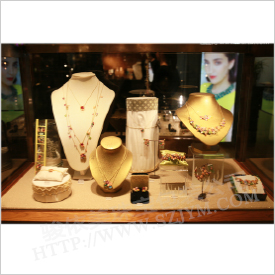
锚定效应在陈列中的精确部署
Precise Deployment of Anchoring Effects in Display
锚定效应是行为经济学中被研究得最为充分的认知偏差之一。当消费者首先看到一个标价十万元的钻石戒指时,其心理价格锚点便被设定在十万级别。随后看到的标价三万元的戒指,在锚定效应的作用下会显得"相对可接受",即使三万元本身并非一个小数目。在珠宝摆台的陈列布局中,这一原理要求将最高价值的产品放置在消费者视线最先到达的位置——通常是陈列面的左侧上方区域,因为阅读习惯使消费者的目光自然从左上角开始扫描。
The anchoring effect is one of the most thoroughly studied cognitive biases in behavioral economics. When a consumer first sees a diamond ring priced at 100,000 yuan, their psychological price anchor is set at the 100,000 level. A subsequently viewed ring priced at 30,000 yuan then appears "relatively acceptable" under the anchoring effect, even though 30,000 is itself not a small amount. In jewelry display platform layout, this principle dictates placing the highest-value product at the position where the consumer's gaze first arrives—typically the upper-left area of the display face, as reading habits naturally direct the gaze from the upper-left corner.
然而锚定效应的部署并非简单的"最贵的放最前面"。研究表明,锚定效应的强度与锚点产品和中档产品之间的价格比值相关。当比值在3:1到5:1之间时,锚定效应最强;当比值超过10:1时,消费者会产生"这两个产品根本不在同一类别"的认知,锚定效应反而失效。因此,在珠宝包装和陈列策略中,批发商需要为零售商提供不同价格区间的包装方案,使零售商能够根据锚定原理灵活组合陈列面。
However, deploying the anchoring effect is not simply a matter of placing the most expensive item first. Research shows that anchoring effect strength correlates with the price ratio between anchor and mid-range products. The effect is strongest when the ratio falls between 3:1 and 5:1; when the ratio exceeds 10:1, consumers form the perception that "these two products are not in the same category," and the anchoring effect actually fails. Therefore, in jewelry packaging and display strategy, wholesalers need to provide packaging solutions across different price tiers, enabling retailers to flexibly compose display faces according to anchoring principles.
损失厌恶与试戴体验设计
Loss Aversion and Try-On Experience Design
卡尼曼的前景理论揭示了人类的一个核心心理特征:失去某物的痛苦感约为获得同等价值物品愉悦感的两倍。在珠宝零售中,这一原理可以通过试戴体验来精确利用。当消费者试戴一件珠宝后,那件珠宝在短暂时间内成为了其"心理所有物"。取下珠宝的过程在心理层面构成了一种"失去",而损失厌恶理论预测这种失去的痛苦感会显著提升购买意愿,以避免"失去"的痛苦。
Kahneman's prospect theory reveals a core psychological characteristic of humans: the pain of losing something is approximately twice as intense as the pleasure of gaining an equivalent item. In jewelry retail, this principle can be precisely leveraged through try-on experiences. After a consumer tries on a piece of jewelry, that piece briefly becomes their "psychological possession." The act of removing the jewelry constitutes a psychological "loss," and loss aversion theory predicts that the pain of this loss significantly increases purchase intention to avoid the pain of "losing."
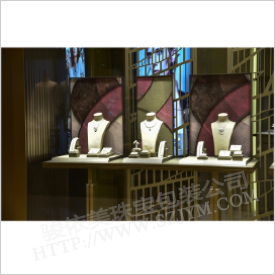
在设计与定制试戴体验流程时,试戴区域的环境设计——包括镜子角度、照明色温、背景色调——都会影响损失厌恶的强度。当试戴镜的角度使消费者看到自己佩戴珠宝的正面形象时,"心理所有"的强度高于看到侧面或背面形象。这一发现要求陈列设计师在规划试戴区域时,不仅要考虑物理空间的便利性,更要考虑认知心理的精确触发条件。
In design and customization of try-on experience flows, environmental design of the try-on area—including mirror angle, lighting color temperature, background color—directly influences loss aversion intensity. When the try-on mirror angle allows consumers to see their frontal image wearing the jewelry, the strength of "psychological possession" exceeds that of seeing a side or rear view. This finding requires display designers to consider not only physical space convenience but also precise triggering conditions of cognitive psychology when planning try-on areas.
心理账户与包装的价值归因
Mental Accounting and Value Attribution of Packaging
心理账户理论指出,消费者会在心理上将不同来源和用途的资金归入不同的"账户",并对其施加不同的花费标准。珠宝购买通常被归入"情感投资"账户,这一账户的花费标准远比"日常开支"账户宽松。精明的珠宝品牌通过包装设计来强化这种心理账户归类——当包装的仪式感和情感叙事足够强时,消费者更容易将购买行为归因于"情感投资"而非"物质消费",从而降低价格敏感度。
Mental accounting theory suggests that consumers psychologically categorize funds from different sources and for different purposes into distinct "accounts," applying different spending standards to each. Jewelry purchases are typically classified into the "emotional investment" account, whose spending standards are far more lenient than the "daily expenses" account. Astute jewelry brands reinforce this mental accounting classification through packaging design—when the ceremonial quality and emotional narrative of packaging are sufficiently strong, consumers more readily attribute the purchase to "emotional investment" rather than "material consumption," thereby reducing price sensitivity.
对于珠宝盒批发商而言,理解心理账户理论意味着包装方案的推销话术需要从"成本"框架转向"投资"框架。与其告诉零售商"这款包装盒每个成本15元",不如告诉他们"这款包装盒能将消费者的心理账户从日常开支提升到情感投资级别,每15元的包装投入可以支撑50元以上的溢价空间"。这种话术转换不是销售技巧的包装,而是对消费者心理机制的深层洞察。
For jewelry box wholesale distributors, understanding mental accounting theory means shifting packaging sales pitches from a "cost" frame to an "investment" frame. Rather than telling retailers "this packaging box costs 15 yuan each," it is more effective to tell them "this packaging box elevates the consumer's mental account from daily expenses to emotional investment, where every 15 yuan of packaging investment can support a premium of over 50 yuan." This shift in framing is not sales technique packaging but a deep insight into consumer psychological mechanisms.
禀赋效应与退换货率优化
Endowment Effect and Return Rate Optimization
禀赋效应是指人们对自己已拥有物品的估价高于同等物品在未拥有状态下的估价。在珠宝零售中,当消费者已经将珠宝带回家并在专属包装中存放了一段时间后,禀赋效应会使他们对珠宝的心理估价上升,从而降低退货概率。这意味着珠宝包装的质量不仅影响购买决策,还直接影响退换货率——一个令人不愿丢弃的精美包装,在心理层面延长了"拥有"状态的持续时间,强化了禀赋效应。
The endowment effect refers to people valuing items they already own more highly than identical items they do not yet possess. In jewelry retail, when a consumer has taken jewelry home and stored it in dedicated packaging for a period of time, the endowment effect raises their psychological valuation of the jewelry, thereby reducing return probability. This means that jewelry packaging quality affects not only purchase decisions but also directly impacts return rates—an exquisite packaging that consumers are reluctant to discard extends the duration of "possession" psychologically, reinforcing the endowment effect.
综上所述,行为经济学为珠宝零售终端的设计和运营提供了一套强大的分析工具。从锚定效应的精确部署到损失厌恶的试戴利用,从心理账户的价值归因到禀赋效应的退换货优化,每一个认知偏差都对应着一个可操作的设计杠杆。在这个认知与商业深度交织的时代,掌握行为经济学原理的珠宝品牌将在终端转化效率上获得不可替代的竞争优势。
In summary, behavioral economics provides a powerful analytical toolkit for jewelry retail terminal design and operations. From precise deployment of anchoring effects to leveraging loss aversion in try-on experiences, from value attribution through mental accounting to return rate optimization through the endowment effect, each cognitive bias corresponds to an actionable design lever. In this era where cognition and commerce are deeply intertwined, jewelry brands that master behavioral economics principles will gain an irreplaceable competitive advantage in terminal conversion efficiency.
— 本文为骏依美包装原创内容,转载请注明出处 / This article is original content by Junyimei Packaging, please indicate the source when reprinting —
- 上一篇:没有啦
- 下一篇:Material Archaeology of Jewelr 2026/7/14


