When the Jewelry Counter Learns to Read柜台开始学会读数
Most jewellery owners have done this arithmetic: a mid-sized store spends two to three hours counting stock before the doors open, which over a year costs roughly one full salary. The usual reward is someone saying, "I think we're one short — let's count again."
That is quietly changing. There is now a layer of hidden antennas under the counter, trays that recognise what sits on them, and chips tucked into box lids. Display props and packaging are turning from static objects into the first data entry point of the whole chain. Six questions we hear most often.
Q1. What is the most expensive hidden cost in a jewellery store?
Not rent. Counting, and the gap between the ledger and the shelf.
Jewellery is a peculiar category: high unit value, many SKUs, small items, dense displays. Counting 1,000 pieces by hand takes about three hours. A tray of 60 rings scanned barcode by barcode takes eight to ten minutes. A full count of 6,000 pieces used to occupy four working days. Larger showrooms hold 8,000 to 25,000 items, and the daily reconciliation becomes a ritual that still leaves room for missed and doubled pieces.
The invisible part costs more. Industry figures put annual shrinkage in jewellery retail — theft, internal loss and counting discrepancy combined — at roughly 1.5% to 2.5% of turnover. One study broke the causes down: manual counting error 65%, internal theft 20%, transaction error 15%. More than six out of ten lost items were never stolen. They were miscounted.
Radio frequency identification rewrites the set. Antennas built into the case collect continuously, so a showcase reconciles in about ten seconds. A handheld reads 200 to 700 tags per second, letting two staff count a 15,000-piece store in 15 to 30 minutes. One group cut its counting cycle from one to three days down to under an hour and pushed human error below 0.02%, while inventory accuracy moved from the 70%–85% typical of barcodes to above 99%.
Q2. How did display props become reading devices?
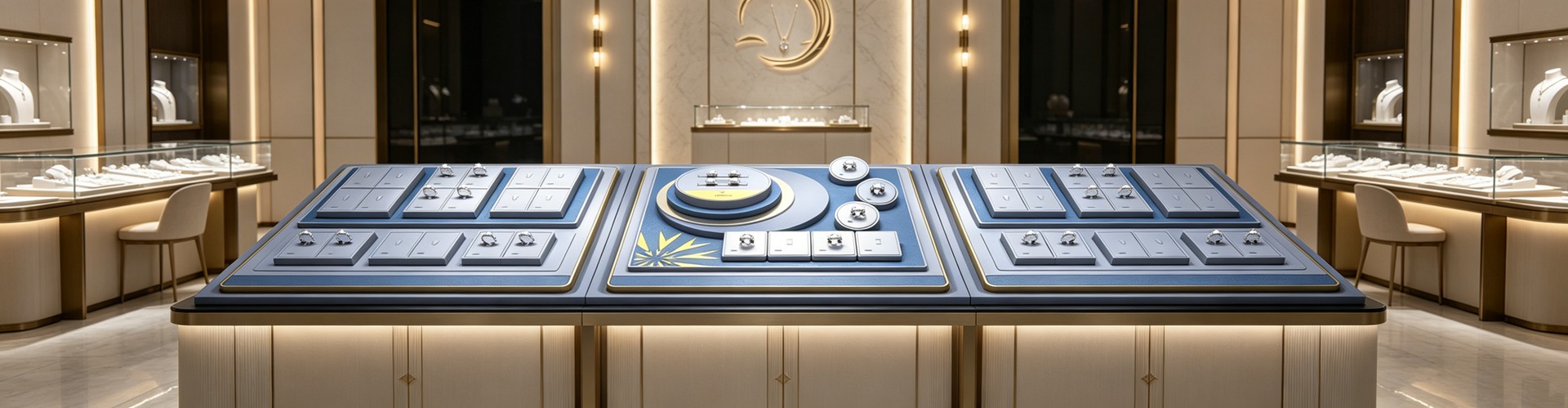
More discreetly than you would expect. The standard approach embeds a near-field antenna array in the base of the case — up to four antennas covering the display area, all hardware hidden inside the cabinet, with cross-reading between adjacent cases handled deliberately. Trays become readers: place 40 to 80 pieces on one and reconciliation finishes in a second or two.
The key property is that RFID needs no line of sight and reads through acrylic, velvet and paper boxes. For anyone specifying fixtures, that has consequences: the material and structure of a display prop now sit inside a radio-frequency calculation. Metal shelves, mirrored acrylic and metallised velvet bases reflect and detune the signal. The distance between antenna and display surface, shelf thickness, whether a cavity was left for the antenna — each affects read rate. Fixtures used to be chosen on colour, sheen, load and visual hierarchy. Now there is one more question: will this base block the signal? Gold, silver and platinum detune tags too, which is why the trade relies on purpose-built on-metal labels as small as 3 by 8 millimetres.
Q3. What is try-on data actually good for?
A smart presentation tray identifies a piece the moment it is set down, mirrors weight, style and certificate details onto a screen, and logs how often the item left the case and how long it was worn. Chow Tai Fook tags every item and uses the tray to count how many times a piece was taken out that day, then feeds store-specific bestsellers into replenishment. Published figures put the conversion uplift at 8%; providers quote a range of 8% to 15%. Linking member try-on data to a mini-programme for personalised follow-up has lifted repurchase by around 25%. Bulk reading at checkout cut average payment time from five minutes to one.
The genuinely valuable output is a metric that did not previously exist: try-on conversion per item. A piece handled again and again but rarely sold usually has a price, sizing or scripting problem. A piece almost never taken out usually has a placement problem — it may sit below the 1.6-metre sightline in the stoop zone. On the old reports these two looked identical. Both were "not selling", and both got pulled. Now they can be told apart.
Q4. Everyone says packaging should be minimal. Is that connected to any of this?
That high-end, minimalist jewellery packaging design wins customers over more readily has been demonstrated many times. Inside a counter that reads, it gains a reason almost nobody mentions: minimalism is radio-frequency friendly.
Metal is the enemy. If the box adds full-coverage foil, metal plaques or mirrored lamination, you have wrapped a second shield around the tag. A plain specialty-paper box with a blind-embossed mark is the better window — the piece can be read inside the case without being lifted out. Heavily metallic boxes often have to be opened before they read reliably. For a box read dozens of times a day, being readable is becoming a hard specification.
The second layer is placement. A near-field touchpoint needs one clean spot a finger can find. The busier the surface, the less room there is for it; on a minimal lid, a single debossed icon or metal clasp is naturally that spot. Some brands now remove the exterior logo altogether and delay the brand reveal to the moment of the tap. Minimalism stops being only an aesthetic choice and becomes part of interaction design.
So minimalism was never the cheap option. It moves budget from surface decoration into structure, tolerance and materials — and now into readability as well.

Q5. Why are chips appearing inside the packaging?
By 2026 more than forty leading houses — Louis Vuitton, Gucci, Prada, Bulgari and Cartier among them — have deployed NFC or RFID chips combined with blockchain identity at scale. LVMH has covered around 78% of new product packaging lines since 2022, with chips set into leather linings or packaging interlayers. Kering had issued unique digital identities to 12 million items by the end of 2024, roughly 65% of annual shipments. A consortium founded by several luxury groups has assigned tamper-proof identities to more than 40 million items. Bulgari binds the chip to an electronic quality certificate, so a tap returns the serial number and digital signature. One Hong Kong-based jewellery group reported counterfeit complaints falling by about 90%. Higher-grade chips use rotating keys and fail permanently if peeled off.
What matters more is the change in what packaging is for. A digital record can accumulate service history, care history and ownership transfers. Once jewellery enters resale, certificates, serial numbers, brand records and original packaging stop being giveaways and start being valuation weights. A box that can prove identity is worth more than the moment it was opened.
Q6. On a limited budget, where should you start?
Rank it by payback. Step one is item tags plus a handheld reader, to fix counting and shrinkage: estimates cluster at seven to eighteen months, and a store holding 8,000 pieces usually recovers the outlay in eight to fourteen months on shrinkage reduction alone. Step two is in-case antennas for presence monitoring, with alerts on unauthorised movement; vendors quote theft reductions of 70% to 90%, and one flagship reported quarterly loss costs down 45%. Step three, and only then, is the smart tray and try-on analytics — a growth tool rather than a loss-prevention one, and without the first two layers it is just a screen. Step four is the chip in the packaging.
Three traps. First, deploying without a physical read test: metal, glass, mirrors and even lighting transformers affect performance, so test with real stock, real boxes and the real counter. Second, tagging the packaging instead of the piece: separate the two and the data collapses. A chip in the box proves the item is genuine; a tag on the item proves it is present. Neither substitutes for the other. Third, buying hardware without changing process: a try-on conversion report nobody reads weekly is waste paper.
Among the enquiries reaching Shenzhen Junyimei, a new category has appeared in the past two years: can the lining leave space for a tag, can a chip sit inside the lid, will the box block the signal. The frequency of those questions is itself a signal.
The real shift is not the two hours saved. It is that questions once answered only by a manager's memory and a month-end report are now answered by the counter itself.
Display props used to make jewellery visible to customers. Now they must also make it visible to the system.
This is original content. Copyright belongs to Shenzhen Junyimei.
Junyimei — present every jewel and timepiece at its best.
很多珠宝店主都算过这笔账:一间中等门店,每天开门前的盘点要占掉两三个小时,一年下来相当于白养一个人。而这笔钱花出去,换回的往往还是一句"好像差了一件,再数一遍"。
这两年情况在变。柜台底下多了一层看不见的天线,托盘学会了认货,盒盖夹层里开始藏芯片。珠宝陈列道具和包装,正从静物变成整条链路的第一个数据入口。
问一:珠宝店最贵的隐形成本是什么?
不是租金,是盘点和账实不符。
珠宝单价高、SKU 多、体积小、陈列密集。人工清点 1000 件通常要 3 小时,6000 件的全量盘点曾占掉 4 个工作日。
更贵的是看不见的部分。行业口径下,珠宝零售因偷盗、内部流失与盘点差异造成的年损耗普遍在营业额的 1.5% 到 2.5%;有调研把原因拆开:人工盘点误差 65%、内部流失 20%、交易差错 15%——超过六成的损失并非被偷走,而是被数错的。
上了射频识别,这组数字被整体改写:柜内天线不间断采集,单柜核对约 10 秒;手持终端每秒可读 200 到 700 枚标签,15000 件的门店两人 15 到 30 分钟盘完;有企业把盘点周期从 1 至 3 天压到 1 小时内,人工误差率降到 0.02% 以下,库存准确率从条码时代的 70%–85% 升到 99% 以上。
问二:陈列道具怎么就变成"读数设备"了?
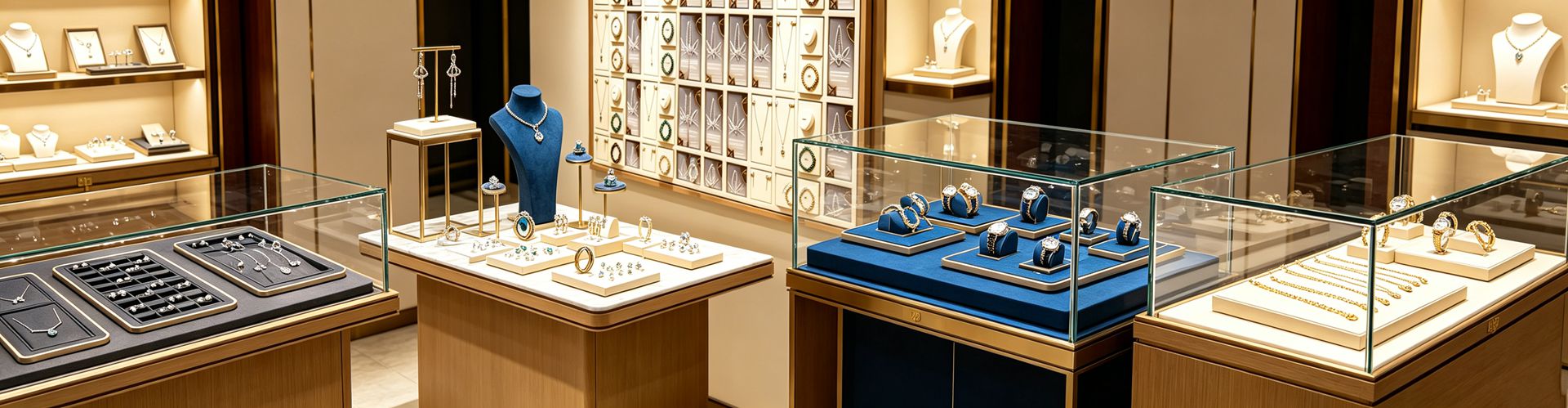
主流方案是在柜台底部内嵌近场天线阵列,最多四路覆盖整个陈列区,硬件全部藏在柜体内不破坏装修。托盘则做成读取盘:40 到 80 件放上去,一两秒完成对账。
关键在于射频识别不需要视线,能穿透亚克力、绒布和纸盒。这句话对做道具的人是个提醒——珠宝陈列道具的材质和结构,从此进入了射频的考量范围。金属层板、镜面亚克力、带金属涂层的绒面底板都会反射并使信号失谐;天线与陈列面的距离、层板厚度、有没有预留天线腔,都直接影响读取率。以前挑首饰展台看颜色、光泽、承重和层次,现在要多问一句:"这块底板会不会挡信号?"
问三:试戴数据能拿来干什么?
智能奉客盘把首饰轻放上去就自动识别,屏幕同步显示克重、款式与证书,后台记录出柜频次与试戴时长。周大福每件商品配标签,由奉客盘统计当天被取出的次数,再按各店爆款给差异化补货策略;公开口径是搭配智能展示后转化率提升 8%,方案商给出的区间为 8% 到 15%。会员试戴数据与小程序联动做推荐,复购提升约 25%。
但真正值钱的是"单品试戴转化率"这个过去不存在的指标。一件货被反复拿出来试却很少成交,问题多半在价格、尺寸或话术;一件货几乎没被拿出来过,问题多半在陈列位——它可能正躺在 1.6 米视线带以下的弯腰区。过去这两种情况在报表上长得一模一样,都叫"卖得不好"。现在它们终于能被分开。
问四:都在说包装要简约,跟这些技术有关系吗?
高端简约的珠宝首饰品包装设计更容易被顾客青睐,这一点已被反复验证。但在会读数的柜台里,它多了一层几乎没人提的理由:简约是射频友好的。
金属是射频的天敌。如果包装再叠一层满版电化铝烫金、金属贴片或镜面覆膜,等于在标签外面又加了一道屏蔽。纯色特种纸配盲压标识的盒子,恰恰是最好的射频窗口——货放在柜里不必取出就能读到。一个每天被读几十次的盒子能不能"被读透",正在成为一项硬指标。
第二层是落点。近场通信触点需要一处干净、手指能准确找到的位置。表面越繁复越没地方安放;而极简盒面上一处盲压图标或一枚金属搭扣,天然就是那个位置。一些先锋品牌干脆取消外表面标识,把品牌揭示延后到"手机一碰"那一刻——简约不再只是审美取向,它成了交互设计的一部分。
所以简约从来不是省钱方案。它把预算从表面工艺挪到结构、公差和材料上,如今又多挪了一份到"能不能被读到"。
问五:包装里为什么开始装芯片?
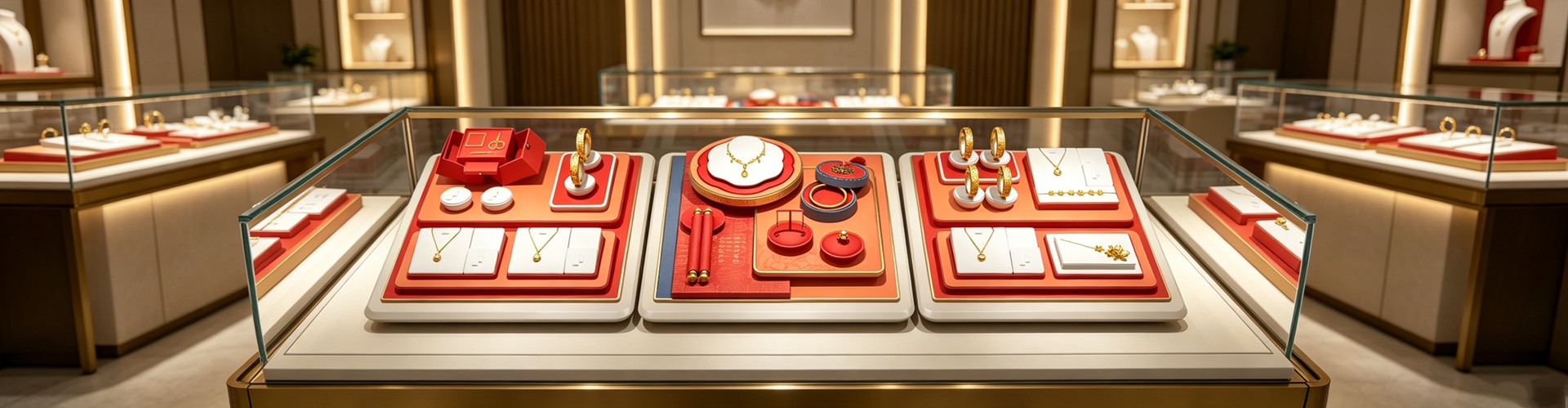
截至 2026 年,路易威登、古驰、普拉达、宝格丽、卡地亚等超过 40 个头部品牌,已规模化部署近场通信芯片加区块链的数字身份。LVMH 自 2022 年起覆盖约 78% 的新品包装线,芯片嵌在皮具内衬或包装夹层;开云集团到 2024 年底为 1200 万件商品建立唯一数字身份,约占年出货量的 65%;多家奢侈品集团联合创立的区块链联盟,累计已为超过 4000 万件商品赋予不可篡改的数字身份。国内某港资珠宝集团上线后,假货投诉下降约 90%。高端芯片采用动态密钥,剥离即永久失效。
更值得注意的是它改变了包装的角色。数字档案里可以持续写入维修、保养与所有权流转记录。而当珠宝进入二次流通,证书、编号、品牌记录与原始包装,正从"附赠品"变成估值权重项——能证明身份的珠宝盒定制方案,价值早已不止于开箱那一刻。
问六:预算有限,从哪一步开始最划算?
按回本速度排。第一步是货品标签加手持终端,解决盘点与损耗:多份测算给出 7 至 18 个月回本,8000 件规模的门店通常 8 至 14 个月仅靠减少损耗就能收回投入。第二步是柜内天线做在位监测,非授权移动实时报警,方案商给出的盗窃降幅为 70% 到 90%,有旗舰店部署后季度损耗成本下降 45%。第三步才是智能托盘与试戴数据——前两步的底座没铺好,它就只是一块屏幕。第四步才轮到包装内嵌芯片。
三个坑要提前避开。一是不做实测就上:金属、玻璃、镜面甚至灯具变压器都影响读取,务必拿真实的货、盒子和柜台做一次读取测试。二是把标签贴在包装上而不是货品上,盒货一分离数据全废——包装上的芯片解决"这件东西是真的",货品上的标签解决"这件东西在不在"。三是只买硬件不改流程:试戴转化率报表没人每周看,它和废纸没区别。
在深圳骏依美接触到的询价里,这两年多了一类以前没有的问题:内衬能不能预留标签位,盒盖里能不能埋一枚芯片,盒子会不会挡信号。这类问题出现的频率本身就是一个信号。
真正的变化不是省下两小时,而是过去只能靠店长记忆和月底报表回答的问题,现在柜台自己会答。
过去陈列道具负责让顾客看见,现在它还得负责让系统看见。
本文为原创内容,版权归深圳骏依美所有,转载请注明出处。
骏依美——让每一件珠宝与腕表,都被更好地呈现。