Why the Watch Box Quietly Protects Value表盒藏着保值密码
Sell a mechanical watch without its original box and papers, and the offer can drop by nearly a fifth. Most owners treat the box as disposable outer shell. In reality it does three jobs at once: it preserves proof of provenance, it blocks damage nobody sees happening, and on a retail counter it decides what happens in the first sixty seconds. Six questions, answered with the numbers.
Q1. Is a watch box really just gift packaging?
Professional pre-owned buyers value a watch on a fairly standard weighting: brand around 40%, condition 30%, accessories 20%, liquidity 10%. Accessories carry a full fifth of the value. The field data is blunt. A complete set — original box, warranty card, manuals, tags, invoice — lifts the buy-back price by 8%–22%, with 10%–15% the common outcome. Card but no box: 3%–7%. A bare watch with nothing attached: an average 18% discount, inside a -12% to -22% band.
A 95%-condition Omega Seamaster 300 quotes at roughly RMB 22,000 as a full set and about RMB 17,000 bare — a RMB 5,000 gap, close to 30%. Sensitivity climbs with tier. Patek Philippe, Audemars Piguet and Richard Mille see full-set premiums of 15%–25%, and a missing warranty card routinely costs more than 10%. Rolex, Jaeger-LeCoultre and IWC sit at 10%–20%. Omega, Longines and Tudor still clear 8%–15%. The box is not a shell; it is a priced link in the watch's identity chain.
Q2. What is the box actually protecting against?
Four things: humidity, magnetism, dust and knocks.
Humidity is the most underestimated. The safe range for a mechanical watch is 40%–60% relative humidity. Above 60%, case backs and clasps begin to corrode and gaskets age faster. Below 30%, gaskets harden and crack while leather straps dry out and go brittle. A humid coastal summer and a dry centrally heated winter sit at opposite ends of that line, and both do damage.
Magnetism is the invisible one. Fields above roughly 60 gauss are enough to magnetise a mechanical movement and push the daily rate off by minutes. A phone, a wireless charging pad, a Bluetooth speaker or a tablet on the same nightstand creates a sustained low-level field. It will not stop the watch. It simply makes it run 15–20 seconds fast every day, and the owner blames the movement.
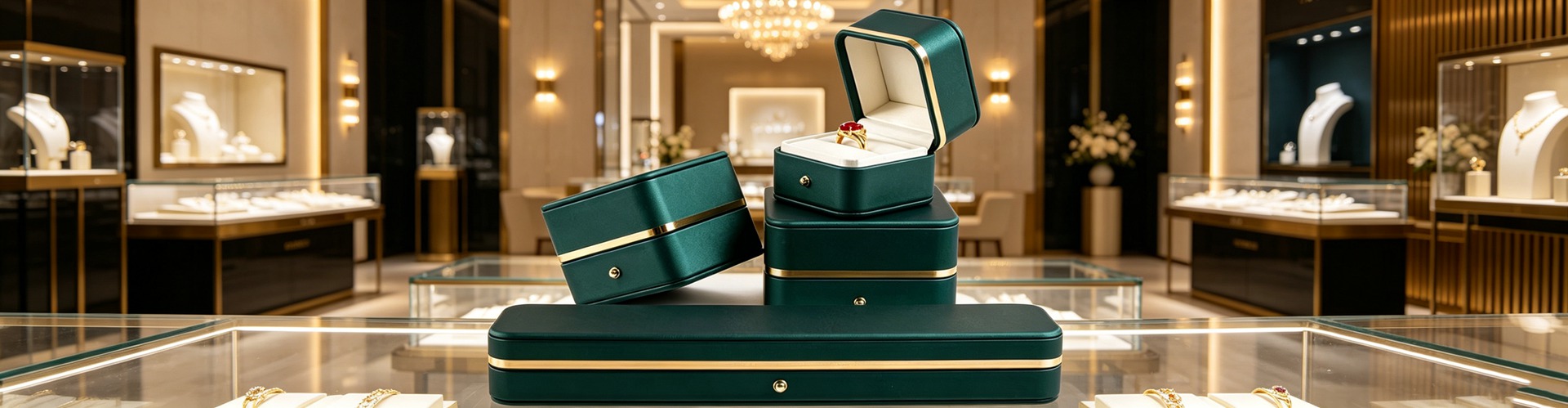
A properly engineered watch box therefore does a specific set of jobs: a sealing lid rim to keep dust out, individual cushions so cases never rub against one another, lint-free lining that does not hold moisture or sweat, a dedicated slot for silica gel or a two-way humidity pack replaced every three to six months — and a placement rule that keeps the whole thing away from electronics.
Q3. Is a watch winder essential, or a gadget?
It depends, and the honest answer is that most people do not need one. Wear a watch four or more days a week and wrist motion keeps it wound; the winder is decoration. Where it earns its place is a rotation piece that sits untouched for more than three days, or a perpetual or annual calendar where resetting takes ten minutes of fiddly work.
Settings matter. Most modern automatics want bidirectional rotation at 650–800 turns per day. Cheap units that spin continuously with no rest cycle put more stress on the rotor and mainspring than simply leaving the watch still. One rule gets ignored constantly: a watch going into long-term storage should not sit on a winder. Running a movement for months with no purpose is wear without benefit. Proper long-term storage is simpler — clean off sweat, wind fully, place it on its own cushion, add desiccant, and run it for a day every four to six weeks so the lubricants do not settle.
Q4. Why do restrained, minimal high-end packages win customers over?
Because in watches and fine jewelry the package is not supposed to perform. Its job is to make the product look expensive. Loaded boxes — stacked drawers, elaborate magnetic closures, broad gold foiling — hold the eye on the packaging instead of the dial. Minimal design does the opposite: tighter footprint, restrained structure, materials with real quality but no noise, so attention falls back on the product.
There is a second reason, and it is about perceived cost allocation. Over-packaging now reads as money spent on the box. Restraint reads as money spent on the product. That is why so many brands have quietly shrunk box volume and removed outer blister layers in recent seasons. What gets cut is bulk and waste. What never gets cut is the protective core — cushion sizing, lining density, closure force of the lid. Subtraction only works once the protection is genuinely sufficient. Minimal is not cheap; the gap between the two is an entire discipline of structure and material engineering.
Q5. How should watch display props be arranged to actually sell?
One dataset settles the argument. For the same watch, average shopper dwell time runs 168 seconds on an open tray, 228 seconds in a generic glass case, 272 seconds in a wooden display box, 322 seconds in an LED-lit showcase and 382 seconds in a high-specification luxury showcase — more than double from worst to best. The industry benchmark is that every additional 30 seconds of dwell raises transaction likelihood by roughly 8%–12%, and professional presentation alone can lift dwell time by up to 37%.
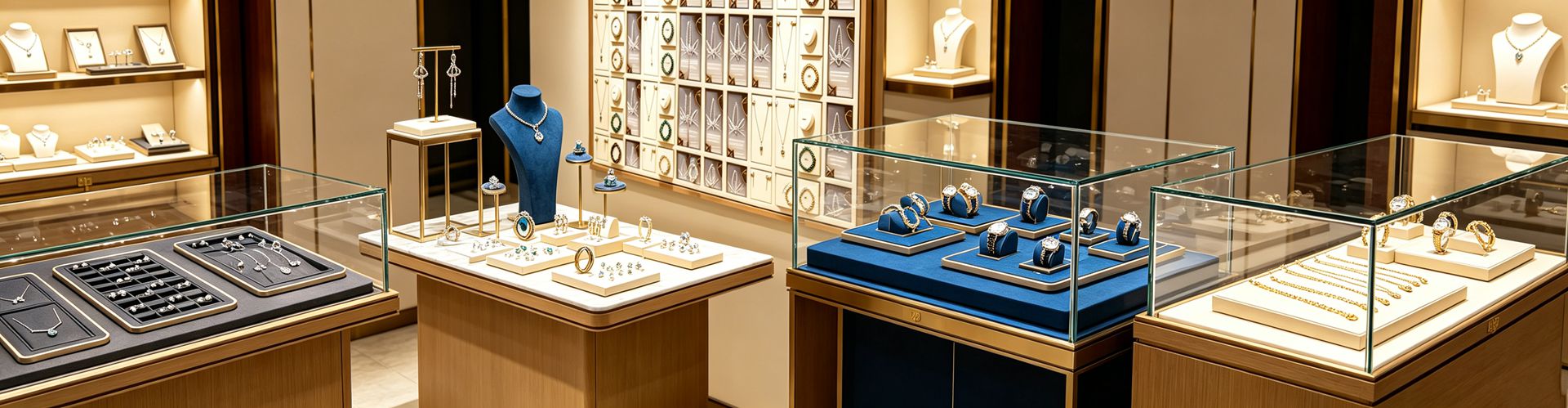
Lighting is the single highest-return feature. Well-lit displays raise product pick-up rates by around 29%, and picking the watch up precedes nearly every sale. Colour temperature has to match the metal: warm white at 2700–3200K flatters yellow and rose gold, while cool white at 5000–6000K is what makes steel and titanium read as sharp. Get the temperature wrong and a good watch looks flat. Independent jewellers across North America and Europe report average basket size up 18%–24% in the six months after upgrading their cases. Which is why serious watch display props and jewelry display props do not belong in a store's decoration budget. They belong in the conversion line item.
Q6. How should counter assortment and display slots be planned?
Width beats depth. Five different references, one unit each, outperforms five units of one reference. Most buyers do not walk in asking for a model number; they choose from what is in the case, so a wider spread raises the odds of matching someone's taste. Second, keep the gender split close to 1:1 — gifting drives a large share of this category, and a case holding eight men's pieces and two women's pieces pushes half the gift demand back out the door. Third, set the reorder trigger at three weeks of stock. Do not wait for an empty slot; shoppers read a bare section as a store that does not take the brand seriously.
The market rewards this precision. In the United States, average sales per door rose 29.7% year on year across the first five months of 2026, with May alone up 32.1% and the luxury segment up 32.8%. In the Prestige tier, unit sales per door grew only 3.9% while value grew 27.8% — the difference came from average ticket rising from about USD 50,220 to over USD 59,000. When price per piece climbs and unit volume flattens, every act of presentation and handover carries more weight. At Shenzhen Junyimei we tend to design the in-case display, the try-on tray and the take-home box as one continuous line rather than three unrelated purchases: light and angle make the customer stop, the tray and cushion make the try-on effortless, and the box that goes home is what proves, years later, that the purchase was worth making.
So what is the watch box quietly holding? A document of value that a resale market will actually pay for, a stable micro-environment that stretches service intervals, and every reason a customer had for picking the watch up in the first place.
This is original content. Copyright belongs to Shenzhen Junyimei.
Junyimei — present every jewel and timepiece at its best.
一只表在二手市场出手,少了原装盒和保卡,报价能差出小几万。很多人把表盒当成拆完就扔的壳子,可它其实同时干着三件事:守住资产凭证、挡住看不见的损耗、决定柜台前那几十秒。下面用六个真实高频的问题,把这件事讲透。
问一:表盒真的只是「送礼用的壳子」吗?
先看二手回收行业通用的估值权重——品牌价值约占 40%、成色 30%、附件 20%、流通性 10%。附件这一项,权重高达两成。实测数据更直观:附件齐全的「大全套」(原装表盒、保卡、说明书、吊牌、发票)回收价上浮 8%–22%,主流落在 10%–15%;只剩保卡没有盒子,上浮 3%–7%;而「单表」——什么附件都没有——平均折价 18%,浮动区间在 -12% 至 -22% 之间。一只 95 新的欧米茄海马 300,全套报价约 2.2 万元,单表只有 1.7 万元,5000 元的差价,接近三成。
越往上走越敏感:百达翡丽、爱彼、理查德米勒这一档,全套溢价 15%–25%,缺保卡压价常常超过 10%,热门型号动辄几万元;劳力士、积家、万国一档是 10%–20%;欧米茄、浪琴、帝舵这类热门运动与入门豪华段,也有 8%–15%。所以表盒不是壳子,它是这只表身份链条上被明码标价的一环。
问二:表盒到底在替腕表挡什么?
挡四样东西:湿度、磁场、灰尘、磕碰。
湿度是最被低估的一项。机械表的安全区间是相对湿度 40%–60%:超过 60%,表壳与表带扣开始锈蚀、防水胶圈加速老化;低于 30%,胶圈变硬开裂、皮带失油发脆。南方的回南天与北方的暖气季,正好卡在这条线的两头。
磁场是第二个隐形杀手。约 60 高斯以上的磁场就足以让机械机芯磁化,日差被拉到几分钟。而手机、无线充电板、蓝牙音箱、平板扬声器,随便一个和表放在同一张床头柜上,就是持续的低强度磁源——它不会让表停走,只会让它每天快 15–20 秒,让人误以为机芯出了毛病,白跑一趟维修。
所以一只结构合规的手表盒,本质上在做这几件事:盖沿密闭隔绝粉尘、独立表枕避免表与表互相刮擦、内衬不掉毛不吃汗、盒内预留干燥剂位(硅胶包每 3–6 个月更换一次),以及——摆放时主动远离电子设备。
问三:摇表器是刚需还是智商税?
分情况,不必一刀切。一周佩戴 4 天以上的表,手腕的自然摆动已经足够上链,摇表器只是个摆设;但连续 3 天以上不戴的轮换款,或者万年历、年历这类复原一次要十几分钟的复杂功能,摇表器确实省心。
设置上有讲究:主流自动机芯建议双向旋转、每日转数(TPD)650–800。很多低价机器 24 小时不停转、没有休息周期,反而更伤自动陀与发条。还有一条常被忽略——准备长期封存的表不要挂在摇表器上。真正的长封存做法是:擦净汗渍、上满条、装进带独立表枕的盒子、放好干燥剂,每 4–6 周取出来运转一天,让润滑油不至于沉降凝固。
问四:为什么高端简约的包装设计,反而更容易被顾客青睐?
因为在腕表和珠宝这两个品类里,包装的任务从来不是「抢戏」,而是「让主角显贵」。堆料的盒子——多层抽屉、复杂磁吸、大面积烫金——很容易把视线留在盒子上,而不是表盘上。简约做法正相反:外形收紧、结构收敛、材质有质感但不喧哗,视觉焦点自然落回产品本身。
另一层原因来自成本观感的错配。过度包装会被今天的消费者读成「钱花在了盒子上」,而克制的设计传递的是「钱花在了产品上」。这也是近几年不少品牌主动缩小表盒体积、砍掉外层泡壳的原因:减的是体积和废料,不减的是保护结构——表枕尺寸、内衬硬度、盒盖闭合力,一样都不能省。做减法的前提,是先把保护做够。简约不等于简陋,这中间隔着一整套结构与材质的功课。
问五:店里的手表陈列道具,怎么摆才真的卖得动?
有一组零售停留时长的对照数据很说明问题。同样的表款,摆在开放托盘上,顾客平均停留 168 秒;普通玻璃柜 228 秒;木质展示盒 272 秒;带 LED 照明的展柜 322 秒;高规格展柜 382 秒——最好的比最差的高出一倍多。而行业经验值是,每多停留 30 秒,成交概率提升约 8%–12%;专业化的陈列环境本身能把停留时长拉高约 37%。
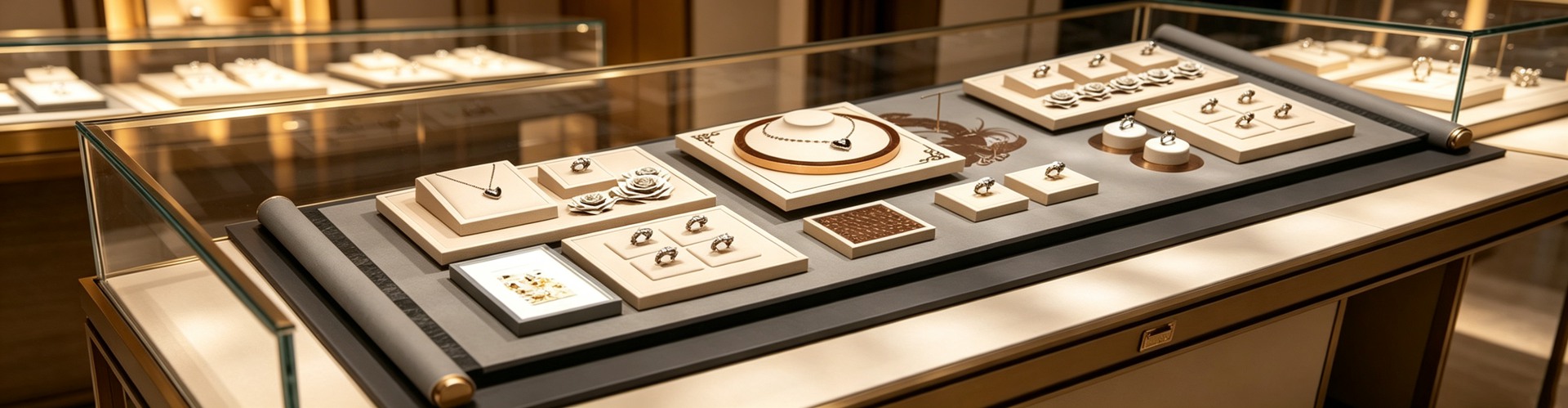
照明是回报率最高的单项:合理布光能让「拿起来试戴」这个关键动作的发生率提升约 29%,而试戴几乎是所有腕表成交的前置动作。色温要分金属配——暖白 2700–3200K 衬黄金与玫瑰金,冷白 5000–6000K 才能把精钢和钛金属的锐利感打出来,配错色温,好表也显得发闷。北美与欧洲独立表店的反馈是,升级专业展柜后的半年里,平均客单价增长 18%–24%。所以专业的手表陈列道具与珠宝陈列道具,从来不该被算进「柜台装修预算」,它本身就是转化率的一部分。
问六:柜台里的表款结构和陈列位,该怎么配?
第一条被反复验证的原则是「宽度优于深度」:与其同一款备 5 只,不如 5 个不同款各 1 只。多数顾客不会指名型号,他们是「看柜台里有什么就选什么」,款式面越宽,命中审美的概率越高。第二条,男女比例尽量接近 1:1——礼赠是这个品类的重要场景,只摆 8 只男表 2 只女表,等于把一半送礼需求推出门。第三条,补货触发点设在 3 周库存,别等柜位空了才补,空着的展示位会被顾客读成「这家店不重视这个品牌」。
市场层面也在支持这套精细化打法:美国市场 2026 年前 5 个月每门店平均销售额同比增长 29.7%,5 月单月 +32.1%,奢华段 +32.8%;而 Prestige 段的件数只增长 3.9%,销售额却涨了 27.8%——靠的是均价从约 5.02 万美元升到 5.9 万美元以上。当单价往上走、件数不再高速增长,每一次展示与交付的体验权重就更高。深圳骏依美在给腕表与珠宝客户做方案时,习惯把「柜内展示—试戴承托—成交包装」当成同一条线来设计:柜内的光与角度负责让顾客停下来,托盘与表枕负责让试戴顺手,最后那只带回家的盒子,负责让这次消费在几年后仍然被证明是值得的。
回到开头那个问题——表盒藏着什么密码?一份能在二手市场被兑现的凭证、一套能延长保养周期的微环境,以及顾客把表拿起来那一刻的全部理由。
本文为原创内容,版权归深圳骏依美所有,转载请注明出处。
骏依美——让每一件珠宝与腕表,都被更好地呈现。