Managing Showcase Light Decay: How to Spot Chip Ageing and Colour Drift Early展柜灯光的光衰管理:灯珠老化与色温漂移怎么早发现
Walk into a jewellery store and the first thing customers sense is rarely the display props themselves; it is the lighting. The same diamond ring looks dazzling under accurate colour temperature and dull under a yellowing old strip. Yet lighting is the easiest thing to overlook: as long as it still works and has not gone dark, few people measure its colour or brightness. In reality, showcase lighting ages quietly. Chip degradation, brightness decay and colour temperature drift are invisible day by day, but after three to five months they drag the whole counter down a notch. This article is about catching the light decay early, before customers notice.
First, why does decay happen? The LED strips and spotlights commonly used in jewellery counters produce light through phosphor and chips inside the LEDs. Phosphor ages under prolonged heat and continuous operation, dropping luminous efficiency: that is brightness decay. At the same time, subtle changes in the phosphor blend shift the light from cool white toward warm and yellow: that is colour drift. Counter interiors are enclosed with weak heat dissipation, and strips sit against metal and wood structures, so decay here is far faster than in ordinary home lighting. In counters open ten or more hours a day, an LED strip after eighteen months may already be at eighty percent of its original brightness, with colour temperature shifted by two to three hundred kelvin. Individually these are invisible; side by side in photos, obvious.
How do you check? The most intuitive way is the white card test. Take a standard white card, or even a fresh sheet of paper, let your eyes adapt for a few seconds, then hold it under two neighbouring strips in turn. If the paper under one set looks clearly yellow and dim while the other looks white and bright, the older strip is decaying. For higher precision, use a colour temperature meter or a phone app and read both sets directly. The colour temperature difference across strips in one counter should stay within about two hundred kelvin. Beyond that, diamonds look dull, platinum grey, and gold distorts; customers cannot say why, but they feel "the store is not as bright as before".
Besides colour temperature, check uniformity. Good jewellery lighting is "bright without glare, even without dead zones". Stand in front of the counter and sweep the whole display plane, looking for dark patches or hotspots. Two problems are common: first, the edges of an ageing strip dim first, creating a "tunnel" of bright centre and dark sides; second, spotlights drift off angle, throwing light onto the surface instead of the pieces. Angle drift is easy: adjust the heads. Uneven strips generally need replacement. Do not forget the strips inside door frames; they sit near seals, dissipate heat worst, and are usually the first to decay.
Catching decay early also protects the display scheme itself. Many stores make new lighting their first move in an upgrade, then find the effect disappointing, because they swapped lamps without recalibrating the scheme: while the old light faded, display staff habitually added fill light and more spotlights to hold brightness; after the swap, brightness spikes and the extra light becomes overwhelming. The right sequence is: photograph the layout before changing lamps, record positions and angles; after swapping, run the original scheme for three days and watch for over-bright or dark zones, then fine-tune angles and dimmers. Let the new light adapt to the display plan, not the other way around.
Here is a practical maintenance calendar. Do a lighting check every quarter: walk every counter with the white card and colour readings, record group values, archive and compare. Every six months, inspect door-frame and corner strips, the two spots that decay fastest. Every eighteen to twenty-four months, replace the main strips and wipe dust off the fixtures at the same time; dust alone can block ten to fifteen percent of light output, an almost free way to regain efficiency. If retired strips have not drifted badly, move them to the stockroom or staff area and reuse them.
Lighting is the atmosphere layer of jewellery display. It never steals the show, yet it decides how every prop and product looks. Manage light decay well and counters stay bright year after year; neglect it, and the finest props fade in a yellow glow. Do not wait for a customer to say "your lights seem dim". Take out the white card every quarter on your own schedule. Treat lighting as a display prop that needs regular care, and the premium feel of a jewellery counter lives in the light you can see.
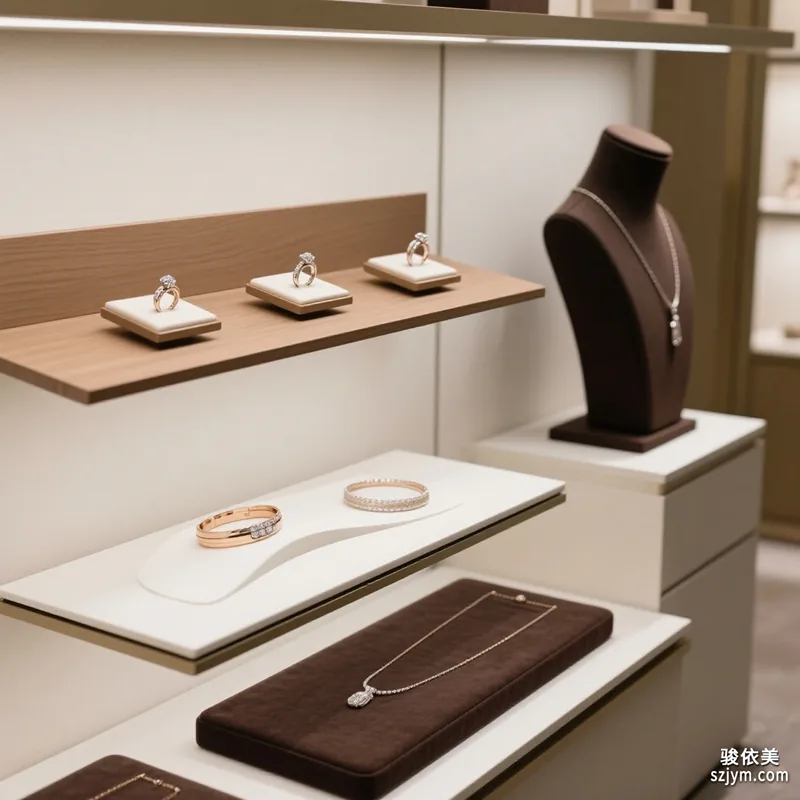
走进一家珠宝店,顾客最先感知到的往往不是陈列道具本身,而是灯光。同样一枚钻戒,在色温准确的灯光下火彩逼人,在发黄的旧灯带下却显得黯淡无光。可灯光又是最容易被忽略的:只要没坏、没灭,很少有人会主动去测它的颜色和亮度。事实上,珠宝柜台的灯光是会"悄悄变老"的。灯珠老化、亮度衰减、色温漂移,这些变化一天两天看不出来,积累三五个月,整个柜台的质感就掉了一档。今天这篇文章,说的就是如何早点发现灯光的光衰,把问题掐在顾客察觉之前。
先说为什么会光衰。珠宝柜台常用的LED灯带和射灯,发光靠的是灯珠内部的荧光粉和芯片。荧光粉在长期高温和持续点亮下会逐渐老化,发光效率下降,这就是亮度衰减;同时荧光粉配比发生细微变化,发出的光会从冷白慢慢偏暖、偏黄,这是色温漂移。柜台内部空间密闭、散热条件差,灯带紧贴金属和木质结构,热量散不出去,光衰速度会比普通家用照明快得多。一般情况下,每天营业十小时以上的柜台,LED灯带用满一年半,亮度可能已经降到新灯的八成以下,色温也偏移了两三百开尔文。这两项叠加,肉眼看不明显,但拍照对比就一目了然。
那么怎么检查?最直观的办法是"白卡对比法"。准备一张标准白色卡纸,或者干脆用一张未拆封的A4打印纸,先在柜台上放几秒,让眼睛适应,然后把纸分别放到相邻的两组灯带下方。如果一组灯下面纸色明显偏黄、偏暗,另一组偏白、偏亮,说明旧灯带已经开始光衰。更严谨一点,可以用色温表或手机上的色温测量软件,直接读出两组灯带的色温值。同柜台的灯带色温差最好控制在正负两百开尔文以内,超过这个范围,钻石会发乌、铂金会发灰、黄金的色泽也会失真,顾客说不清哪里不对,但就是觉得"店里没那么亮了"。
除了色温,还要看照度均匀性。珠宝柜台的打光讲究的是"亮而不刺眼、匀而无死角"。检查时站在柜台正面,视线扫过整个陈列面,看有没有明显的暗区或亮斑。常见问题集中在两处:一是灯带老化后边角位置先暗下去,形成中间亮两边暗的"隧道感";二是射灯角度偏移,原本照在展品上的光挪到了台面上。射灯角度偏移好办,调整灯头就行;灯带不均匀则基本只能更换。另外别忘了检查柜门位置的灯带,很多柜台门框内侧也有补光,那里的灯带更贴近密封条,散热更差,往往是最先光衰的一批。
再说一说光衰早发现对陈列方案本身的意义。很多门店做陈列升级时,第一个动作就是换新灯带,但换了灯之后却发现效果没有想象中好,问题往往出在"只换了灯、没调方案":旧灯光衰期间,陈列师会习惯性地加亮补光、加多射灯来维持亮度,灯一换新,亮度陡增,原本合适的补光就过量了,柜台变得晃眼。所以正确顺序是:换灯之前先拍照存档,记录每组灯带的位置和角度;换完后按原方案亮灯观察三天,看有没有过亮或过暗的区域,再微调射灯角度和亮度。让新灯光去适应陈列方案,而不是让方案迁就旧灯。
最后给一个可执行的维护日历。建议每个季度做一次"灯光体检":用白卡对比法和色温读数把全部柜台过一遍,记录每组的色温值和相对亮度,存档比对;每半年重点检查门框内侧和转角处的灯带,这两处光衰最快;每一年半到两年整体更换主照明灯带,同时清一次灯具表面的积灰——积灰会遮挡百分之十到十五的光输出,这几乎是零成本的光效恢复。换下来的旧灯带若色温漂移不严重,可以挪去库房或员工区照明,物尽其用。
灯光是珠宝陈列的"氛围层",它不抢戏,却决定了所有道具和货品呈现出的质感。光衰管理做得好,柜台十年如一日地亮堂;做得不好,再好的陈列道具也会在昏黄的光线里失色。与其等顾客说"你们家灯好像暗了",不如每个季度主动把白卡纸拿出来比一比。把灯光当成一件需要定期保养的陈列道具,珠宝柜台的高级感,就藏在这些看得见的光里。