How a ring should stand: ring stands, slots, and velvet surfaces戒指的“站姿”:戒指托、凹槽与绒面怎么配
Rings are the pickiest category when it comes to display props. We have all seen counters where rings lie completely flat: the face lies flush against the surface, and the customer either bends down or has to pick the ring up to actually see the facets and the center stone. A ring only becomes a display when it stands up.
The key to standing up is the ring stand. A proper holder lifts the shank firmly so the face points forward and slightly upward, and the customer sees the whole ring at eye level. On a holder like the DJ1, the height and tilt of each seat follow the ring size: wide-shank rings get taller, wider seats; slim rings get narrow seats, so the shank seats fully without wobble.
Sizing between holder and shank needs care. Too wide, and the ring sits loose and can slip out with a light tug. Too narrow, and it jams — half a minute of struggling ruins the try-on mood. A well-fitted seat leaves about one finger's width at the opening: the ring goes in and out smoothly, without scratching velvet on the way.
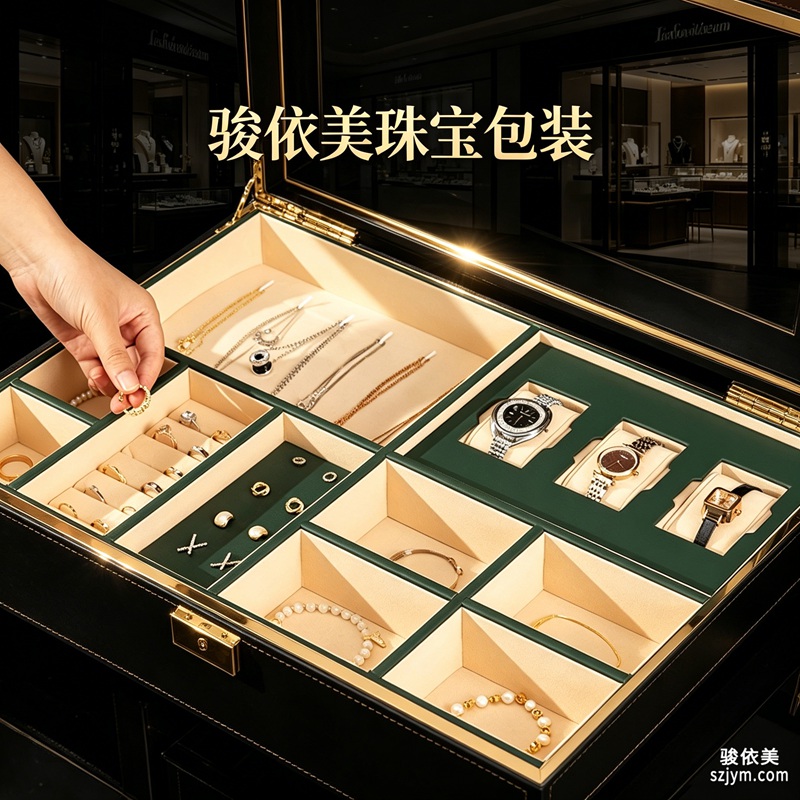 Slot depth is just as particular. Too shallow and the ring cannot stand; too deep and it sinks in, forcing the customer to lean in to see the face. The working rule: the shank should be about one third exposed when seated — visible at a glance, and one finger-pinch away from being picked up. Fancy-cut and large-tablet rings belong on velvet seats with side openings, so the face edge never buries itself in the nap or leaves a permanent dent.
The velvet color decides whether the ring "floats" or "sinks." Dark velvet flatters metal: white and yellow gold read brighter on black or charcoal. Light velvet flatters colored stones: rubies, sapphires, and emeralds gain water and clarity on cream or camel. If a case runs mostly gold, lay a dark velvet base; if it runs mostly color, light it up — two velvet zones side by side, each doing its job.
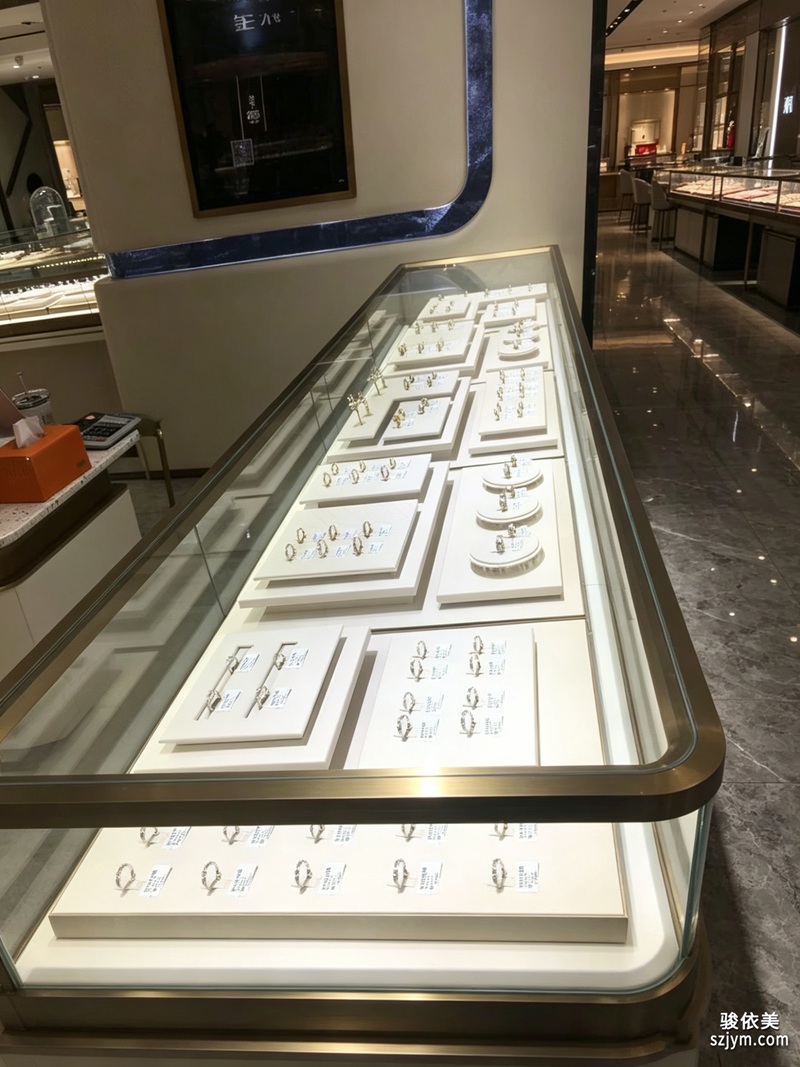 High-volume plain-band counters should add two props: ring rolls and ring pillows. Rolls store stock neatly, coil after coil without losing shape, and show well at a glance; pillows display heroes — a gentle convex surface lifts the ring so both shank and face are in view. Both come by ring size; the counter opens tidy, stock sorted, and customers read that as trustworthy.
Each style also has its own stance. Plain bands line up on a slight slant, one neat row after another — order is itself a form of luxury. Diamonds face the light: point the table toward the source, and the fire speaks on its own. Fancy and floral rings need breathing room, so neighboring holders never crowd their outline. The bridal corner is special — customers like to see the pair together, and a matched couple standing on one holder closes faster than two separated singles.
Counter practice matters too. A standing ring must also be fed by light. Flat top light is the enemy: every facet reflects separately and the fire breaks into pieces. Side-back light is the old friend — it sketches a bright line along the crown edge, and the center stone's fire stands up facet by facet. Give the ring zone one adjustable spot instead of an even wash; hold 3500-4500K and the metals keep their tone.
High-try-on rings go on movable seats at the front, where customers can test and return them; the back row is fixed display. Leave one ring-width of space between seats, so pulling one ring does not knock over its neighbor with a sleeve. Brush the velvet when tidying — dents and loose nap make goods look old.
The try-on row needs extra care. Rings come off and go back at different speeds, and the seats must survive “casual putting back.” Choose front-row holders with wide mouths and heavy bases, so a returned ring lands true; keep a velvet pad on the counter so a temporarily parked ring never scratches. Straighten tilted seats at closing and the row is crisp again next morning.
Spacing worth repeating: one ring-width is the floor, not the target. Fancy cuts and pavé “take space” — widen to two ring-widths so a sleeve never knocks the neighbor; big-tablet, long-arm styles get their own “lift-out” seat, so a customer wanting to study the cut gets it handed over without being fished out of the tray. Props serve people; an inch more space, a notch smoother experience.
Velvet care decides how long a stance can last. Rings come and go all day, leaving fingerprints, foundation, and dust; after closing, brush the nap softly with the grain, then spot-clean with a velvet cleaner, and the row looks puffed and new by morning. Wash cushion covers on rotation — a shine-worn surface ages even the best rings. Once a season, take the stands apart and deep-clean; for nap beyond revival, re-wrap in the same tone. The cost is small, yet the counter looks reopened. A spotless prop is what keeps a stance standing.
When a ring stands correctly — visible, reachable, comfortable to try — the sale follows naturally. The holder height, the slot depth, and the velvet color: get these three right, and every ring finds its own posture in the case.
This is original content. Copyright belongs to Shenzhen Junyimei.
Junyimei — present every jewel and timepiece at its best.戒指是珠宝里最"挑道具"的品类。在柜台前见过太多把戒指平放的陈列:戒面整个贴平,客人要么弯腰、要么把戒指端起来,才能看清台上的那点刻面和主石。戒指"站"起来,才谈得上展示。 立起来的关键是戒指托。一支合格的托,要把戒圈稳稳支起,让戒面朝前、朝斜上方,客人平视就能看全整只戒指。DJ1 这类戒指展示道具,托位的高度和倾斜角度都按戒圈尺寸走:圈口大的配高托、托面宽的款,圈口细的用窄托,戒圈整个落座才不晃。 托和圈的关系要抠尺寸。托太宽,戒指套上去松,客人拿取时一滑就脱手;托太窄,戒指卡进去拔不出来,半天取不下来,试戴的兴致就没了。合适的托位,开口大约留一指宽,戒指放进取下都顺,还不会在绒面上刮出印子。
凹槽的深度同样有讲究。槽太浅,戒指立不住,槽太深,戒指"陷"进去,客人得凑近了才看得见戒面。经验值是戒指放进去后,戒圈露出三分之一左右的高度:一眼能看全,手指一捏就能拿。异形戒、大台面戒指要用带侧开槽的绒面托,戒面边缘不陷进绒里,也不会压出难看的槽印。
绒面的颜色,决定戒指是"浮"出来还是"沉"下去。深色绒衬金饰:白色、金色货品放在黑绒、深灰绒上,金属色被衬得发亮;浅色绒衬彩宝:红宝、蓝宝、祖母绿放在米色、浅驼绒上,宝石色显水、显透。同一批货里金饰多,就选深绒打底,彩宝多,选浅绒提亮,两种绒面分区放,互不干扰。
量大的素圈柜还有两件道具值得配:戒指卷和戒指枕。戒指卷适合收纳备货,一圈圈缠着不走样,翻找时也看得清;戒指枕适合陈列主推,枕面微微鼓起,戒指架在凸面上,戒圈和戒面同时入眼。卷和枕都按戒圈号分码,收的几号、陈列几号,柜台一打开整整齐齐,客人看着就放心。
分品类还要讲究"站姿"。素圈戒适合并排斜放,一排过去像列队,整齐感就是高级感;钻戒要正对光源放,让主石迎着光的方向,台面角度对好,火彩自己会说话;异形戒、花戒要给足台面,别让旁边的戒托挤着它的轮廓。婚戒区更特殊,客人习惯"成套看",把对戒并排立在同一个托上,比分开摆更容易促成下单。
柜台实操也有门道。戒指“站”对了,灯光还要“喂”得上。戒面最怕平顶光,平光打下来,刻面各自反光,火彩碎成一团;侧逆光才是老朋友——光从斜后方来,戒面边缘勾勒出一道亮线,主石的火彩顺着切面一根根立起来。柜台里给戒指区单独配一盏可调角度的射灯,比整片平均光管用得多;色温维持在三千五到四千五K之间,金属色最稳。
试戴频率高的戒指放在前排可挪动的托位,客人拿出来试、放回去自己归位;后排做固定陈列。托位之间的间距,留一个戒圈的宽度,避免客人取这一枚时,袖子一带把旁边那枚也带倒。整理柜台时顺手把绒面刷一遍,压痕、浮毛都会让货显得旧。
试戴位更要细心。客人把戒指从托上取下来,试戴完放回原处,动作有快有慢,托位得扛得住“乱放”。前排试戴托选开口大、底座重的款,放回去顺手就落位;柜台上再垫一块绒布软垫,戒指临时搁着也不会刮。被客人碰歪的托位,闭店整理时拨回原角度,第二天又是齐整的一排。
托位之间的间距,留一个戒圈的宽度是下限不是上限。异形戒、镶钻戒这类“占地”的款式,间距放宽到两个戒圈,取的时候袖子一带也不会带倒旁边一枚;主石大、戒臂长的款再单独留出“出柜位”,客人想近距离看切工,店员端起来就走,不用在托盘里苦苦夹出来。道具是为人服务的,间距松一寸,体验就顺一截。
绒面的保养,决定这套"站姿"能立多久。戒指天天放取,绒上会积下指印、粉底和灰尘,闭店后拿软刷顺毛刷一遍,再用绒面清洁剂局部擦洗,第二天又蓬松如新。托布和托垫也要换着洗,脏得发亮的绒面配再好的戒指也显旧。逢换季,把戒指托集体拆洗一次,绒面实在洗不回来的,换一块同色的绒布重包,成本不高,柜台却像重新开过张。道具干干净净,戒指的"站姿"才站得住。
戒指的"站姿"站对了,客人看得见、拿得到、试得顺,成交就是水到渠成的事。托的高度、槽的深浅、绒的颜色,这三样配齐,一枚戒指在柜台前就有了自己的样子。
本文为原创内容,版权归深圳骏依美所有。如需转载请注明出处。
骏依美——让每一件珠宝与腕表,都被更好地呈现。
Slot depth is just as particular. Too shallow and the ring cannot stand; too deep and it sinks in, forcing the customer to lean in to see the face. The working rule: the shank should be about one third exposed when seated — visible at a glance, and one finger-pinch away from being picked up. Fancy-cut and large-tablet rings belong on velvet seats with side openings, so the face edge never buries itself in the nap or leaves a permanent dent.
The velvet color decides whether the ring "floats" or "sinks." Dark velvet flatters metal: white and yellow gold read brighter on black or charcoal. Light velvet flatters colored stones: rubies, sapphires, and emeralds gain water and clarity on cream or camel. If a case runs mostly gold, lay a dark velvet base; if it runs mostly color, light it up — two velvet zones side by side, each doing its job.
High-volume plain-band counters should add two props: ring rolls and ring pillows. Rolls store stock neatly, coil after coil without losing shape, and show well at a glance; pillows display heroes — a gentle convex surface lifts the ring so both shank and face are in view. Both come by ring size; the counter opens tidy, stock sorted, and customers read that as trustworthy.
Each style also has its own stance. Plain bands line up on a slight slant, one neat row after another — order is itself a form of luxury. Diamonds face the light: point the table toward the source, and the fire speaks on its own. Fancy and floral rings need breathing room, so neighboring holders never crowd their outline. The bridal corner is special — customers like to see the pair together, and a matched couple standing on one holder closes faster than two separated singles.
Counter practice matters too. A standing ring must also be fed by light. Flat top light is the enemy: every facet reflects separately and the fire breaks into pieces. Side-back light is the old friend — it sketches a bright line along the crown edge, and the center stone's fire stands up facet by facet. Give the ring zone one adjustable spot instead of an even wash; hold 3500-4500K and the metals keep their tone.
High-try-on rings go on movable seats at the front, where customers can test and return them; the back row is fixed display. Leave one ring-width of space between seats, so pulling one ring does not knock over its neighbor with a sleeve. Brush the velvet when tidying — dents and loose nap make goods look old.
The try-on row needs extra care. Rings come off and go back at different speeds, and the seats must survive “casual putting back.” Choose front-row holders with wide mouths and heavy bases, so a returned ring lands true; keep a velvet pad on the counter so a temporarily parked ring never scratches. Straighten tilted seats at closing and the row is crisp again next morning.
Spacing worth repeating: one ring-width is the floor, not the target. Fancy cuts and pavé “take space” — widen to two ring-widths so a sleeve never knocks the neighbor; big-tablet, long-arm styles get their own “lift-out” seat, so a customer wanting to study the cut gets it handed over without being fished out of the tray. Props serve people; an inch more space, a notch smoother experience.
Velvet care decides how long a stance can last. Rings come and go all day, leaving fingerprints, foundation, and dust; after closing, brush the nap softly with the grain, then spot-clean with a velvet cleaner, and the row looks puffed and new by morning. Wash cushion covers on rotation — a shine-worn surface ages even the best rings. Once a season, take the stands apart and deep-clean; for nap beyond revival, re-wrap in the same tone. The cost is small, yet the counter looks reopened. A spotless prop is what keeps a stance standing.
When a ring stands correctly — visible, reachable, comfortable to try — the sale follows naturally. The holder height, the slot depth, and the velvet color: get these three right, and every ring finds its own posture in the case.
This is original content. Copyright belongs to Shenzhen Junyimei.Junyimei — present every jewel and timepiece at its best.戒指是珠宝里最"挑道具"的品类。在柜台前见过太多把戒指平放的陈列:戒面整个贴平,客人要么弯腰、要么把戒指端起来,才能看清台上的那点刻面和主石。戒指"站"起来,才谈得上展示。 立起来的关键是戒指托。一支合格的托,要把戒圈稳稳支起,让戒面朝前、朝斜上方,客人平视就能看全整只戒指。DJ1 这类戒指展示道具,托位的高度和倾斜角度都按戒圈尺寸走:圈口大的配高托、托面宽的款,圈口细的用窄托,戒圈整个落座才不晃。 托和圈的关系要抠尺寸。托太宽,戒指套上去松,客人拿取时一滑就脱手;托太窄,戒指卡进去拔不出来,半天取不下来,试戴的兴致就没了。合适的托位,开口大约留一指宽,戒指放进取下都顺,还不会在绒面上刮出印子。
凹槽的深度同样有讲究。槽太浅,戒指立不住,槽太深,戒指"陷"进去,客人得凑近了才看得见戒面。经验值是戒指放进去后,戒圈露出三分之一左右的高度:一眼能看全,手指一捏就能拿。异形戒、大台面戒指要用带侧开槽的绒面托,戒面边缘不陷进绒里,也不会压出难看的槽印。
绒面的颜色,决定戒指是"浮"出来还是"沉"下去。深色绒衬金饰:白色、金色货品放在黑绒、深灰绒上,金属色被衬得发亮;浅色绒衬彩宝:红宝、蓝宝、祖母绿放在米色、浅驼绒上,宝石色显水、显透。同一批货里金饰多,就选深绒打底,彩宝多,选浅绒提亮,两种绒面分区放,互不干扰。
量大的素圈柜还有两件道具值得配:戒指卷和戒指枕。戒指卷适合收纳备货,一圈圈缠着不走样,翻找时也看得清;戒指枕适合陈列主推,枕面微微鼓起,戒指架在凸面上,戒圈和戒面同时入眼。卷和枕都按戒圈号分码,收的几号、陈列几号,柜台一打开整整齐齐,客人看着就放心。
分品类还要讲究"站姿"。素圈戒适合并排斜放,一排过去像列队,整齐感就是高级感;钻戒要正对光源放,让主石迎着光的方向,台面角度对好,火彩自己会说话;异形戒、花戒要给足台面,别让旁边的戒托挤着它的轮廓。婚戒区更特殊,客人习惯"成套看",把对戒并排立在同一个托上,比分开摆更容易促成下单。
柜台实操也有门道。戒指“站”对了,灯光还要“喂”得上。戒面最怕平顶光,平光打下来,刻面各自反光,火彩碎成一团;侧逆光才是老朋友——光从斜后方来,戒面边缘勾勒出一道亮线,主石的火彩顺着切面一根根立起来。柜台里给戒指区单独配一盏可调角度的射灯,比整片平均光管用得多;色温维持在三千五到四千五K之间,金属色最稳。
试戴频率高的戒指放在前排可挪动的托位,客人拿出来试、放回去自己归位;后排做固定陈列。托位之间的间距,留一个戒圈的宽度,避免客人取这一枚时,袖子一带把旁边那枚也带倒。整理柜台时顺手把绒面刷一遍,压痕、浮毛都会让货显得旧。
试戴位更要细心。客人把戒指从托上取下来,试戴完放回原处,动作有快有慢,托位得扛得住“乱放”。前排试戴托选开口大、底座重的款,放回去顺手就落位;柜台上再垫一块绒布软垫,戒指临时搁着也不会刮。被客人碰歪的托位,闭店整理时拨回原角度,第二天又是齐整的一排。
托位之间的间距,留一个戒圈的宽度是下限不是上限。异形戒、镶钻戒这类“占地”的款式,间距放宽到两个戒圈,取的时候袖子一带也不会带倒旁边一枚;主石大、戒臂长的款再单独留出“出柜位”,客人想近距离看切工,店员端起来就走,不用在托盘里苦苦夹出来。道具是为人服务的,间距松一寸,体验就顺一截。
绒面的保养,决定这套"站姿"能立多久。戒指天天放取,绒上会积下指印、粉底和灰尘,闭店后拿软刷顺毛刷一遍,再用绒面清洁剂局部擦洗,第二天又蓬松如新。托布和托垫也要换着洗,脏得发亮的绒面配再好的戒指也显旧。逢换季,把戒指托集体拆洗一次,绒面实在洗不回来的,换一块同色的绒布重包,成本不高,柜台却像重新开过张。道具干干净净,戒指的"站姿"才站得住。
戒指的"站姿"站对了,客人看得见、拿得到、试得顺,成交就是水到渠成的事。托的高度、槽的深浅、绒的颜色,这三样配齐,一枚戒指在柜台前就有了自己的样子。
本文为原创内容,版权归深圳骏依美所有。如需转载请注明出处。骏依美——让每一件珠宝与腕表,都被更好地呈现。