Setting up a jewelry livestream: stand height, angle, and lighting珠宝直播间怎么布台:展架高度、角度与灯光
Selling jewelry on a livestream and selling it at a counter are two different games. At the counter, people look at the goods, so the stand is set at eye level. On a livestream, the camera looks at the goods, so the stand has to be set for the lens. A stand that reads instantly in a store can be buried at the edge of the frame all show long.
Start with the camera position and height. The usual phone setup puts the stand beside the host, with the camera fifteen degrees above the host's eye line looking down, so the frame holds both the host's face and the props in hand. At that point the working height of the stand is not the usual counter height of about ninety centimeters; it is the height where a seated host can bring a display position straight to the lens without leaning. For most stands, a first tier eighty-five to a hundred-ten centimeters off the floor works best — reachable in one move, close enough for one tap of the screen to bring it into focus.
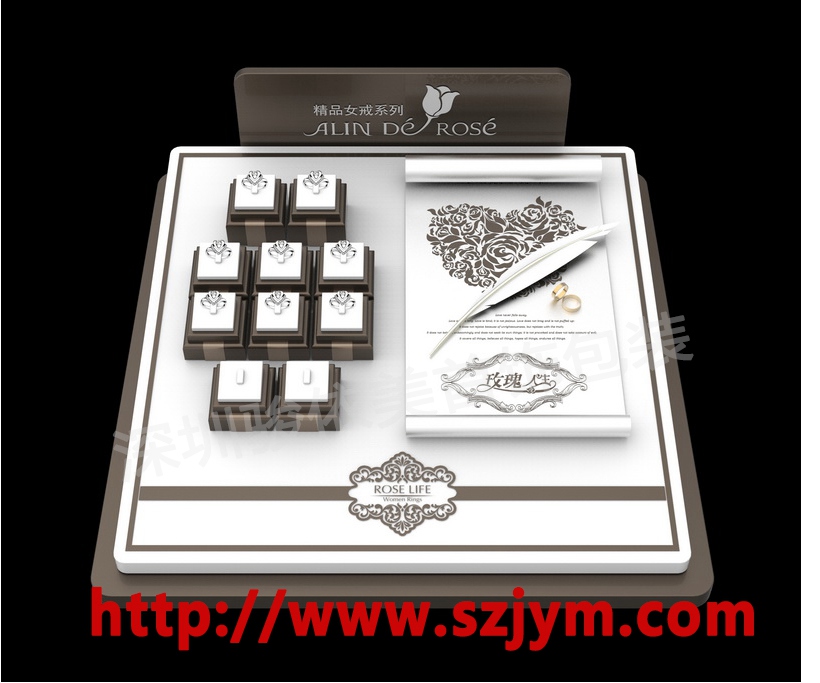
Height settled, angle comes next. Upright display is for human eyes; a lens has perspective, and a display surface that is too low and too flat gets squashed or cropped in the frame. One rule we hand hosts: tilt the display surface ten to fifteen degrees toward the lens, so ring faces and gem tables "look up" a little and the viewer sees the whole piece without tilting their head. On a stand like the TP02, the display tier is built with a natural slope, so a ring or pendant lands fully in the front view with no fiddling.
 Beyond angle comes light. The most common livestream failure is glare: a spotlight hits the metal, one white bar cuts across the frame, and precious metal turns into dead white. The fix is not to shoot with a single hard lamp. Put the key light forty-five degrees above and beside the phone, and add a soft fill in front — then the metal reads as an even highlight and both facets and ring faces light up. Overhead light is best avoided: it drops the shadow of an earring or ring straight onto the goods, and the audience sees a moving shadow instead of the piece.
Color temperature should match the counter too. Jewelry counters usually run warm white near 4000K; if the livestream is lit at 5500K, everything goes cool — gold looks pale and jade looks gray. White-balance once before going live, using the velvet of the tray as a reference. If the velvet color holds, the goods' color is close enough.
 Lighting has an order too: light the background first, then the goods. With the background lit, the counter's reflection points drop and the goods read clean; with the background too dark, metal pieces bleed into the black. The worst case is the lens facing the source — the whole frame washes out. Fix it with a diffusion cloth between the lens and the light: the source stays out of the frame and the picture returns to normal. A diffuser and a small flag cost next to nothing and save buying a whole new light.
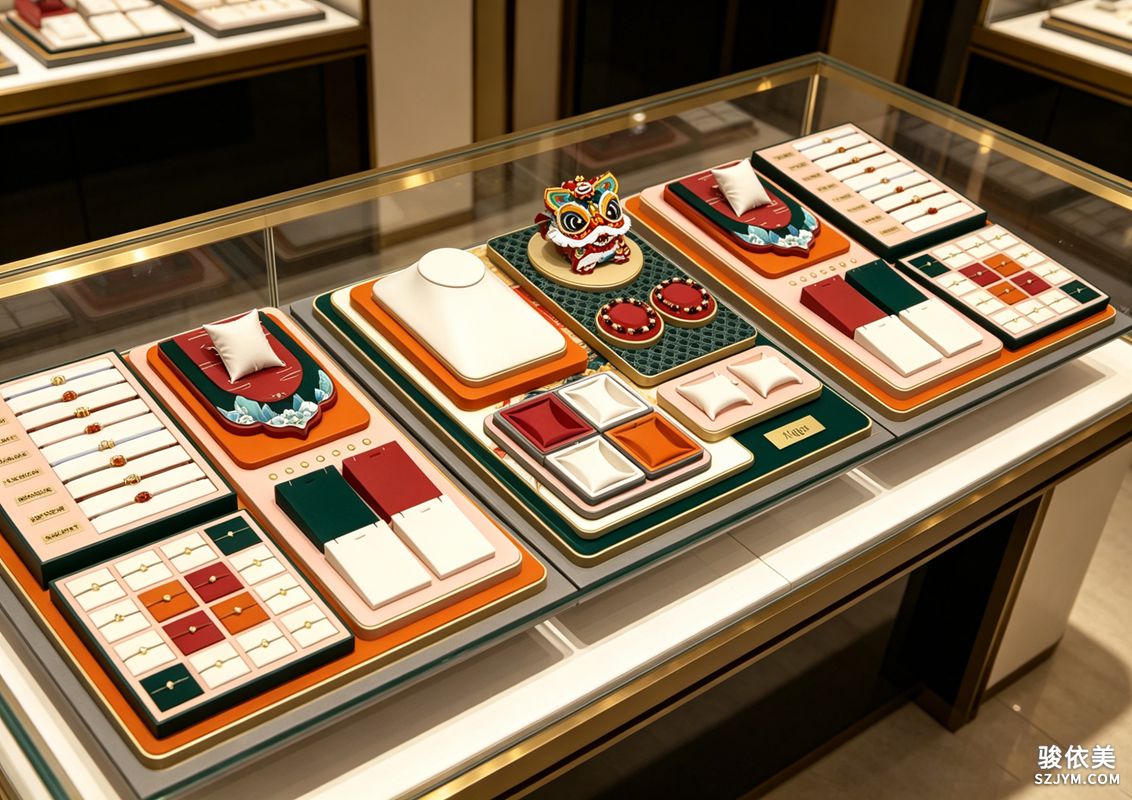
Now the supporting cast. A high-end stand like the DJ6-1 works best as the anchor: one tier for the host, one for the product, and a third reserved for the item about to be listed. Do not fill the whole table. Stands fight each other in frame, the viewer's attention gets eaten by props, and the goods disappear. There is a rule of thumb we share: keep no more than three props in the visible frame, and keep the rest in a spare tray beside the host, rotating them in and out at a steady rhythm.
The last piece is flow. A livestream is not a static display case — the host picks up, puts down, and turns constantly. Put the most-used display position on the dominant-hand side, the turntable in the middle, and the low-frequency pieces at the far end. A turntable saves half the reaching: one turn brings the next item into view, the commentary never pauses, and dwell time climbs on its own.
What sits on the table matters as much as how. Livestream goods should rotate, not pile up. Keep one hero piece per segment in the frame and the rest in the reserve tray, swapping after each story. Too full, and the frame is all boxes and trays — nobody knows where to look; kept lean, one piece one story, dwell and interaction climb. We tell hosts to sort the whole session's pieces beforehand and move in ten-minute batches; a steady rhythm keeps viewers around.
Leave a “backstage” beside the live table. Reserve trays, spare velvet, and polishing cloths sit on the side the camera never sees, reachable with a turn of the head. Closing matters too: after the show, put every piece into a lined stash box before turning off the lights — dust and lamp heat are enemies, and long direct exposure speeds oxidation on chains and shanks. Set the table well and you can strike it well; the next live is up in ten minutes.
Setting the table is really setting a rhythm. A two-to-three-hour stream follows a curve: the first fifteen minutes are warm-up, the middle sags, and a late wave returns before sign-off. Props should move with that curve — heroes at the host's fingertips during warm-up, talking pieces mid-show, high-ticket bestsellers back at center stage near the end. After sign-off, scrub a few frames of the replay: which angle made the goods look best. Note it down and reuse it. Stage-setting is not a one-shot act but a playbook you tune every single day.
At the end of the day, setting up a jewelry livestream is three things: the stand height that flatters the lens, the angle that makes the goods lift their heads, and the light that keeps colors honest. Get those three right, and the host's words finally have a stage.
This is original content. Copyright belongs to Shenzhen Junyimei.
Junyimei — present every jewel and timepiece at its best.直播卖珠宝和柜台卖珠宝,是两套完全不同的逻辑。柜台里人看货,展架高度按人的视线调;直播间里"镜头"看货,展架高度得按镜头调。同一个架子,线下一眼就能看到的事,直播里可能整场都"埋"在画面边缘。 先定机位和镜头高度。手机直播的常规摆法,是把展架放在主播手边,机位在主播正面偏上十五度俯角,画面里同时收进主播的脸和手上的道具。这时候展架的工作高度,不是柜台常用的九十厘米左右,而是要让主播坐着也能把展示位送到镜头前:大多数展架的第一层格位,离地八十五到一百一十厘米最顺手,手一抬就能取,镜头一近就能拍清。 高度定完是角度。直立摆放是给人眼看的,直播镜头有透视,太低太平的展示面在画面里会被压扁、切边。给主播的一条经验:展示面朝镜头方向前倾十到十五度,戒面、宝石面都微微"抬头",观众不用歪头就能看到全貌。像 TP02 这种直播展示架,展位本身带斜面,放上戒指或吊坠,正面镜头刚好收进整个台面,主播不用反复调角度。
角度之外是光线。直播间最常见的翻车是反光:射灯打在金属件上,画面里一道白杠,贵金属能拍成一片死白。解决的办法是别用单灯直打,主光源放在手机同侧斜上方四十五度,前面再补一盏柔光,金属反光就变成均匀的高光,戒面、刻面也都亮得起来。顶光尽量少用——顶光会把耳饰、戒指的投影砸到货品上,观众看到的就是一团影子在动。
色温也要跟着柜台统一。珠宝柜台常用四千K左右的暖白光,直播间如果用了五千五的冷光,货品颜色会整体偏冷,金饰显白、翡翠显灰。开播前先对一次白平衡,拿托盘里的绒布做参照:绒布颜色不跑偏,货的颜色就八九不离十。
布光的顺序也有讲究,先打背景再打货。背景亮起来,柜台的反光点就少了,货品在画面里显得干净;背景过暗,金属件容易跟黑背景糊成一片。镜头正对光源是最忌讳的——逆光会把整个画面冲白,这时候在镜头前挡一块柔光布,把光源隔在布外,画面立刻回到正常。直播间里这两样小道具(遮光板和柔光布)加起来花不了多少钱,效果顶得上换一盏灯。
再说展架本身的搭配。DJ6-1 这类高定展示架适合做主位:一个主播位、一个产品位、第三个位置留给随时要"上链接"的爆款。别把整张桌子摆满,镜头里架子跟架子打架,观众注意力被道具吃掉,货反而看不见。直播间布台有个经验值:镜头视野里的道具尽量不超过三件,其余的收在主播手边的备用盘里,按节奏一件件换。
最后是动线。直播不是一个静态展柜,主播要拿、要放、要转。布台时把高频拿取的展示位放在惯用手一侧,转盘放中间,低频的摆件放远端。带转盘的架子能省一半动作——转一下就到下一个品,讲解不断,停留时长自然上去。
台上摆多少货也有讲究。直播间的货要“轮”起来,不能“摊”在那里。每个时段主推的品只摆一件在镜头里,其余按顺序排在备用盘里,讲完一个换一个。摆得太满,镜头里全是盒子、托盘,观众不知道看什么;摆得精,一件货一个故事,停留和互动都跟得上。我们常建议主播把整场要讲的货提前排好序,按十分钟一批的节奏过,节奏稳了,观众就不走。
直播台旁边要留一块“后台”。补货盘、备用绒布、擦货布都放在镜头拍不到的一侧,主播转头就能拿到。下播收尾更有讲究:先把货逐件收进带内衬的收纳盒,再关灯——积灰和灯光炙烤是货品的大敌,直播间灯光长时间直射,戒圈、链条表面会加速氧化。布台布得好,收得也顺,第二天开播十分钟就位。
布台布的其实是"节奏"。一场直播两三个小时,观众的注意力是曲线:开播十五分钟是热场,中场最容易掉人,下播前又有一波回流。台面道具也要跟着这个曲线动——主推款放在主播手边最顺手的位置,中场换上话题款,尾声把高客单的爆款再摆回C位。下播后用回放核对几帧画面,看哪个机位、哪个角度货最上镜,记下来,下次直接复用。布台不是一次性的动作,而是一套每天都能微调的打法。
说到底,直播间布台就三件事:架子的高度让镜头舒服,角度让货"抬头",灯光让颜色不骗人。这三样调顺了,主播的嘴皮子才有用武之地。
本文为原创内容,版权归深圳骏依美所有。如需转载请注明出处。
骏依美——让每一件珠宝与腕表,都被更好地呈现。
Beyond angle comes light. The most common livestream failure is glare: a spotlight hits the metal, one white bar cuts across the frame, and precious metal turns into dead white. The fix is not to shoot with a single hard lamp. Put the key light forty-five degrees above and beside the phone, and add a soft fill in front — then the metal reads as an even highlight and both facets and ring faces light up. Overhead light is best avoided: it drops the shadow of an earring or ring straight onto the goods, and the audience sees a moving shadow instead of the piece.
Color temperature should match the counter too. Jewelry counters usually run warm white near 4000K; if the livestream is lit at 5500K, everything goes cool — gold looks pale and jade looks gray. White-balance once before going live, using the velvet of the tray as a reference. If the velvet color holds, the goods' color is close enough.
Lighting has an order too: light the background first, then the goods. With the background lit, the counter's reflection points drop and the goods read clean; with the background too dark, metal pieces bleed into the black. The worst case is the lens facing the source — the whole frame washes out. Fix it with a diffusion cloth between the lens and the light: the source stays out of the frame and the picture returns to normal. A diffuser and a small flag cost next to nothing and save buying a whole new light.
Now the supporting cast. A high-end stand like the DJ6-1 works best as the anchor: one tier for the host, one for the product, and a third reserved for the item about to be listed. Do not fill the whole table. Stands fight each other in frame, the viewer's attention gets eaten by props, and the goods disappear. There is a rule of thumb we share: keep no more than three props in the visible frame, and keep the rest in a spare tray beside the host, rotating them in and out at a steady rhythm.
The last piece is flow. A livestream is not a static display case — the host picks up, puts down, and turns constantly. Put the most-used display position on the dominant-hand side, the turntable in the middle, and the low-frequency pieces at the far end. A turntable saves half the reaching: one turn brings the next item into view, the commentary never pauses, and dwell time climbs on its own.
What sits on the table matters as much as how. Livestream goods should rotate, not pile up. Keep one hero piece per segment in the frame and the rest in the reserve tray, swapping after each story. Too full, and the frame is all boxes and trays — nobody knows where to look; kept lean, one piece one story, dwell and interaction climb. We tell hosts to sort the whole session's pieces beforehand and move in ten-minute batches; a steady rhythm keeps viewers around.
Leave a “backstage” beside the live table. Reserve trays, spare velvet, and polishing cloths sit on the side the camera never sees, reachable with a turn of the head. Closing matters too: after the show, put every piece into a lined stash box before turning off the lights — dust and lamp heat are enemies, and long direct exposure speeds oxidation on chains and shanks. Set the table well and you can strike it well; the next live is up in ten minutes.
Setting the table is really setting a rhythm. A two-to-three-hour stream follows a curve: the first fifteen minutes are warm-up, the middle sags, and a late wave returns before sign-off. Props should move with that curve — heroes at the host's fingertips during warm-up, talking pieces mid-show, high-ticket bestsellers back at center stage near the end. After sign-off, scrub a few frames of the replay: which angle made the goods look best. Note it down and reuse it. Stage-setting is not a one-shot act but a playbook you tune every single day.
At the end of the day, setting up a jewelry livestream is three things: the stand height that flatters the lens, the angle that makes the goods lift their heads, and the light that keeps colors honest. Get those three right, and the host's words finally have a stage.
This is original content. Copyright belongs to Shenzhen Junyimei.Junyimei — present every jewel and timepiece at its best.直播卖珠宝和柜台卖珠宝,是两套完全不同的逻辑。柜台里人看货,展架高度按人的视线调;直播间里"镜头"看货,展架高度得按镜头调。同一个架子,线下一眼就能看到的事,直播里可能整场都"埋"在画面边缘。 先定机位和镜头高度。手机直播的常规摆法,是把展架放在主播手边,机位在主播正面偏上十五度俯角,画面里同时收进主播的脸和手上的道具。这时候展架的工作高度,不是柜台常用的九十厘米左右,而是要让主播坐着也能把展示位送到镜头前:大多数展架的第一层格位,离地八十五到一百一十厘米最顺手,手一抬就能取,镜头一近就能拍清。 高度定完是角度。直立摆放是给人眼看的,直播镜头有透视,太低太平的展示面在画面里会被压扁、切边。给主播的一条经验:展示面朝镜头方向前倾十到十五度,戒面、宝石面都微微"抬头",观众不用歪头就能看到全貌。像 TP02 这种直播展示架,展位本身带斜面,放上戒指或吊坠,正面镜头刚好收进整个台面,主播不用反复调角度。
角度之外是光线。直播间最常见的翻车是反光:射灯打在金属件上,画面里一道白杠,贵金属能拍成一片死白。解决的办法是别用单灯直打,主光源放在手机同侧斜上方四十五度,前面再补一盏柔光,金属反光就变成均匀的高光,戒面、刻面也都亮得起来。顶光尽量少用——顶光会把耳饰、戒指的投影砸到货品上,观众看到的就是一团影子在动。
色温也要跟着柜台统一。珠宝柜台常用四千K左右的暖白光,直播间如果用了五千五的冷光,货品颜色会整体偏冷,金饰显白、翡翠显灰。开播前先对一次白平衡,拿托盘里的绒布做参照:绒布颜色不跑偏,货的颜色就八九不离十。
布光的顺序也有讲究,先打背景再打货。背景亮起来,柜台的反光点就少了,货品在画面里显得干净;背景过暗,金属件容易跟黑背景糊成一片。镜头正对光源是最忌讳的——逆光会把整个画面冲白,这时候在镜头前挡一块柔光布,把光源隔在布外,画面立刻回到正常。直播间里这两样小道具(遮光板和柔光布)加起来花不了多少钱,效果顶得上换一盏灯。
再说展架本身的搭配。DJ6-1 这类高定展示架适合做主位:一个主播位、一个产品位、第三个位置留给随时要"上链接"的爆款。别把整张桌子摆满,镜头里架子跟架子打架,观众注意力被道具吃掉,货反而看不见。直播间布台有个经验值:镜头视野里的道具尽量不超过三件,其余的收在主播手边的备用盘里,按节奏一件件换。
最后是动线。直播不是一个静态展柜,主播要拿、要放、要转。布台时把高频拿取的展示位放在惯用手一侧,转盘放中间,低频的摆件放远端。带转盘的架子能省一半动作——转一下就到下一个品,讲解不断,停留时长自然上去。
台上摆多少货也有讲究。直播间的货要“轮”起来,不能“摊”在那里。每个时段主推的品只摆一件在镜头里,其余按顺序排在备用盘里,讲完一个换一个。摆得太满,镜头里全是盒子、托盘,观众不知道看什么;摆得精,一件货一个故事,停留和互动都跟得上。我们常建议主播把整场要讲的货提前排好序,按十分钟一批的节奏过,节奏稳了,观众就不走。
直播台旁边要留一块“后台”。补货盘、备用绒布、擦货布都放在镜头拍不到的一侧,主播转头就能拿到。下播收尾更有讲究:先把货逐件收进带内衬的收纳盒,再关灯——积灰和灯光炙烤是货品的大敌,直播间灯光长时间直射,戒圈、链条表面会加速氧化。布台布得好,收得也顺,第二天开播十分钟就位。
布台布的其实是"节奏"。一场直播两三个小时,观众的注意力是曲线:开播十五分钟是热场,中场最容易掉人,下播前又有一波回流。台面道具也要跟着这个曲线动——主推款放在主播手边最顺手的位置,中场换上话题款,尾声把高客单的爆款再摆回C位。下播后用回放核对几帧画面,看哪个机位、哪个角度货最上镜,记下来,下次直接复用。布台不是一次性的动作,而是一套每天都能微调的打法。
说到底,直播间布台就三件事:架子的高度让镜头舒服,角度让货"抬头",灯光让颜色不骗人。这三样调顺了,主播的嘴皮子才有用武之地。
本文为原创内容,版权归深圳骏依美所有。如需转载请注明出处。骏依美——让每一件珠宝与腕表,都被更好地呈现。