Tangle-Free Display: How to Hang Pendants and Chains Neatly吊坠挂绳老缠成一团,柜台里怎么挂才利落
Pendants and necklaces are the easiest group on any counter to drift into chaos. The customer tries one on, the cords tangle, the chain wraps around the display stand, and by the time the knot is undone the buying mood is gone too. In years of jewelry display work, the most common phrase I hear is still “can I see this one?” — and how tidily a pendant hangs decides whether the customer ever reaches out.
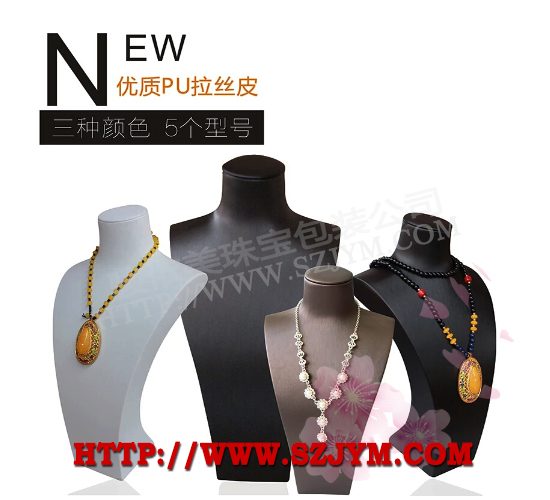
First, sort by form. Long-chain pendants want to hang; short chains and bracelets want to lie flat; cord pendants want to stand upright. Mix the three and you get the mess. Keep them separate and everything falls into place.
Long chains belong on bust stands. The bust gives the chain a natural drape, the pendant lands at collarbone level, and the customer sees “how it looks on me” instead of a knotted heap. That's the whole point of a bust stand — it sells a wearing fantasy, not a stand. Test heights often: if a longer chain slumps on the stand, swap to a shorter one instead of keeping one stand for everything.
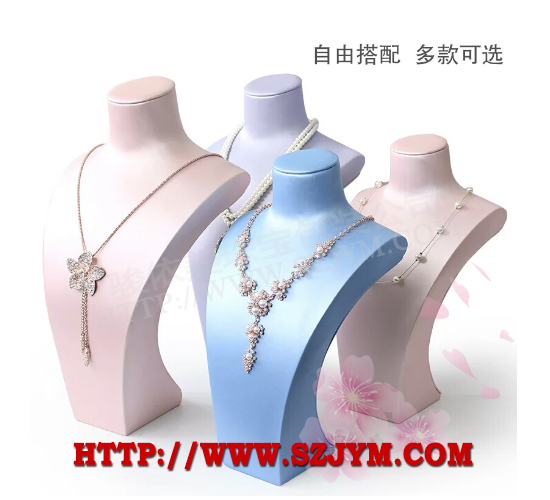
Short chains and bracelets lie flat — one neat row on a tray, with real spacing between pieces. Better to show fewer than to touch: adjacent chains are tomorrow's tangles. Cord pendants are a third case: pendant facing up, cord straightened and tucked into place, so the moment a customer picks it up it's already “ready to try on” — and quick to put back. Standing pendants upright also keeps the front of the piece facing the glass, visible to anyone walking past.
I learned this the hard way. In the early years I hung a dozen chains on one hook to save space. A customer pulled one and the whole clump slid down into a giant knot; I untangled it for nearly ten minutes while she walked over to the next counter. Since then: two or three pieces per hook, with a finger's width of clearance, reachable in one motion.
Three minutes of cord-straightening before closing matters just as much. Untangle what customers messed up during the day, straighten the cords, and the counter looks immaculate the next morning. Never underestimate those three minutes — the first thing a customer sees through the door is how you closed the night before.
Pendant cords are a small detail that shows real craft. Bust stands shape the pieces, trays keep the spacing, closing time straightens the cords — do these three and the counter looks tidy, the customer's hand moves freely, and try-on rates climb on their own.
吊坠和项链是柜台里最容易"越摆越乱"的一类货。客人试戴的时候,挂绳缠成一团,链子绕在演示架上,解半天解不开,本来想买的兴致也解没了。做珠宝陈列这些年,被客人问得最多的一句话反而是"这条我看看"——吊坠挂得利不利落,直接决定客人愿不愿意伸手。
先分清楚货的形态。长链吊坠要"挂",短链、手链要"躺",挂绳吊坠要"立"。三种形态各有各的摆法,混在一起才乱。
长链吊坠首选颈模架。颈模架把链子撑出自然弧度,坠子落在锁骨位置,客人一眼看到的是"戴在身上的效果",而不是一条绕成团的链子。这正是颈模架存在的意义——它卖的不是架子,是佩戴想象。高度上要勤试:链长不一样的款,挂上去兜不住就换更短的架,别一架子从头用到尾。
短链手链这类"躺"的货,放托盘里平铺一排,间距拉开,宁可少放几条也别挨着——挨着的链子就是明天的缠结。挂绳吊坠是另一种摆法:坠子朝上立起来,绳尾理直收进卡位,客人拿起就是"准备试戴"的状态,放回也快。竖着摆还有个好处,坠子的正面始终对着玻璃,客人路过就能看到款式。
翻过车才知道这些。早年间图省事,把十来条链子全挂在一个钩子上,客人一抽,整串散下来,缠成一大团,我在旁边解了快十分钟,客人已经去隔壁柜台了。从那以后,挂架只挂两三条,间距必须留出"一指头宽",顺手就能拿。
收市前花三分钟顺一遍绳也很重要。白天被翻乱的吊坠挂绳,晚上理直、顺时针绕一遍,第二天开门整个柜台干干净净。别小看这三分钟,客人进门第一眼看到的,就是昨天收市前的样子。
吊坠挂绳是个小细节,却最见功夫。架子撑出造型、托盘留出间距、收市理直挂绳,三步做齐,柜台看着利落,客人伸手也利落,试戴率自然就上去了。