How Wood and Velvet Meet in a Jewelry Tray实木珠宝托盘,木与绒怎么咬合
A solid wood jewelry tray is back in favor. Next to a panel of compressed board that thuds when you tap it, real timber feels warm to the touch and holds its own on a counter. The TP34 model uses a wood base with a deep-green velvet lining and divided compartments, so rings, pendants and necklaces each have a home.
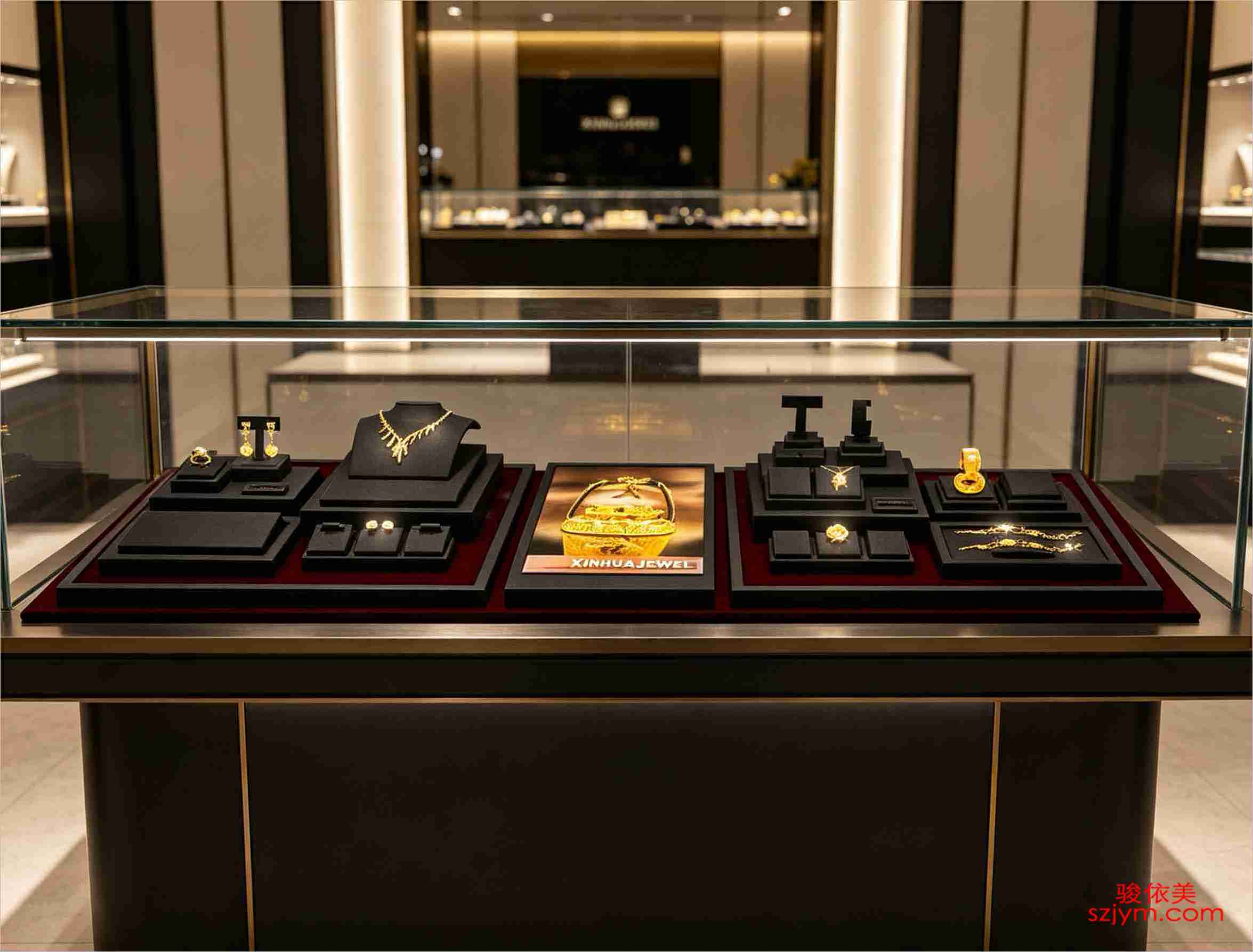 The wood choice matters. Too soft, like pine, and a single knock leaves a dent; shipments stacked in transit press marks into it. Too hard and the piece gets heavy, awkward to shift on the counter. The common move is a multilayer board of poplar or beech: it keeps the grain and resists warping. Thickness counts as well—too thin and it bows under load, too thick and it is dead weight, so 8 to 10 millimeters is the sweet spot for most trays. The surface needs edge banding. Skip it and damp creeps in through the cut ends; by the next plum-rain season the board lifts and the velvet bubbles with it. The band should match the wood tone, reading as one solid piece from across the room, not a strip of plastic; some shops use PVC edging that goes brittle in a cold northern winter and chips at a knock, so a thin real-wood band is the better call.
The velvet lining is applied, not grown. Green velvet brushed with adhesive on the back, pressed into each well. The corner is where it goes wrong—the well is a right angle and the cloth must fold in tight; fold it badly and a small triangular gap forms, the ring rattles. Old hands wet the velvet lightly to set it, then press while it is half-dry and still soft, so it beds down as it cures. The glue should be low-odor; otherwise the tray sits on the counter giving off fumes for days and the customer wrinkles a nose on approach. The pile has its own weight; too thin and the base color shows through under pressure, too thick and the corners bunch, so a mid weight holds the deep green best.
The wood choice matters. Too soft, like pine, and a single knock leaves a dent; shipments stacked in transit press marks into it. Too hard and the piece gets heavy, awkward to shift on the counter. The common move is a multilayer board of poplar or beech: it keeps the grain and resists warping. Thickness counts as well—too thin and it bows under load, too thick and it is dead weight, so 8 to 10 millimeters is the sweet spot for most trays. The surface needs edge banding. Skip it and damp creeps in through the cut ends; by the next plum-rain season the board lifts and the velvet bubbles with it. The band should match the wood tone, reading as one solid piece from across the room, not a strip of plastic; some shops use PVC edging that goes brittle in a cold northern winter and chips at a knock, so a thin real-wood band is the better call.
The velvet lining is applied, not grown. Green velvet brushed with adhesive on the back, pressed into each well. The corner is where it goes wrong—the well is a right angle and the cloth must fold in tight; fold it badly and a small triangular gap forms, the ring rattles. Old hands wet the velvet lightly to set it, then press while it is half-dry and still soft, so it beds down as it cures. The glue should be low-odor; otherwise the tray sits on the counter giving off fumes for days and the customer wrinkles a nose on approach. The pile has its own weight; too thin and the base color shows through under pressure, too thick and the corners bunch, so a mid weight holds the deep green best.
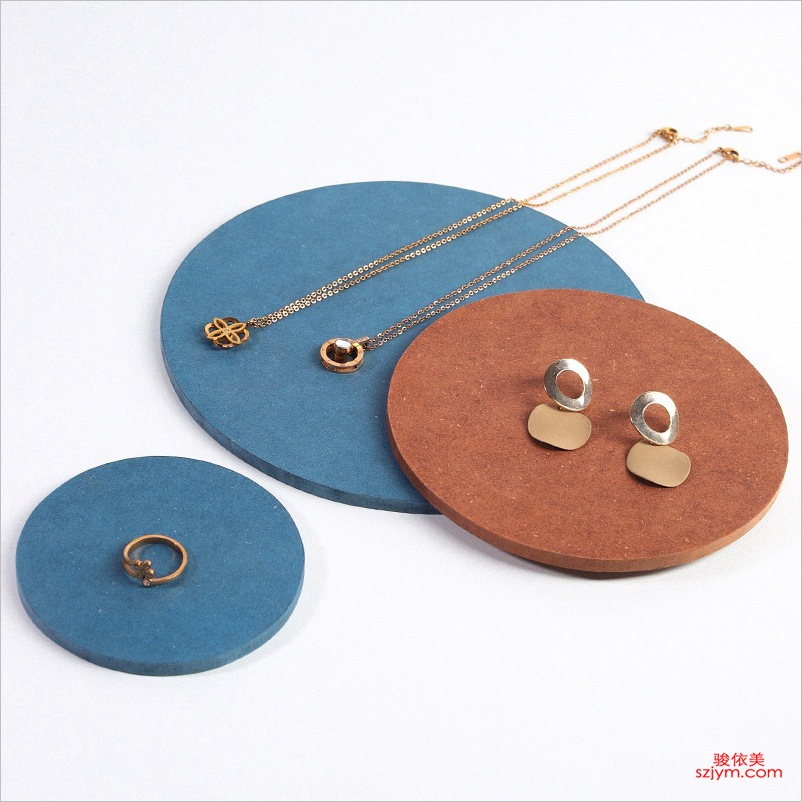 The compartments come from die-cutting. Each cell is sized to what actually sells: narrow for rings, wide for bangles, a long slot for necklaces. The walls between cells cannot be thin, or they soften under a full load and the divisions blur. The cutting die needs regular sharpening; a dull one leaves a fuzzy edge the velvet will not tuck into, and a dark seam shows. Most trays add a non-slip pad or a weighted base underneath, because the velvet is slick; without it the tray drifts at a touch inside the glass case and the person restocking straightens it all day. A wood tray costs more than a board tray, and earns it through steadiness—steady grain, steady build, steady look.
A logo on the wood has its own rule. Hot foil on a grainy surface blurs at the edges, so laser engraving reads cleaner and pairs better with the deep-green velvet. At the store, care is simple: no alcohol wipes on the wood or the wax lifts and the patch goes pale; a soft brush down the pile cleans the velvet, while brushing against it lays the nap flat and leaves a dark patch under the light.
When you order, show the maker the pieces you actually stock and let them cut the mold to fit, rather than taking a knife to the cells afterward. A tray that looks right but drifts every time someone brushes it quietly costs sales, because the display never reads as intentional. The wood version stays put, and that steadiness is most of its value.
This is original content. Copyright belongs to Shenzhen Junyimei.
The compartments come from die-cutting. Each cell is sized to what actually sells: narrow for rings, wide for bangles, a long slot for necklaces. The walls between cells cannot be thin, or they soften under a full load and the divisions blur. The cutting die needs regular sharpening; a dull one leaves a fuzzy edge the velvet will not tuck into, and a dark seam shows. Most trays add a non-slip pad or a weighted base underneath, because the velvet is slick; without it the tray drifts at a touch inside the glass case and the person restocking straightens it all day. A wood tray costs more than a board tray, and earns it through steadiness—steady grain, steady build, steady look.
A logo on the wood has its own rule. Hot foil on a grainy surface blurs at the edges, so laser engraving reads cleaner and pairs better with the deep-green velvet. At the store, care is simple: no alcohol wipes on the wood or the wax lifts and the patch goes pale; a soft brush down the pile cleans the velvet, while brushing against it lays the nap flat and leaves a dark patch under the light.
When you order, show the maker the pieces you actually stock and let them cut the mold to fit, rather than taking a knife to the cells afterward. A tray that looks right but drifts every time someone brushes it quietly costs sales, because the display never reads as intentional. The wood version stays put, and that steadiness is most of its value.
This is original content. Copyright belongs to Shenzhen Junyimei.
Junyimei — present every jewel and timepiece at its best.实木珠宝托盘这两年又回来吃香了。比起一片压不响的密度的板,天然木材摸着有温度,柜台上摆着也压得住场。TP34这款用实木底,配深绿绒面内衬,多格位分区,戒指、吊坠、项链各归各位。
木的选择有讲究。太软的料,比如松木,一磕一个坑,运输途中互相压一下就留印子;太硬的又重得柜台不好挪。常见做法是用杨木或榉木的多层实木板,既有木纹又不容易变形。板子厚度也得看,太薄一压就弯,太厚死沉,8到10毫米是多数托盘的甜区。表面得封边,不封的话潮气从断面进去,过个梅雨季板子就起翘,绒面跟着鼓。封边条要和木色接近,远看像一块整木,别搞出塑料感;有些厂用PVC封边,低温发脆,北方冬天一磕就崩口,不如用同色实木薄皮封。
绒面内衬是贴上去的,不是长出来的。深绿绒布背面刷胶,对准托盘格位一压,难点在转角——格位是直角,绒布要折进去服帖,折不好就起小三角空鼓,戒指放上去会晃。老师傅贴之前会把绒布过一遍水轻定型,半干时趁软压,干透就服帖了。胶要用低挥发的,否则柜台上放着,挥发味几天散不掉,客人一靠近就皱眉。绒布也有克重,太薄的绒面一压就透出底板颜色,太厚转角堆料,中等克重配深绿最压得住。
多格位靠模切。每个格子多大,是按常卖的货定的:戒指格窄一点,手镯格宽,项链格做成横条长槽。格与格之间的隔墙不能太薄,薄了放满货一压就软,隔墙塌了分区就乱。模切刀要勤磨,钝了切出来的格边起毛,绒面塞不进去,留一条黑缝。托盘底部一般加一层防滑垫,或者做配重底,不然绒面滑,托盘在玻璃柜里轻轻一碰就移位,理货的人天天得扶正。木托盘比密度板金贵就金贵在“稳”,木性稳、结构稳、看着也稳。
木面印logo也有讲究。托盘正面常要打品牌字,木纹上做烫金容易糊,字边发毛,不如用激光雕刻,凹痕清晰,配深绿绒面反而显档次。托盘到店里也讲养护:别拿酒精湿巾去擦木面,脱了蜡就发白;绒面脏了用软毛刷顺毛轻扫,逆着刷绒倒一片,灯光下全是暗斑。
定做时把常放的货比给厂里,让他们按尺寸开模,比自己事后拿美工刀改格位强。一个看着挺括却一碰就漂的托盘,悄悄赔掉的是成交——陈列永远没那股“故意摆过”的劲儿。木的版本站得住,这份稳当才是它大半的价值。
本文为原创内容,版权归深圳骏依美所有。如需转载请注明出处。
骏依美——让每一件珠宝与腕表,都被更好地呈现。
The wood choice matters. Too soft, like pine, and a single knock leaves a dent; shipments stacked in transit press marks into it. Too hard and the piece gets heavy, awkward to shift on the counter. The common move is a multilayer board of poplar or beech: it keeps the grain and resists warping. Thickness counts as well—too thin and it bows under load, too thick and it is dead weight, so 8 to 10 millimeters is the sweet spot for most trays. The surface needs edge banding. Skip it and damp creeps in through the cut ends; by the next plum-rain season the board lifts and the velvet bubbles with it. The band should match the wood tone, reading as one solid piece from across the room, not a strip of plastic; some shops use PVC edging that goes brittle in a cold northern winter and chips at a knock, so a thin real-wood band is the better call.
The velvet lining is applied, not grown. Green velvet brushed with adhesive on the back, pressed into each well. The corner is where it goes wrong—the well is a right angle and the cloth must fold in tight; fold it badly and a small triangular gap forms, the ring rattles. Old hands wet the velvet lightly to set it, then press while it is half-dry and still soft, so it beds down as it cures. The glue should be low-odor; otherwise the tray sits on the counter giving off fumes for days and the customer wrinkles a nose on approach. The pile has its own weight; too thin and the base color shows through under pressure, too thick and the corners bunch, so a mid weight holds the deep green best.
The compartments come from die-cutting. Each cell is sized to what actually sells: narrow for rings, wide for bangles, a long slot for necklaces. The walls between cells cannot be thin, or they soften under a full load and the divisions blur. The cutting die needs regular sharpening; a dull one leaves a fuzzy edge the velvet will not tuck into, and a dark seam shows. Most trays add a non-slip pad or a weighted base underneath, because the velvet is slick; without it the tray drifts at a touch inside the glass case and the person restocking straightens it all day. A wood tray costs more than a board tray, and earns it through steadiness—steady grain, steady build, steady look.
A logo on the wood has its own rule. Hot foil on a grainy surface blurs at the edges, so laser engraving reads cleaner and pairs better with the deep-green velvet. At the store, care is simple: no alcohol wipes on the wood or the wax lifts and the patch goes pale; a soft brush down the pile cleans the velvet, while brushing against it lays the nap flat and leaves a dark patch under the light.
When you order, show the maker the pieces you actually stock and let them cut the mold to fit, rather than taking a knife to the cells afterward. A tray that looks right but drifts every time someone brushes it quietly costs sales, because the display never reads as intentional. The wood version stays put, and that steadiness is most of its value.
This is original content. Copyright belongs to Shenzhen Junyimei.Junyimei — present every jewel and timepiece at its best.实木珠宝托盘这两年又回来吃香了。比起一片压不响的密度的板,天然木材摸着有温度,柜台上摆着也压得住场。TP34这款用实木底,配深绿绒面内衬,多格位分区,戒指、吊坠、项链各归各位。
木的选择有讲究。太软的料,比如松木,一磕一个坑,运输途中互相压一下就留印子;太硬的又重得柜台不好挪。常见做法是用杨木或榉木的多层实木板,既有木纹又不容易变形。板子厚度也得看,太薄一压就弯,太厚死沉,8到10毫米是多数托盘的甜区。表面得封边,不封的话潮气从断面进去,过个梅雨季板子就起翘,绒面跟着鼓。封边条要和木色接近,远看像一块整木,别搞出塑料感;有些厂用PVC封边,低温发脆,北方冬天一磕就崩口,不如用同色实木薄皮封。
绒面内衬是贴上去的,不是长出来的。深绿绒布背面刷胶,对准托盘格位一压,难点在转角——格位是直角,绒布要折进去服帖,折不好就起小三角空鼓,戒指放上去会晃。老师傅贴之前会把绒布过一遍水轻定型,半干时趁软压,干透就服帖了。胶要用低挥发的,否则柜台上放着,挥发味几天散不掉,客人一靠近就皱眉。绒布也有克重,太薄的绒面一压就透出底板颜色,太厚转角堆料,中等克重配深绿最压得住。
多格位靠模切。每个格子多大,是按常卖的货定的:戒指格窄一点,手镯格宽,项链格做成横条长槽。格与格之间的隔墙不能太薄,薄了放满货一压就软,隔墙塌了分区就乱。模切刀要勤磨,钝了切出来的格边起毛,绒面塞不进去,留一条黑缝。托盘底部一般加一层防滑垫,或者做配重底,不然绒面滑,托盘在玻璃柜里轻轻一碰就移位,理货的人天天得扶正。木托盘比密度板金贵就金贵在“稳”,木性稳、结构稳、看着也稳。
木面印logo也有讲究。托盘正面常要打品牌字,木纹上做烫金容易糊,字边发毛,不如用激光雕刻,凹痕清晰,配深绿绒面反而显档次。托盘到店里也讲养护:别拿酒精湿巾去擦木面,脱了蜡就发白;绒面脏了用软毛刷顺毛轻扫,逆着刷绒倒一片,灯光下全是暗斑。
定做时把常放的货比给厂里,让他们按尺寸开模,比自己事后拿美工刀改格位强。一个看着挺括却一碰就漂的托盘,悄悄赔掉的是成交——陈列永远没那股“故意摆过”的劲儿。木的版本站得住,这份稳当才是它大半的价值。
本文为原创内容,版权归深圳骏依美所有。如需转载请注明出处。骏依美——让每一件珠宝与腕表,都被更好地呈现。