How Many Pieces on One Display Stand Feels Right一组陈列架,摆几件才不空
How many pieces on one display stand is a craft in itself. Too few and the counter looks empty, a customer glances and thinks there is no stock; too many and everything is crowded, no single piece can hold its head up. We supply many overseas clients with the jewelry display stand SJ25 — the black-and-white set with ring mounts, earring posts and a necklace cushion, flexible to combine — which makes a good example for talking about spacing.
Start with how many per row. On a modular set like the SJ25, four to six earring slots on one board is enough; more and the eye tires. Three to four rings on the ring mount feels right, leaving a thumb's-width gap so light slips in and catches the fire. One necklace per cushion — do not greedy-stack two; it looks messy and presses a mark into the velvet. The cushion's velvet also keeps its nap longer when it is not crushed daily, so spacing quietly protects the prop as well.
The SJ25's black velvet base against its white lacquer frame already pushes contrast to the limit; load the stand full and you eat that contrast. Leave two fingers' width between pieces; the black velvet sets off the colour temperature of white gold and rose gold without leaning on volume. Many new shops load the stand full at once, and from a distance it reads as a black blob you only untangle up close. We usually advise filling seven-tenths and leaving the rest as breathing room for the eye, and for the clerk to drop in a hero piece anytime.
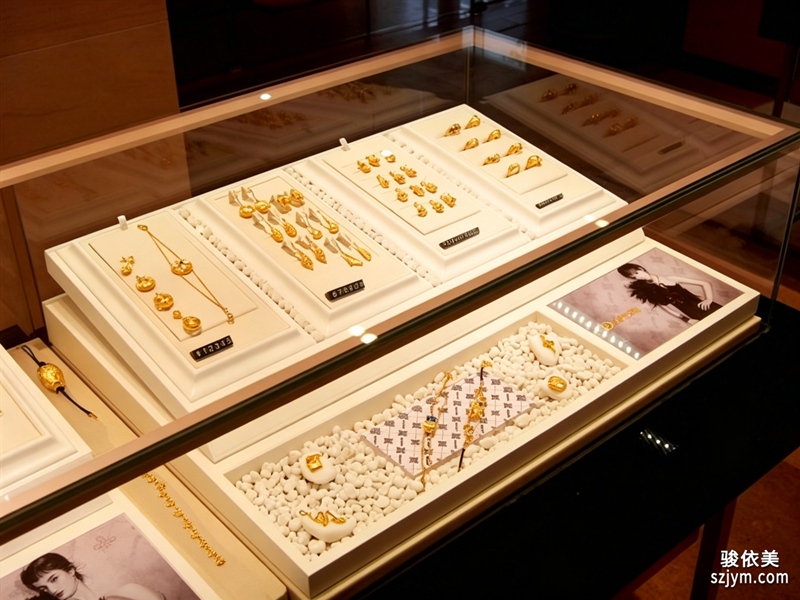 Vary the height too. The SJ25's ring mount and necklace cushion already step in height; place the piece you most want to push slightly higher in the middle, a notch lower on each side, and a small C-position forms naturally. Do not level everything — equal height kills the focus and looks like shelving, not display.
When the weekend crowd arrives, do not fill every gap in a hurry. Veteran clerks top up to eighty per cent and leave a couple of empty slots as breathing holes; anyone can then see at a glance which style just moved and should be replenished first. Empty is not out-of-stock, it leaves room for the sale. Clients often ask for more slots "to show range" — we counter that range reads better across two stands with air between them than one packed solid.
Vary the height too. The SJ25's ring mount and necklace cushion already step in height; place the piece you most want to push slightly higher in the middle, a notch lower on each side, and a small C-position forms naturally. Do not level everything — equal height kills the focus and looks like shelving, not display.
When the weekend crowd arrives, do not fill every gap in a hurry. Veteran clerks top up to eighty per cent and leave a couple of empty slots as breathing holes; anyone can then see at a glance which style just moved and should be replenished first. Empty is not out-of-stock, it leaves room for the sale. Clients often ask for more slots "to show range" — we counter that range reads better across two stands with air between them than one packed solid.
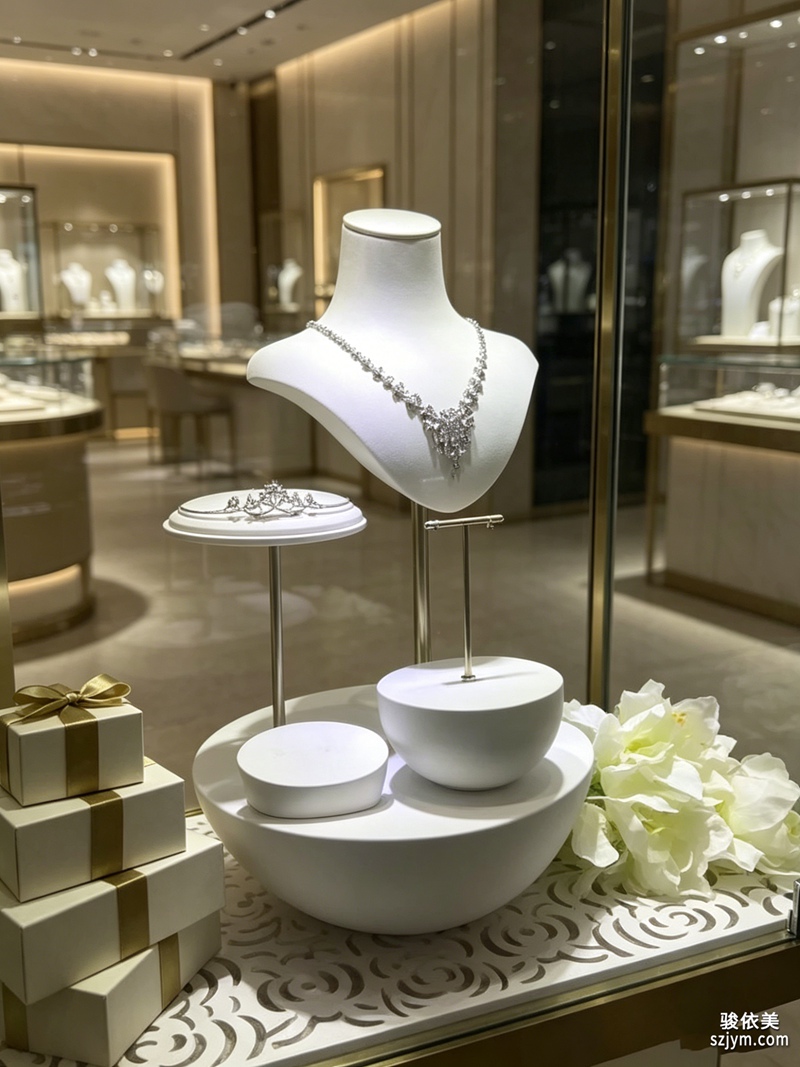 We have seen the fail. One client crammed twelve rings into a six-slot board and jammed the earring posts full; it photographed fine for social media, but a real person walking past the counter swiped away in two seconds. Cut to four rings, three pairs of earrings, and try-on rate that day clearly rose. Spacing is not saving material — it gives each piece its stage.
Junyimei works in watch display and jewelry packaging; a combined stand like the SJ25 leaves the factory with its slots calculated to a module. How many to place and how far apart looks like habit, but it is measured.
This is original content. Copyright belongs to Shenzhen Junyimei.
We have seen the fail. One client crammed twelve rings into a six-slot board and jammed the earring posts full; it photographed fine for social media, but a real person walking past the counter swiped away in two seconds. Cut to four rings, three pairs of earrings, and try-on rate that day clearly rose. Spacing is not saving material — it gives each piece its stage.
Junyimei works in watch display and jewelry packaging; a combined stand like the SJ25 leaves the factory with its slots calculated to a module. How many to place and how far apart looks like habit, but it is measured.
This is original content. Copyright belongs to Shenzhen Junyimei.
Junyimei — present every jewel and timepiece at its best.柜台上一组陈列架摆几件,是个手艺活。摆少了显空,客人扫一眼觉得没货;摆多了又挤,每件都抬不起头。我们给不少海外客户配【珠宝陈列架SJ25】,黑白配色那套,含戒指座、耳钉架和项链枕,组合灵活,正好拿来聊这个间距的讲究。 先说一排几只。SJ25 这种模块化组合,一条挂板配四到六个耳钉位就够,再多客人眼睛就累了。戒指座摆三到四枚最舒服,留出指肚大的空隙,光线能钻进去勾出火彩。项链枕一只挂一条,别贪心叠两条,叠了反而显乱,绒面也被压出印子。枕上的绒面天天不被压,绒毛立得久,间距其实也悄悄护着道具。 SJ25 的黑色绒底配白色烤漆边框,对比已经拉到顶,再上满货反而把这道对比吃掉。件与件之间留出两指宽,黑色绒底把白金、玫瑰金的色温衬出来,不靠堆量撑场面。很多新店一上来把架子上满,结果远看是一团黑,近看才分得清。我们一般建议先摆七成,留那三成空当给客人视线落脚,也方便店员随时补一款主推。
高度也要错。SJ25 的戒指座和项链枕本来就有高低,摆的时候把最想推的那枚放中间略高的位置,左右矮一截,自然成个小小的C位。别所有位子一般齐,齐了反而没重点,像货架不像陈列。
周末客流一来,补货别图快全填满。老店员的习惯是补到八成,留两个空位当呼吸口,谁都能一眼看出哪款刚卖动、该先补。空着不是缺货,是给成交留余地。客户常要我们“多加槽位显品类全”,我们的回法是:品类全靠两组架子中间留空气来表达,比塞满一组更清楚。
翻车见过。有回客户把十二枚戒指塞进六位挂板,耳钉架也插满,拍照发朋友圈还行,真人站柜台前两秒就划走。减到四枚、耳钉留三对,当天试戴率明显上来。间距不是省料,是给每件首饰留出台面。
骏依美做腕表陈列和首饰包装这行,SJ25 这类组合架出厂前都按模数算好卡位。摆几件、隔多远,看着是习惯,其实是算过的。
本文为原创内容,版权归深圳骏依美所有。如需转载请注明出处。
骏依美——让每一件珠宝与腕表,都被更好地呈现。
Vary the height too. The SJ25's ring mount and necklace cushion already step in height; place the piece you most want to push slightly higher in the middle, a notch lower on each side, and a small C-position forms naturally. Do not level everything — equal height kills the focus and looks like shelving, not display.
When the weekend crowd arrives, do not fill every gap in a hurry. Veteran clerks top up to eighty per cent and leave a couple of empty slots as breathing holes; anyone can then see at a glance which style just moved and should be replenished first. Empty is not out-of-stock, it leaves room for the sale. Clients often ask for more slots "to show range" — we counter that range reads better across two stands with air between them than one packed solid.
We have seen the fail. One client crammed twelve rings into a six-slot board and jammed the earring posts full; it photographed fine for social media, but a real person walking past the counter swiped away in two seconds. Cut to four rings, three pairs of earrings, and try-on rate that day clearly rose. Spacing is not saving material — it gives each piece its stage.
Junyimei works in watch display and jewelry packaging; a combined stand like the SJ25 leaves the factory with its slots calculated to a module. How many to place and how far apart looks like habit, but it is measured.
This is original content. Copyright belongs to Shenzhen Junyimei.Junyimei — present every jewel and timepiece at its best.柜台上一组陈列架摆几件,是个手艺活。摆少了显空,客人扫一眼觉得没货;摆多了又挤,每件都抬不起头。我们给不少海外客户配【珠宝陈列架SJ25】,黑白配色那套,含戒指座、耳钉架和项链枕,组合灵活,正好拿来聊这个间距的讲究。 先说一排几只。SJ25 这种模块化组合,一条挂板配四到六个耳钉位就够,再多客人眼睛就累了。戒指座摆三到四枚最舒服,留出指肚大的空隙,光线能钻进去勾出火彩。项链枕一只挂一条,别贪心叠两条,叠了反而显乱,绒面也被压出印子。枕上的绒面天天不被压,绒毛立得久,间距其实也悄悄护着道具。 SJ25 的黑色绒底配白色烤漆边框,对比已经拉到顶,再上满货反而把这道对比吃掉。件与件之间留出两指宽,黑色绒底把白金、玫瑰金的色温衬出来,不靠堆量撑场面。很多新店一上来把架子上满,结果远看是一团黑,近看才分得清。我们一般建议先摆七成,留那三成空当给客人视线落脚,也方便店员随时补一款主推。
高度也要错。SJ25 的戒指座和项链枕本来就有高低,摆的时候把最想推的那枚放中间略高的位置,左右矮一截,自然成个小小的C位。别所有位子一般齐,齐了反而没重点,像货架不像陈列。
周末客流一来,补货别图快全填满。老店员的习惯是补到八成,留两个空位当呼吸口,谁都能一眼看出哪款刚卖动、该先补。空着不是缺货,是给成交留余地。客户常要我们“多加槽位显品类全”,我们的回法是:品类全靠两组架子中间留空气来表达,比塞满一组更清楚。
翻车见过。有回客户把十二枚戒指塞进六位挂板,耳钉架也插满,拍照发朋友圈还行,真人站柜台前两秒就划走。减到四枚、耳钉留三对,当天试戴率明显上来。间距不是省料,是给每件首饰留出台面。
骏依美做腕表陈列和首饰包装这行,SJ25 这类组合架出厂前都按模数算好卡位。摆几件、隔多远,看着是习惯,其实是算过的。
本文为原创内容,版权归深圳骏依美所有。如需转载请注明出处。骏依美——让每一件珠宝与腕表,都被更好地呈现。