How Your Trade Show Booth Wins Jewelry Buyers展会摊位定成败
Every year, the world's major jewelry trade shows gather tens of thousands of buyers who arrive with budgets already approved and sourcing lists already written. Two booths of exactly the same size can end the fair very differently: one leaves with a season of orders, the other with a pocket of business cards and no follow-up. The difference is rarely the product itself — it is the display work done in those few square meters. Below are the questions exhibitors and buyers ask most, answered.
Q1: How do buyers actually "read" a booth as they walk the aisles?
Start with the numbers. According to the Center for Exhibition Industry Research (CEIR), roughly 81% of trade show attendees hold purchasing authority, and 92% attend primarily to discover new products and new suppliers. Around 67% of them are prospects your company has never reached through any other channel — the show floor is quite literally the only place your brand will meet them. JCK Las Vegas 2025, the industry's largest fair, brought together more than 30,000 professionals — including over 17,000 buyers, store owners and decision-makers from more than 100 countries — alongside around 1,900 exhibitors. In other words, the people passing your booth are not tourists; they are budget-holders with lists. But their attention is scarce. An attendee spends on average only about 4.5 hours on the show floor, passes hundreds of booths, and still has meetings to attend and hundreds of cards to collect. That leaves three to five seconds for your booth to earn a stop. Those seconds are not spent reading prices. They are spent scanning order, lighting and cleanliness. Buyers make an unconscious quality judgment about your whole operation from the state of your booth, the way a consumer judges a jewelry box by the weight of its hinge. Think of the booth as the first piece of packaging your product ever wears: if the wrapper looks careless, buyers hesitate about what is inside, no matter how good the goods are.
Q2: What is the first priority of booth merchandising?
Clarity over abundance. Industry surveys show that 48% of exhibitors believe an eye-catching booth design is crucial for attracting visitors, and decades of retail research agree: single-hero displays stop far more people than crowded tabletops, and products at eye level get picked up far more often than items buried on low shelves. Apply the same logic. Put the season's hero collection at straight eye level, one jewelry display stand telling one story. Group the rest by category so a buyer understands your full line within three steps. The supporting props matter more than most exhibitors expect: dark velvet trays flatter silver and pale gold, light trays flatter colored stones, and buyers read tray quality as a proxy for factory quality. A booth with pilling velvet and lifting laminate quietly tells a buyer that the craftsmanship behind it may be equally loose. Display props are not decoration costs — they are silent samples that testify for you in three seconds.
Q3: Small budget, small booth — how do you still look premium?
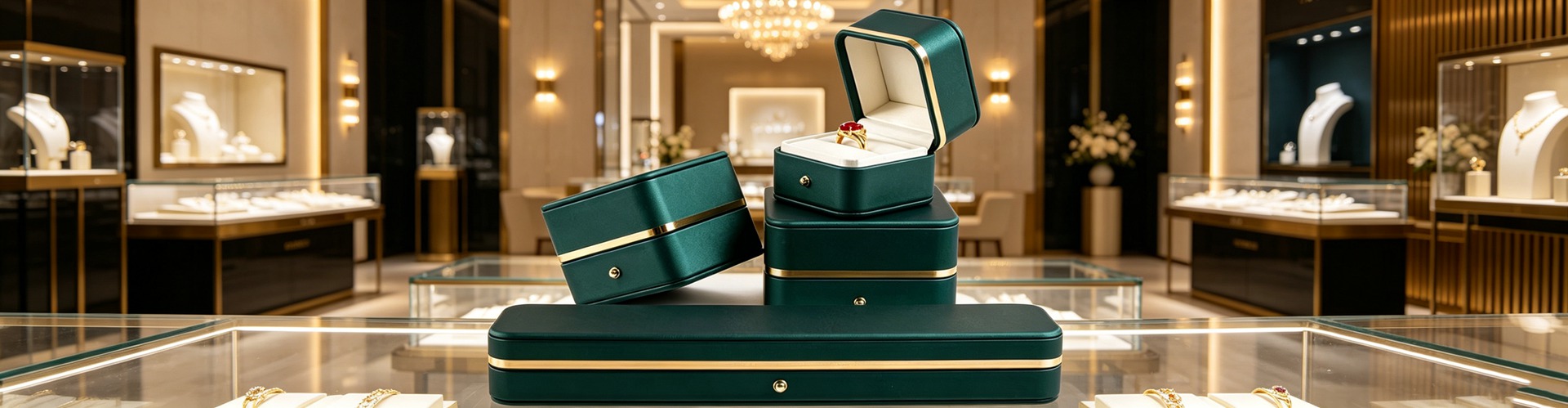
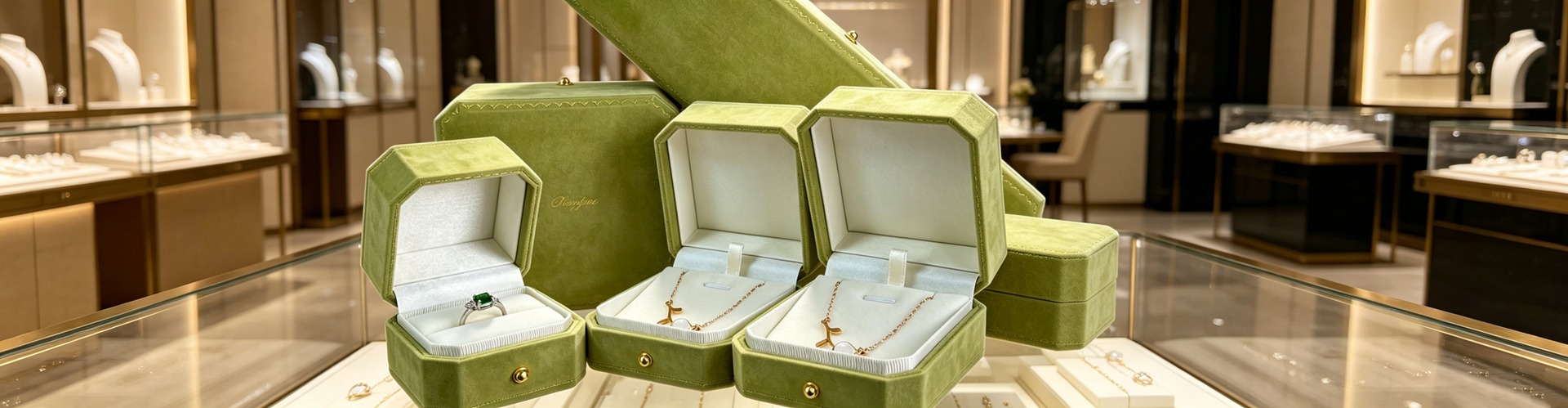
Focus on three levers: light, negative space and packaging. First, light. Use narrow-beam spots to build contrast — make the hero pieces three to five times brighter than the ambient level so they glow from across the aisle. Mind the color temperature and color rendering: warm light around 3000K suits gold and silver, cooler 4000K-plus suits diamonds, and a CRI above 90 keeps gemstones from shifting color. Second, space. Keep the tabletop one-third empty rather than one-tenth full. Retail studies have linked generous whitespace to higher perceived value and even higher average orders; a crammed booth reads as clearance, not quality. Third, packaging. Put one coordinated set of sample boxes and pouches on the counter. High-end, minimalist jewelry packaging is the kind customers prefer — and that holds just as true in front of a procurement manager as in front of a retail customer, because buyers are purchasing the product's "on-shelf image" for their own end consumers, not only the goods. A beautifully made sample box on your counter often starts more conversations than a price list does. It also proves in one glance that you understand how jewelry is presented, not just how it is made — a point Shenzhen Junyimei and other packaging-focused suppliers make to their B2B clients constantly.
Q4: How long will buyers stay, and what makes them stop at all?
Engagement is the gateway metric. About 74% of attendees say they are more likely to buy after a meaningful interaction with a brand at a show, and exhibitors who follow up effectively see lead conversion rates of 5–10%, while converting a trade show lead costs roughly 38% less than relying on cold sales calls. None of that happens unless the buyer first stops. What stops people is not "feel free to look around" — it is participation. White-glove try-ons, a loupe for examining stone cutting, an open-and-close demonstration of a jewelry box mechanism, a seating corner where a buyer can put down their bag. Dwell time is a core KPI in almost every exhibition performance report; every extra minute of dwell time is another minute of negotiation. Design deliberate "stopping points": one small consultation table is worth more than a row of glass cases people can only look at. Keep price sheets and loose stock in drawers, let the tabletop tell the story, and unfold the commercial details only after the buyer sits down — then you control the rhythm of the conversation. Staffing is part of the display, too. Two well-trained people who can look up, smile and offer a gloved hand convert far better than five staff members clustered around a phone. Brief the team on one rule: never greet a buyer with a pitch, greet them with a question about their store or their market — it turns a booth visit into a needs analysis, which is where real orders start. Also decide in advance who qualifies a lead: the same team member should grade every conversation from one to five before the visitor walks away, so follow-up effort flows to the buyers who actually signaled intent rather than to whoever collected the most tote bags.
Q5: The show is over — is the display work finished too?
No; that is when the second half begins. Studies of leading exhibitors show 80% complete their first round of follow-up within three days of a show closing, and in manufacturing sectors roughly 20% of B2B transactions are initiated at exhibitions. A buyer meets dozens of booths a day and remembers only the ones with pictures attached. The tray that made them want to pick a piece up twice, the spotlight that made the hero diamond talk, the gloved hand that offered a ring — these are memory anchors. So do not send a bare price list. Attach photos of your booth, your display scenes and your packaging; better still, mail a small sample of the show packaging so the recipient can "walk back into your booth" from their desk. Display creates the memory; follow-up harvests it. Events also outperform digital channels on lead quality: benchmarks put event marketing's MQL-to-SQL conversion at 7–15%, against 2–4% for LinkedIn ads and 1–3% for search ads — but only for exhibitors who followed up while the memory was still warm.
Q6: Which booth mistakes ruin an otherwise good product line?
Five recurring ones. First, glass cabinets angled straight into the aisle lighting, so buyers see their own reflection instead of the jewelry. Second, oversaturated spotlights that flatten fire and heat the pieces. Third, sample overcrowding — when everything is emphasized, the buyer cannot tell what your hero product is. Fourth, messy price communication: retail price tags on a wholesale booth scare bulk buyers; zoned, tiered pricing reads far more professional. Fifth, ignoring sustainability: about 92% of regular exhibitors now take steps to reduce their carbon footprint, and reusable modular stands and jewelry display stands are becoming the norm — disposable foam boards and one-shot printed backdrops are starting to look dated to exactly the buyers you want. A sixth mistake deserves mention as well: measuring nothing. Without a visitor count, a dwell-time estimate or a simple tally of qualified conversations, you cannot compare this show with the last one or decide whether to rebook — the exhibitors who improve every season are the ones who wrote down numbers while everyone else was celebrating the free champagne. One closing thought: every dollar of booth investment follows the same logic as jewelry packaging — the product is the protagonist, and display exists so the protagonist is seen in the first glance. If budget is tight, spend it on lighting, trays and sample packaging first; rent the largest possible shell rather than filling a big empty stand with too little product, because a small booth with perfect density always beats a large one with thin air. Suppliers such as Shenzhen Junyimei support jewelry companies with packaging and jewelry display props sized for exactly these shows, with low minimums that fit an exhibitor's calendar — order early, test-fit everything with your real samples before shipping, and pack a small spares kit of bulbs, trays and cleaning cloths, because the show must go on even when one spotlight does not.
This is original content. Copyright belongs to Shenzhen Junyimei.
Junyimei — present every jewel and timepiece at its best.
每年几场大型珠宝展,动辄汇聚上万名带着采购清单和预算来的专业买家。同样十几平方米的摊位,有的展商三天谈下整季订单,有的只收获一把没下文的名片。差别往往不在产品,而在那几十平方米的陈列功夫。下面用几个展商和采购商最关心的问题,把"展会摊位陈列"这件事讲透。
问:采购商逛展会时,究竟是怎么"看"摊位的?
答:先看一组数据。根据美国展览业研究中心(CEIR)的统计,约81%的展会观众拥有采购决策权,92%的观众逛展的首要目的就是发现新产品、新供应商。2025年JCK拉斯维加斯珠宝展汇聚了超过3万名业内人士,其中买家、店主和决策者超过1.7万名,来自100多个国家。也就是说,从你摊位前走过的人,大概率不是闲逛,而是手里握着预算、心里带着采购清单的买家。但买家的注意力极其有限——一位观众平均在展馆里只停留4.5小时左右,要路过几百个摊位,还要见约好的人、换几百张名片。所以摊位前三到五秒的第一眼,几乎决定了对方停不停。这第一眼看的不是价格,而是陈列的秩序感、灯光的层次和展台的干净程度。可以把展位理解为产品的第一件"外包装":包装粗糙,里面的货再好,买家也会先按下犹豫键。
问:摊位陈列的第一要务是什么?
答:是"少而清楚",不是"多而全"。行业调研显示,约48%的展商承认,醒目的摊位设计是吸引观众驻足的关键;而零售门店的陈列研究早已证明,单主角陈列比堆头式陈列的驻足率高得多,处于视线高度的产品被拿起率也远高于要弯腰才能看到的层板。展位陈列同理:把当季主推系列放在水平视线高度,一个展托只讲一个系列的故事;其余系列按品类分区陈列,让买家三步之内看懂你的产品线结构。配套的珠宝陈列道具同样讲究——深色植绒托衬浅色金银、浅色托衬彩宝,托具本身的质感会被买家当作工厂品质的代理指标。一个连展托都起球掉绒、台面贴皮翘边的摊位,很难让人相信它的货品工艺过硬。陈列道具不是布展开销,是可以在三秒内自证实力的"无声样品"。

问:中小展商预算有限,怎么把十几平方米做出高级感?
答:抓三件事——灯、留白、包装。灯光上,主推款用窄光束重点打亮,环境光压暗形成层次,展品亮度与环境亮度拉开三到五倍,买家隔着过道就能看见那一点亮;但注意色温与显色指数,金银用3000K左右的暖光,钻石类用4000K以上冷白光,显色指数尽量在90以上,否则宝石会"变色"。留白上,台面宁可空三分,不要挤十分——零售研究里有"留白40%左右反而拉高客单价"的结论,展位同样适用,挤满的摊位传递的是清仓感而非品质感。包装上,台面上摆一套与品牌调性一致的样品盒、首饰袋,本身就是隐性销售:高端简约的珠宝首饰品包装设计,更容易被顾客青睐——这句话放在零售柜台上成立,放在采购商面前同样成立,因为采购商买的不只是货,还有这套货卖给终端消费者时的"出场形象"。一套有质感的样品包装,常常比价格表更能引发对话。
问:买家愿意在摊位停留多久?怎样让他们停下来?
答:行业数据显示,约74%的观众在展会上与品牌产生实质互动后,购买意愿会明显提升;而有效跟进过展会线索的展商,线索转化率可以达到5%到10%,把一个展会线索转化的成本比纯电话开发低约38%。前提是——对方先停下来。让人停下来的从来不是"欢迎随便看看",而是可参与的细节:白手套试戴、放大镜看车工、当面演示一件包装从合盖到开盒的过程。停留时间(dwell time)是几乎所有展会效果报告里的核心指标,停留每多一分钟,深谈的机会就多一分。所以摊位要设计"停留点":一个可以坐下来谈的小洽谈角,比一排站着看的玻璃柜更值钱;把报价单和散货收进抽屉,台面上只留讲故事的东西,买家坐下之后你再把信息一层层展开,节奏就握在你手里。
问:展会结束了,陈列的功课是不是就结束了?
答:没有,恰恰是下半场开始。日本商工会议所的调研显示,头部展商中有80%会在展会结束后三天内完成首轮跟进;也有统计称制造业约20%的B2B交易由展会直接启动。买家在展会上平均一天要记几十个摊位,回家之后能想起来的,往往是"有画面"的那几个——你摊位上那只让人想拿起来看第二次的首饰盒、那盏把主钻照得会说话的射灯、那位用白手套递戒指的展示动作,都是买家记忆里的锚点。所以跟进邮件里不要只发价格表,附上摊位实拍、陈列场景图,甚至把展会同款包装一起寄个小样,让对方"重新走进你的摊位"。陈列做的是记忆,跟进收割的是记忆。
问:展位陈列有哪些常见的"翻车"细节?
答:五个最常见。一是玻璃展柜正对过道主灯,反光让买家看到的是自己而不是珠宝;二是射灯直射货品过曝,宝石火彩全无还发烫;三是样品堆得太满,买家找不到"你的主推是哪一款";四是价格牌乱贴,采购场景里用零售价签会吓跑批发买家,分区报价更专业;五是忽略可持续形象——全球已有约92%的常规展商在采取措施降低参展碳足迹,可复用的模块化展台与陈列架正成为主流,一次性喷绘海报+泡沫板的做法已经开始显得过时。最后提醒一句:展位陈列的所有投入,本质都是给产品做加法的珠宝包装逻辑——货是主角,陈列负责让主角在第一眼里就被看见。如果你的下一场展会预算有限,先把钱花在灯光、展托和样品包装这三样上,深圳骏依美常年为珠宝企业提供首饰展台配套的包装与陈列用品,从小批量起订,展会前两周下单也来得及。
本文为原创内容,版权归深圳骏依美所有,转载请注明出处。
骏依美——让每一件珠宝与腕表,都被更好地呈现。