Sell Jewelry Live: Let Packaging Do The Talking镜头前珠宝怎么卖
Livestream commerce has turned the phone screen into a storefront. For jewelry—a high-ticket, trust-sensitive, highly visual category—the camera is the window, the host is the sales associate, and the way a piece is presented (lighting, angle, the unboxing, and the 珠宝陈列道具 (jewelry display prop) behind it) replaces the physical counter as the first lever of conversion. Here are the questions real sellers and buyers keep asking about selling jewelry on camera.
Q1: Why does presentation beat the pitch in jewelry livestream?
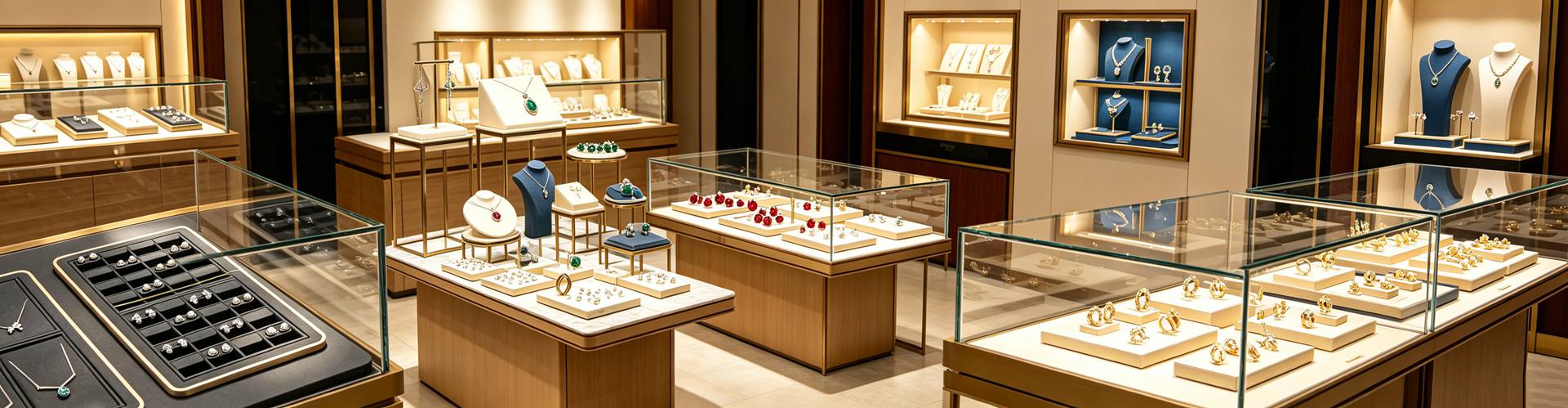
Because the camera gives the product the final say. A repeatedly observed rule of thumb: jewelry livestream conversion runs around 8%, versus roughly 1% on a traditional static product page—nearly an 8x gap. The reason is simple: a still image gives one angle, while a live room rotates the piece in real time, shows it against real skin, and reveals fire and reflection—exactly what a trust-heavy category needs to "see the real thing." The numbers from China's Shuibei district make it concrete: this largest gold-and-jewelry cluster (9,000+ firms, over ¥200 billion annual output) now posts daily livestream GMV above ¥200 million under a "source + live" model; its 2025 season sold ¥800 million in 40 days with 1 billion+ views, and its 2026 Qixi-themed double-platform event topped ¥1 billion with 1.2 billion+ exposures. Viewers go from entering a room to checkout in about 11 minutes. In that window, what keeps them is not the host's volume but whether the piece "lights up" on screen—which is exactly what a good 珠宝陈列道具 (jewelry display prop) delivers: rings lifted, necklaces hung in an arc, watches cushioned with layers, every item a focal point.
Q2: How does the unboxing moment actually sell on camera?
The unboxing is not the ending—it is the climax. Around 60% of Gen Z consumers actively film unboxings, and unboxing content often draws 2–3x the engagement of a plain product shot. Top hosts prove the "presentation + trust" formula: one Douyin host ("Yunshang Jewelry Dongge") hit ¥245 million GMV in a single stream, and a 5-million-follower host ("Xiaobei") crossed ¥100 million in a day. For jewelry, the 珠宝包装 (jewelry packaging) plays two roles at once on camera: protection (proof the seller is professional and logistics are safe) and a "trust prop"—when viewers see a piece lifted from a neat, substantial box, they assume it is more authentic, more valuable, more worth buying. That is why hosts slow the opener down and zoom in on the velvet insert and the clasp. Suppliers should design boxes to be "camera-friendly": solid colors, low glare, clean structure, so the box frames the product instead of fighting it.
Q3: What do display props do for the camera frame?
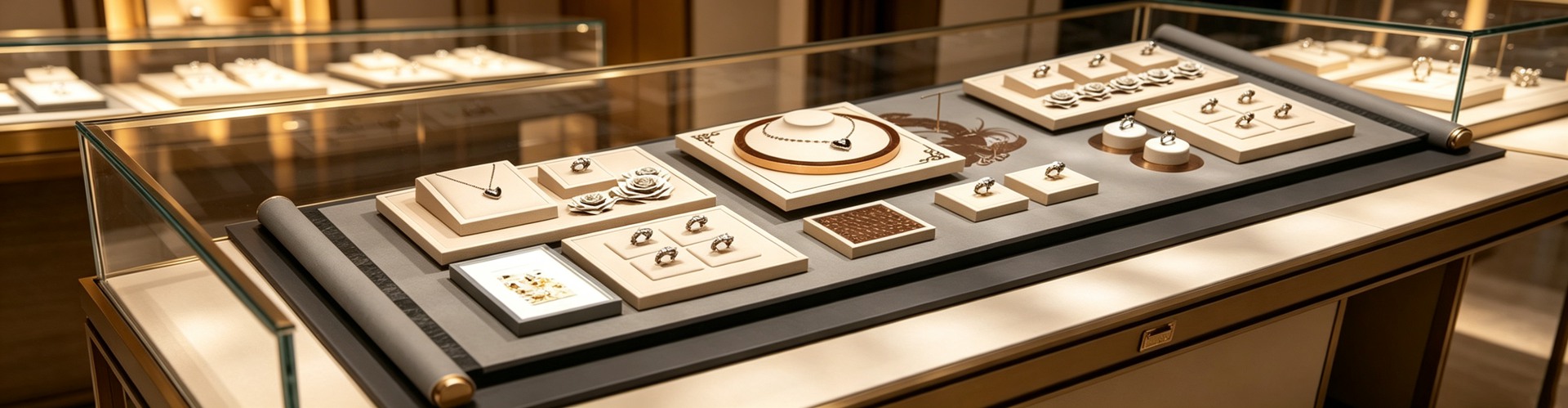
They solve "focus" and "depth." Brick-and-mortar research already shows about 68% of fine-jewelry sales are influenced by how pieces are displayed, structured display lifts conversion 20%–40%, and putting hero pieces at eye level raises pick-up rates by 82%; a single-hero display can lift dwell by roughly 40%. On camera the logic is identical: a piece lying flat on velvet gets scrolled past, but lifted on a 珠宝展示架 / 首饰展台 (display stand or bust), it gains a hero and negative space. Mature jewelry rooms keep a small kit of 珠宝展示架 (jewelry display rack) tools—earring boards, ring holders, hand models, watch pillows—so each product has its place and the host can swap hands without losing the frame. For small sellers this beats buying lighting gear; it is the highest-ROI "camera upgrade."
Q4: Why does minimalist packaging win on screen?
This is the point the boss makes often—high-end, minimalist jewelry packaging design is more favored by customers. The camera amplifies it: a plain backdrop plus a quiet box makes the jewelry the only star, undistracted by busy patterns; and the "unboxing gap" turns positive—expectations stay modest, the texture surprises, trust and liking rise. Studies suggest minimalist packaging can lift perceived premium by about 35% and repurchase intent by roughly 22%. A restrained hard-case box with magnetic closure and a small foil logo reads clean on camera and finishes crisp—equally good for retail and for the live unboxing.
Q5: How can a small jeweler build a camera-ready set cheaply?
Start with three things, not a studio. One: a solid-color backdrop (light gray or cream). Two: a reusable 珠宝包装 (jewelry packaging) set—box plus pouch—dedicated to the unboxing shot. Three: a few small display props for posing. Then light it: a key light on the product, a rim light for the edge. Hundreds of yuan noticeably raise quality. To tell a brand story, drop a numbered card or QR code inside the box. Shenzhen Junyimei supports low-MOQ custom boxes and display pieces, so sellers can prototype, validate in the live room, then scale—low risk. On-camera professionalism usually comes from this "small but precise" presentation system, not from piling on equipment.
Q6: What about watches—do they need special treatment on camera?
Yes, and the 手表盒 (watch box) is part of it. A wristwatch reads small on a thumbnail, so hosts use a pillow or curved 首饰展台 (display bust) to show the case profile and the clasp, and a 珠宝展示架 (jewelry display rack) to keep several references in frame during comparison streams. The original 手表盒 (watch box) also signals authenticity and completeness—buyers of pre-owned and limited pieces pay attention to whether the full set (box, papers, tags) is present, because it protects resale value. On camera, opening the genuine box is a quiet proof of "full set," and it pairs naturally with the unboxing moment that already drives engagement.
This is original content. Copyright belongs to Shenzhen Junyimei.
Junyimei — present every jewel and timepiece at its best.
直播电商把"门店"装进了手机屏幕。对珠宝这类高客单、重信任、强视觉的品类来说,镜头就是橱窗,主播就是导购,而产品的呈现方式——灯光、角度、开箱、以及背后的珠宝陈列道具——则取代了实体柜台,成为成交的第一杠杆。下面用几组真实问题,说说镜头前珠宝到底该怎么"摆"才卖得动。
Q1:直播卖珠宝,为什么"呈现"比"叫卖"更重要?
因为镜头把选择权还给了产品本身。行业里一个被反复验证的观察是:珠宝直播的平均转化率可以达到 8% 上下,而传统电商静态详情页只有约 1%——差距接近八倍。原因很直接:静态图只能给一个角度,直播却能实时旋转、贴肤试戴、展示火彩与反光;对信任门槛极高的珠宝,观众恰恰最需要"看见真东西"。最直观的样本是深圳水贝——这个全国最大的黄金珠宝集聚区(9000 多家企业、年产业规模超 2000 亿元),在"源头产地+直播"模式下,各直播基地日均 GMV 已突破 2 亿元;2025 年直播季 40 天卖出 8 亿、全网曝光 10 亿+,2026 年"水贝之恋·浪漫七夕"专场双平台总销售额更突破 10 亿元,全网曝光超 12 亿次。观众从进直播间到下单,平均只要 11 分钟。在这 11 分钟里,决定留下的不是主播嗓门多大,而是产品有没有在镜头里"发光",这恰恰需要珠宝陈列道具把戒指立起来、把项链挂出弧度、把腕表垫出层次,让每件都成为画面焦点。
Q2:镜头前,首饰盒和开箱怎么帮着卖货?
开箱在直播里不是收尾,而是高潮。数据显示,约六成 Z 世代消费者会主动拍摄开箱过程,开箱类内容的互动往往是普通展示的 2–3 倍。头部主播的战绩也印证了"呈现+信任"的威力:抖音达人"云上珠宝东哥"单场 GMV 达 2.45 亿元,500 万粉丝主播"小北"单日销售破亿。对珠宝而言,首饰盒在镜头中同时承担两个角色:一是保护,证明卖家专业、物流靠谱;二是"信任道具"——观众看到一件珠宝从规整、有质感的盒子里被取出,会默认它更真、更贵、更值得买。这也符合水贝"半小时内质检溯源"的产区信任基建:开箱即"可视化验真"。落到供应商侧,珠宝包装设计要考虑"上镜友好"——纯色、低反光、结构干净,既能当背景又不抢产品。一个克制而体面的盒子,比满版烫金更能撑起高端感。
Q3:直播布景里,珠宝摆台和陈列架起什么作用?
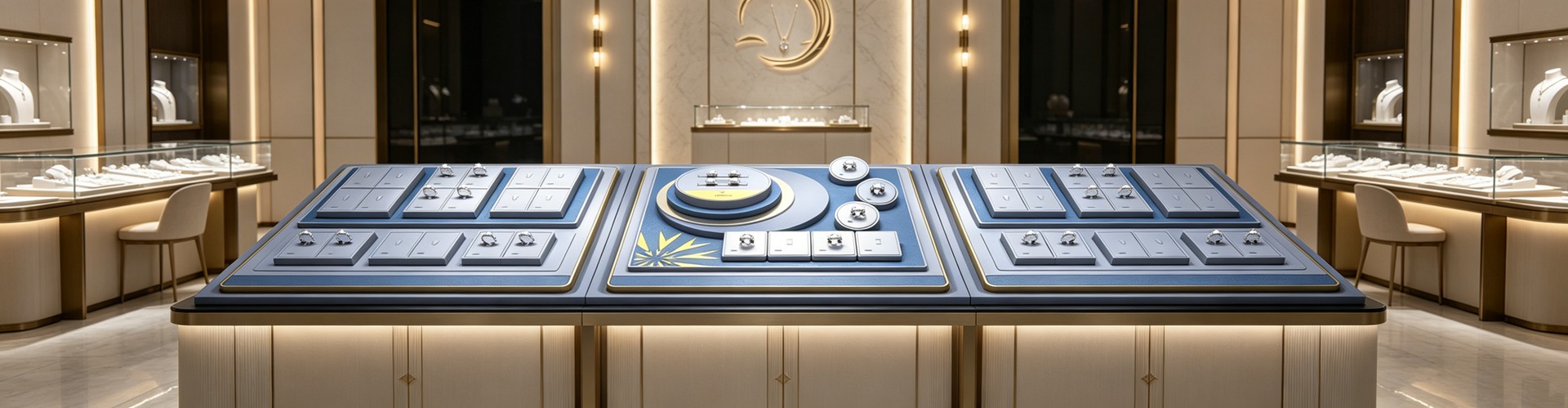
它们解决的是"焦点"和"层次"两个问题。实体零售的研究早已给出答案:约 68% 的高级珠宝成交受到陈列方式影响,结构化陈列能带来 20%–40% 的成交提升,而把主推款放在平视高度,顾客拿起的概率高出 82%;单主角陈列还能让驻足率提升约 40%。镜头前逻辑完全一致——平铺在绒布上容易被划走,用珠宝摆台把戒指托起、用弧形展具把项链挂出"S"形,画面立刻有了主角和留白。许多成熟的珠宝直播间会配一整套小型珠宝陈列道具:耳钉板、戒指托、手模、腕表枕,每件产品各归其位,主播换手不慌、机位不乱。对中小商家来说,这比砸灯光设备更划算,是性价比最高的"镜头升级"。
Q4:高端简约包装,在镜头前为什么更吃香?
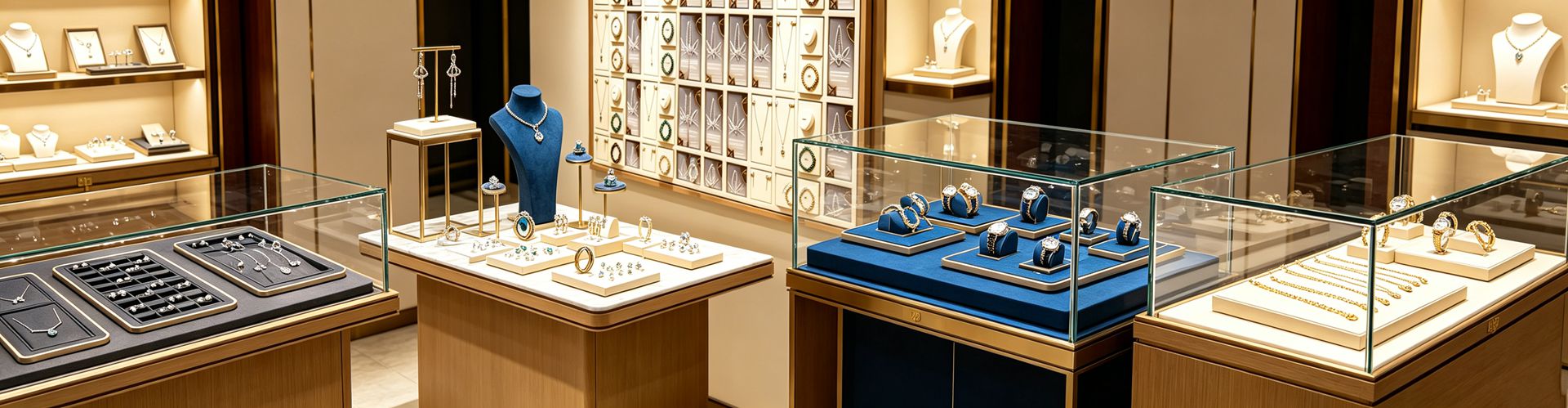
这正是老板常说的那句话——高端简约珠宝首饰品包装设计,更容易被顾客青睐。原因在镜头里被放大了:直播背景通常是纯色或浅灰,一个素净的盒子让珠宝成为唯一主角,不会被花哨纹样分散注意力;同时"开箱落差"为正——观众预期不高,拆开却被质感惊艳,信任和好感反而更高。有研究指出,极简包装带来的高端感知可提升约 35%、复购意向约 +22%。在水贝这样的源头产区,深圳骏依美的实践中很常见这类克制设计:硬板盒+磁吸、内衬同色系、logo 小幅烫印,上镜干净、收尾利落,既适合日常零售,也适合直播开箱。
Q5:中小珠宝商,怎么低门槛搭好"镜头陈列"?
不必一步到位,三件起步就够:①一块纯色背景布(浅灰或米白);②一套可复用的首饰盒与首饰袋,专门服务开箱镜头;③几件小型珠宝陈列道具做产品定姿。剩下的交给光线——主光打亮产品、轮廓光勾边,成本几百元就能显著提质。想先试水,水贝还有"HELLO 水贝共享直播间"这种现成场地,新手不必自建摄影棚。想讲品牌,可在盒内加编号卡或二维码,把"源头工厂"的故事说清楚。像深圳骏依美这样的珠宝盒工厂,支持小单定制盒体与陈列件,商家先用少量试样、跑通直播间再放量,风险很低。镜头前的专业感,往往来自这套"小而准"的呈现系统,而不是一味堆设备。
本文为原创内容,版权归深圳骏依美所有,转载请注明出处。
骏依美——让每一件珠宝与腕表,都被更好地呈现。