The Quiet Branding Power of a Jewelry Pouch首饰袋里的品牌力
Most jewelry brands pour their budget into the gift box and the window display, yet overlook the single item a customer is most likely to keep close and reuse daily — the humble jewelry pouch. Unlike a rigid box that gets stored away, a pouch travels to the office, on trips, and into everyday handbags. That small bag often becomes a brand's highest-frequency touchpoint in a customer's real life.
Q1: Why does a tiny pouch stick in a customer's memory better than the box?
The answer is reuse. There is a well-known observation in packaging: customers may forget the box, but they remember the pretty little pouch that now holds their daily essentials. The moment that pouch is repurposed for cables, cosmetics, or travel trinkets, it becomes a "memory anchor" in their routine. Psychologists call this the mere-exposure effect — the more often someone sees a brand, the more familiar and trustworthy it feels. Packaging research suggests a well-designed reusable bag is used 50–150 times and generates 5,000+ visual impressions over its lifetime, while a cardboard box is typically seen fewer than 10 times before recycling. For a jewelry brand, that makes the jewelry pouch the cheapest touchpoint that turns a one-time sale into long-term companionship — and brands using custom pouches report roughly 22% higher repeat-purchase rates and about 12% lower returns than those shipping generic packaging.
Q2: Why do customers actually prefer a high-end, minimalist pouch?
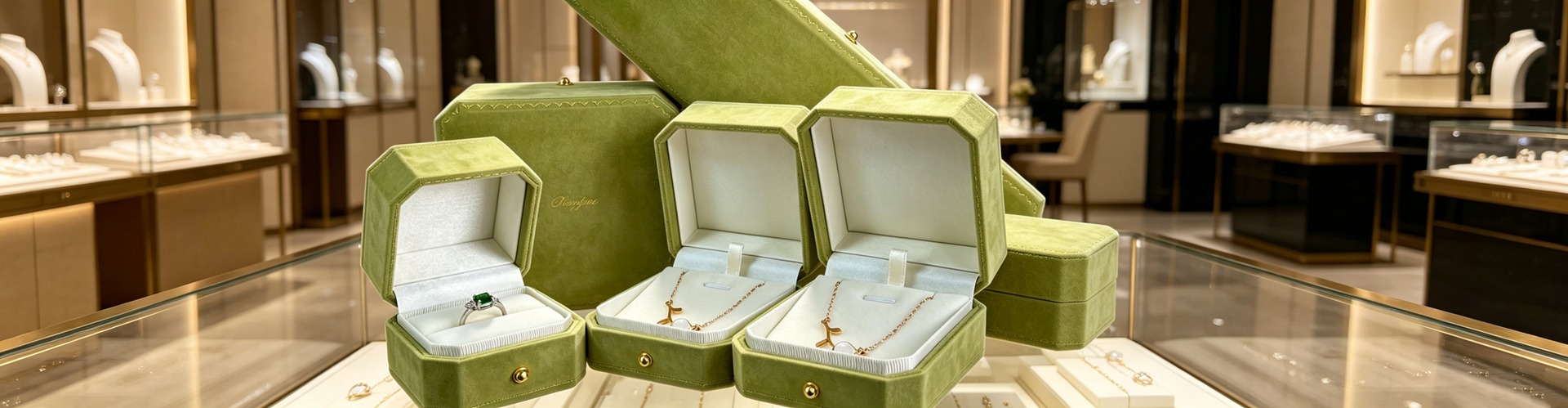
This is the principle our founder repeats: premium, minimalist jewelry packaging design is more readily favored by customers. It holds true for pouches. Minimalism is not cheapness — a restrained natural-cotton bag, one precise foil-stamped logo, and a smooth drawstring signal a quiet confidence that "we care only where it matters." Studies show over 60% of consumers are more likely to recommend a brand that uses quality, functional packaging, and pulling the visual focus onto the logo and the material reads as more luxurious than busy ornamentation. In jewelry packaging design, less is more, and the smaller the pouch, the more skill it demands.
Q3: Which fabric feels premium without blowing the budget?
Fabric drives hand-feel, and hand-feel drives value judgment. Velvet at ≥200 GSM resists shedding and feels dense in hand — a safe pick for a light-luxury impression. Microfiber at 0.8 mm mimics suede and compresses without creasing, ideal for travel kits. Natural cotton-linen and recycled polyester lean eco and artisanal. Avoid 0.4 mm satin for hero products: it looks worn after a few opens. The math still favors it — a custom foil-stamped velvet pouch at a 500-piece minimum runs about $1.20 each yet supports a $15–20 retail uplift at checkout, because buyers fold tactile quality straight into perceived product value. That is exactly where jewelry pouch manufacturing quietly lifts the whole item's price, while a durable, reusable build earns the eco credentials modern shoppers look for.

Q4: How should the logo be printed so it looks refined, not cheap?
Foil stamping is the most cost-effective upgrade, but two traps remain. First, keep the thinnest stroke at or above 5 mm, or edges blur in mass production. Second, use a dark lining — black or navy — to hide light tarnish on silver and stop colored fabric from rubbing onto metal. When Shenzhen Junyimei supplies custom jewelry boxes with matching pouches, the standing advice is "sample first, then scale": a pre-production sample cut from the actual production roll cuts shade variance and defect rates from the usual 15–20% down to near zero. If the pouch feels cheap, the jewelry inside feels cheap too — this step is not where to save.
Q5: How does one pouch become a walking advertisement for the brand?
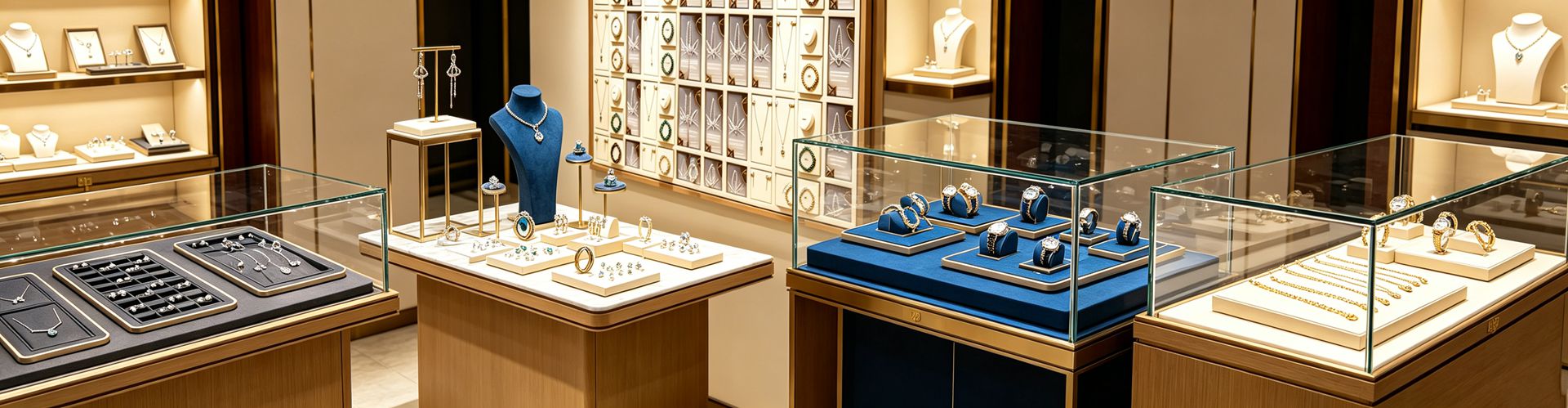
Once carried daily, the pouch is a mobile billboard. Industry studies estimate a reusable branded bag can generate 1,000–5,000 impressions across its life. Glossier's pink bubble-wrap pouch and Lululemon's waterproof totes are reused and "worn" in public for free exposure; every "where did you get that little pouch?" introduces the brand to a new person. Data shows user-generated unboxing content drives up to 6x the engagement of brand-created posts, and 60% of Gen Z will film an unboxing when the packaging is distinctive enough. Align the pouch visually with your jewelry display props and boxes so a customer sees one consistent brand from delivery, to in-store browsing, to daily reuse. Shenzhen Junyimei has spent years building exactly this "box–pouch–display" visual loop as an affordable system for small and mid-size jewelry brands.
This is original content. Copyright belongs to Shenzhen Junyimei.
Junyimei — present every jewel and timepiece at its best.
很多店主把预算砸在礼盒和橱窗上,却忽略了一个最常被顾客带在身边、也最常被反复使用的细节——首饰袋。它不像盒子会被收进柜子,而是跟着人上下班、出差、放进手包。一枚小小的首饰袋,往往是品牌在顾客日常生活中"出镜率"最高的那一块。
Q1:为什么一枚小首饰袋,比盒子更让人记住品牌?
答案在于"复用率"。行业里有个朴素的观察:顾客未必记得住买来的盒子,却常常记得住那个装着日常小物的漂亮袋子。一旦袋子被拿去装数据线、化妆品或旅途中的零碎,它就成了顾客生活里的"记忆锚点"。心理学上叫"单纯曝光效应"——一个人越频繁看到某个品牌,就越觉得它熟悉、可信。包装行业研究指出,一只设计得体的可复用袋子,平均被使用 50–150 次,生命周期内可产生 5000 次以上的视觉曝光;相比之下,一只纸箱通常在拆封后被看到不到 10 次就进了回收站。对珠宝品牌而言,这意味着首饰袋是把一次性交易变成长期陪伴的低成本触点,也是为什么用了定制袋的品牌,复购率能比用通用包装的高出约 22%、退货率还能再降约 12%。
Q2:高端简约的首饰袋,为什么反而更受顾客青睐?
这正是老板常强调的那句:"高端简约珠宝首饰品包装设计,更容易被顾客青睐。"放到首饰袋上同样成立。极简不等于简陋——一块克制的素色棉麻袋、一道精准的烫金 logo、一根顺滑的抽绳,传递的是"我们只在乎必要之处"的细节自信。调研显示,超过 60% 的消费者更愿意推荐使用了"有质感、好用"包装的品牌;而把视觉重心收拢到 logo 与材质本身,反而比花哨堆砌更显高级。对珠宝包装设计来说,少即是多,袋子越小,越考验功力。
Q3:选什么面料,才有高级感又不至于成本失控?
面料决定手感,手感决定价值判断。绒布(velvet)在 ≥200GSM 时不易掉毛、捏在手里厚实,是"轻奢感"的稳妥选择;微纤维 0.8mm 触感接近麂皮,更适合旅行收纳,压缩不皱;素色棉麻与再生涤纶则主打环保与手作气质。需要提醒的是,0.4mm 的廉价缎面虽然便宜,但几次开合就显旧,慎用在零售主力款上。账面也不亏:一只带烫金 logo 的定制绒布袋,500 只起订的单价约 1.2 美元,却能在结账时支撑起 15–20 元的零售溢价——因为顾客会把"袋子的质感"直接折算进"珠宝的价值"。这正是珠宝袋加工这件小事,能反向抬高整件货品身价的地方。
Q4:logo 怎么印,才不廉价、还能抗氧化?
烫金(foil stamping)是首饰袋提升档次最划算的一笔投入,但有两个坑要避开:一是笔画最细不能低于 5mm,否则批量生产时边缘发虚;二是内衬尽量用深色(黑或藏青),既能遮住银饰轻微的氧化痕迹,也能防止彩色面料把金属蹭花。深圳骏依美在给客户做珠宝盒定制与袋类配套时,通常会建议"先打样、再放量"——用正式大货的同卷面料做预产样,能把色差与瑕疵率从行业常见的 15–20% 压到近乎为零。袋子若显得廉价,里面的珠宝也跟着掉价,这一步省不得。
Q5:一枚首饰袋,如何变成"会走路的品牌广告"?
当袋子被顾客天天带着走,它就成了一块移动广告牌。Glossier 的粉色气泡袋、Lululemon 的防水手提袋,都是被顾客心甘情愿"背"出门的免费曝光;每一次有人问"你这小袋子哪儿来的",品牌就被自然介绍给新客人。数据显示,用户自发产生的开箱/UGC 内容,互动率可达品牌自建内容的 6 倍;而 60% 的 Z 世代会在包装足够独特时拍下开箱。把首饰袋和饰品包装盒、店铺里的珠宝陈列道具统一视觉,顾客从线上收到、到线下逛店、再到日常复用,看到的都是同一个品牌——这种连贯,才是真正的品牌资产。深圳骏依美专注珠宝包装与袋类配套多年,正是把这套"盒—袋—陈列"的视觉闭环,做成中小珠宝品牌用得起的方案。
本文为原创内容,版权归深圳骏依美所有,转载请注明出处。
骏依美——让每一件珠宝与腕表,都被更好地呈现。