Why Vintage Jewelry Is the New Luxury中古珠宝成新宠
In the spring of 2026, something quietly telling happened at Christie's Hong Kong. The headline number was a HK$958 million haul at the "Classic Week" sale—but the detail that mattered more was who was bidding. More than half of all new buyers were Millennials and Gen Z; in the handbags and accessories session, 41% were Millennials or younger. Sotheby's reported that under-40 buyers accounted for 30% of luxury auction participation in Q1 2026, and that Gen Z and Millennial collectors had grown 56% over five years. The young are not crowding the boutique windows for this season's novelties. They are walking into auction houses and vintage stores. A market once dismissed as "used goods" has become the fastest-growing slice of the entire jewelry industry.
The numbers all point the same way. The global secondhand jewelry resale market was worth about $71.9 billion in 2025 and is projected to reach $76.8 billion in 2026, expanding at a 6.8% CAGR. The antique jewelry segment, valued at $44.2 billion in 2025, is expected to climb to $82.5 billion by 2034 at 7.2% annual growth—both curves outpacing the primary market. Signed estate jewelry is the most aggressive niche of all: one industry report sizes it at $5.74 billion in 2025, heading to $10.4 billion by 2030, a 12.7% CAGR. The RealReal's 2026 Resale Report found vintage demand on its platform up 432% between 2020 and 2026, and Boston Consulting Group estimates the secondary luxury market is growing three times faster than the primary one. Forty-seven percent of consumers now check an item's likely resale value before buying new.
China tells the same story in its own register. The country's secondhand luxury market is set to surpass ¥450 billion in 2026, with jewelry accounting for over 30% of that and a steady 18%+ CAGR. High gold prices are pushing dormant family heirlooms into circulation: the Sichuan Precious Metals Recycling Association reports Chengdu's jewelry buyback exceeded ¥8 billion in 2026 with more than 420,000 valid transactions, while Ningbo's gold-recycling volume rose about 42% year-on-year in Q1. These melted-down or refurbished stocks are the raw reservoir feeding the vintage trade. Japan offers an even more extreme sample: with the yen near multi-decade lows, consumers shifted 5% to 10% of assets into gold, and department-store jewelry and precious-metal sales rose 19% in the first half of 2026—six times the pace of overall retail—while a single month saw 175 vintage auctions held nationwide.
Why now? Four forces converge. First, circular fashion as a value statement. Younger buyers increasingly treat sustainability as identity—one study estimated a new diamond ring's carbon footprint at roughly 53,850 times that of a vintage one, and more than 70% of consumers cite sustainability as a key motive for buying pre-owned luxury. Second, uniqueness and story. In an age of mass-produced sameness, a piece with a former owner's trace and a traceable provenance is the scarcest social currency: 85% of buyers prize one-of-a-kind character, and craftsmanship plus origin can add a 10–15% premium. Third, the asset angle. Investment-grade antique and signed jewelry is outrunning gold—Sotheby's records a 1970s Cartier Love bracelet reselling 15% above its original retail price even after inflation adjustment. Fourth, the retro revival: 1990s-style searches rose 93% year-on-year, and Belle Époque design is being reintroduced by the creative directors of Chanel and Dior, making "old-money" aesthetics young again.
None of this momentum survives without trust. Authentication is the industry's quiet bottleneck: PwC's luxury outlook found roughly 15% of consumers hesitant precisely because they fear fakes. Resale platforms have answered with AI-powered verification, GIA grading, and blockchain-backed provenance records that travel with the piece. Crucially, trust is no longer only about the jewel itself—it extends to its paperwork and its container. A verified box, a dated receipt, an original fitted case: together they form a chain of custody that can lift a piece's resale value by double digits. In other words, presentation is not vanity here; it is part of the asset's documentary proof. A brooch that arrives in a battered, anonymous parcel reads as risk, while the same brooch presented in its heritage case reads as provenance.
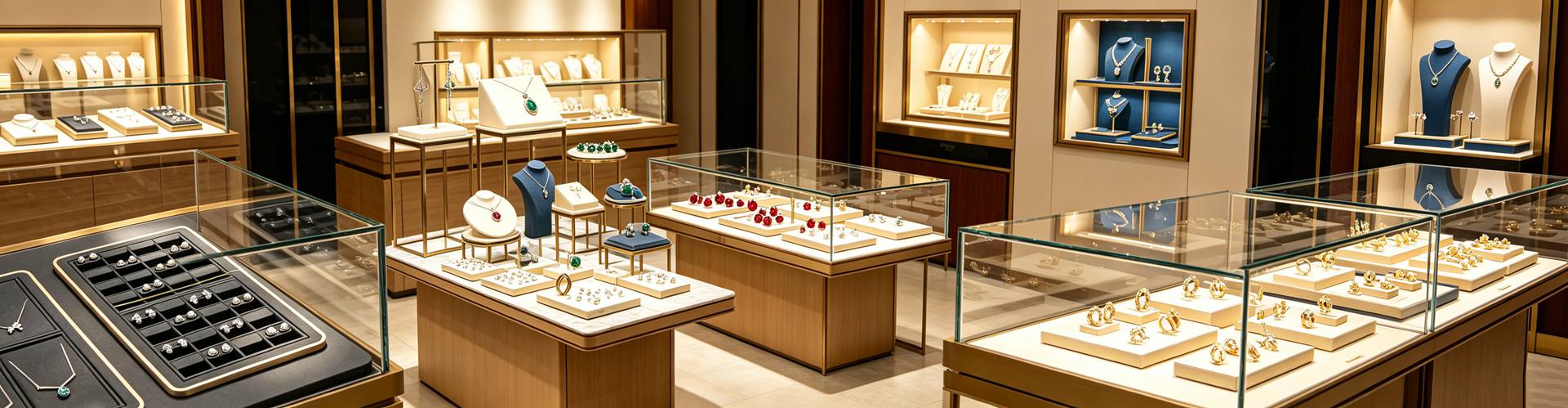
Heritage houses have taken notice. Bloomberg reported Tiffany & Co. exploring certified pre-owned programs for its heritage pieces, a striking pivot for a maison built on newness. Traditional jewelers, by contrast, have watched entry-level new sales slip about 10% as younger shoppers divert spending to vintage alternatives, according to JCK. The gap is being filled by specialized marketplaces: ventures focused on authenticated vintage jewelry have seen user growth around 300%, and decade-specific saved searches rose 135% year-on-year, with the 1990s leading volume. The secondary market is no longer a shadow economy at the edge of luxury; it is becoming infrastructure. For the first time, the resale value of a piece is shaping what shoppers buy new—nearly half now research future resale before the original purchase.
So what actually holds value, and what comes next? The RealReal's 2026 data offers a map. Signed pieces from heritage houses lead demand, but the surprise is in the specifics: signet rings and bespoke searches like Retrouvaï's "Flying Pig" spiked, while Belle Époque design (circa 1895–1914) is flagged as the next breakout, echoed by the recent Chanel and Dior collections that revisit the era's drop-waist silhouettes. Decade-specific taste is sharpening—saved searches for the 1990s rose 135% year-on-year, and Y2K styling climbed 93% as Gen Z rediscovers the early 2000s. Discovery is increasingly social: roughly 70% of vintage buyers first encounter a piece through Instagram or TikTok, where the patina of an old brooch reads as character rather than wear. The practical upshot for sellers is that condition and completeness now command a premium—a piece with its original box and papers is not nostalgia, it is a higher-grade asset. That is precisely why the container matters: the jewelry box is no longer packaging after the sale, but provenance before it.
Yet the vintage renaissance also surfaces a quiet craft: how to present the old. A diamond ring bearing the patina of decades, tossed into a cheap velvet pouch, quietly loses perceived value; resting instead in a sober wooden jewelry box, held by an individually slotted accessory packaging box, it naturally reads as "worth keeping." This is where jewelry packaging and display earn their keep—not by shouting with ornament, but by underscoring with restraint. In a boutique, a jewelry display stand and jewelry display props turn the marks of time into a selling point: a 1940s brooch, lit and staged correctly, tells a story of "heirloom," not "secondhand." The staging itself becomes a form of editing—choosing what the eye meets first, and letting the century behind the piece do the persuading.
It is precisely the direction Shenzhen Junyimei has pursued for years. Specializing in jewelry packaging design and custom jewelry boxes, Junyimei understands the proportion of "old made new": the warmth of wood and recycled materials, the security of flocked slots, the detail of foil and screen printing—all so that every vintage piece gets a home worthy of its era. As circular fashion becomes irreversible, packaging is no longer a one-time consumable but a "second home" reused across a jewel's long life cycle. A well-made jewelry box does not merely protect; across decades and owners, it accumulates meaning and becomes part of the piece's story, passed along like a footnote written by careful hands.

For retailers, the implication is practical. The vintage buyer is not looking for a discount—they are looking for a narrative they can trust and a presentation that honors it. That means treating display and packaging as continuity, not aftermath: a jewelry display stand that lets a signed brooch breathe, a jewelry display prop that frames its era, a jewelry box that survives to the next owner. The shops winning this segment are the ones that make the pre-owned feel curated rather than leftover. Regional taste sharpens the point—New York leans quiet luxury, Dallas over-indexes on David Yurman, Washington D.C. is the only U.S. region where engagement rings appear among top consigned items—so the staging must shift city by city, just as the merchandise does. A single generic velvet pad will not carry a Belle Époque diamond the way a considered setting will. And because roughly 70% of vintage discovery now happens inside social feeds, the unboxing and the flat-lay—shot within a considered jewelry box or atop a jewelry display stand—are themselves the first advertisement, long before a client steps through the door. A brooch photographed flat against tissue paper reads as thrift; the same brooch lifted on a jewelry display prop, lit to catch its facets, reads as coveted. Presentation, in other words, is now part of the marketing funnel, not an afterthought at the counter.
The lesson for brands and retailers is clear: the future competition is not only "whose new piece shines brighter," but "who can catch the precious past and deliver it with dignity." From the young faces at the auction houses, to the queues at the recycling counters in Shuibei, to the antique brooches being re-polished in the window—the story of jewelry is being retold. And at both ends of that story, there has always been a decent box.
This is original content. Copyright belongs to Shenzhen Junyimei.
Junyimei — present every jewel and timepiece at its best.
2026年春天,佳士得香港“雅逸精品周”落槌。比9.58亿港元的总成交更耐人寻味的,是一个买家结构的细节:所有新买家中,逾半数属于千禧世代与Z世代;在手袋及配饰专场,41%的买家是千禧一代或更年轻的人。苏富比给出的数字同样锋利——2026年一季度,40岁以下买家在奢侈品类拍卖中占比已达30%,Z世代与千禧藏家人数过去五年增长了56%。年轻人没有涌向商场橱窗里闪闪发亮的新品,而是转身走进了拍卖行与中古店。一个曾被贴上“旧货”标签的市场,正在成为整个珠宝行业增速最快的那块拼图。
数据指向同一个方向。全球二手珠宝转售市场2025年规模约719亿美元,2026年预计增至768亿美元,并以6.8%的年复合增速持续扩张;古董珠宝赛道2025年规模为442亿美元,预计2026至2034年间以7.2%的增速攀升至825亿美元——两条曲线都跑赢了新品珠宝的行业均值。更激进的是品牌签名古董珠宝:据行业研究,该细分市场2025年已达57.4亿美元,预计2030年增至104亿美元,年复合增速高达12.7%。The RealReal发布的2026年转售报告称,平台上的中古(vintage)需求在2020至2026年间飙升432%;波士顿咨询的测算更指出,二手奢侈品市场的增速是新品市场的三倍。
国内市场同样躁动。2026年中国二手奢侈品交易规模有望突破4500亿元,其中首饰类占比超过三成,年复合增长率稳定在18%以上。金价高位把无数家庭抽屉里沉睡的旧金推向市场:四川省贵金属回收行业协会统计,2026年成都首饰回收全年交易额突破80亿元、有效订单超42万单;宁波一季度黄金回收业务量同比上涨约42%,民间闲置黄金的变现潜在规模超过52亿元。这些被熔掉或翻新的存量,正是中古流通的原始水源。
为什么是现在?第一,是循环时尚的价值观胜利。年轻消费者越来越把“可持续”当作一种身份表达——研究估算,一枚新钻戒的碳足迹约为古董钻戒的5.3万倍,而超过七成消费者将可持续性列为购买二手奢侈品的关键动因。第二,是独特性与故事性。在量产审美疲劳的时代,一件带着前主人痕迹、可追溯渊源的古董珠宝,成了最稀缺的“社交货币”:85%的买家看重独一无二,工艺与出处能为单品带来10%至15%的溢价。第三,是资产属性。投资级的古董与签名珠宝正在跑赢黄金——苏富比记录显示,一只1970年代的卡地亚Love手镯,经通胀调整后转售价仍比当年零售价高出15%。第四,是复古审美的回潮。1990年代风格的检索量同比上涨93%,美好时代(Belle Époque)设计被香奈儿、迪奥的创意总监重新搬上秀场,老钱审美正在年轻化。
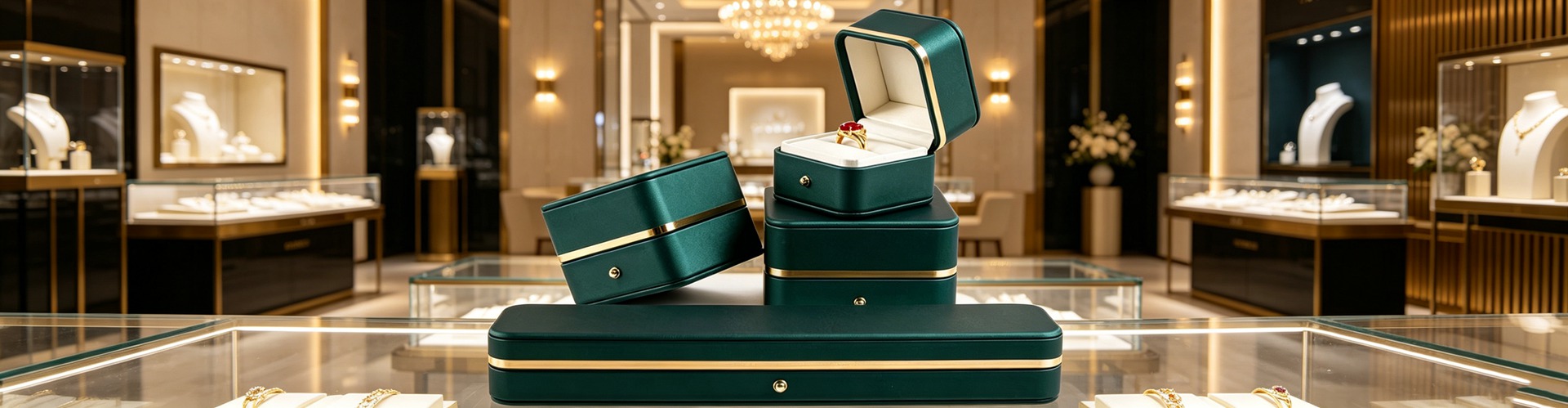
然而,中古珠宝的复兴,也把“如何呈现旧物”这门功课推到了台前。一件带着岁月包浆的古董钻戒,若随手丢在廉价的绒布袋里,价值感便不自觉地打了折扣;而当它躺在沉稳的木质首饰盒中、被独立卡位的饰品包装盒妥帖固定,那种“值得被收藏”的体面便自然浮现。这正是珠宝包装与陈列真正讲究的地方——不是用喧哗的华丽抢戏,而是用克制的质感衬托。在门店里,珠宝摆台与珠宝展示架把岁月的痕迹讲成卖点:一枚1940年代的胸针,配上恰当的灯光与珠宝陈列道具,讲述的便不再只是“二手”,而是“传世”。
这也是深圳骏依美一直专注的方向。多年来,骏依美深耕珠宝包装设计与珠宝盒定制,深谙“旧物新呈”的分寸感:木质与再生材料的温润、绒面卡位的稳妥、烫印与丝印的细节,都是为了给每一件中古珠宝一个配得上它年代的居所。当循环时尚成为不可逆的趋势,包装不再是一次性耗材,而是一件珠宝漫长生命周期里,反复被使用的“第二个家”。
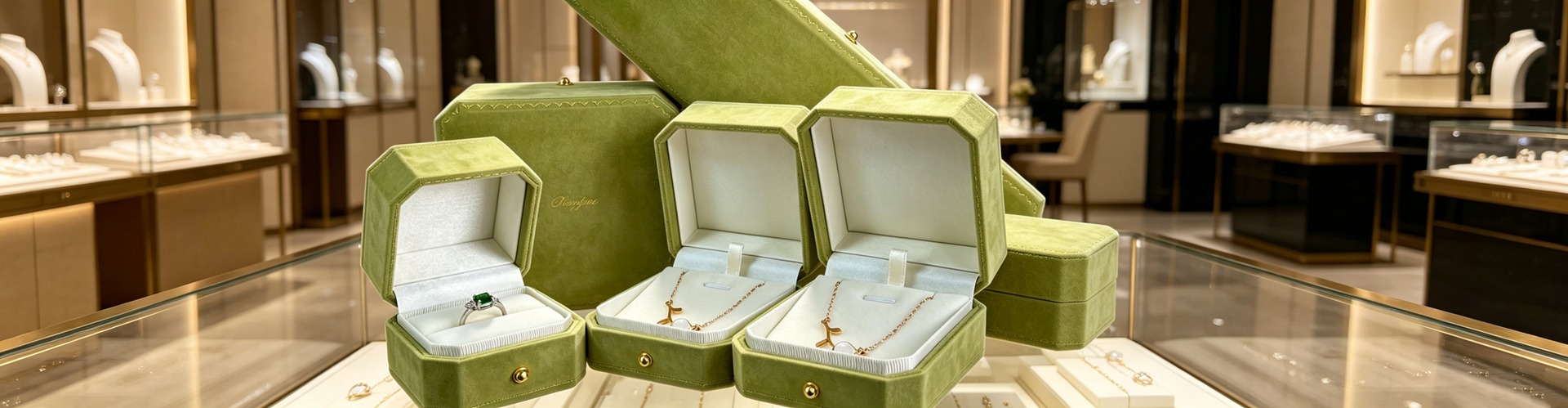
对品牌与零售商而言,中古浪潮给出的启示很清晰:未来竞争的不只是“谁的新品更亮”,更是“谁能把过往的珍贵妥善接住、体面交付”。从拍卖行的年轻面孔,到水贝回收摊前的排队人群,再到橱窗里被重新擦亮的古董胸针——珠宝的故事,正在被重新讲述。而故事的两端,始终需要一只体面的盒子。
本文为原创内容,版权归深圳骏依美所有,转载请注明出处。
骏依美——让每一件珠宝与腕表,都被更好地呈现。