Why A Good Watch Box Protects Its Value表盒选对 腕表保值
Most buyers obsess over the movement and the dial, then shove the original box onto a closet shelf on day one — or throw it out entirely. Years later, when it is time to sell, that missing box quietly shaves a visible slice off the offer. So is a watch box packaging, or is it part of the asset? Here are the questions that come up most often.
Q: Does the box genuinely affect a watch's price, or is that collector folklore?
A: The market data is fairly consistent. On the pre-owned market, a "full set" — original box, warranty card, booklets, spare links, receipt — typically trades 10% to 25% above the identical watch sold naked. Chrono24 data also shows full sets sell roughly 13% faster than watch-only equivalents. Model-level examples make it concrete: a pre-ceramic Submariner 16610 runs about 17.8% higher with a full set, a GMT-Master II 16710 about 23.3%, a Cartier Santos 100XL about 20.8%. Limited editions can carry a 20%–40% premium, and vintage references over fifty years old sometimes show gaps of 25% to well over 100%.
Asian trade-in desks report the same pattern with finer granularity. A 2026 service standard issued in Beijing by market regulators together with the China Horologe Association sets out that a valid in-warranty card adds 10%–15%, while a missing card triggers a flat 12%–25% deduction; complete inner and outer original boxes add 3%–5%, and no original box means a routine 3%–8% haircut. Full sets overall command an 8%–22% premium, rising to 12%–22% on hot sport models. Hong Kong dealers quote 8%–15% above naked pricing for popular steel references with box and papers. One detail worth noting: certain special-edition boxes from top brands trade independently on the secondary market for the equivalent of several hundred US dollars.
The honest conclusion is pragmatic. The box is not the pricing core — movement condition, cosmetic grade and authenticity are. But it is the single piece of that premium most owners throw away themselves.
Q: What temperature, humidity and light levels actually matter for storage?
A: Three ranges cover almost everything.
Humidity: 40%–60% relative humidity is the accepted safe band. Above 65%–70%, ferrous movement components begin to corrode and leather straps can rot or discolour. Below 35%, rubber gaskets slowly dry and crack, which quietly compromises water resistance. A twenty-dollar hygrometer inside the case beats guesswork, and silica gel refreshed every few months handles the rest. One overlooked detail: avoid placing cobalt-chloride blue indicating silica gel right next to precious-metal dials, since the indicator can off-gas trace compounds over years. Indicator-free gel or sealed moisture cards are the safer choice.
Temperature: a stable 18–24°C is ideal. Sustained exposure above 40°C — a parked car in summer, a spot beside a heating vent — accelerates lubricant breakdown. Cold itself is rarely the problem, but years of thermal cycling fatigue gaskets. Garages, attics and sunrooms are all poor long-term homes for a collection.
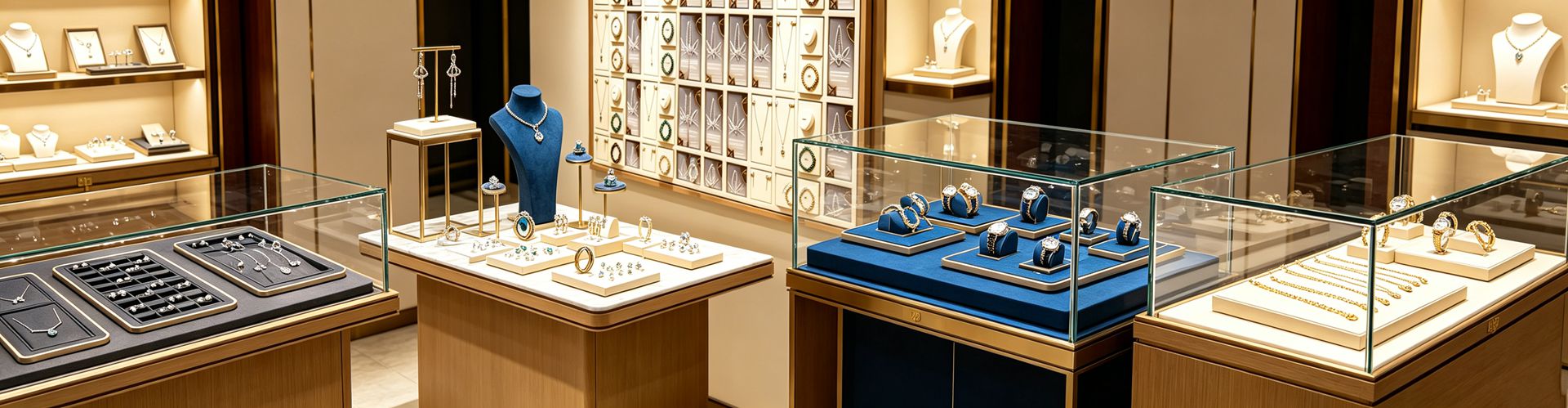
Light and magnetism: UV bleaches dials, degrades luminous material and ages leather straps faster than almost anything else. An open glass-top display case looks superb, but placed opposite a south-facing window it produces visible damage over a five-to-ten-year horizon. Magnetism is sneakier. Speakers, magnetic phone mounts and laptops can magnetise a movement badly enough to push the daily rate to +30 or +60 seconds, an error routinely misdiagnosed as mechanical failure when a watchmaker can demagnetise it in under five minutes. A properly built watch box solves all three problems at once: it blocks light, buffers humidity, excludes dust, and keeps pieces from scratching each other with a soft lining.
Q: Is a watch winder essential equipment or an expensive gadget?
A: It depends on how many automatics you rotate and what they do. An automatic left off the wrist usually stops within 38 to 50 hours. Stopping harms nothing on a modern movement — resetting a three-hand date watch takes seconds. But for a perpetual calendar, annual calendar or moon phase, cycling through months and leap years every time is genuinely tedious, and that is where a winder earns its place.
Settings are what matter. Most Swiss automatics require 650–900 turns per day; Patek Philippe calibres generally sit at 650–800; Rolex Perpetual movements wind bidirectionally, so bidirectional at 650–800 is correct. Damage comes from running a TPD far above the movement's requirement for long stretches, not from winding as such — a correctly programmed unit does not harm a healthy movement. A good winder should also stay under 30 dB at one metre; audible clicking or whirring points to a motor or mounting issue.
One myth to retire: a winder does not extend your service interval. Modern service windows have already stretched from the old three-year rule to 5–7 years, with several brands now publishing guidance closer to 7–10 years — that gain comes from synthetic lubricants and tighter machining, not from the winder. Hand-wound pieces in particular should never be left spinning on one.
Q: How should a retailer display watches so they look expensive without damaging them?
A: Watches follow different display logic from rings and necklaces, because they have thickness and weight distribution. Three practical rules.
First, pillow size must match case diameter. An oversized cushion built for a 44mm diver will not support a small ladies' piece — the watch tilts and load lands on the lugs. Serious watch display props ship with multiple pillow sizes or angled cradles.
Second, store strap watches flat rather than upright on a narrow cushion. Over a few months an upright leather strap develops a permanent crease at the lug that is very hard to reverse. Clasp bracelets closed to reduce link-on-link abrasion.
Third, keep light off the dial. Retail wants brightness, but a spotlight aimed straight at the crystal is both glaring and a cumulative UV dose. Raking light across the case chamfers and indices reads far better than flooding the dial.
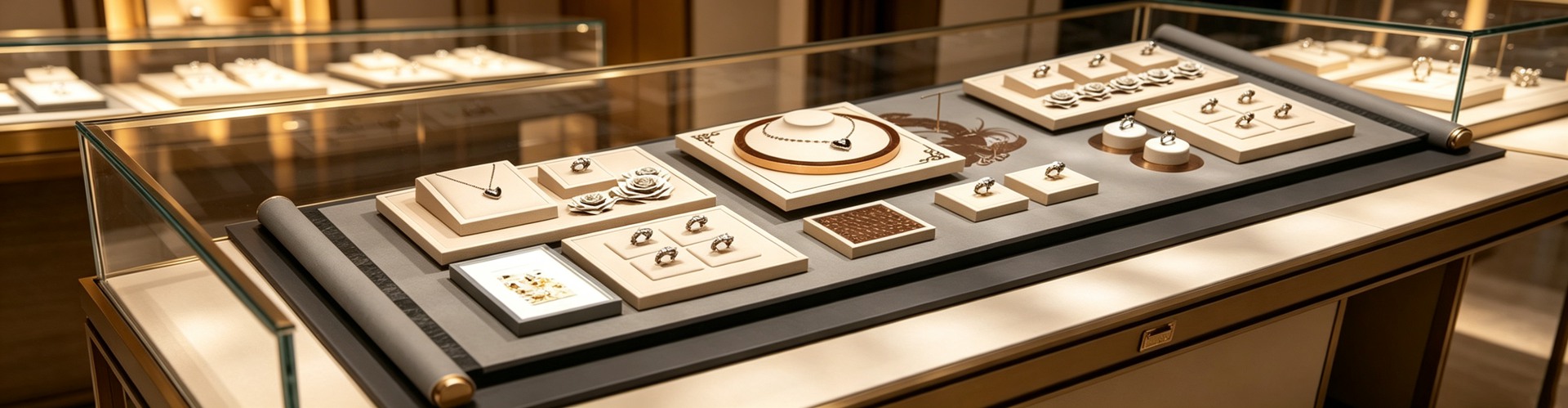
For window and in-case composition, lifting the hero piece to eye level on its own stand outperforms a flat row every time, and mixing in a few jewelry display props to build height variation gives the eye somewhere to land. This is not decoration — it is what makes a customer reach out and pick the watch up.
Q: When commissioning custom watch boxes, which specifications should a buyer check?
A: Ignore the renders and audit six things.
One, lining material: microfibre, velvet and quality leather all work; hard plastic interiors and coarse fabric are what scratch cases. Two, pillow firmness and size tiers — can the supplier deliver 36mm, 40mm and 44mm variants? Three, whether wooden boxes are properly sealed, since untreated wood off-gasses oils that attack finishes over time. Four, magnet placement — magnetic closures must sit well away from the watch position, and cheap boxes often put strong magnets directly above the lid line. Five, material credentials: paper and cardboard already account for roughly 34.8% of watch packaging by material share, and FSC certification, biodegradable inserts, modular reusable structures plus NFC or QR authentication are becoming standard at the luxury end. Six, transit structure — e-commerce requires a compression-resistant outer carton plus a locating inner tray, or the piece arrives with dented corners.
Worth a glance at the market itself: global wrist watch packaging was around USD 2.64 billion in 2025 and is projected to reach USD 3.69 billion by 2032, a CAGR near 4.88%, with Asia Pacific the largest region at roughly USD 1.01 billion and luxury watches taking a 54.6% share. Another house forecasts USD 3.02 billion in 2026 rising to USD 5.02 billion by 2035 at a 5.8% CAGR. Different numbers, same verdict: packaging has moved from giveaway to a component of brand narrative and residual value. That is why more brands now develop watch boxes and jewelry boxes within one design language, handing the whole programme to a manufacturer with real structural engineering capability rather than buying stock items piecemeal. Shenzhen Junyimei approaches these projects the same way — dimensions and structure first, finishes and craft second.
One line to close on: the value of a watch box is not realised the day you buy it, but the day you sell the watch.
This is original content. Copyright belongs to Shenzhen Junyimei.
Junyimei — present every jewel and timepiece at its best.
很多人买表盯着机芯和表盘,回家第一天却把原装表盒塞进柜子顶层,甚至当废纸箱丢了。几年后想出手,才发现少了那只盒子,报价单上凭空少一截。表盒到底是包装,还是资产的一部分?
问:手表盒真的会影响腕表价格吗?还是收藏圈的心理安慰?
答:这有市场数据支撑。二手市场"全套"(原装盒+保卡+说明书+多余表节+票据)与"裸表"的价差普遍在 10%–25%,Chrono24 数据还显示全套比同款裸表成交快约 13%。具体型号更直观:陶瓷前 Submariner 16610 全套高约 17.8%,GMT-Master II 16710 高约 23.3%,Cartier Santos 100XL 高约 20.8%。限量款溢价可达 20%–40%,五十年以上古董表甚至出现 25%–100% 以上的差距。
国内口径更细。2026 年北京市场监管部门联合中国钟表协会发布的行业服务规范写明:有效在保保卡额外溢价 10%–15%,缺失保卡折价 12%–25%;原装内外盒齐全溢价 3%–5%,无原盒折价 3%–8%;大全套整体溢价 8%–22%,热门运动款上浮到 12%–22%。一些高端品牌的特殊表盒,单是盒子在二手市场就值 1000–3000 元。
结论很务实:盒子不是定价核心(机芯工况、成色、真伪才是),但它是最容易被自己丢掉的那部分溢价。
问:家里存表,温度、湿度、光线到底要控制到什么程度?
答:记住三个区间就够用。
湿度:40%–60% RH 是公认的安全带。高于 65%–70%,机芯含铁零件容易起锈、皮带会霉变;低于 35% 则让橡胶密封圈干裂,直接影响防水。一只几十块的湿度计比经验判断靠谱,硅胶干燥剂每几个月换一次即可,且别用带钴指示剂的蓝色变色硅胶紧挨贵金属表盘。
温度:18–24°C 稳定室温最理想。超过 40°C(暴晒的车内、暖气出风口旁)加速润滑油劣化;冷本身问题不大,但反复冷热循环多年会让密封圈疲劳。车库、阁楼、阳光房都不适合存表。
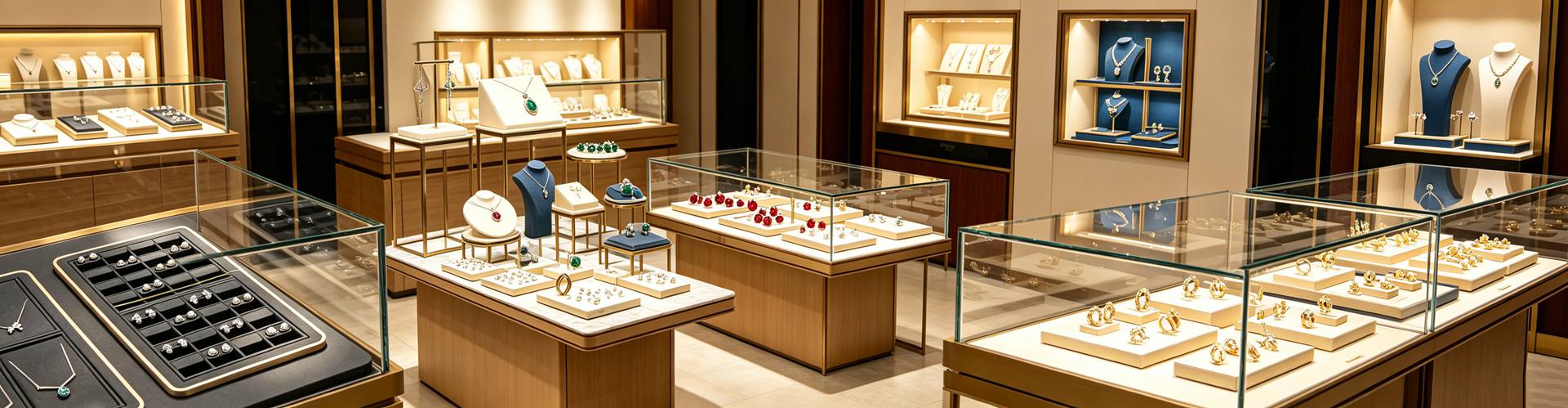
光线与磁场:紫外线让表盘褪色、夜光衰减、皮带老化,开放式玻璃柜正对南向窗户,五到十年损伤肉眼可见。磁场更隐蔽——音箱、磁吸支架、笔记本都可能把机芯磁化,日误差跑到 +30 至 +60 秒,很多人误判为机械故障,其实去磁五分钟就好。一只做工到位的手表盒,本质就是把闭光、控湿、隔尘一次性解决,并用柔性衬里避免表与表互刮。
问:上链盒(摆轮盒)是必需品,还是智商税?
答:看你戴几只、戴什么。自动机械表离腕后通常 38–50 小时内停走,停走对现代机芯无害——三针日历表重新对时几十秒就好。但万年历、年历、月相每次重设要翻月份算闰年,上链盒就是实打实的省事。
关键是参数对。多数瑞士自动机芯需要 650–900 TPD(每日转数),百达翡丽多在 650–800,劳力士为双向上链、设 650–800 双向即可。TPD 远高于机芯需求且长时间运行才是真正的伤害来源,程序正确的上链盒不会损伤健康机芯。
还要澄清:上链盒不会延长保养周期。现代腕表保养区间已从"三年一次"延长到 5–7 年,部分品牌官方给到 7–10 年,那是合成润滑油和加工精度的功劳。手动上链表更不要长期挂在上链盒空转。
问:门店里手表该怎么摆,既显档次又不伤表?
答:手表和戒指、项链的陈列逻辑不同,它有"厚度"和配重。三点实操:
第一,托枕尺寸必须匹配表径。大表位的大枕芯撑不住小尺寸女表,表会歪、表耳受力,好的手表陈列道具会配不同尺寸枕芯或斜面托。
第二,皮带表尽量平放,别长期立在窄枕上——几个月就会在表耳处形成很难恢复的永久弯折;钢链表扣好表扣,减少链节摩擦。
第三,灯光别直射表盘。射灯正对表镜既刺眼又累积紫外,斜射打亮表壳倒角和刻度反而更出效果。
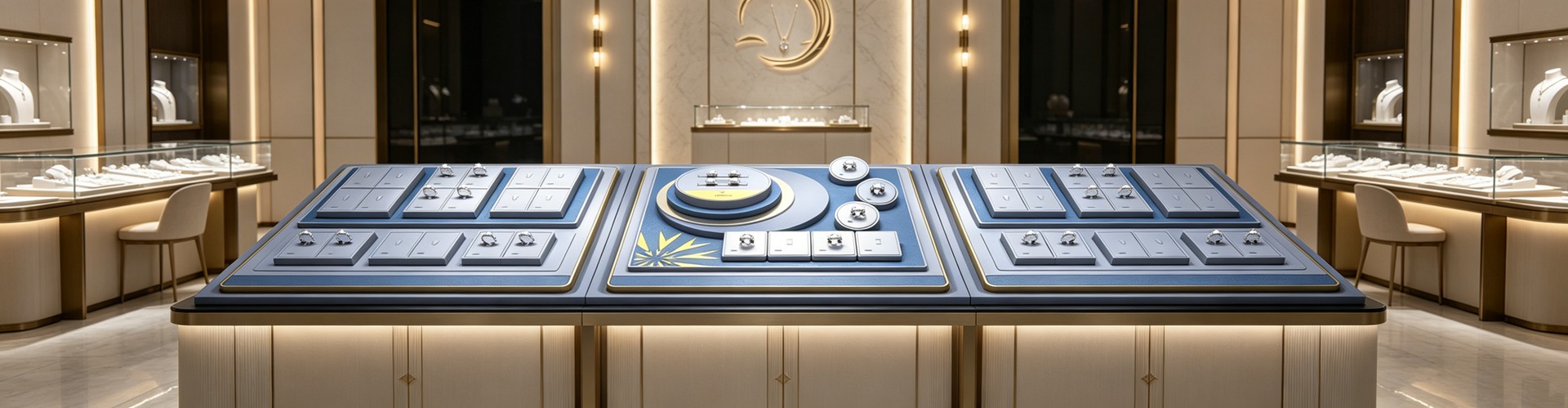
组合上,主推款放平视高度、用独立手表陈列道具抬起来,比一排平铺更抓人;同柜搭配少量珠宝陈列道具做高低层次,视线才有落点。这不是审美问题,是转化问题。
问:品牌方或采购要定制手表盒,验厂时该盯哪几个参数?
答:别只看效果图,盯这六项能筛掉大半供应商。
一、内衬材质:微纤、丝绒、优质皮革都行,避开硬塑料内胆和粗糙织物——刮花表壳的元凶。
二、枕芯软硬与尺寸档位:能否按 36mm / 40mm / 44mm 分规格。
三、木盒是否封边:未处理木材长期释放油分气体,影响表面镀层。
四、磁扣位置:必须远离表位,低价盒子常把强磁做在盖沿正上方。
五、环保凭证:纸/纸板已是腕表包装用量最大的材质(约 34.8%),FSC 认证、可降解内托、模块化可复用结构正成为奢华段标配。
六、运输结构:电商链路必须有外箱抗压+内层卡位的两层设计。
顺带看盘子:全球腕表包装市场 2025 年约 26.4 亿美元,预计 2032 年增至 36.9 亿美元(CAGR 约 4.88%),亚太为最大区域市场,奢华腕表占 54.6%。包装已从"附赠品"变成品牌叙事与保值凭证的一部分。这也是越来越多品牌把手表盒与首饰盒放进同一套设计语言、交给有结构工程能力的珠宝盒工厂整体开发的原因;深圳骏依美的做法也是先定尺寸结构,再谈饰面工艺。
表盒的价值,不在你买它的那天,而在你卖表的那天。
本文为原创内容,版权归深圳骏依美所有,转载请注明出处。
骏依美——让每一件珠宝与腕表,都被更好地呈现。