New Trends in Jewelry Retail: How Scenario-Based Display Reshapes Consumer Shopping Experience珠宝首饰零售新风向:场景化陈列如何重塑消费者购买体验
1. The Era of Scenario-Based Display Has Arrived
In today's jewelry retail industry, consumer expectations for shopping experiences have far surpassed the traditional "browse—negotiate—purchase" model. An increasing number of jewelry brands are treating their stores as immersive experience spaces rather than mere product display venues. Scenario-based display has emerged precisely in response to this trend, constructing themed display environments that embed jewelry and accessories into lifestyle story scenes, allowing consumers to not only see the products themselves but also feel the aesthetic philosophy and cultural connotation conveyed by the brand.
Industry data shows that jewelry stores adopting scenario-based displays have seen an average conversion rate increase of over thirty percent. Behind this figure lies a genuine reflection of consumers' need for "emotional shopping." When a diamond necklace is placed on a carefully designed jewelry display stand with soft lighting and a themed background, its perceived value significantly exceeds that of being simply laid flat in a glass cabinet. This perceptual difference is the core value of scenario-based display.
2. The Psychological Foundation of Visual Marketing
The effectiveness of scenario-based display is rooted in the psychological mechanisms of "anchoring effect" and "contextual association" in consumer psychology. When consumers enter a thoughtfully arranged jewelry space, visual information forms a first impression within seconds, and this impression continuously influences subsequent purchase decisions. Research shows that the human brain processes visual information sixty thousand times faster than text, meaning that before consumers rationally analyze price and quality, the visual effect of the display environment has already subtly conveyed the brand's tonality.
In practical terms, the height, angle, and spacing of jewelry display racks all require precise calculation. The golden eye-level zone is typically between 120 and 160 centimeters above the floor, where products receive the highest exposure. Meanwhile, the colors of display props should form complementary or contrasting relationships with the jewelry's own color tone: warm-toned gold jewelry pairs well with dark velvet-based props, while cool-toned platinum and white gold series are better suited for light-colored or transparent material display carriers. This color psychology matching can effectively enhance the visual appeal of products.
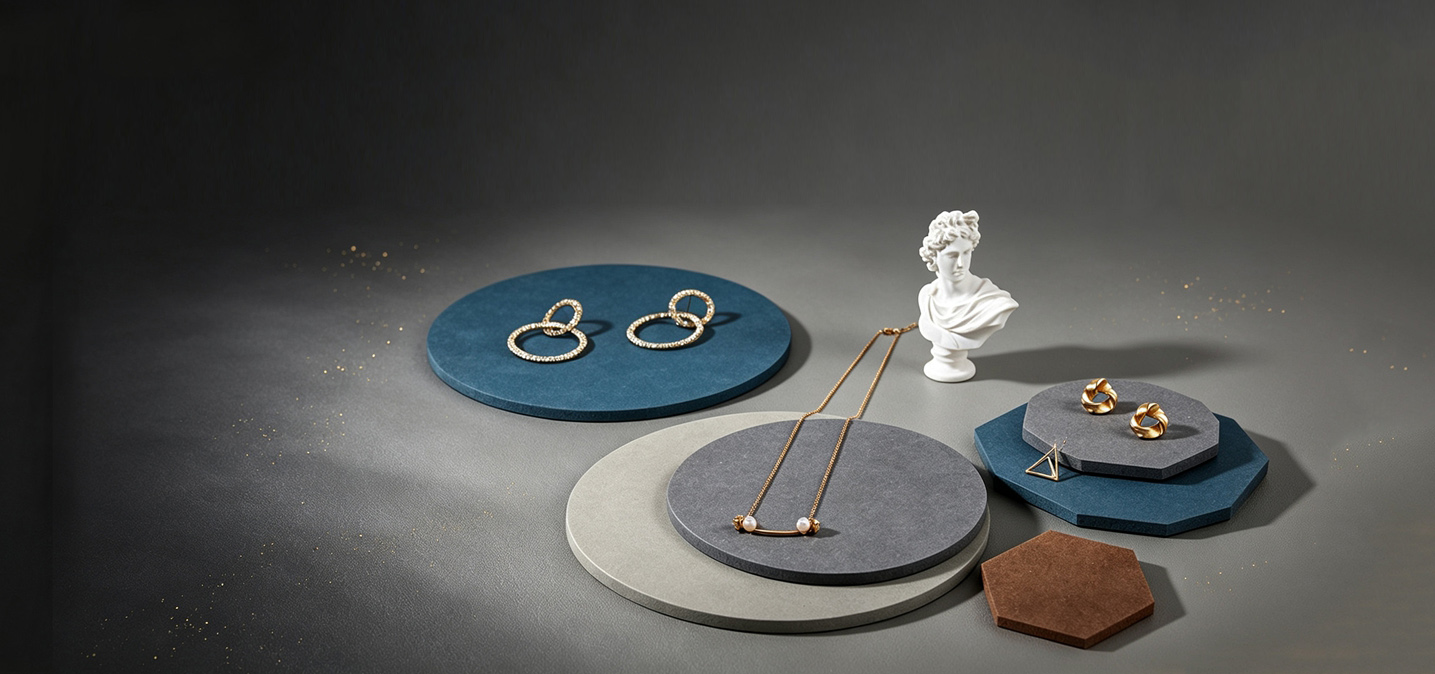
3. The Deep Connection Between Prop Materials and Brand Identity
The material selection for jewelry display props is not merely about aesthetics; it is a direct expression of brand positioning. High-end jewelry brands typically choose natural materials such as solid wood, genuine leather, or silk velvet as display bases, as the warm texture inherent in these materials harmonizes with precious metals and gemstones, creating a calm and luxurious atmosphere. Jewelry brands targeting younger consumer groups, however, tend to use synthetic materials like acrylic, brushed metal, or marble textures to present a modern and individualized feel.
It is worth noting that jewelry boxes, as an important component of the prop system, have evolved from simple storage containers to extensions of the brand experience. A well-designed and customized jewelry box continues to convey brand value long after the consumer leaves the store. Many premium brands have begun embedding brand story cards, care guides, and even digital identity authentication chips inside jewelry boxes, transforming what was once disposable packaging into a long-term brand touchpoint. This concept of "portable display" is being adopted by an increasing number of jewelry enterprises.
4. Integration and Innovation of Digital Interactive Experiences
With the popularization of smart terminals, traditional static displays are evolving toward digital interactivity. Some cutting-edge jewelry stores have already introduced AR virtual try-ons, smart guide screens, and dynamic lighting control systems. Consumers can scan QR codes on jewelry display racks to view 360-degree panoramic product displays, gemstone traceability information, and styling suggestions on their phones. This online-offline integrated experience effectively shortens consumer decision cycles while also accumulating valuable user behavior data for brands.
In the wave of digital transformation, jewelry box wholesalers are also actively adjusting their product strategies. Traditional mass-standardized packaging is being replaced by a "small-batch, multi-style, customizable" model. Through deep collaboration with retail endpoints, wholesalers can provide packaging solutions with higher matching degrees tailored to different stores' display themes and brand tonality. This shift from a "product-centric" to a "scenario-centric" supply chain is reshaping the entire jewelry packaging industry ecosystem.
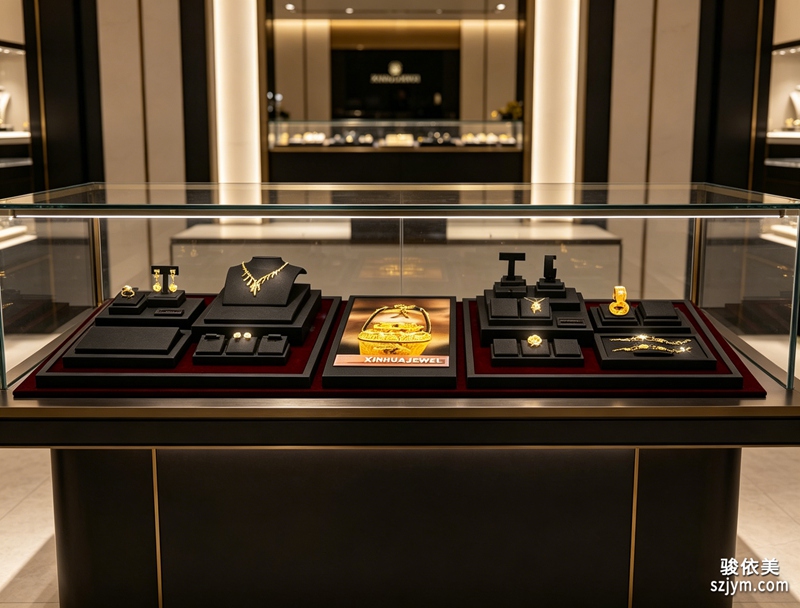
5. Future Outlook and Industry Insights
Looking ahead, scenario-based display in jewelry retail will show three major trends: first, the degree of intelligence will continue to rise, with IoT sensors monitoring foot traffic, dwell time, and interaction heat in display areas in real time to provide data support for display optimization; second, sustainability concepts will penetrate deeply, with eco-friendly display props and biodegradable packaging becoming mainstream choices; third, personalized customization will move toward scale, as flexible manufacturing technology enables jewelry brands to create exclusive display schemes for different regions, seasons, and even holidays.
For jewelry enterprises, scenario-based display is not a simple decoration upgrade but a comprehensive transformation from thinking patterns to operational systems. It requires companies to place consumer experience at the core, using "scenarios" as the nexus to integrate product design, spatial layout, packaging innovation, and digital technology. In this process, professional jewelry display prop suppliers play a critical role—they provide not only physical display tools but also aesthetic design wisdom and commercial strategy support. It is foreseeable that under the dual drive of consumption upgrades and technological innovation, the display aesthetics of jewelry retail will usher in an even more exciting chapter.
This article is original content, copyrighted by Shenzhen Junyimei. Please indicate the source when reprinting.
Junyimei — Making every piece of jewelry and watch presented better. Specializing in jewelry boxes, jewelry display stands, watch display props. Shenzhen-owned factory, custom design supported. Inquiries welcome!
一、场景化陈列的时代到来
在当今珠宝零售行业,消费者对购物体验的期望已经远远超越了过去简单的"看货—议价—成交"模式。越来越多的珠宝品牌开始将门店视为沉浸式体验空间,而不仅仅是商品展示的场所。场景化陈列正是在这一趋势下应运而生,它通过构建主题化的展示环境,将珠宝首饰融入生活方式的故事场景中,让消费者在选购时不仅看到产品本身,更能感受到品牌所传递的美学理念与文化内涵。
从行业数据来看,采用场景化陈列的珠宝门店平均进店转化率提升了百分之三十以上。这一数字背后,是消费者对"情感化购物"需求的真实反映。当一件钻石项链被放置在精心设计的珠宝摆台上,搭配柔和的灯光与主题背景,它的价值感知会显著高于被简单平铺在玻璃柜中的状态。这种感知差异正是场景化陈列的核心价值所在。
二、视觉营销的心理学基础
场景化陈列之所以有效,其根源在于消费心理学中的"锚定效应"与"情境联想"机制。当消费者进入一个精心布置的珠宝空间,视觉信息会在数秒内形成第一印象,而这个印象会持续影响后续的购买决策。研究显示,人类大脑处理视觉信息的速度比文字快六万倍,这意味着在消费者理性分析价格与品质之前,陈列环境的视觉效果已经潜移默化地完成了品牌调性的传递。
具体到操作层面,珠宝陈列架的高度、角度和间距都需要经过精密计算。黄金视线区域通常在地面以上一百二十至一百六十厘米之间,这一区间内的商品曝光率最高。同时,陈列道具的色彩应当与珠宝本身的色调形成互补或对比关系:暖色调的黄金首饰适合搭配深色绒布底座的道具,而冷色调的铂金与白金系列则更适合浅色或透明材质的展示载体。这种色彩心理学上的匹配能够有效提升产品的视觉吸引力。
三、道具材质与品牌调性的深度关联
珠宝道具的材质选择不仅关乎美观,更是品牌定位的直接表达。高端珠宝品牌通常选用实木、真皮或丝绒等天然材质作为陈列基底,这些材料自带的温润质感能够与贵金属和宝石形成和谐呼应,营造出沉稳而奢华的氛围。而面向年轻消费群体的潮牌珠宝则更倾向于使用亚克力、金属拉丝或大理石纹等人造材质,以呈现现代感与个性化。
值得注意的是,首饰盒作为道具体系中的重要组成部分,其功能已经从单纯的收纳容器升级为品牌体验的延伸。一款设计与定制精良的首饰盒,在消费者离店后依然能够持续传递品牌价值。许多高端品牌开始在首饰盒内嵌入品牌故事卡片、保养指南甚至数字身份认证芯片,将原本的一次性包装转化为长期的品牌触点。这种"可带走的陈列"理念正在被越来越多的珠宝企业所采纳。
四、数字化互动体验的融合创新
随着智能终端的普及,传统的静态陈列正在向数字化互动方向演进。一些前沿珠宝门店已经开始引入AR虚拟试戴、智能导购屏幕和动态灯光控制系统。消费者可以通过扫描珠宝陈列架上的二维码,在手机上查看产品的360度全景展示、宝石溯源信息以及搭配建议。这种线上线下融合的体验方式,有效缩短了消费者的决策周期,同时也为品牌积累了宝贵的用户行为数据。
在数字化转型的浪潮中,珠宝盒批发商也在积极调整产品策略。传统的大批量标准化包装正在被"小批量、多款式、可定制"的模式所替代。批发商通过与零售端的深度合作,能够根据不同门店的陈列主题和品牌调性,提供匹配度更高的包装解决方案。这种从"以产品为中心"到"以场景为中心"的供应链转变,正在重塑整个珠宝包装产业的生态格局。
五、未来展望与行业启示
展望未来,珠宝零售的场景化陈列将呈现三大趋势:一是智能化程度持续提升,物联网传感器将实时监测陈列区域的客流量、停留时长和互动热度,为陈列优化提供数据支撑;二是可持续理念深入渗透,环保材质的陈列道具和可降解包装将成为主流选择;三是个性化定制走向规模化,借助柔性制造技术,珠宝品牌可以为不同区域、不同季节甚至不同节日定制专属的陈列方案。
对于珠宝企业而言,场景化陈列不是简单的装修升级,而是一次从思维模式到运营体系的全面变革。它要求企业将消费者体验置于核心位置,以"场景"为纽带整合产品设计、空间布局、包装创新和数字技术。在这个过程中,专业的珠宝道具供应商扮演着关键角色——他们不仅提供物理层面的陈列工具,更提供美学层面的设计智慧和商业层面的策略支持。可以预见,在消费升级和技术革新的双重驱动下,珠宝零售的陈列美学将迎来更加精彩的篇章。
本文为原创内容,版权归深圳骏依美所有,转载请注明出处。
骏依美——让每一件珠宝与腕表,都被更好地呈现。专注珠宝盒、首饰盒、珠宝陈列架、手表陈列道具等包装产品的设计与生产,深圳自有工厂,支持来图定制打样,欢迎咨询合作!