Forward-looking Trends in Jewelry Packaging Design for 2026: From Protection to Brand Storytelling2026年珠宝包装设计的前瞻趋势:从保护功能到品牌叙事的进化
1. The Evolution of Jewelry Packaging: From Utility to Artistic Expression
The history of jewelry packaging can be traced back hundreds of years, when packaging was solely designed to protect precious accessories from damage during transport and storage. However, as consumer aesthetics continue to evolve and brand awareness grows, jewelry packaging has far exceeded its original protective function, becoming an important vehicle for brands to convey value and culture. In 2026, we see more and more jewelry brands elevating packaging design to the same level as product design itself, with some consumers even making purchase decisions based on the beauty of the packaging alone.
From wooden boxes to velvet cases, from minimalist paper boxes to 3D-printed custom boxes, the pace of innovation in packaging materials and craftsmanship is remarkable. Especially in the high-end jewelry sector, the unboxing experience has become an important content for consumers to share on social media. A beautifully designed jewelry box not only enhances the added value of the product but also serves as an implicit secondary marketing channel for the brand. This shift from "function-oriented" to "experience-oriented" is profoundly influencing the packaging strategies of the entire jewelry industry.
2. Sustainable Materials: The Green Packaging Wave Sweeps the Jewelry Industry
Rising global environmental awareness is driving the jewelry industry toward a more sustainable development path. In 2026, an increasing number of jewelry brands are adopting biodegradable materials, recycled cardboard, plant fibers, and eco-friendly inks for their packaging. This trend not only responds to growing consumer demand for sustainability but also reflects the brand's sense of social responsibility.
It is worth noting that sustainable packaging does not mean sacrificing aesthetics and quality. Many innovative materials can already rival traditional ones in texture and visual appeal, and even offer entirely new experiences in touch and appearance. For example, jewelry boxes made from bamboo fiber composite materials not only possess a natural warmth but can also fully degrade in natural environments. For jewelry companies focused on long-term brand value, green packaging has become an important direction for differentiated competition.
3. Personalized Customization: Packaging as an Extension of Brand Storytelling
In the era of personalized consumption, uniform packaging can no longer meet consumer expectations. Among the jewelry packaging trends of 2026, design and customization have become core keywords. From laser-engraved brand logos to customized interior layouts based on consumer preferences, from color schemes to material selection, every detail can serve as a bridge for deep communication between brands and consumers.
Especially for mid-to-high-end jewelry brands, customized packaging can create a unique sense of ceremony for consumers. Some brands have even introduced "growable" packaging designs — the interior modules of jewelry boxes can be flexibly adjusted as consumers purchase more jewelry in the future. This forward-thinking design philosophy not only increases consumer brand loyalty but also creates opportunities for sustained repurchase. In this field, Shenzhen, as an important base for the jewelry industry, has numerous factories equipped with complete customization capabilities from design to production, able to provide differentiated packaging solutions for various brands.
4. Upgrading Display Aesthetics: Innovation in Jewelry Display Stands and Props
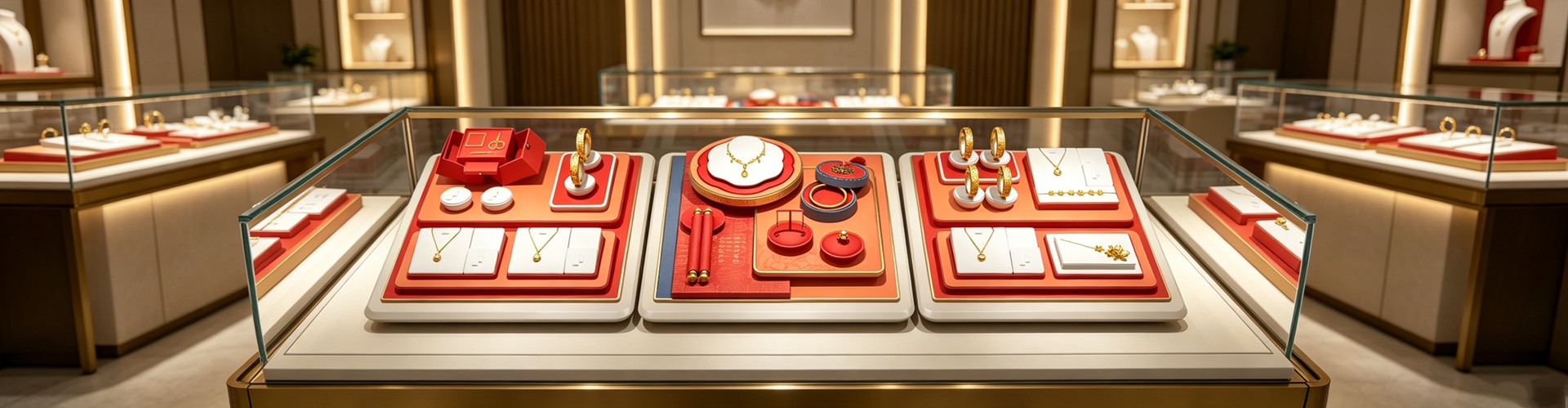
Beyond product packaging itself, the display methods in physical stores are also undergoing profound transformation. Traditional jewelry display stands and jewelry display props are evolving from single-purpose product display tools into comprehensive display systems that integrate aesthetic design, lighting engineering, and interactive experiences. The display design of 2026 focuses more on creating immersive scenes, using clever spatial layouts and material pairings to create an immersive shopping experience for consumers.
In terms of display prop innovation, new products such as adjustable-angle rotating display stands, jewelry counters with embedded LED lighting, and smart display props integrated with digital screens are constantly emerging. These innovations not only enhance the display effect of jewelry but can also be flexibly adjusted according to different product lines, maximizing the unique charm of each piece of jewelry. Meanwhile, watch display props are also upgrading simultaneously, transitioning from traditional flat displays to three-dimensional, multi-layered presentations, allowing each timepiece to be presented at its best angle.
5. Future Outlook: The Fusion of Smart Packaging and Digital Experiences
Looking ahead, the integration of jewelry packaging with digital technology will become the next major trend. NFC chip embedding, AR augmented reality unboxing experiences, and blockchain traceability information storage are being gradually introduced into the jewelry packaging field. Consumers can simply tap the packaging with their phones to access complete product information, certification documents, and brand stories, greatly enriching the purchasing experience.
For jewelry box wholesale and retail enterprises, keeping pace with these trends is not just a market choice but an inevitable requirement for brand survival and development. The jewelry packaging of the future will no longer be just a container but a comprehensive medium that integrates protection, display, storytelling, and interaction. Brands that can embrace change first and incorporate innovative concepts into packaging design will surely stand out in fierce market competition, winning consumer favor and trust.
This article is original content, copyrighted by Shenzhen Junyimei. Please indicate the source when reprinting.
Junyimei — Making every piece of jewelry and watch presented better. Specializing in jewelry boxes, jewelry display stands, watch display props. Shenzhen-owned factory, custom design supported. Inquiries welcome!
一、珠宝包装的演变:从实用功能到艺术表达
珠宝包装的历史可以追溯到数百年前,最初的包装仅仅是为了保护贵重饰品在运输和储存过程中不受损坏。然而,随着消费审美的不断升级和品牌意识的觉醒,珠宝包装早已超越了单纯的保护功能,成为品牌传递价值和文化的重要载体。2026年,我们看到越来越多的珠宝品牌将包装设计提升到了与产品设计同等的高度,甚至有些消费者会因为一个精美的包装而决定购买。
从木盒到丝绒盒,从简约纸盒到3D打印定制盒,包装材质和工艺的迭代速度令人瞩目。特别是在高端珠宝领域,开箱体验已经成为消费者分享社交媒体的重要内容,一个设计精良的首饰盒不仅能够提升产品的附加值,还能在无形中为品牌进行二次传播。这种从"功能导向"到"体验导向"的转变,正在深刻影响着整个珠宝行业的包装策略。
二、可持续材料:绿色包装新浪潮席卷珠宝行业
全球环保意识的提升正在推动珠宝行业走向更加可持续的发展道路。2026年,越来越多的珠宝品牌开始采用可降解材料、再生纸板、植物纤维以及环保油墨来制作包装。这种趋势不仅响应了消费者日益增长的环保诉求,也体现了品牌的社会责任感。
值得注意的是,可持续包装并不意味着牺牲美观和品质。许多创新材料在质感和视觉效果上已经能够媲美传统材料,甚至在触感和视觉上带来全新的体验。例如,竹纤维复合材料制成的首饰盒不仅具有天然的温润质感,还能在自然环境中完全降解。对于注重品牌长期价值的珠宝企业而言,绿色包装已经成为差异化竞争的重要方向。
三、个性化定制:包装成为品牌叙事的延伸
在个性化消费时代,千篇一律的包装已经无法满足消费者的期待。2026年的珠宝包装趋势中,设计与定制成为核心关键词。从镭射雕刻品牌Logo到根据消费者喜好定制内部布局,从色彩搭配到材质选择,每一个细节都可以成为品牌与消费者之间深度沟通的桥梁。
特别是对于中高端珠宝品牌而言,定制化包装能够为消费者创造独一无二的仪式感。一些品牌甚至推出了"可成长"的包装设计——首饰盒的内部模块可以根据消费者未来购买的更多首饰进行灵活调整。这种前瞻性的设计理念不仅增加了消费者的品牌忠诚度,也为品牌创造了持续复购的契机。在这一领域,深圳作为珠宝产业的重要基地,众多工厂已经具备了从设计到生产的完整定制能力,能够为不同品牌提供差异化的包装解决方案。
四、陈列美学的升级:珠宝陈列架与摆台的革新
除了产品包装本身,线下门店的陈列方式同样经历着深刻的变革。传统的珠宝陈列架和珠宝摆台正在从单一的商品展示工具,进化为集美学设计、灯光工程和互动体验于一体的综合展示系统。2026年的陈列设计更加注重场景化营造,通过巧妙的空间布局和材质搭配,为消费者创造沉浸式的购物体验。
在陈列道具的创新方面,可调节角度的旋转展示架、嵌入式LED照明的珠宝台、以及融合数字屏幕的智能摆台等新型产品不断涌现。这些创新不仅提升了珠宝的展示效果,还能根据不同产品系列灵活调整,最大化地突出每件珠宝的独特魅力。同时,手表陈列道具也在同步升级,从传统的平铺式展示向立体化、多层次展示转变,让每一枚腕表都能以最佳角度呈现。
五、未来展望:智能包装与数字化体验的融合
展望未来,珠宝包装与数字化技术的融合将成为下一个重要趋势。NFC芯片嵌入、AR增强现实开箱体验、区块链溯源信息存储等技术正在被逐步引入珠宝包装领域。消费者只需用手机触碰包装,就能获取产品的完整信息、认证证书以及品牌故事,这种交互方式极大地丰富了消费者的购买体验。
对于珠宝盒批发和零售企业而言,紧跟这些趋势不仅是市场选择,更是品牌生存和发展的必然要求。未来的珠宝包装将不再只是一个容器,而是一个集保护、展示、叙事和互动于一体的综合载体。那些能够率先拥抱变革、将创新理念融入包装设计的品牌,必将在激烈的市场竞争中脱颖而出,赢得消费者的青睐和信任。
本文为原创内容,版权归深圳骏依美所有,转载请注明出处。
骏依美——让每一件珠宝与腕表,都被更好地呈现。专注珠宝盒、首饰盒、珠宝陈列架、手表陈列道具等包装产品的设计与生产,深圳自有工厂,支持来图定制打样,欢迎咨询合作!