How to Choose the Right Jewelry Box Material首饰盒材质怎么选
A diamond ring in a glossy plastic-feel carton and the same ring in a matte wood-grain box with flocked lining can command very different prices. The box is not a sidekick—it is the first sentence your jewelry speaks, and the material writes it.
Q1: Do customers actually care about jewelry box material?
They do, more than many owners assume. The global jewelry packaging box market passed US$4.8 billion in 2023 and is growing at roughly 6.2% CAGR, with material upgrades a key driver. Nielsen found 81% of global respondents feel strongly that companies should help the environment. Shorr's 2025 Sustainable Packaging Consumer Report (2,016 US consumers) is blunter: 90% are more likely to buy from brands with eco-friendly packaging, 54% deliberately chose sustainable packaging in the past six months, 43% will pay a premium, and 39% have switched brands for greener packaging. Simon-Kucher's 2025 Germany study (2,031 people) adds that 63% view brands with sustainable packaging more positively and 54% will pay more (about 8% on average). Material is no longer a cost line—it is a silent closer.
Q2: What are the main materials, and what positioning does each carry?
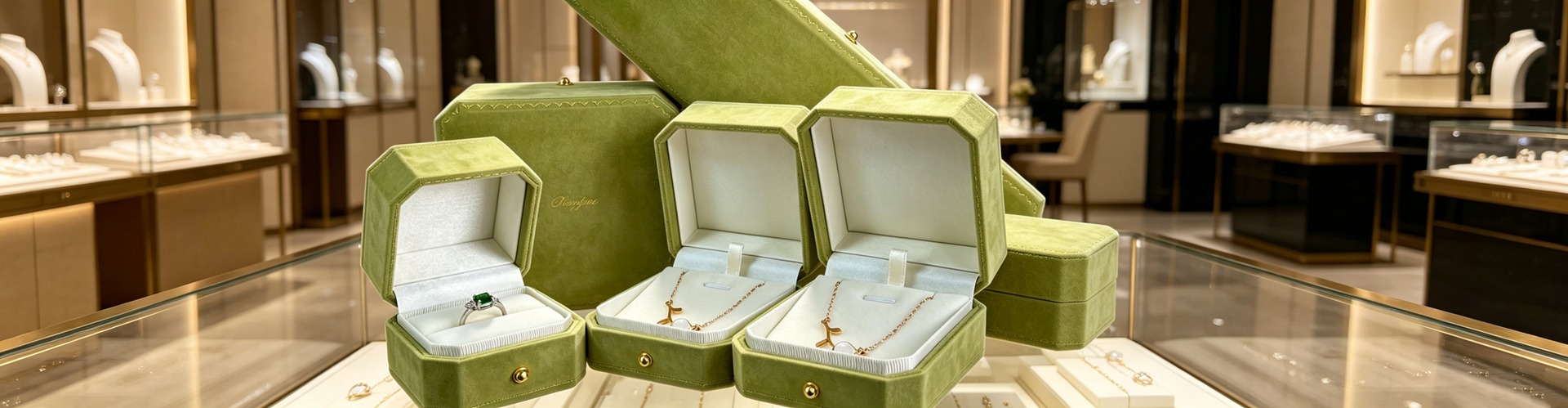
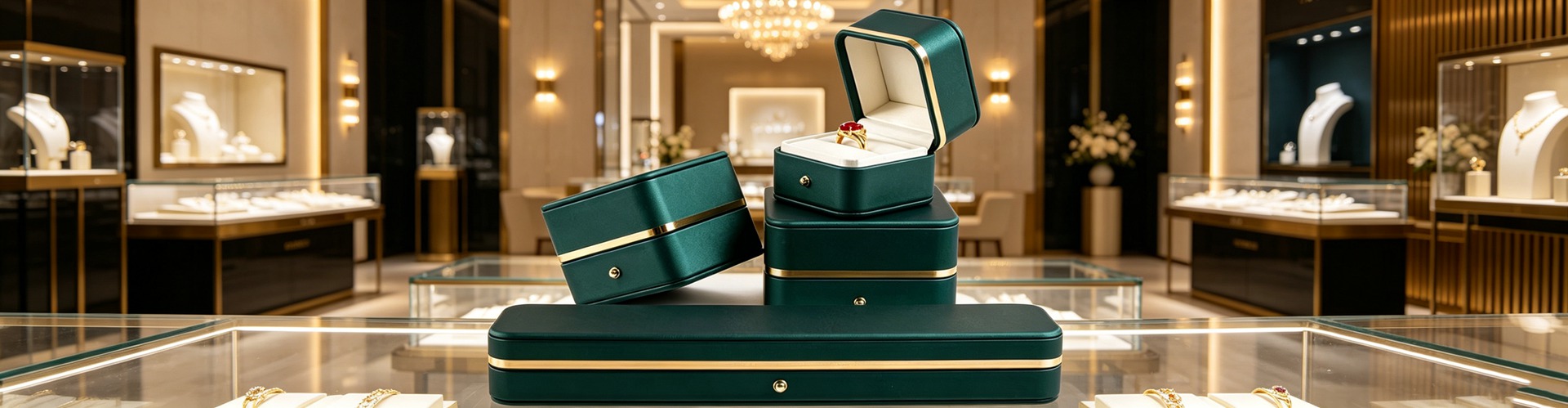
Read a quick map. Wood / recycled wood feels warm and substantial—premium and gifting territory; Tiffany's iconic blue box now holds over 65% recycled content without losing prestige. Leatherette / PU-finish paper mimics real leather via decorative printing: matte, understated, modern—the go-to for high-end minimalist jewelry packaging. Flocked greyboard is soft and protective, the workhorse lining for rings and earrings. Acrylic / clear cases are light and translucent with built-in display appeal, perfect for young lines and "unboxing" social shots. Recycled paper / Kraft is honest and recyclable, telling a sustainability story. When you commission a custom jewelry box, match material to brand tone: cold-tech calls for matte black with a metal badge; warm-oriental calls for wood grain and cream flocking. A jewelry box factory like Shenzhen Junyimei can unify the case, lining, and hardware into one visual language so the box never fights the jewel.
Q3: Does eco material look cheap?
Not if chosen well. Sustainable materials are projected to exceed 40% of jewelry packaging by 2025, and they are going premium: recycled paper cuts carbon ~40% versus virgin and uses far less water; FSC-certified paper comes from responsibly managed forests; PLA bioplastic from plant sugars is compostable; mycelium (mushroom-root) and seaweed-based materials earn PR on limited editions. Lush shipped a "zero-waste" jewelry box that converts into a planter. The trick: tactility comes from finishing, not from waste—matte coating, linen embossing, a thin gold-foil line make recycled paper feel luxury. Eco and premium are not opposites; carelessness is.
Q4: How can a small batch brand tell a story without blowing budget?
Three moves. First, pick one or two "signature materials" instead of gilding the whole box: a recycled carton with a foil logo outside, cheaper flocking inside—the visual weight lands on the brand mark. Second, turn the jewelry pouch into a keeper: an organic-cotton or linen pouch outlives a one-time box and travels with the customer as free advertising. Third, use a QR code to tell the material's origin—"this box is 65% recycled fiber" reads truer than slogans printed everywhere. Epsilon found 80% of consumers prefer brands offering personalized experiences; a small material touch is the cheapest personalization there is.
Q5: What checklist should I run before ordering?
Walk these five lines: ① Protection—flocked lining against scratches, anti-magnetic lining for watches; the box must never become the thing that damages the goods. ② Quality match—don't wrap a thousand-dollar piece in toy-gloss. ③ Sustainability proof—prefer FSC / recycled, and make the eco story visible. ④ Brand coherence—color, hardware, and typeface aligned with your store. ⑤ Cost control—core SKUs get the hero material, long-tail items a substitute. Hand this list to a jewelry box factory for a sample round and you'll usually lock the direction in one pass. Customers forget the box's specs; they remember whether the moment of opening felt worth it.
This is original content. Copyright belongs to Shenzhen Junyimei.
Junyimei — present every jewel and timepiece at its best.
一枚钻戒躺在塑料感十足的亮面纸盒里,和躺在哑光木纹+植绒内衬的盒子里,顾客愿意付的价格可能差出两成。盒子不是配角,它是珠宝"出场"的第一句话——而这句话,由材质替你说出。
问一:珠宝盒材质,顾客真的在意吗?
在意,而且比很多店主以为的更在意。全球珠宝包装盒市场 2023 年已突破 48 亿美元,并以约 6.2% 的年复合增速扩张,材质升级正是主要驱动力之一。尼尔森调研显示 81% 的全球受访者强烈认为企业应当改善环境;Shorr 2025 可持续包装消费者报告(样本 2016 名美国消费者)更直接:90% 的人更可能购买采用可持续包装的品牌,54% 在过去半年刻意选择环保包装,43% 愿为可持续包装付溢价,更有 39% 曾因对手更环保而直接换品牌。Simon-Kucher 2025 年德国调研(2031 人)也印证:63% 认为可持续包装让品牌形象更好,54% 愿付溢价(平均约 8%)。材质已不是成本项,而是成交的隐形推手——一枚被用心包裹的戒指,顾客默认它更值得。
问二:主流材质怎么分,各自撑什么定位?
先看一张"材质地图"。木质/再生木温润、有分量,撑高端与礼赠线,Tiffany 蓝盒已含 65% 以上再生材料仍保住 prestige;皮革纹/PU 饰面纸用装饰印刷模拟真皮手感,哑光、低调、现代,是高端简约包装的常客;植绒+灰板软触、护形,是戒指耳环内衬的主力;亚克力/透明壳轻盈通透、自带展示感,适合年轻线与社交"开箱照";再生纸/Kraft质朴可回收,呼应可持续叙事。做珠宝盒定制时,材质要与品牌调性同频:冷淡科技感选哑光黑+金属标,温润东方感选木纹+米色植绒。深圳骏依美这类珠宝盒工厂常能把盒体、内衬、五金做成同一套视觉语言,避免"盒子一个调、首饰另一个调"的割裂。
问三:环保材质会不会显得廉价?
不会,前提是选对。2025 年可持续材料在珠宝包装中占比预计超 40%,且高端化趋势明显:再生纸比原生材料减碳约 40%、更省水;FSC 认证纸来自负责任森林;PLA 生物基塑料源自植物糖、可堆肥;蘑菇菌丝(mycelium)、海藻基材料用于限量款还能换 PR 声量。Lush 推出过"零废弃珠宝盒"可二次变成花盆。关键是"质感来自处理,不是来自浪费"——哑光涂层、布纹压印、烫金细线,都能让再生纸也有奢侈品的分寸感。换句话说,环保和高级并不对立,对立的是"敷衍"。
问四:小批量品牌怎么用材质讲品牌故事又不超预算?
三招。第一,选 1–2 个"记忆点材质"而非全盒堆料:比如外盒用再生纸+烫 Logo,内衬用成本更低的植绒,视觉重心落在品牌标识上。第二,把首饰袋做成可留存的配件——有机棉/亚麻小袋比一次性盒更易被顾客带走复用,自带传播。第三,用二维码讲材质来历:扫码看见"本盒含 65% 再生纤维",比印满标语更可信。Epsilon 研究指 80% 消费者更愿与提供个性化体验的品牌做生意;材质上的小巧思,就是最便宜的个性化。珠宝包装因此从"容器"升级为"品牌的第一句自我介绍"。
问五:下单前,材质清单怎么列?
按这五条过一遍:①防护——戒指用植绒防刮、手表用防磁内衬,别让盒子成了伤货的元凶;②质感匹配价位——千元线别用玩具感亮面;③可持续凭证——优先 FSC/再生材料,并在外观上让顾客"看得见"环保;④品牌同频——颜色、五金、字体与店铺视觉一致;⑤成本可控——核心 SKU 用主材质,长尾款用替代材质。把这套清单交给珠宝盒工厂打样,通常一轮就能定调。记住:顾客记不住盒子的参数,但记得住"拆开时那一下,值不值得"。
本文为原创内容,版权归深圳骏依美所有,转载请注明出处。
骏依美——让每一件珠宝与腕表,都被更好地呈现。