How Display Stands Quietly Turn Browsers Into Jewelry Buyers摆台选对 成交翻倍
The same ring, buried in an overstocked velvet tray versus lit by a single precise beam on its own jewelry display stand, can close at wildly different rates. Display is not decoration—it is a silent salesperson that writes "this is worth it" into the customer's eyes before a word is spoken. For a category where perceived value, sparkle, and tactile appeal do most of the selling, the stand that holds the piece is not background furniture. It is part of the product.
Q1: Does display really drive sales, or is it just pretty?
It does, and by more than most owners estimate. GIA consumer-behavior research shows that 68% of in-store fine-jewelry purchases are influenced by the display, not by a decision made before walking in. A Journal of Retailing study notes visual merchandising quality can explain up to 33% of the variation in impulse buying. Measured in practice, structured display—right case height, focused lighting, clean sightlines, grouped curation—lifts sales 20%–40% over random placement: countertop cases 15%–25%, freestanding islands 20%–35%, wall cases 25%–40%, entrance towers 10%–20%. POPAI puts as many as 76% of purchase decisions in-store, and eye-level items are 82% more likely to be picked up. The logic is simple: customers rarely ask to try a piece they cannot see, and an untried piece is usually a permanently lost sale. A well-made jewelry display stand is the cheapest increment you can buy—it just moves the hero piece into the golden sightline. Retail research also finds that up to 70% of jewelry purchases in physical stores are unplanned, triggered by the visual appeal of the display rather than a pre-existing intention, which is exactly why the unplanned moment is the one worth engineering. When the halo effect of a premium environment adds a perceived-value premium of 15%–25%, you are not inflating the price—you are finally showing the piece at its true best, and the customer feels it.
Q2: With a tight budget, light or props first?
Light first. The Lighting Research Center is blunt: at 3000–4000K with a Color Rendering Index of 90+, the same jewelry looks 35%–50% more brilliant than under standard ambient retail light—the fastest payback of any upgrade. Split by material: diamonds and platinum pop under cooler white; gold reads richer in warm light; jade and pearls prefer neutral white. Make the display zone 3–5× the ambient illuminance to create a spotlight effect, but control glare so the fixture never hits the customer's eye. Studies also show shoppers perceive products in well-lit displays as up to 20% more valuable, and that poor lighting can cut perceived value by the same margin. Jewelry display props come second, because their real job is to decide where the light lands and at what angle—an angled velvet cradle does more for a solitaire than a flat tray ever will.
Q3: How many pieces belong in one case?
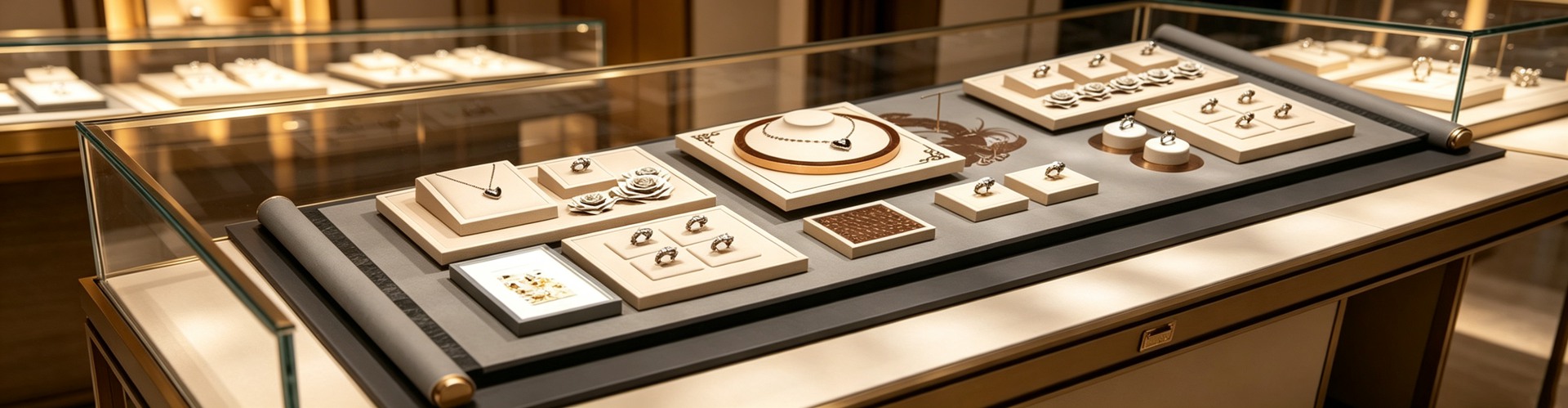
Fewer than you think. A case with five edited pieces signals more value than one stuffed with fifty. Three rules: control density; build visual hierarchy—give each sightline one "hero" piece, raised, individually lit, surrounded by negative space, with the rest as supporting cast; and group by story or scene rather than by metal type. Eye-level positioning alone accounts for an estimated 52% of all retail sales, so the hero belongs at the sightline, not buried on a bottom shelf. When a piece is easy to see, the customer is far more likely to ask to handle it—and handling is the first step to buying. Colour still matters once the piece is placed: displays using complementary colours can lift sales by 35%, so a cool-stone hero against a warm velvet cradle earns more than the same stone on a matching grey. And do not display in isolation—cross-merchandising, pairing a band beside its jewelry box or a necklace with its jewelry display stand, can raise average transaction value by up to 20%, because the customer buys the whole moment, not just the item.
Q4: How to choose material and style for stands and racks?
Let material serve the brand voice. A wooden jewelry display stand reads warm and premium; metal frames feel modern and austere; acrylic is light and transparent, suiting younger lines. Wall jewelry display racks unlock vertical space—the same footprint can hold 3–5× more SKUs than a countertop case, and let you zone by metal, gemstone, or price tier, cutting the time staff spend fetching pieces and letting shoppers pre-select before they reach the counter. Watch display props need extra demagnetization and scratch protection, with microfiber velvet liners rather than plain foam, since a watch movement resents both stray fields and abrasive surfaces. A jewelry box factory such as Shenzhen Junyimei can often deliver a joined "packaging + display" prototype so the box and the stand share one visual language in color temperature, velvet, and hardware—avoiding the disjointed feel of two clashing tones in a single case. That consistency is what makes a counter read as a brand rather than a warehouse. Durability matters too: cheap cases age fast, with lighting that degrades and hardware that wears, pushing maintenance cost up over time, whereas a properly engineered system stays optically stable for years—LED components typically run 50,000+ hours before attention is needed. A display is a multi-year asset, so buy the one whose finish, hinges, and light you will still be proud of in year three, not just in week one.
Q5: Where does a small shop start?
Two moves suffice. First, make one island or tower near the entrance the "hero zone"—only three to five high-margin pieces under an adjustable spotlight. Second, use jewelry display racks to group by story (bridal, everyday, gifting) and tweak weekly. Visual Merchandising & Store Design research finds 73% of customers are more likely to return to a store with strong visual merchandising, and stores that refresh displays every two weeks see 23% more foot traffic than static ones. Window displays alone can lift foot traffic by as much as 23%, so even the glass front is a selling surface. Clear, attractive signage in the display guides the eye and can add another 5%–10% to conversion, while interactive elements—a turntable, a touch-sample drawer—boost product engagement by up to 40%. Small, steady iterations beat one big gamble, and they keep the floor feeling alive rather than frozen. The shop that changes a little every fortnight reads as cared-for; the shop that never moves reads as closed-in-advance.
Q6: What makes a display feel premium versus cheap?
Three signals: security, light, and restraint. Locked glass communicates authenticity and worth—open trays can inadvertently signal lower value even when the merchandise is identical, a documented driver of luxury behavior. Integrated LED turns fire and metal into the version the customer will actually wear. And restraint—negative space, one hero, no clutter—reads as confidence. Retail psychology estimates a perceived-value premium of 15%–25% for pieces shown in high-quality environments, the so-called halo effect: the ring in a lit, velvet-lined cabinet is judged more valuable than the same ring in a flat fluorescent tray. You are not padding the price; you are finally showing the piece at its real best. Trust is the quiet multiplier here. In jewelry retail, where customers part with significant sums for items worn close to the body and given as meaningful gifts, a clean, secure, professionally finished display reduces hesitation and makes people comfortable asking questions. Surveys of mall jewelry shoppers rank the visual appeal of the display as influential for 74%, lighting quality for 68%, and ease of viewing through glass for 61%—all ahead of staff approachability at 57%. Get the case right and the associate's job gets easier; get it wrong and no charm compensates.
Q7: How do I know if display is actually working?
Watch three numbers: dwell time, try-on rate, and attach rate. The cases are telling. One luxury project raised dwell from 4 to 11 minutes, try-on conversion from 28% to 67%, and monthly sales baseline by roughly 38% after a display upgrade. UK retailer Granite Jewellers changed nothing but the environment—same stock, same prices—and lifted average order value 28%, revenue 22% year-on-year, and dwell time 34%, because customers stopped at pieces they had previously walked past. When those numbers move, you know the silent salesperson is on the floor, working every hour the store is open.
This is original content. Copyright belongs to Shenzhen Junyimei.
Junyimei — present every jewel and timepiece at its best.
同一枚戒指,藏在铺满货的绒布盘里,和被一束精准光线打在独立珠宝摆台上,成交概率可能差出一倍。陈列不是装饰,而是一位沉默的销售员——它替你在顾客开口前,先把"这件值得"写进了眼睛里。
问一:陈列真能影响成交,还是只是好看?
能,而且权重比多数店主估计的高。GIA 的消费者行为研究显示,实体店高级珠宝成交中有 68% 是受店内陈列影响,而非顾客进门就已想好要买什么。《Journal of Retailing》的研究也指出,视觉营销质量可解释冲动购买行为最高 33% 的差异。落到实测:结构化陈列(合适柜高、聚焦照明、干净视线、成组策展)相比随意摆放,销售提升 20%–40%。按柜型拆:台面柜 15%–25%,独立中岛 20%–35%,墙面柜 25%–40%,入口旋转塔 10%–20%。道理不复杂:顾客不会为看不见的东西主动开口试戴,没被试戴的货品基本等于永久损失的一单。
问二:预算有限,先投灯光还是先投道具?
先投灯。美国 Lighting Research Center 结论很直接:色温 3000–4000K、显色指数 CRI 90 以上,同一批珠宝视觉亮丽度比普通环境光提升 35%–50%,是回报最快的改造项。色温按品类分:钻石铂金偏冷白火彩更跳,黄金暖光更饱满,翡翠珍珠中性白。展示区照度做到环境 3–5 倍形成聚光,同时控眩光,别让灯珠直射眼睛。珠宝陈列道具排第二,因为它真正决定光落在哪、以什么角度落。
问三:一个柜台放多少件合适?
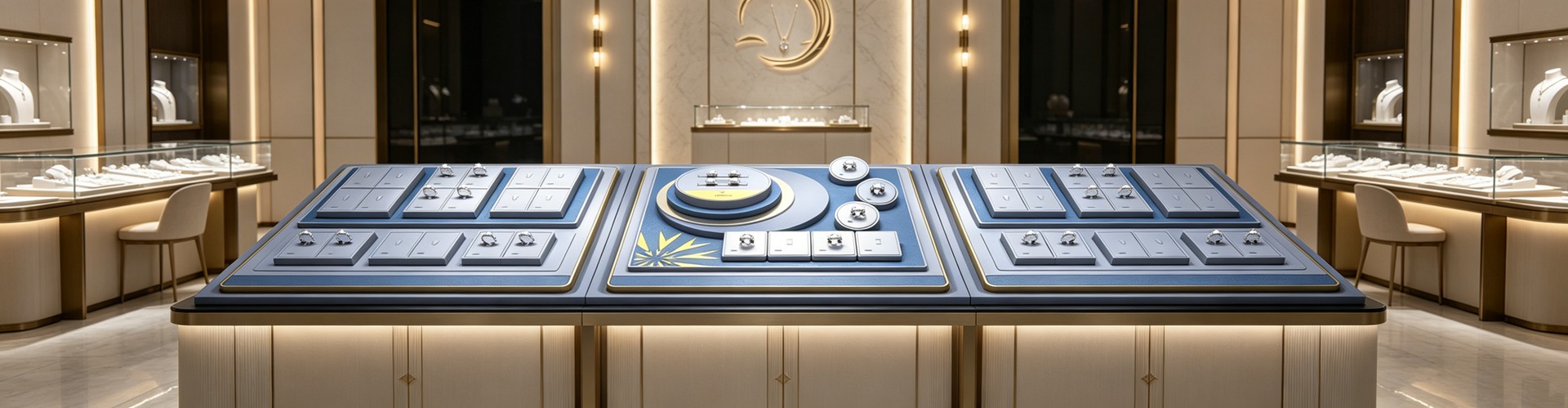
比现在少。摆五件精选的柜子,价值感高于塞五十件。三条做法:控密度;建视觉层次——每视区一个"主角款",抬高、独立打光、四周留白,其余陪衬;按场景分组而非按金属一股脑排。POPAI 研究显示高达 76% 的购买决策在店内做出,而平视高度货品被拿起购买概率高 82%——把主角款放视线黄金区,是最便宜的增量。
问四:摆台和展示架怎么挑材质与样式?
材质先服务品牌调性。珠宝摆台木质显温润高端,金属框架显现代冷峻,亚克力轻盈通透、适合年轻线。墙面珠宝展示架盘活垂直空间,同样面积可多放 3–5 倍 SKU,还能按金属、宝石或价位分区,减少导购反复取货。手表陈列道具要额外防磁防刮,托架内衬用超纤绒而非普通海绵。像深圳骏依美这类珠宝盒工厂常能提供"包装+陈列"一体化打样,让盒子与展架在色温、绒面、五金上同一套视觉语言,避免柜台里两种调性割裂。
问五:小店预算紧,陈列从哪起步?
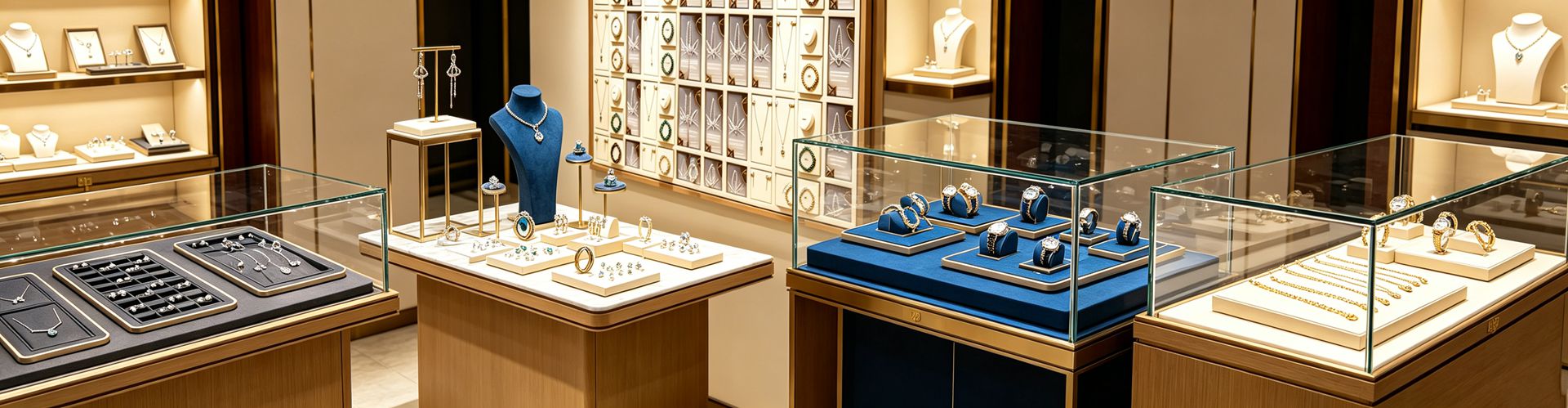
两步够:入口中岛或旋转塔设"主角区",只放三到五件高毛利款配可调射灯;用珠宝陈列架做故事分组(婚嫁/日常/礼赠),每周微调。视觉陈列与 Store Design 研究指 73% 顾客更愿回访陈列好的店,每两周刷新陈列的门店进店量比静态高 23%。持续小步迭代比一次性大改更稳。
问六:怎么判断陈列有没有用?
盯停留时长、试戴率、连带率。某高端项目升级后停留 4→11 分钟、试戴转化 28%→67%、月销涨约 38%;Granite Jewellers 只换展示环境、不动货价,客单价 +28%、营收 +22%、停留 +34%。数字一动,就知道那位沉默销售员已上岗。
本文为原创内容,版权归深圳骏依美所有,转载请注明出处。
骏依美——让每一件珠宝与腕表,都被更好地呈现。