Fall 2026 Jewelry Market Watch: New Consumption Trends and Packaging Innovation Under High Gold Prices2026秋季珠宝市场观察:金价高位下的消费新趋势与包装创新
1. Fall 2026 Jewelry Market Overview: Consumer Divergence Under High Gold Prices
In September 2026, international gold prices remain near historic highs after experiencing significant volatility in the first half of the year. London spot gold is trading around $2,600 per ounce, up more than 15% year-over-year. The core drivers of this rally include continued central bank gold purchases, geopolitical uncertainty, and expectations of lower real interest rates. For jewelry retailers, high gold prices are a double-edged sword: they boost demand for investment-grade gold bars and jewelry as a store of value, while simultaneously pressuring the unit price of everyday wearable gold jewelry, making consumers more cautious about gram weight selection.
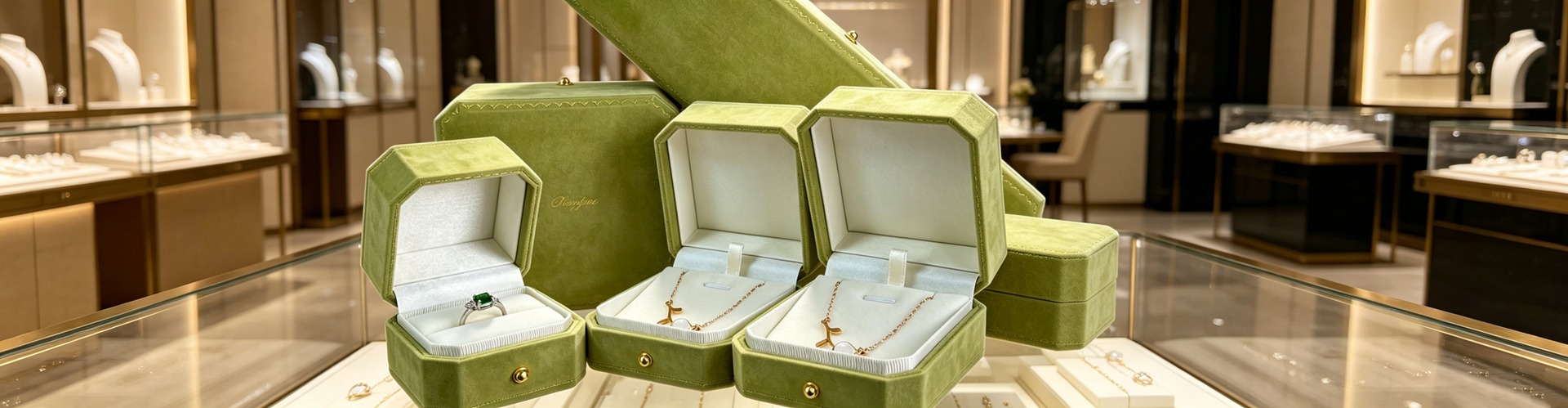
Notably, the consumption structure is undergoing significant divergence. High-end jewelry brands, leveraging brand premium and scarce gemstone resources, maintain strong pricing power; mid-range brands face considerable promotional pressure. This divergence reflects shifting consumer psychology—shoppers are more willing to pay for "worth-having" premium pieces rather than overpriced ordinary designs. For the jewelry packaging industry, this trend means brands have higher expectations for the quality, design, and unboxing ceremony of their packaging. High-end jewelry boxes are no longer mere containers but an extension of brand value communication.
2. Jewelry Exhibition Barometer: Signals from the September Shenzhen Jewelry Show
The annual September Shenzhen International Jewelry Show is regarded as the "barometer" of China's jewelry industry. The 2026 edition showcased several distinctive characteristics: First, the continued strength of Chinese heritage design, with jewelry incorporating traditional Chinese patterns and intangible cultural heritage techniques occupying prominent positions. Young consumers' identification with Chinese cultural elements is translating into purchasing power. Second, the lab-grown diamond exhibition area expanded by nearly 40% compared to last year, establishing a "dual-track" model with natural diamonds. Price wars are easing, and the industry is returning to quality competition. Third, the integration of digital technology and jewelry has accelerated, with 3D-printed customization and AR virtual try-on becoming part of daily operations for many exhibitors.
During the exhibition, we also observed an upgrade trend in jewelry display props and presentation solutions. Increasingly, brands are no longer satisfied with traditional velvet trays, instead pursuing modular, lighting-integrated, multi-material mixed display solutions. The design of jewelry display stands has evolved from simple "display function" to "scenario marketing tools." A well-designed display table itself becomes a silent brand narrative. This has directly driven growth in the jewelry display stand and watch display prop sub-categories.
3. Consumer Trend Insights: How Gen Z Is Redefining Jewelry Consumption
Gen Z (born 1997-2012) is becoming the growth engine of jewelry consumption. This group's consumption habits differ fundamentally from previous generations: they do not blindly pursue big-brand logos, but value design uniqueness and wearing versatility; they are accustomed to completing the entire journey from discovery to purchase on social platforms like Xiaohongshu and Douyin, with physical stores serving more as "experience and confirmation" venues; they are willing to pay for emotional value—if a piece of jewelry can carry a story or memory, its premium potential far exceeds the value of the materials themselves.
This shift in consumer psychology poses new challenges for jewelry box wholesale and jewelry box design. Young people's first action after unboxing is to photograph and share. If the packaging itself is not "Instagram-worthy," it misses a free social media communication opportunity. Therefore, the design of jewelry pouches has also evolved from functional to fashionable, becoming an important touchpoint for brand recognition. Brands that can impress consumers with small details—such as the tactile feel of velvet lining, the sound of magnetic closure, or an enclosed handwritten card—often achieve higher repurchase rates and word-of-mouth recommendations.
4. Craftsmanship and Technology Frontier: How New Materials and Processes Are Reshaping Jewelry Packaging
In terms of craftsmanship and technology, several noteworthy new trends have emerged in the jewelry packaging industry in 2026. First is the widespread application of eco-friendly materials. FSC-certified paper, plant-based leather alternatives, and biodegradable cushioning materials are transitioning from concept to mass production. An increasing number of overseas clients explicitly request eco-friendly material solutions during the inquiry stage, which is forcing domestic factories to accelerate green supply chain transformation. Second, the maturation of micro-laser engraving technology has significantly reduced the cost of fine pattern customization on jewelry box surfaces. Effects that previously required copper plate molds can now be achieved directly with lasers, making single-piece minimum orders possible.
Another important direction is the exploration of smart packaging. Some high-end brands have begun experimenting with embedding NFC chips in jewelry boxes, allowing consumers to verify product authenticity, view product stories, and access after-sales information with a simple tap of their phone. Although current penetration remains low, this trend is expected to accelerate in the next two to three years as chip costs decrease and consumer anti-counterfeiting awareness grows. For packaging factories specializing in design and customization, laying out smart packaging capabilities ahead of the curve will provide a first-mover advantage in the next round of competition.
5. Industry Outlook: The Value Leap from "Selling Products" to "Selling Solutions"
Looking back at the first three quarters of 2026, the most profound change in the jewelry packaging industry lies not in any specific technology, but in the reconstruction of business models. Increasingly, brands no longer treat packaging suppliers as mere contract manufacturers, but expect partners to provide one-stop solutions spanning creative design, structural engineering, material selection, and mass production delivery. This means excellent packaging factories must simultaneously strengthen both design capabilities and engineering capabilities—possessing both aesthetic sensibility and execution capability.
Looking ahead to the fourth quarter, as the year-end consumption peak approaches, jewelry brands' stocking pace will accelerate, and orders for jewelry boxes and watch display props are expected to see a seasonal peak. For the factory side, proactive capacity planning and flexible scheduling are particularly important—during peak season, one must ensure both delivery and quality. In an increasingly competitive market environment, the companies that can truly survive economic cycles are those comprehensive service providers who understand jewelry, understand packaging, and understand consumers.
This article is original content, copyrighted by Shenzhen Junyimei. Please indicate the source when reprinting.
Junyimei — Making every piece of jewelry and watch presented better. Specializing in jewelry boxes, jewelry display stands, watch display props. Shenzhen-owned factory, custom design supported. Inquiries welcome!
一、2026年秋季珠宝市场全景:金价高位运行下的消费分化
2026年9月,国际金价在经历上半年的剧烈波动后依然维持在历史高位区间。伦敦金现货价格在每盎司2600美元附近震荡,较去年同期上涨超过15%。这一轮金价上涨的核心驱动力来自全球央行持续购金、地缘政治不确定性以及美元实际利率的下行预期。对珠宝零售终端而言,高金价是一把双刃剑:一方面推动了投资类金条和金饰的保值需求,另一方面也让日常佩戴类金饰的客单价承压,消费者在克重选择上更加审慎。
值得注意的是,消费结构正在发生显著分化。高端珠宝品牌凭借品牌溢价和稀缺宝石资源,依然维持着强劲的议价能力;而中端品牌则面临较大的促销压力。这种分化背后折射出消费心理的变化——消费者更愿意为"值得拥有"的精品买单,而非为溢价过高的普通款式买单。对于珠宝包装行业而言,这种趋势意味着品牌方对包装的品质感、设计感和开箱仪式感提出了更高要求,高端首饰盒不再只是容器,而是品牌价值传递的延伸载体。
二、珠宝展会的风向标:9月深圳珠宝展释放了哪些信号
每年9月的深圳国际珠宝展被视为中国珠宝行业的"晴雨表"。2026年的展会现场呈现出几个鲜明特征:第一,国潮设计持续走强,融入中国传统纹样、非遗工艺的珠宝作品占据了不少展位的C位,年轻消费者对中国文化元素的认同感正在转化为购买力;第二,培育钻石展区的面积较去年扩大了近40%,培育钻与天然钻的"双轨并行"格局基本确立,价格战趋缓,行业开始回归品质竞争;第三,数字化与珠宝的融合加速,3D打印定制、AR试戴等技术已经在不少展商的日常运营中落地。
展会期间,我们还观察到珠宝道具与陈列方案的升级趋势。越来越多品牌不再满足于传统的绒布托盘,而是追求模块化、灯光集成、多材质混搭的陈列方案。珠宝陈列架的设计从单纯的"展示功能"向"场景营销工具"演进,一个精心设计的摆台本身就是一种无声的品牌叙事。这也直接带动了珠宝摆台和手表陈列道具细分品类的增长。
三、消费趋势洞察:Z世代如何重新定义珠宝消费
Z世代(1997-2012年出生)正在成为珠宝消费的增长引擎。这一群体的消费习惯与前代有着本质差异:他们不盲目追求大牌Logo,更看重设计的独特性和佩戴场景的多样性;他们习惯在小红书、抖音等社交平台上完成种草到拔草的全链路,线下门店更多承担"体验和确认"的功能;他们愿意为情绪价值买单,一件珠宝如果能承载某个故事或某段记忆,其溢价空间远超材质本身的价值。
这种消费心理的变化对珠宝盒批发和首饰盒设计提出了新的课题。年轻人开箱后第一件事就是拍照分享,如果包装本身不够"出片",就错失了一次免费的社交传播机会。因此,首饰袋的设计也从功能性走向时尚化,成为品牌识别的重要触点。那些能在小细节上打动消费者的品牌——比如丝绒内衬的触感、磁吸开合的声音、内附手写卡片——往往能获得更高的复购率和口碑推荐。
四、工艺技术前沿:新材质与新工艺如何重塑珠宝包装
在工艺技术层面,2026年珠宝包装行业出现了几项值得关注的新趋势。首先是环保材质的普及应用,FSC认证纸张、植物基皮革替代材料、可降解缓冲填充物正在从概念走向量产。越来越多的海外客户在询价阶段就会明确要求提供环保材质方案,这也倒逼国内工厂加快绿色供应链转型。其次,微距激光雕刻技术的成熟让珠宝盒表面的精细图案定制成本大幅降低,过去需要开铜版模才能实现的浮雕效果,现在可以用激光直接实现,单件起订成为可能。
另一个重要方向是智能包装的探索。部分高端品牌已经开始尝试在珠宝盒中嵌入NFC芯片,消费者用手机触碰即可验证产品真伪、查看产品故事和售后信息。虽然目前渗透率还不高,但随着芯片成本下降和消费者防伪意识增强,这一趋势有望在未来两到三年内加速。对于专注于设计与定制的包装工厂来说,提前布局智能包装能力,将在下一轮竞争中占据先发优势。
五、行业展望:从"卖产品"到"卖解决方案"的价值跃迁
回望2026年前三个季度,珠宝包装行业最深刻的变化不在于某项具体技术,而在于商业模式的重构。越来越多的品牌方不再把包装供应商当作单纯的代工厂,而是希望合作方能提供从设计创意、结构工程、材质选型到量产交付的一站式解决方案。这意味着优秀的包装工厂必须在设计能力和工程能力上同时发力,既要有审美力,也要有落地力。
展望第四季度,随着年末消费旺季临近,珠宝品牌的备货节奏将加快,珠宝盒和手表陈列道具的订单量有望迎来季节性高峰。对于工厂端而言,提前做好产能规划和柔性排产尤为重要——旺季既要保交付,也要保品质。在竞争日益激烈的市场环境中,真正能穿越周期的企业,一定是那些既懂珠宝、也懂包装、更懂消费者的综合型服务商。
本文为原创内容,版权归深圳骏依美所有,转载请注明出处。
骏依美——让每一件珠宝与腕表,都被更好地呈现。专注珠宝盒、首饰盒、珠宝陈列架、手表陈列道具等包装产品的设计与生产,深圳自有工厂,支持来图定制打样,欢迎咨询合作!