Sustainable Jewelry Packaging: How Eco-Friendly Materials Are Reshaping the Jewelry Box Industry可持续珠宝包装:环保材料如何重塑首饰盒行业
Sustainable Jewelry Packaging: A Quietly Emerging Industry Revolution
Driven by the global sustainability movement, the jewelry industry is undergoing a profound transformation from product to packaging. As the first interface between brand and consumer, jewelry packaging is having its material choices and manufacturing philosophy reexamined. From traditional plastic foam pads and chemical adhesives to recycled pulp, plant fibers, and biodegradable materials, sustainable jewelry packaging is no longer merely a marketing concept but a genuine transformation being actively practiced across the entire supply chain.
For jewelry box manufacturers, this transformation means a comprehensive upgrade spanning raw material procurement, production processes, and finished products. An increasing number of brands are requiring suppliers to provide environmentally certified materials, and a "green premium" has emerged in jewelry box wholesale—packaging products made with sustainable materials often command higher market recognition and customer loyalty.
The Environmental Cost of Traditional Materials and the Rise of Alternatives
For a long time, the jewelry packaging industry has relied heavily on plastic foam, EVA sponge, and chemical adhesives to provide cushioning and protection. While these materials excel in physical performance, they require decades or even centuries to degrade in nature, posing potential threats to soil and marine ecosystems. As environmental regulations tighten and consumer awareness rises, alternatives are maturing rapidly.
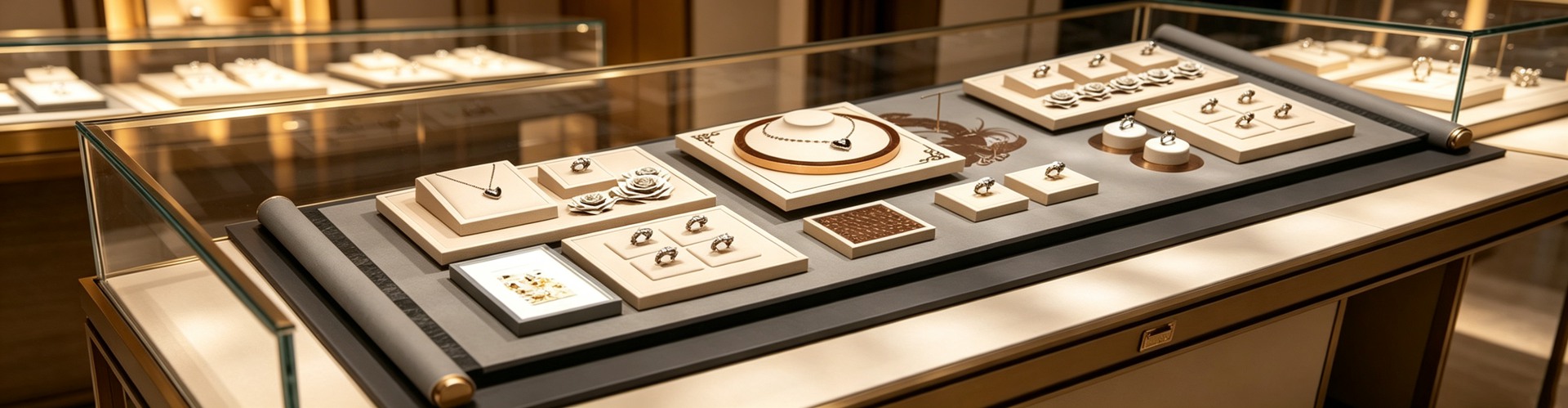
Molded pulp, mycelium-based composites, and recycled wool felt are three noteworthy eco-friendly cushioning materials. Molded pulp uses waste paper pulp as raw material, forming precise cavity structures through molded tooling that can perfectly fit various jewelry box inserts; mycelium-based materials possess a natural porous structure with excellent shock absorption and can fully biodegrade within weeks after disposal. Recycled wool felt repurposes textile industry scraps, offering a soft touch and premium texture ideal for jewelry display stands and counter props lining materials.
Consumer Psychology: How Eco-Friendly Packaging Influences Purchasing Decisions
Multiple market research studies show that Gen Z and Millennial consumers are particularly sensitive to brands' environmental practices. When two pieces of jewelry are comparable in quality and price, over 60% of young consumers say they prefer brands that use eco-friendly packaging. This means jewelry packaging is not merely a protective container but a direct expression of brand values.
Forward-thinking brands have begun labeling carbon footprint information and material origins on jewelry pouches and packaging boxes, allowing consumers to feel the brand's sincerity the moment they open the packaging. This transparency approach not only strengthens consumer trust but also generates substantial organic "unboxing" content on social media, creating low-cost brand exposure. The sustainability of jewelry display props is also becoming an important consideration in retail terminal display design.
Technology Innovation Drives Sustainable Packaging Design
Sustainability does not mean sacrificing aesthetics and functionality. On the contrary, the application of eco-friendly materials is giving rise to new design languages. Jewelry display racks made from biodegradable PLA plastic and plant fiber composites not only achieve transparency and surface gloss comparable to traditional acrylic but also enable complex curved forms through injection molding, meeting premium brands' demanding aesthetic requirements for display.
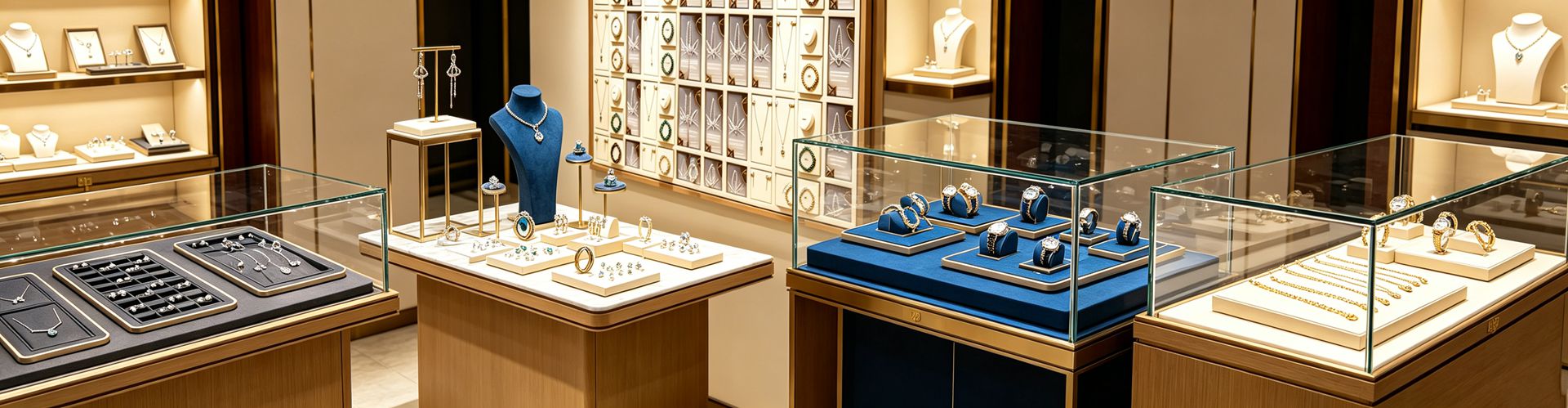
In the watch display props sector, bamboo and FSC-certified wood applications are gaining popularity. Bamboo's short growth cycle and high carbon absorption efficiency make it a natural low-carbon material, with its warm texture creating a subtle visual contrast against the metallic finish of timepieces. Meanwhile, breakthroughs in water-soluble adhesive development enable multi-layer composite packaging boxes to maintain structural strength while allowing material separation for recycling, significantly reducing recycling difficulty and costs. Professional jewelry packaging design and customization service providers are systematically introducing such innovative materials into their product lines, offering clients packaging solutions that combine environmental attributes with premium quality.
Future Outlook: From Material Substitution to Systematic Sustainability
Looking ahead, sustainable jewelry packaging will no longer be limited to single-material substitution but will evolve toward systematic solutions. This includes designing with the packaging's circular economy path in mind from the outset, such as foldable jewelry box designs that save space during transport, modular structures that allow consumers to retain and repurpose packaging long-term, and even transforming the packaging itself into part of the display props.
Jewelry box wholesale companies and packaging manufacturers need to establish closer collaboration with brands, introducing sustainable design thinking from the product development stage. As a major global hub for jewelry packaging, Shenzhen possesses a well-established supply chain and mature manufacturing capabilities, positioning it to pioneer the green transformation. Through continuous material innovation and process optimization, every piece of jewelry packaging can become a vivid testament to sustainability.
This article is original content, copyrighted by Shenzhen Junyimei. Please indicate the source when reprinting.
Junyimei — Making every piece of jewelry and watch presented better. Specializing in jewelry boxes, jewelry display stands, watch display props. Shenzhen-owned factory, custom design supported. Inquiries welcome!
可持续珠宝包装:一场悄然兴起的行业变革
在全球可持续发展浪潮的推动下,珠宝行业正经历一场从产品到包装的深度转型。珠宝包装作为品牌与消费者接触的第一道界面,其材料选择和工艺理念正在被重新审视。从传统的塑料衬垫、化学胶水到如今的再生纸浆、植物纤维和可降解材料,可持续珠宝包装不再只是一个营销概念,而是整个产业链上下游都在积极践行的真实变革。
对于首饰盒制造商而言,这场变革意味着从原材料采购、生产工艺到最终成品的全面升级。越来越多的品牌开始要求供应商提供环保认证材料,珠宝盒批发环节也出现了"绿色溢价"——使用可持续材料的包装产品往往能获得更高的市场认可度和客户忠诚度。
传统材料的环境代价与替代方案的崛起
长期以来,珠宝包装行业高度依赖塑料泡沫、EVA海绵和化学胶黏剂来提供缓冲和保护功能。这些材料虽然在物理性能上表现优异,但在自然环境中需要数十年甚至上百年才能降解,对土壤和海洋生态构成潜在威胁。随着环保法规的收紧和消费者意识的提升,替代方案正加速成熟。
纸质模塑、蘑菇菌丝体复合材料和再生羊毛毡是三种备受关注的新型环保缓冲材料。纸质模塑以废纸浆为原料,通过模具成型形成精确的腔体结构,可以完美适配各种形状的首饰盒内托;蘑菇菌丝体材料则具备天然的多孔结构和优异的减震性能,且在废弃后可在数周内完全降解。再生羊毛毡利用纺织业边角料重新加工,触感柔软、质感高级,非常适合珠宝摆台和陈列道具的衬底材料。
消费者心理:环保包装如何影响购买决策
多项市场调研显示,尤其是Z世代和千禧一代消费者,对品牌的环保实践有着高度的敏感性。当两款首饰在品质和价格相近的情况下,超过六成的年轻消费者表示更倾向于选择使用环保包装的品牌。这意味着珠宝包装不仅仅是保护产品的容器,更是品牌价值观的直观表达。
一些前瞻性品牌已经开始在首饰袋和包装盒上标注碳足迹信息和材料来源,让消费者在拆开包装的瞬间就能感受到品牌的诚意。这种透明化的做法不仅增强了消费者的信任感,也在社交媒体上催生了大量"开箱"内容的自发传播,形成了低成本的品牌曝光效果。珠宝道具的可持续性也逐渐成为零售终端陈列设计的重要考量因素。
技术创新驱动可持续包装设计
可持续并不意味着牺牲美感和功能性。恰恰相反,环保材料的应用正在催生新的设计语言。以可降解PLA塑料和植物纤维复合材料制作的珠宝陈列架,不仅具备与传统亚克力相近的透明度和表面光泽,还能通过注塑工艺实现复杂曲面造型,满足高端品牌对陈列美学的严苛要求。
在手表陈列道具领域,竹材和FSC认证木材的应用正在普及。竹材生长周期短、碳吸收效率高,是天然的低碳材料,其温润的纹理与腕表的金属质感形成精妙的视觉对比。同时,水溶性胶水的研发突破使得多层复合结构的包装盒可以在保持强度的前提下实现材料分离回收,大大降低了回收处理的难度和成本。专业的珠宝包装设计与定制服务商正在将这类创新材料系统性地引入产品线,为客户提供兼具环保属性和高端品质的包装方案。
未来展望:从材料替代到系统化可持续
展望未来,可持续珠宝包装将不再局限于单一材料的替换,而是走向系统化解决方案。这包括从设计源头就考虑包装的循环利用路径,例如可折叠首饰盒设计使其在运输环节节省空间,模块化结构允许消费者长期保留并二次使用包装,甚至将包装本身转化为展示道具的一部分。
珠宝盒批发企业和包装制造商需要与品牌方建立更紧密的协作关系,从产品开发阶段就引入可持续设计思维。深圳作为全球珠宝包装的重要产业基地,拥有完善的供应链和成熟的工艺技术,具备率先实现绿色转型的条件。通过持续的材料创新和工艺优化,让每一件珠宝的包装都能成为可持续理念的生动注脚。
本文为原创内容,版权归深圳骏依美所有,转载请注明出处。
骏依美——让每一件珠宝与腕表,都被更好地呈现。专注珠宝盒、首饰盒、珠宝陈列架、手表陈列道具等包装产品的设计与生产,深圳自有工厂,支持来图定制打样,欢迎咨询合作!