Heritage Gold Rewrites the Price Tag古法金重写金价
When a single gold store can do close to a billion yuan in annual sales, and the price tags on its shelves barely mention weight in grams, you know the logic of the gold business is being quietly rewritten — by a group of people who work with their hands.
In 2025, Laopu Gold delivered a result that made the entire luxury world take notice: revenue of 27.3 billion yuan, up 221% year on year; net profit of 4.87 billion yuan, up 230.5%. The efficiency is what stuns. The company runs just 45 self-operated stores across 16 Chinese cities, yet it generates nearly one billion yuan in annualized sales per mall, with the highest sales-per-square-meter among all luxury groups' China stores. Frost & Sullivan data shows that the overlap between Laopu's customers and the clientele of Louis Vuitton, Hermès, Cartier and Bvlgari rose from 77.3% in July 2025 to 82.4% in March 2026. In other words, the people buying heritage gold and the people buying Hermès are rapidly becoming the same people. Its first overseas store, at Marina Bay Sands in Singapore, alone did over 3.9 billion yuan in annual sales.
What Laopu sells was never the metal itself. It sells the craft system behind the words "gu fa jin" — ancient-method gold. The techniques — lou tai, chui ye, zan ke, hua si, xiang qian (raised forming, hammering, engraving, filigree, inlay) — descend from the Qing imperial workshop and parts of them are listed as intangible cultural heritage. The surface is a soft, matte glow, not the flashy mirror polish of the typical mall. Production is measured in days and months, not stamping cycles. A hand-engraved filigree bangle by a master can take seven to fifteen days. That slowness is precisely the source of the premium — and the confidence to raise prices by 20% to 30% in early 2026. The matte finish hides nothing; every tool mark stays visible, which is why no two pieces are ever identical.
Laopu is not an outlier; it rode a swelling wave. The heritage-gold market grew from 13 billion yuan in 2018 to 157.3 billion in 2023, a compound annual growth rate of 64.6%, and blew past 180 billion in 2025. Its penetration of the total gold-jewelry category climbed from under 10% in 2020 to over 35% today, with 40% expected in 2026. The World Gold Council's 2025 China Gold Jewelry Consumer Insight names heritage and hard-pure gold as retailers' core profit engine. And the main buyers are no longer brides — they are Generation Z and millennials paying for craft.
It is not Laopu alone riding this wind. Chow Tai Fook's 'Heirloom' collection, launched in 2017, went viral on social platforms and lit the fuse; Laomiao has rolled out eight iterations of heritage-gold lines; Caibai built a 'golden sedan chair' from over a kilogram of gold using filigree to recreate a wedding custom; Chaohongji's 'filigree wind-and-rain bridge' translates traditional patterns into a modern vocabulary. From the imperial workshop to Generation Z's jewelry box, filigree and engraving have completed a contemporary translation across three centuries. What young buyers are purchasing is not a tacky gold trinket but a cultural identity they can wear. Behind the romance sits a hard manufacturing base: Shenzhen's Shuibei district concentrates over 70% of China's gold-processing capacity, and many heritage-gold pieces are actually produced there before reaching branded counters — a reminder that the 'ancient' craft and the most modern supply chain now share the same workshop.
What is worth writing about is not the growth but the shift in pricing power underneath it. The traditional jeweler sells by the gram: spot price times weight plus a small labor fee, with value anchored in the metal. Heritage gold sells by the piece — selling craft, culture and scarcity. When a young buyer pays far more for a strand of filigree than the gold content is worth, gold acquires, for the first time, something like the brand premium of a fine watch or a leather good. Analysts sum it up as a move from "worshipping material" to "appreciating craft." Gold stops being a commodity and becomes a work that can claim a lineage, an artisan and a story. The transformation is so complete that gold jewelry now competes for the same wallet as a designer handbag, not just for a wedding date.
Critics call it a bubble tied to gold's rally, but the cultural shift looks structural. As Chinese consumers — especially the young — grow more confident in their own aesthetic references, 'quiet luxury' stops meaning European logos and starts meaning domestic craft with a verified lineage. Heritage gold is the cleanest proof that a local tradition can command a global-grade premium without discounting itself.
There is a quiet infrastructure race underneath the romance. Blockchain traceability, independent craft authentication and documented artisan records are moving from nice-to-have to table stakes, because a premium built on 'real handwork' cannot survive on trust alone. The brands that scale heritage gold without diluting it will be the ones that can prove, piece by piece, that a bangle was actually raised and engraved by a human — and present that proof in the box, not only in the marketing.
Yet the 2026 chapter is not as smooth as 2025. Industry trackers note that, hit by gold-price volatility and a flood of new entrants, the top heritage-gold brands have slowed, Laopu's share price has pulled back sharply from its 2025 peak, and the market has entered a correction. The uglier problem is counterfeiting: some workshops use simplified stamping to fake hand engraving, selling ordinary frosted goods under the heritage label, so customers pay a premium for rough work and questionable purity. When the premium rests on the authenticity of the craft, diluting that authenticity erodes the premium's foundation. This is exactly why the industry is now pushing to tie the "intangible-heritage-plus-gold" willingness to pay to verifiable craft standards. Laopu has responded by treating price increases as a signal of authenticity rather than a cost, betting that customers read a higher tag as proof of the real thing.
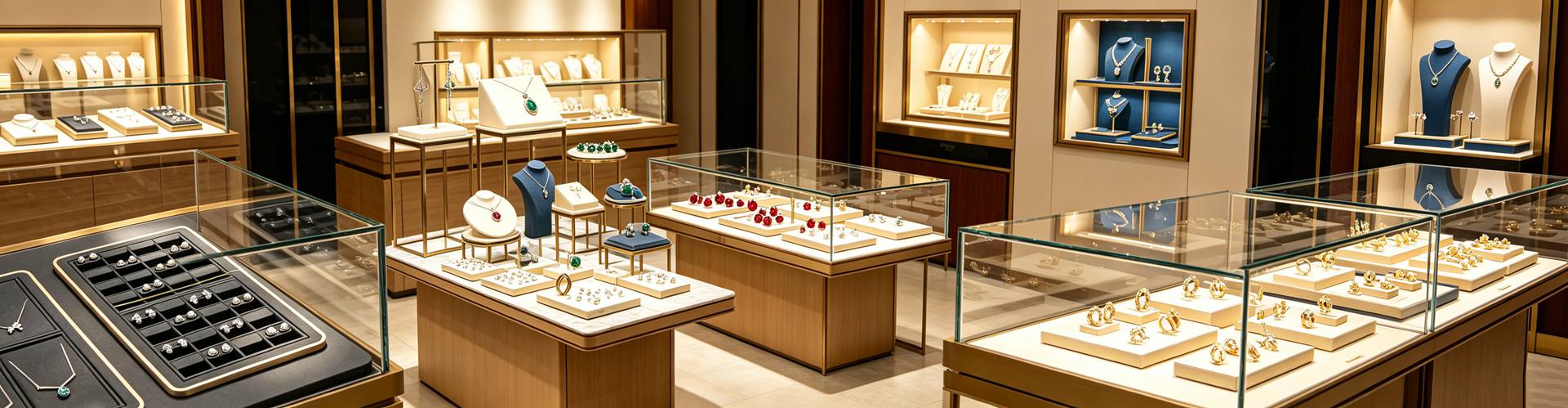
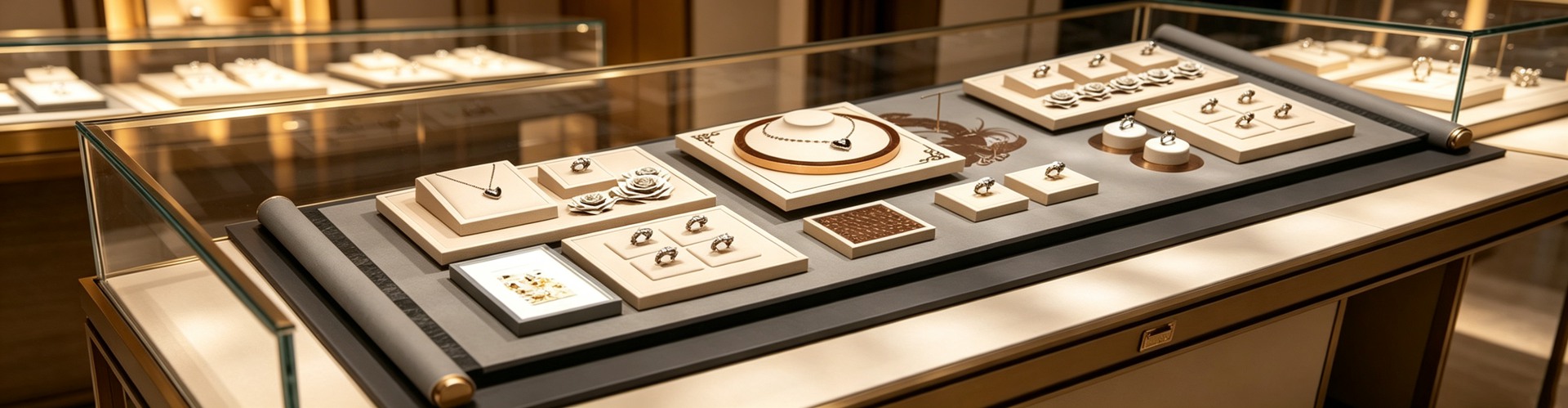
Laopu's stores sit almost exclusively in top-tier malls like SKP, MixC and Hang Lung, and they look like private museums rather than gold shops. The jewelry display props, the pedestals and the lighting are not there to flood the goods with brightness but to present each filigree piece as an exhibit — only when a customer sees the engraved grain under a focused beam do they believe the gold is worth the price. This "museum-style merchandising" is itself part of the premium; it extends the craft from the counter into a ritual worth gazing at. Customers do not just buy the object; they buy the act of being shown it properly.
This is where packaging and presentation become decisive. When half a piece's value lives in its "craft narrative," its container can no longer be a random velvet pouch. Jewelry box customization is promoted from an accessory to the final chapter of the story — a fixed cradle for the filigree object, a separate sleeve for the certificate and the engraver's signature, an opening阻尼 tuned so people want to open it again and again. These details decide whether a piece still looks dignified in its tenth year. The jewelry box is no longer mere storage; it carries the cultural codes of the imperial workshop from the counter into the customer's private drawer. Jewelry packaging design is therefore upgraded from "protecting the gold" to "preserving a craft" — acid-free linings, undyed cotton and linen, stable hinges, so the box's lifespan keeps pace with the gold's expectation of being inherited. Shenzhen Junyimei has spent years moving its budget from surface patterns to structural tolerances, and that is the point: real refinement is what holds up where the eye does not immediately look.

The rise and reset of heritage gold is a reminder: gold has never lacked value; what it lacked was a reason to pay for something beyond the value. When the marks of a graver can support a company worth over a hundred billion, the jewelry industry should understand that the next growth pole is not in the mine — it is at the artisan's fingertips, and in the box that delivers that craftsmanship safely into the customer's hands. The lesson travels well beyond gold: in a market flooded with look-alikes, the defensible premium is the one you can document and present. The brands that win the next decade will be those that treat the box, the certificate and the counter as parts of the same craft, not afterthoughts.
This is original content. Copyright belongs to Shenzhen Junyimei.
Junyimei — present every jewel and timepiece at its best.
当一家卖黄金的门店,单店一年能做出近十亿元的生意,而它的货架上几乎看不到按克计价的标签——你会发现,黄金这门生意的底层逻辑,正在被一群手工匠人悄悄改写。
2025年,老铺黄金交出的成绩单让整个奢侈品圈侧目:营收273亿元,同比增长221%;净利润48.68亿元,同比增长230.5%。更惊人的是效率——这家公司在全国16座城市只开了45家自营门店,却能在单个商场实现年化销售近十亿元,坪效在全球奢侈品集团的中国门店中排名第一。弗若斯特沙利文的数据显示,它的消费者与路易威登、爱马仕、卡地亚、宝格丽的客群重合率,从2025年7月的77.3%爬升到2026年3月的82.4%。换句话说,买古法金的人,和买爱马仕的人,正在变成同一批人。
老铺黄金卖的,从来不是"金子"本身。它卖的是"古法金"三个字背后的工艺体系——搂胎、捶揲、錾刻、花丝、镶嵌,这套源自清代宫廷造办处的手艺,部分已被列入非物质文化遗产。成品表面是温润的哑光,不是商场里亮得发贼的抛光;制作周期以天计、以月计,远非模具冲压可比。一件资深匠人手工錾刻的花丝手镯,工期可以到7到15天。这种"慢",恰恰是溢价的来源,也是它敢于在2026年初整体提价20%至30%的底气。
老铺不是孤例,它踩中了一个正在膨胀的赛道。古法金市场规模从2018年的130亿元,一路冲到2023年的1573亿元,年复合增速高达64.6%;2025年更是突破1800亿元。它在全品类黄金首饰中的渗透率,从2020年不足10%,爬升到如今的35%以上,预计2026年破40%。世界黄金协会在《2025中国金饰消费趋势洞察》里点明:古法金与硬足金,是零售商当前的核心利润来源。而90后、00后,早已是这门手艺的主力买单人。
这股风也并非老铺一家在吹。周大福2017年推出"传承系列"古法金,在社交平台走红,成为市场引爆点;老庙已累计推出8期古法金产品,菜百用千余克黄金打造"玲珑金花轿"、以非遗花丝重现婚俗,潮宏基的"花丝风雨桥"把传统纹样转译为现代语言。从宫廷造办处到Z世代的首饰盒,花丝与錾刻完成了一场跨越三百年的当代转译——年轻人买的不是"土潮"的金,而是一份可被佩戴的文化认同。热闹的叙事背后是扎实的制造底盘:深圳水贝集聚了全国七成以上的黄金加工产能,许多古法金实则在此完成生产再贴上品牌柜台,"古法"与最现代的供应链,如今共享同一间车间。
真正值得写的,不是增长,而是增长背后的定价权迁移。传统金店的逻辑是"按克卖"——金价乘克重加一点工费,价值锚在金属本身。古法金的逻辑是"按件卖、卖工艺、卖文化、卖稀缺"。当年轻人愿意为一缕花丝支付远超金料的钱,黄金第一次有了类似高级腕表或皮具的"品牌溢价"。中研普华把这场转移概括为:从"材质崇拜"到"工艺审美"。黄金不再是 commodity,而是一件可以讲出身、讲匠人、讲文化的作品。
当然,2026年的故事已经不像2025年那样顺滑。行业词条记录,受国际金价波动与赛道涌入者激增影响,头部高奢古法金品牌增长放缓,老铺股价较2025年高位明显回调,市场进入调整期。更刺眼的是山寨——部分作坊用简化模具冲压冒充手工錾刻,以古法之名卖普通磨砂货,消费者花高价买到的却是工艺粗糙、纯度存疑的"伪古法"。当溢价建立在"工艺真实性"上,真实性一旦被稀释,溢价也就失去了地基。这也是为什么行业开始呼吁把"非遗+黄金"的支付意愿,落到可验证的工艺标准上。
老铺的门店几乎只开在SKP、万象城、恒隆这样的顶级商场,装修得像私人博物馆而非金店。里面用的珠宝陈列道具与珠宝摆台、灯光,不是把货堆亮,而是把每件花丝作品当成展品来打光——当顾客在聚光下看见錾刻的纹理,才肯相信这缕金子值这个价。这种"博物馆式陈列"本身就是溢价的一部分,它把工艺从柜台延伸成一种可被凝视的仪式。
这正是包装与呈现变得关键的地方。当一件金饰的价值一半来自"工艺叙事",它的容器就不能再是随手塞进的绒布袋。珠宝盒定制因此从附属品升格为叙事的最后一环——为花丝摆件预留固定卡位、为证书与工匠签名留独立夹层、把开合阻尼调到让人愿意反复打开,这些细节决定了一件商品在第十年是否还体面。首饰盒也不再只是收纳,它是把"宫廷造办处"那套文化符号,从柜台延续到私人抽屉里的方式。珠宝包装设计的任务,因此从"保护金子"升级为"封存一段手艺":用无酸内衬、未染色棉麻和稳定阻尼,让盒子的寿命追上金子本身的传承预期。深圳骏依美这些年把预算从花纹挪到结构公差,道理就在这里——真正的高级感,是看不见的地方也经得起看。
古法金的起落提醒我们:黄金从来不缺价值,缺的是让人愿意为价值之外的东西付费的理由。当錾刻的刀痕能撑起一家千亿市值的公司,珠宝行业就该明白——下一个增长极,不在矿里,在匠人的手指上,也在把这份匠心稳妥交到顾客手里的那只盒子里。
本文为原创内容,版权归深圳骏依美所有,转载请注明出处。
骏依美——让每一件珠宝与腕表,都被更好地呈现。