Preview of the 2026 Shenzhen International Jewelry Fair: Digital Wave Meets Display Aesthetics2026深圳国际珠宝展前瞻:数字化浪潮与陈列美学的全新碰撞
1. Shenzhen International Jewelry Fair: The Industry Barometer Reopens
The 2026 Shenzhen International Jewelry Fair is set to open in September. As one of the largest and most influential professional jewelry exhibitions in the Asia-Pacific region, this year's fair is expected to attract over 1,500 exhibitors covering 60,000 square meters, encompassing all categories including diamonds, gold, colored gemstones, jade, and pearls. As the core hub of China's jewelry industry, Shenzhen is home to thousands of upstream and downstream enterprises in the Shuibei Jewelry Industrial Park, with annual output value accounting for over 70% of the national jewelry retail total. This makes the annual Shenzhen Jewelry Fair the industry's trend "barometer."
This year's fair adopts the theme "Digital Future, Radiant Symbiosis," featuring three special zones: the Digital Jewelry Innovation Pavilion, the Sustainable Jewelry Exhibition Area, and the Cultural IP Co-branded Zone. The Digital Jewelry Innovation Pavilion introduces interactive experiences including AR virtual try-ons, blockchain traceability displays, and AI jewelry design competitions for the first time, transforming audiences from passive viewers into immersive experience participants. This theme reflects the jewelry industry's acceleration toward digital and intelligent transformation, also bringing new technological collaboration opportunities for jewelry props and display equipment suppliers.
2. Digital Display Technology Reshapes the Exhibition Experience
One of the most notable transformations at this year's jewelry fair is the comprehensive penetration of digital display technology. Unlike the traditional static display model of "glass cabinets plus spotlights," an increasing number of exhibiting brands are adopting smart interactive display cabinets, holographic projection display systems, and digital twin platforms. Smart interactive cabinets with built-in motion sensors automatically play product craft videos and gemstone origin stories when audiences approach. Holographic projection technology can suspend magnified internal structures of gemstones in mid-air, making inclusions and cutting details visible that are difficult to observe with the naked eye.
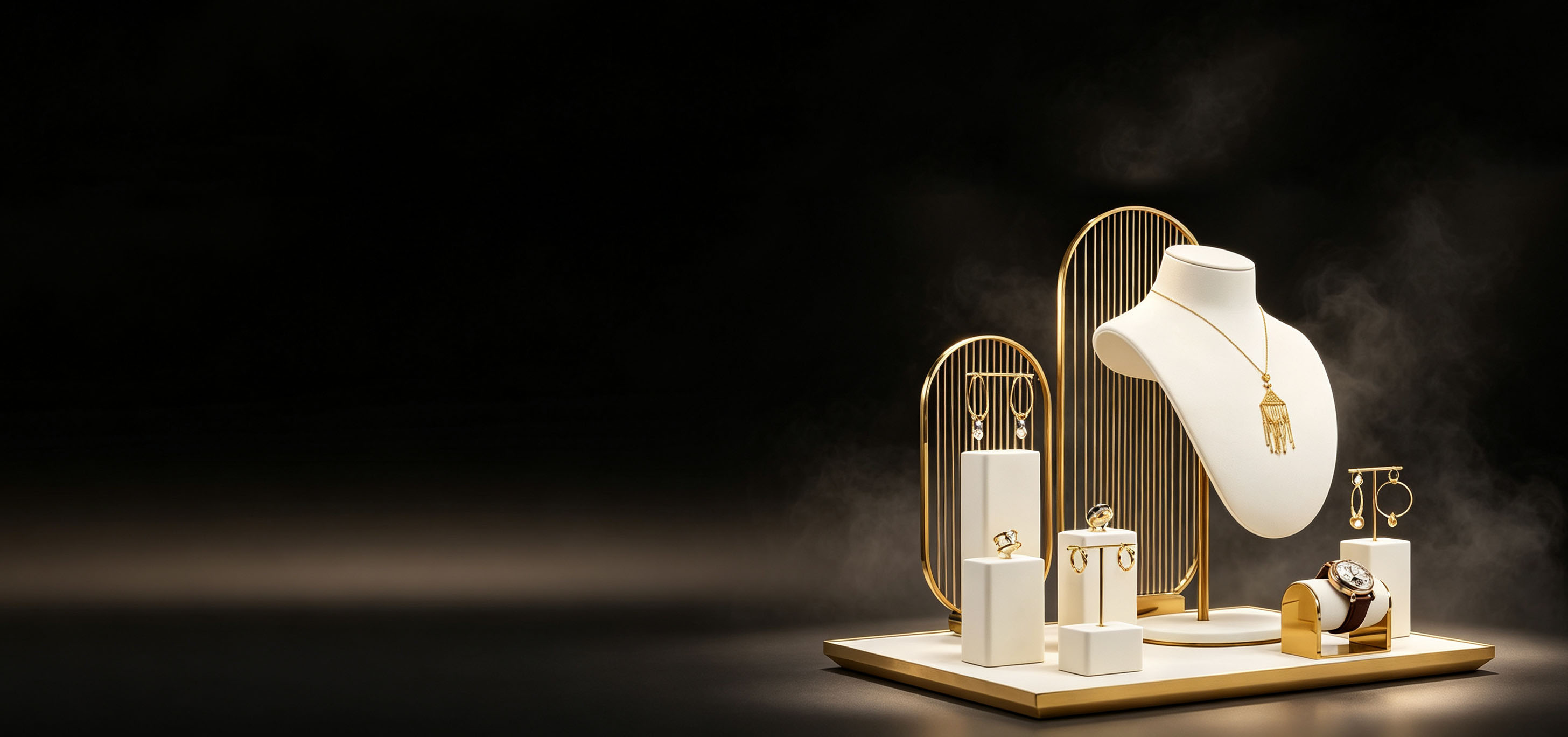
These technological innovations not only enhance the viewing experience but also impose new requirements on jewelry display stand design. Traditional cabinets need to reserve installation space for sensors, cable routing channels for power supply, and thermal management structures. The material selection for jewelry display stands must also account for signal transparency of electronic devices. Some premium brands have even customized smart jewelry props with built-in LED matrices that automatically adjust lighting parameters based on the tone of different jewelry, achieving "personalized lighting for every piece." This deep technological integration transforms display equipment from supporting roles into important carriers of brand expression.
3. Sustainable Jewelry Becomes a Core Fair Theme
Another highlight of the 2026 Shenzhen Jewelry Fair is the deep implementation of sustainable jewelry themes. Following two consecutive editions with dedicated sustainable jewelry zones, this year's fair integrates sustainability throughout exhibition design, forum agendas, and award criteria. The organizer has launched a "Green Booth Certification" system for the first time, encouraging exhibitors to use recyclable display fixtures, energy-efficient lighting, and biodegradable packaging materials to reduce the exhibition's carbon footprint at the source. Over 200 brands have registered for green certification, demonstrating the industry's strong commitment to ESG principles.
Sustainable jewelry products themselves are showing diversification. The lab-grown diamond brand exhibition area has expanded by 40% compared to last year, with retail prices of lab-grown diamonds stabilized at 15% to 25% of natural diamond prices, and consumer acceptance has significantly increased. Recycled metal jewelry, fair-trade colored gemstones, and recovered pearls have also attracted large numbers of professional buyers. Notably, some brands have fully adopted FSC-certified paper and soy-based ink printing for their jewelry boxes and jewelry pouches, extending environmental concepts to every touchpoint of the product lifecycle, setting green standards for the jewelry box wholesale market.
4. Cultural IP Collaborations and National Trend Design Continue to Heat Up
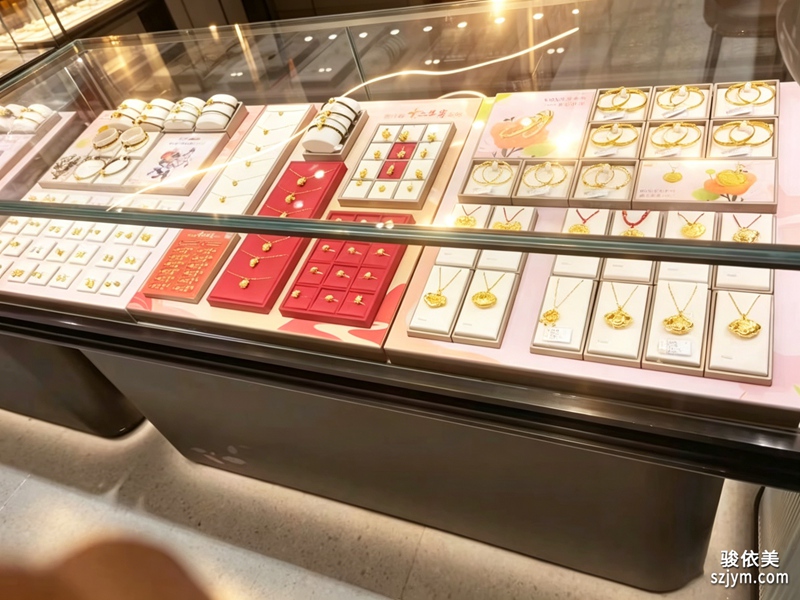
Cultural IP collaborations have become one of the most talked-about marketing strategies in the jewelry industry in recent years. The Cultural IP Co-branded Zone at this year's Shenzhen Jewelry Fair gathers dozens of crossover collaboration cases. From museum artifact IPs to intangible heritage craft IPs, from anime and gaming IPs to regional cultural tourism IPs, jewelry brands continuously expand their audience boundaries through collaborations. Multiple brands have integrated traditional cultural elements such as Dunhuang murals, Sanxingdui bronze patterns, and Song Dynasty Ru kiln glaze colors into jewelry designs, paired with exquisite jewelry box packaging and immersive display scenes, creating strong cultural narrative tension at the fair.
The rise of national trend design has also driven the development of related industry chains. The number of service agencies specializing in cultural IP licensing, pattern design, and craft transformation for jewelry brands has nearly doubled in the past year. At the display level, national trend jewelry imposes higher aesthetic requirements on jewelry props—jewelry display stands incorporating Chinese screen elements, watch display props featuring lacquerware techniques, and jewelry pouches made of silk fabric that combine traditional crafts with modern functionality are in high demand. This integrated need for design and customization is driving the jewelry packaging industry toward cultural customization upgrades from standardized production.
5. Industry Ecosystem Evolution Driven by Exhibition Economy
Jewelry fairs are not only platforms for product display but also catalysts for industry ecosystem evolution. Events held during the fair, including the China Jewelry Industry Summit Forum, cross-border e-commerce matchmaking sessions, and emerging designer incubation roadshows, provide efficient scenarios for deep engagement across all links of the industry chain. The organizer estimates that this year's fair will facilitate over 30 billion yuan in intended cooperation agreements, covering raw material procurement, brand franchising, OEM partnerships, and design licensing. These collaborations not only promote transactions themselves but also drive the optimization of industry resource allocation.
The fair's agglomeration effect on the local Shenzhen jewelry industry is particularly significant. The Shuibei Jewelry Industrial Park experiences peak foot traffic before and after the fair, with surrounding jewelry packaging companies, testing institutions, logistics service providers, and design studios seeing notable order growth. Especially for suppliers of jewelry boxes and watch display props, stock preparation often begins two to three months before the fair to meet exhibiting brands' urgent custom needs. This spillover effect of "exhibition economy" continues to enhance the collaborative capability and response speed of the Shenzhen jewelry industry chain, also bringing stable growth opportunities for jewelry packaging design and production enterprises.
This article is original content, copyrighted by Shenzhen Junyimei. Please indicate the source when reprinting.
Junyimei — Making every piece of jewelry and watch presented better. Specializing in jewelry boxes, jewelry display stands, watch display props. Shenzhen-owned factory, custom design supported. Inquiries welcome!
一、深圳国际珠宝展:行业风向标再启幕
2026年深圳国际珠宝展即将于9月拉开帷幕,作为亚太地区规模最大、影响力最广的珠宝专业展览会之一,本届展会预计吸引超过1500家参展企业、覆盖面积达6万平方米,涵盖钻石、黄金、彩宝、玉石、珍珠等全品类珠宝产品。深圳作为中国珠宝产业的核心枢纽,汇聚了水贝珠宝产业园数千家上下游企业,年产值占全国珠宝零售总额的逾七成,这使得每年的深圳珠宝展都成为行业趋势的"风向标"。
今年的展会以"数智未来,璀璨共生"为主题,特别设立了数字珠宝创新馆、可持续珠宝展区和文化IP联名专区三大特色板块。其中数字珠宝创新馆首次引入AR虚拟试戴、区块链溯源展示和AI珠宝设计竞赛等互动环节,让观众从被动的观赏者转变为沉浸式体验参与者。这一主题设定反映出珠宝行业正从传统制造向数字化、智能化方向加速转型,也为珠宝道具和陈列设备供应商带来了全新的技术合作机遇。
二、数字化展陈技术重塑观展体验
本届珠宝展最引人注目的变革之一,是数字化展陈技术的全面渗透。与传统"玻璃柜+射灯"的静态展示模式不同,越来越多的参展品牌开始采用智能互动展柜、全息投影陈列系统和数字孪生展示平台。智能互动展柜内置体感传感器,当观众靠近时自动播放产品工艺视频和宝石产地故事;全息投影技术则可以将放大数倍的宝石内部结构悬浮呈现在空气中,让肉眼难以观察的包裹体和切工细节一览无余。
这些技术创新不仅提升了观展体验,也对珠宝陈列架的设计提出了全新要求。传统展柜需要预留传感器安装空间、供电线路走线通道和散热结构,珠宝摆台的材质选择也要兼顾电子设备的信号穿透性。部分高端品牌甚至定制了带有内置LED矩阵的智能珠宝道具,可根据不同珠宝的色调自动调节灯光参数,实现"千人千光"的精准照明效果。这种深度技术融合使得展陈设备从配角变为品牌表达的重要载体。
三、可持续珠宝成为展会核心议题
2026年深圳珠宝展的另一大亮点是可持续珠宝议题的深度落地。继连续两届设立可持续珠宝专区后,本届展会将可持续发展理念贯穿于展陈设计、论坛议程和评奖标准的各个环节。主办方首次推出"绿色展台认证"体系,鼓励参展商使用可回收展具、节能照明和可降解包装材料,从源头减少展览碳足迹。已有超过200家品牌报名参与绿色认证,显示出行业对ESG理念的高度认同。
可持续珠宝产品本身也呈现出多元化趋势。实验室培育钻石品牌展区面积较去年扩大了40%,培育钻石零售价格已稳定在天然钻石的15%至25%区间,消费者接受度显著提升。再生金属珠宝、公平贸易彩宝和回收珍珠等品类也吸引了大量专业买家驻足。值得关注的是,部分品牌在首饰盒和首饰袋的包装上全面采用FSC认证纸张和大豆油墨印刷,将环保理念延伸到产品生命周期的每一个触点,为珠宝盒批发市场树立了绿色标准。
四、文化IP联名与国潮设计持续升温
文化IP联名已成为珠宝行业近年来最具话题性的营销策略之一,本届深圳珠宝展专设的文化IP联名专区汇集了数十个跨界合作案例。从博物馆文物IP到非遗工艺IP,从动漫游戏IP到地域文旅IP,珠宝品牌通过联名不断拓宽受众边界。多个品牌将敦煌壁画、三星堆青铜纹饰、宋代汝窑釉色等传统文化元素融入珠宝设计,配以精致的珠宝盒包装和沉浸式的展陈场景,在展会上形成了强烈的文化叙事张力。
国潮设计的升温也带动了相关产业链的发展。专注为珠宝品牌提供文化IP授权、纹样设计和工艺转化的服务机构数量在过去一年增长了近一倍。在陈列层面,国潮珠宝对珠宝道具提出了更高的审美要求——中式屏风元素的珠宝陈列架、漆器工艺的手表陈列道具、丝绸材质的首饰袋等传统工艺与现代功能相结合的展陈产品备受青睐。这种设计与定制一体化的需求,正推动珠宝包装行业从标准化生产向文化定制化方向升级。
五、展会经济驱动下的产业生态进化
珠宝展不仅是产品展示的平台,更是产业生态进化的催化剂。展会期间举办的中国珠宝产业高峰论坛、跨境电商对接会和新锐设计师孵化路演等活动,为产业链各环节的深度对接提供了高效场景。据主办方预计,本届展会将促成超过300亿元的合作意向签约,涵盖原材料采购、品牌加盟、代工合作和设计授权等多种模式。这些合作不仅促进了交易本身,更推动了行业资源的优化配置。
展会对深圳本地珠宝产业的集聚效应尤为显著。水贝珠宝产业园在展会前后迎来客流高峰,周边的珠宝包装企业、检测机构、物流服务商和设计工作室订单量显著增长。特别是珠宝盒和手表陈列道具等配套产品供应商,往往在展会前两三个月就开始备货,以满足参展品牌的紧急定制需求。这种"展会经济"的溢出效应,使得深圳珠宝产业链的协同能力和响应速度持续提升,也为珠宝包装设计与生产企业带来了稳定的增长空间。
本文为原创内容,版权归深圳骏依美所有,转载请注明出处。
骏依美——让每一件珠宝与腕表,都被更好地呈现。专注珠宝盒、首饰盒、珠宝陈列架、手表陈列道具等包装产品的设计与生产,深圳自有工厂,支持来图定制打样,欢迎咨询合作!