Why Packaging Quotes Differ报价单为何差三倍
The same velvet ring box: supplier A quotes $2.20, supplier B quotes $0.75. Most brands assume one of them is lying. Usually neither is — the two quotes simply answer different questions. In packaging sourcing, the expensive mistakes rarely hide in the price. They hide in the lines nobody printed on the quote.
Q1: What minimum order quantity should a first-time buyer commit to?
Start with a real price ladder. For a custom velvet ring box, FOB Shenzhen: roughly $2.20 per unit at 100 pieces, $1.60 at 300, $1.25 at 500, $0.95 at 1,000, and $0.75 at 3,000. That is close to a threefold spread on an identical box — the plainest explanation for wildly different quotes. Orders below 500 units typically carry a 20%–40% small-batch premium, because setup, colour calibration and die changes are fixed costs that refuse to be spread thin.
MOQs are tiered too. Plain stock items and simple pouches can start at 20–100 units. Semi-custom work using the factory's existing box structure usually starts at 300–500. Pouches stay low at 300–500 because fabric cutting is flexible. Standard rigid boxes run 500–3,000. Fully bespoke work requiring new dies, unusual materials or intricate finishes generally begins at 1,000–2,000.
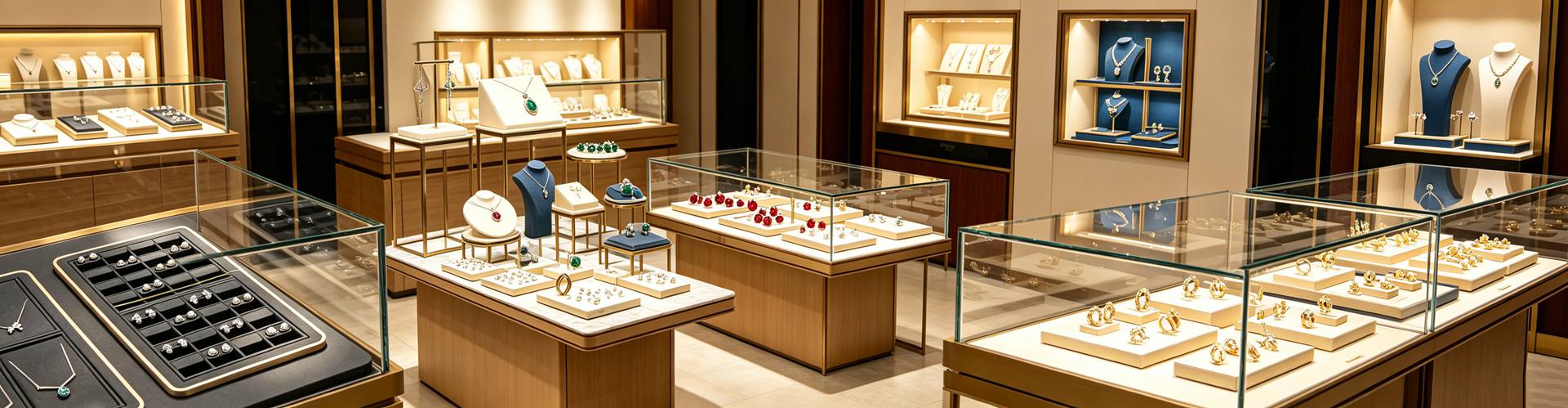
Choosing an MOQ is really a trade between cash flow and unit price. New brands are best served by 1,000–2,000 units as a market test before scaling. Established brands place rolling quarterly orders of 3,000–5,000, capturing volume pricing without freezing capital. The genuine trap is ordering three years of stock to chase the lowest unit price — you have just locked your brand image to its least mature version.
Q2: Where do the unlisted costs hide?
This is where first-timers lose money. Items commonly quoted separately include: cutting dies and tooling at $50–200, sampling fees of $20–80 (usually credited against bulk orders), Pantone colour matching at $30–100, custom insert moulds at $80–150, logo plate setup at $20–80, individual poly bagging at $0.05–0.15 per unit, foam or velvet inserts at $0.20–0.80 per unit, and a $0.10–0.50 per unit gap between sea and air freight.
Add them up and a "$0.95" quote can land at $1.60 delivered. So the single most useful sentence in any enquiry is: "Does this price include printing, inserts, individual bagging and delivery to my warehouse?" Ask for an itemised breakdown rather than a lump sum. A legitimate factory has no reason to resist line items; resistance usually signals a trading company stacking margin.
One structural note on geography. At comparable quality, Western suppliers quote $3.50–8.00 per unit with MOQs of 500–2,000 and lead times of 7–15 days. Chinese manufacturers quote $0.75–2.50 with MOQs of 100–500 and lead times of 20–35 days. Below 1,000 units, sourcing from China typically saves 60%–75% of total cost — paid for with three to five extra weeks of logistics buffer.
Q3: What is a reasonable packaging budget?
The working benchmark is 8%–15% of retail price, dropping toward 5% in thin-margin categories. In absolute terms: $0.30–1.00 for volume brands, $1.50–4.00 for mainstream positioning, $3.00–8.00 for luxury tiers.
Luxury houses run different arithmetic. Industry estimates place Tiffany's packaging at roughly 3%–5% of cost of goods sold, about double the 1.5%–2.5% jewellery average — $4–7 for a standard box, $15–25 for high-value pieces with bespoke inserts. Expensive, until you read the resale data. The RealReal's 2024 figures show Tiffany items sold with original packaging (box, ribbon and pouch) commanded 24% higher prices than identical items without; Cartier packaging added around 11%, Bulgari about 9%. Bain research puts the perceived-value premium at 18%–22%. Against an average purchase of roughly $2,500, a $7 box is generating something like $450–550 in perceived value.
The market is voting accordingly. Global jewellery packaging was worth about $1.35 billion in 2025 and is forecast to reach $2.03 billion by 2032, a 6.04% CAGR, with boxes taking 60.9% of the category, paper and cardboard 37.9%, and Asia Pacific the largest region. Over 65% of jewellery retailers now use rigid gift boxes as their standard format, and close to 48% of manufacturers favour reusable box designs for retention.
Q4: Why is minimalist packaging harder to manufacture?
High-end minimalist jewellery packaging wins customers more readily — that much is broadly accepted. What gets discussed far less is the flip side: minimalism demands far tighter manufacturing tolerances than ornate design.
The logic is simple. An elaborate box carries foil, pattern and ribbon; a 0.3mm deviation anywhere disappears into the visual noise. A plain box with nothing but a blind-debossed logo hands every ounce of forgiveness back to the structure itself. A fold that sits 0.2mm off reads as crooked immediately. A slight colour drift between production batches becomes two different boxes sitting side by side on the counter. The quantified benchmarks are unforgiving: print colour deviation of Delta E within 1.5 (2.0 being the acceptable ceiling), die-cutting and folding accuracy within 0.2–0.3mm, board weight above 800 g/m² to resist bulging, and moisture content held between 8% and 12% to prevent cracking in storage.
Minimalism, then, is never the budget option. It moves spend from surface decoration into structure and tolerance. Brands that botch it almost always chose a minimalist rendering and then chose the cheapest factory to build it.
Q5: How should sampling and lead times be scheduled?
Work backwards; nothing else holds. A full cycle runs roughly: design confirmation and first sample 5–7 days, revisions 3–5 days (structural samples 3–7 days, fully branded prototypes up to 7–20 days), mass production 15–20 days, inspection 2–3 days, then 20–30 days by sea or 5–7 by air. Total: 45–65 days by sea, 30–40 by air. Simple customisation on an existing structure can ship in 10–15 days; fully bespoke tooling needs 25–45 days before transit even begins.
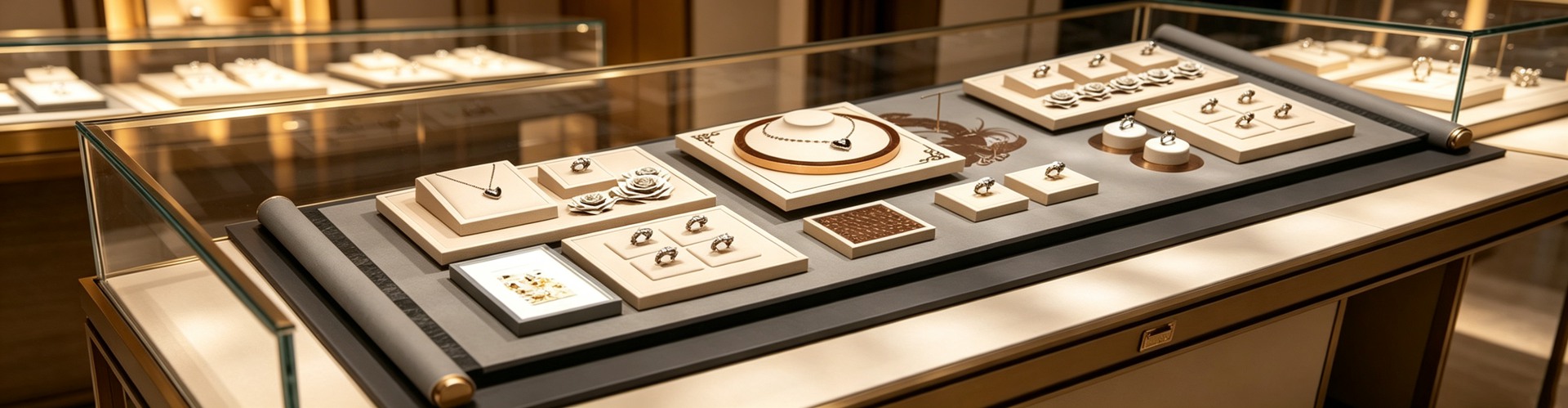
Seasonal collections should start 6–8 weeks ahead. And the most avoidable delay of all is bad artwork. Supply vector AI or EPS files, fonts converted to outlines, CMYK colour mode, deboss lines no thinner than 0.5mm and foil lines no lighter than 1pt. A phone-screenshot PNG cannot be turned into a foil plate, and the file will simply bounce back. Never skip the physical sample — charcoal grey on a monitor and charcoal grey in the hand are two different colours.
Q6: What quality clauses belong in the contract?
Written standards beat post-delivery arguments every time. Clauses worth committing to paper: batch defect rate below 1%, tightened to 0.5% or less for luxury positioning, with "defect" defined explicitly — misaligned logos, surface scratches, weak magnets, shedding flock — and rework or credit assigned to the supplier when thresholds are breached. Flocked lining density of at least 300 fibres per square centimetre. Formaldehyde emissions compliant with China's mandatory GB 18584-2001 standard. ISO 9001 certification as a baseline, ISO 14001 where sustainability claims matter.
Inspect in three stages rather than only at the end: incoming materials (board thickness, fabric colour consistency, adhesive grade), in-process (structural integrity, logo position against Pantone references, insert fit against the actual pieces), and pre-shipment (cosmetic inspection plus functional and drop testing).
One detail buyers keep overlooking: magnetic closures feel wonderful, but magnetic fields are unkind to opals and pearls. Confirm closure type by product category rather than applying one specification across a whole set. The same discipline applies to lining colour — white pearls on off-white velvet is a decision to hide your own inventory.
Packaging procurement is not a contest in hard bargaining. It is a contest in asking the right questions early. Suppliers such as Shenzhen Junyimei, who have run custom jewellery box production long enough to itemise dies, inserts and inspection standards at the quotation stage, tend to be the ones that cause the fewest problems later.
This is original content. Copyright belongs to Shenzhen Junyimei.
Junyimei — present every jewel and timepiece at its best.
同一只绒布戒指盒,A 家报 2.2 美元,B 家报 0.75 美元。品牌方第一反应往往是"B 家在骗人",但更常见的真相是:两张报价单问的根本不是同一个问题。包装采购的坑,八成不在价格本身,而在报价单没写的那些行。
问一:第一次定制,起订量到底该定多少?
先看一组真实的阶梯价。以 FOB 深圳的定制绒布戒指盒为例:100 只时单价约 2.20 美元,300 只降到 1.60 美元,500 只 1.25 美元,1000 只 0.95 美元,3000 只只要 0.75 美元。从 100 只到 3000 只,单价差了近三倍——这就是"报价差三倍"最朴素的来源。行业惯例是 500 件以下的订单要额外承担 20%–40% 的小批量溢价,因为开机、调色、换刀模的固定成本摊不薄。
起订量本身也是分层的:素面现货或简单绒布袋,20–100 只就能起;沿用工厂已有盒型只改印刷的"半定制",通常 300–500 只;绒布袋因为布料裁切灵活,门槛低到 300–500;标准硬盒 500–3000;要开新刀模、上特殊材料或复杂工艺的全定制,起订量往往从 1000–2000 只起跳。
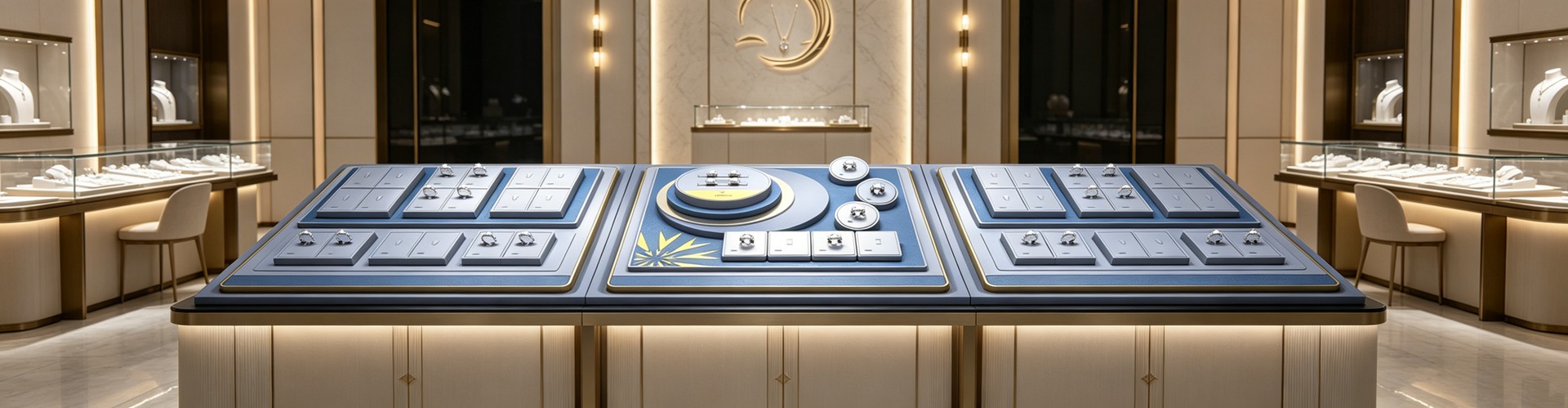
选起订量的本质是在现金流和单价之间做取舍。新品牌建议 1000–2000 只试水,用市场反馈验证盒型再放量;成熟品牌按季度滚动下单 3000–5000 只,既拿到批量价又不压死库存。真正吃亏的是"贪便宜一次订三年量"——盒型三年不换,等于把品牌形象锁死在你最不成熟的那个版本上。
问二:报价单上没写的钱,都藏在哪儿?
这是新手最容易翻车的地方。常见的单列项包括:刀模/模具费 50–200 美元、打样费 20–80 美元(多数工厂可在批量单中抵扣)、Pantone 专色对色 30–100 美元、内衬开模 80–150 美元、logo 制版费 20–80 美元、单只独立 OPP 袋 0.05–0.15 美元、内衬(海绵或绒布)另计 0.20–0.80 美元一只,以及空运与海运之间 0.10–0.50 美元的差额。
把这些加总,一张"0.95 美元"的报价单落到到岸价可能是 1.6 美元。所以询价时最有效的一句话是:"这个价格含不含印刷、内衬、独立包装袋和送到我仓库的运费?" 要求对方给逐项拆分的报价,而不是一个笼统总价。正规的珠宝盒工厂不怕拆,怕拆的多半是中间商在加价。
还有一个常被忽略的结构差异:同等品质下,欧美单价约 3.50–8.00 美元、起订 500–2000 只、交期 7–15 天;中国单价 0.75–2.50 美元、起订 100–500 只、交期 20–35 天。1000 只以下的订单,从中国采购通常能省下 60%–75% 的总成本,代价是要多留三到五周的物流缓冲。
问三:包装花多少钱才算合理?
行业通行的经验值是:包装成本控制在产品零售价的 8%–15%(利润率低的品类可下探到 5%)。落到具体金额,走量品牌 0.30–1.00 美元,主流品牌 1.50–4.00 美元,奢侈定位 3.00–8.00 美元。
值得注意的是奢侈品牌的账算法不一样。有行业估算认为,蒂芙尼的包装约占其销货成本的 3%–5%,是珠宝行业 1.5%–2.5% 平均水平的两倍;标准款单只盒子 4–7 美元,高价值品类配定制内衬能到 15–25 美元。看起来贵,但 The RealReal 2024 年的二手成交数据显示:带原包装(盒 + 丝带 + 袋)的蒂芙尼商品,成交价比同款无包装高出 24%,卡地亚约 11%,宝格丽约 9%。贝恩的研究亦指出其包装带来的感知价值溢价在 18%–22% 区间。按平均客单价 2500 美元估算,一只 7 美元的盒子撬动了约 450–550 美元的感知价值。
全球珠宝包装市场 2025 年规模约 13.45 亿美元,预计 2032 年达 20.29 亿美元,年复合增长率 6.04%,其中盒类占 60.9%、纸和纸板材质占 37.9%,亚太是最大区域市场。国内首饰包装定制市场 2026 年预计突破 350 亿元,近三年复合增速维持在 12% 以上,定制化需求占比超六成。
问四:为什么高端简约的包装反而更难做?
高端简约的珠宝首饰品包装设计,更容易被顾客青睐——这点几乎已是共识。但很少有人讲清楚它的另一面:简约对制造精度的要求,比繁复设计高得多。
道理很简单,花哨的盒子有烫金、有印花、有丝带,任何一处 0.3 毫米的偏差都被视觉噪音盖住了;而一只纯色、无装饰、只做一个盲压 logo 的盒子,所有容错都交给了结构本身。折边歪 0.2 毫米,一眼就是歪的;同一批货色差稍大,摆在柜台上就是两个颜色。行业里对高标准的量化是:印刷色差 Delta E 控制在 1.5 以内(2.0 以内为可接受线),模切与折边精度误差小于 0.2–0.3 毫米,纸板克重 800g/m² 以上以保证不鼓包变形,含水率控制在 8%–12% 之间以防长期存储开裂。
所以"简约"从来不是省钱方案,它是把预算从表面工艺挪到了结构和公差上。真正把简约做砸的品牌,往往是照着效果图选了极简款,却按最低价选了工厂。
问五:打样和交期怎么排,才不会误了上市?
倒推是唯一靠谱的方法。完整链路大致是:设计确认与首样 5–7 天,改样确认 3–5 天(结构样 3–7 天,全品牌样最长 7–20 天),量产 15–20 天,成品检验 2–3 天,海运 20–30 天或空运 5–7 天。合计海运 45–65 天、空运 30–40 天。若是沿用现成盒型的简单定制,10–15 天可出货;全新开模的复杂定制则要 25–45 天以上,还不含运输。
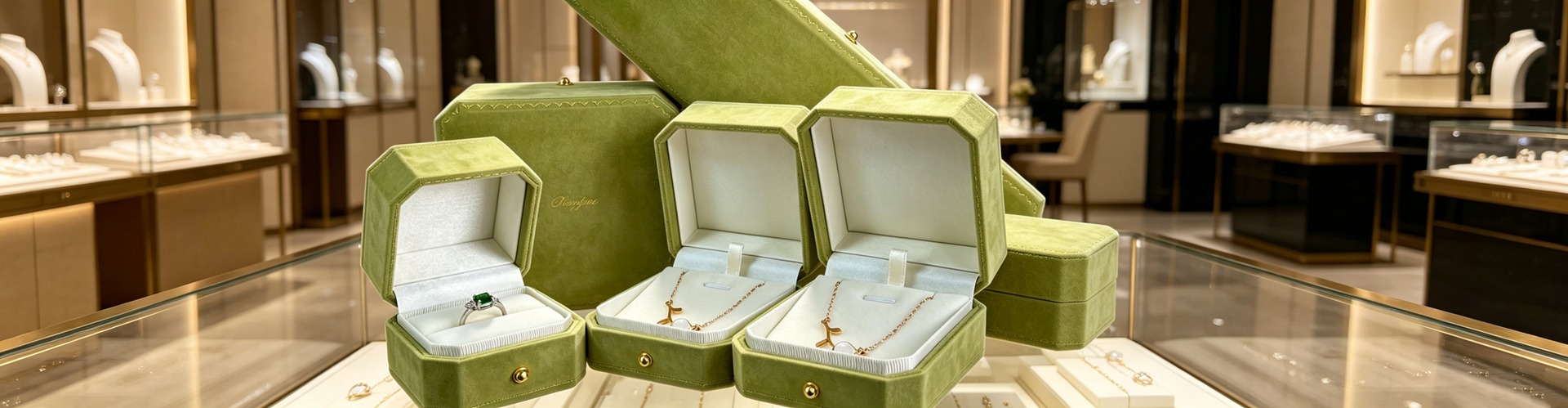
季节性系列建议提前 6–8 周启动。另外,稿件不规范是最冤枉的延误来源:请提供 AI 或 EPS 矢量文件、字体转曲、CMYK 色彩模式;压凹线宽不低于 0.5 毫米,烫金线不低于 1pt。用手机截的 PNG 图去开烫金版,工厂只能反复退回改稿。无论如何都不要跳过实物样——屏幕上的深空灰和实物上的深空灰,是两回事。
问六:品控条款该怎么写进合同?
把标准写进合同,比事后吵架有用一百倍。可直接落笔的几条:整批可接受缺陷率低于 1%(奢侈定位建议收紧到 0.5% 以内),并明确"什么算缺陷"——logo 错位、盒面划痕、磁力不足、掉绒起毛都应逐条列出,超标由供方返工或折让;植绒内衬密度不低于每平方厘米 300 根;甲醛释放量须符合 GB 18584-2001 强制性国家标准;供应商具备 ISO 9001,环保诉求强的另加 ISO 14001。
检验要分三段做,不能只等成品:来料检查纸板厚度、布料色差、胶水标号;生产中检查结构强度、logo 对 Pantone 位置、内衬与实物首饰的贴合度;出货前做外观与功能检验,包括跌落测试。
最后提醒一个被反复忽略的细节:磁吸闭合虽然手感高级,但磁场对欧泊、珍珠这类娇贵材质并不友好,成套首饰盒批发采购时应按品类分别确认闭合方式。同理,内衬颜色要和主推珠宝错开——白珍珠配米白绒布,等于把货藏起来卖。
说到底,包装采购不是比谁砍价狠,而是比谁把问题问在前面。像深圳骏依美这类做珠宝盒定制多年的供应商,愿意在报价阶段就把刀模、内衬、检验标准逐项摊开讲清楚的,通常也是后面最省心的那一个。
本文为原创内容,版权归深圳骏依美所有,转载请注明出处。
骏依美——让每一件珠宝与腕表,都被更好地呈现。