The Small Pouch Is Quietly Doing Heavy Lifting别小看那只首饰袋
At the moment a sale closes, the last thing a salesperson does is rarely handing over the card. It is pushing the ring into a small velvet pouch. The gesture takes two seconds, yet the customer remembers it — how the drawstring tightens, how deep the nap catches the light, whether the logo sits straight. The trade files this item under "giveaway," last line on the cost sheet. The money says otherwise.
Q1: How big a business can one little pouch carry?
Bigger than most people assume. The global jewelry pouch market stood at roughly USD 4.8 billion in 2025, up from about USD 3.1 billion in 2019 — more than fifty percent growth in six years. Analysts put the 2026–2034 compound annual growth rate at 6.7%, pointing toward USD 8.6 billion by 2034. The regional picture matters even more to anyone sourcing in China: Asia Pacific leads with a 36.1% share, around USD 1.73 billion, and that capacity is concentrated in Guangdong and Zhejiang. One in every three pouches on earth comes out of a workshop down the road. Last line on the cost sheet; main artery on the industry map. Factories doing pouch manufacturing have felt the shift most clearly — what used to be thrown in with the order now arrives as its own spec sheet.
Q2: Velvet, satin, microfiber or cotton — how do you actually choose?
Start with how the market votes. Velvet still leads, holding somewhere between 33% and 38% depending on the survey, earning it through the scratch barrier its pile creates and a texture that reads expensive on contact. Satin and silk take about 22.8%, winning on drape and sheen — useful for necklaces that need to lie flat. Microfiber and suede sit near 21.9%, hard-wearing and easy to clean, the workhorse of the value tier. Organza and plastic together hold only about 4.1%, mostly wholesale and trade-show duty. The real variable is cotton: growing at an 8.9% CAGR, the fastest of any material, pushed by environmental regulation and brands' own carbon commitments. The selection logic is plain enough. Precious-metal settings scratch, so velvet first. Silver tarnishes, so insist on sulphur-free linings. Pearls and opals are organic and dislike a sealed, airless pocket — breathable cotton often serves them better than dense pile.
Q3: Where do the complaints actually cluster — design, or smell?
Smell. On one cross-border marketplace, 66.7% of negative reviews for organza pouches named a harsh odour, dwarfing the 8.3% who called them overpriced. Among positive reviews, "good material" and "cute design" each drew 21.1%. The contrast tells the story: customers will pay for looks and still return the parcel over a whiff of adhesive. Odour usually traces back to dyes, glues or lamination steps with loose VOC control — the classic case of saving pennies and losing the order. The same dataset holds a detail that is easy to miss. Some 54.55% of users treat the pouch as a handbag insert, only 18.18% are jewelry owners, and 45% of actual use is "organising small items." Once the pouch leaves the store it mostly does not go into a drawer. It stays in circulation, in the customer's bag, in daily view. Its working life far outlasts the unboxing.
Q4: With a proper presentation box, is a pouch still necessary?
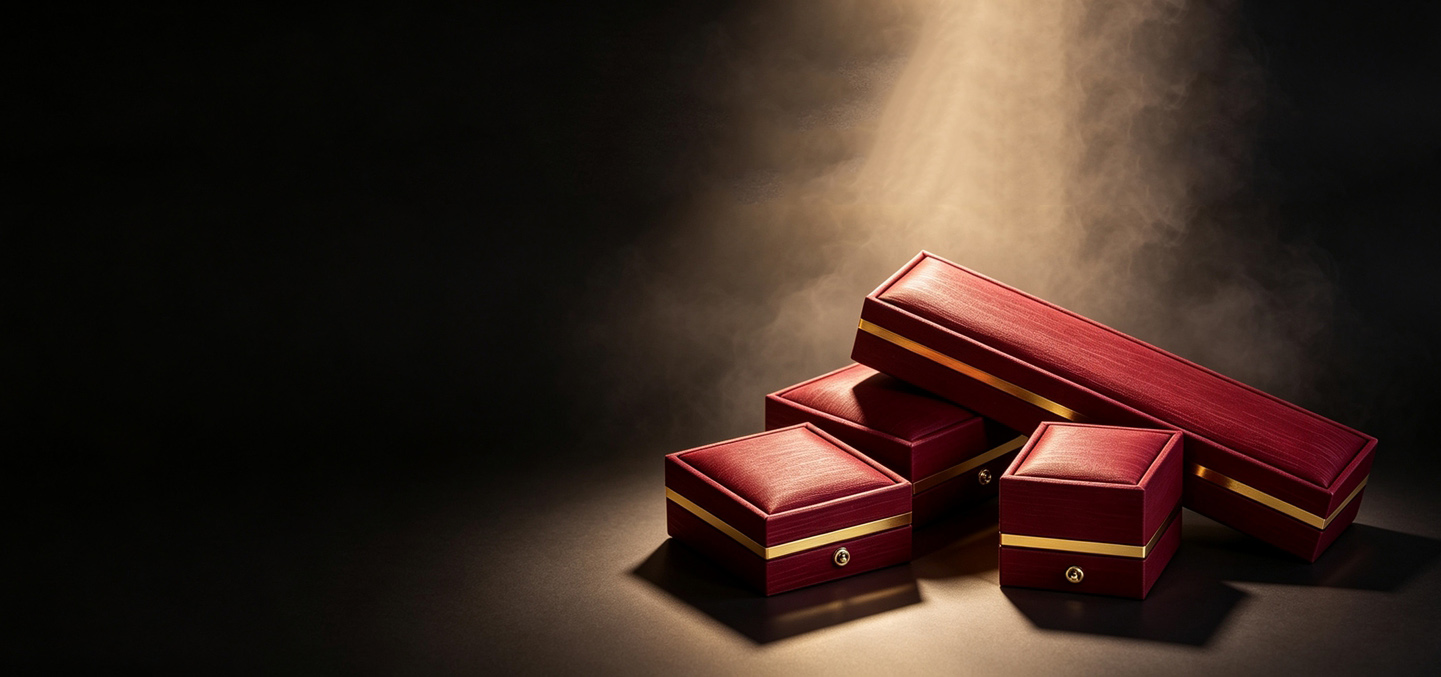
Yes — but give each a job. Box and pouch solve different stages. The box handles transit and ceremony, carrying load through structure and creating a pause through its opening. The pouch handles carrying and reuse, working through soft conformity and low bulk. A frequent mistake is asking the pouch to do the box's work: a bare ring dropped into velvet and shipped has zero cushioning, and meets any stacking load head-on. The sensible pairing puts a rigid box on the outside to absorb handling and drops, and a pouch inside to stop abrasion and tangling — necklaces especially deserve their own bag so they do not knot. Invert the scenario, though, and the logic inverts too: for local pickup or a pop-up, where nothing travels far, a well-made pouch stands alone and strips real volume and freight cost out of the package. Junyimei tends to ask one question first — how does the goods travel — before setting the box-to-pouch ratio.
Q5: On the counter, how should pouches sit alongside display props?
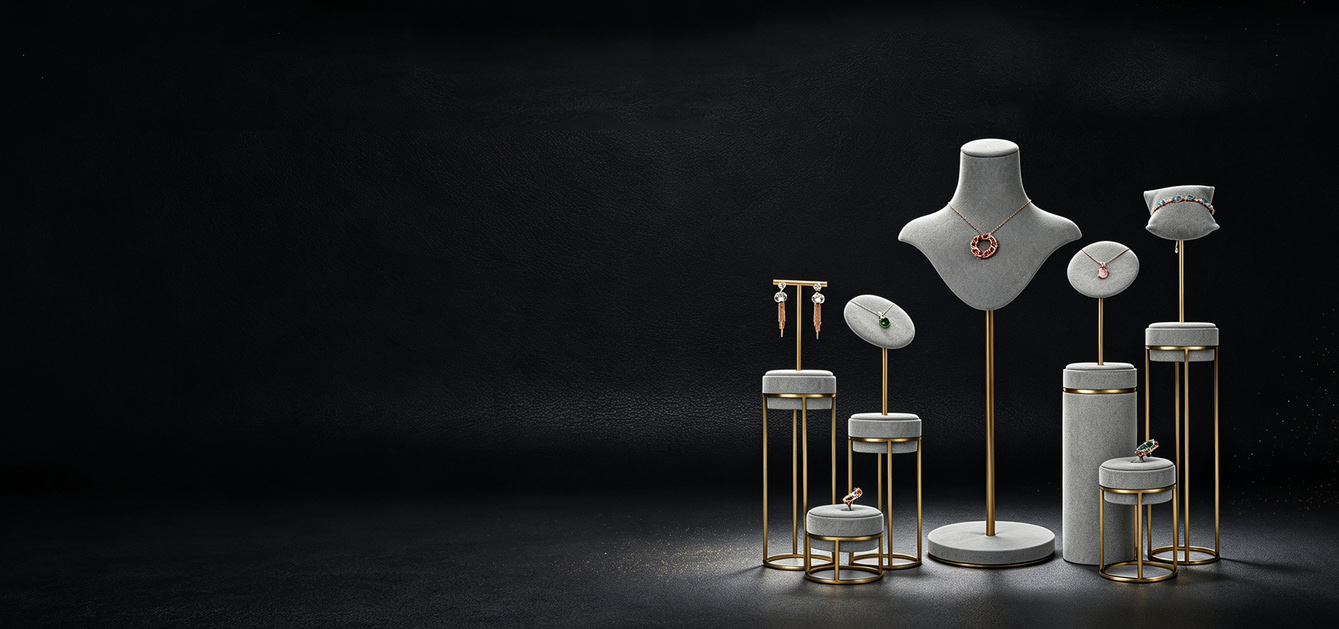
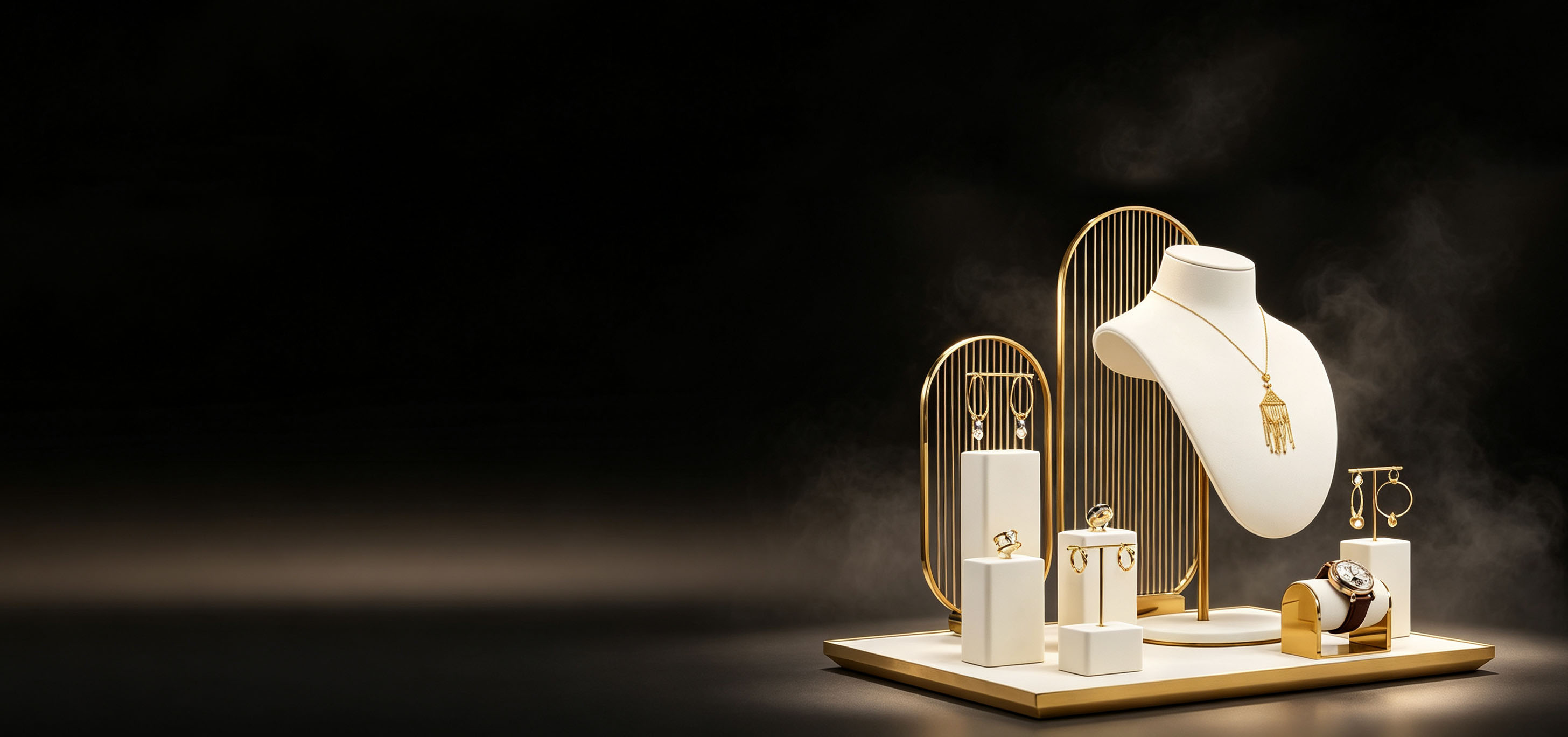
Quietly. Standard practice for in-case lighting is 4000–5000K neutral-to-cool light at a colour rendering index of Ra 90 or above, counter-surface illuminance held around 5000–8000 lux, with hero pieces pushed to 10000 lux, and spots angled about 30 degrees off the glass to kill glare. That environment is tuned for the fire in a stone. Fill the case with broad, glossy satin surfaces and the pouches simply intercept the light. So pouches usually live in a drawer or the lower tray, appearing only at the point of sale. If the pouch itself must be shown, choose a matte nap and keep at least thirty percent of the surface empty — negative space is not wasted area, it is where the eye rests. Display props exist to lift the lead actor. That is true of stands, neck forms and trays, and no less true of a pouch.
Q6: How do export costs and sustainability balance out?
Acknowledge the hard constraint first. Under US Section 301, Chinese-origin textile bags falling under HTS 6307.90 carry an additional 25% duty. That single line rewrites quotations, and it is the direct reason many brands have shrunk pouch dimensions and trimmed fabric weight. Cutting cost, however, is not the same as cutting grade. McKinsey research finds roughly 78% of global consumers willing to change their habits to reduce environmental impact, which means the premium attached to recycled polyester or organic cotton is increasingly repaid in repeat purchase. The pragmatic route is subtraction, not degradation: fewer millimetres, fewer layers, less pointless printing — but no compromise on weave density or colour fastness. A pouch that pills and fades within three months gets thrown away, and the brand memory goes into the bin with it.
In the end, the pouch is the cheapest item in the packaging system and the one most often seen again. It does not win the first sale. It is opened, carried out and quietly repurposed for studs and loose coins, over and over. Getting those two seconds right buys far more than two more seconds of advertising.
This is original content. Copyright belongs to Junyimei.
Junyimei — present every jewel and timepiece at its best.
柜台成交那一刻,店员做的最后一个动作,往往不是递卡,而是把戒指推进一只小小的绒布袋。这个动作只花两秒,顾客却会记住它——袋口收紧的手感、绒面反光的深浅、logo 烫得正不正。行业里习惯把它算作"附赠品",成本表上排在最末一行。但真金白银的数字并不这么看。
Q1:一只首饰袋,撑得起一个多大的生意?
比多数人预估的大。全球首饰袋市场 2025 年规模约 48 亿美元,而 2019 年还只有 31 亿美元,六年涨了五成以上;机构给出的 2026—2034 年复合增长率为 6.7%,2034 年有望摸到 86 亿美元。区域格局更值得中国供应链关注:亚太以 36.1% 的份额居首,约合 17.3 亿美元,而这块产能高度集中在广东与浙江两地。换句话说,全世界每三只首饰袋,就有一只出自我们隔壁的车间。它在成本表上是末行,在产业地图上却是主干。做珠宝袋加工的工厂这几年订单结构变化最明显——过去是"随货搭赠",现在客户会单独开一张规格单。
Q2:绒布、缎面、超纤、棉,到底怎么挑?
先看市场用脚投票的结果。绒布仍是第一材质,份额在 33%—38% 之间浮动,靠的是绒毛倒伏形成的防刮层和"一摸就贵"的手感;缎面与真丝约 22.8%,胜在垂坠与反光,适合项链这类需要铺展的品类;超纤与麂皮约 21.9%,耐磨、易清洁,是性价比档位的主力;欧根纱与塑料合计只剩 4.1% 左右,多用于批发与临时展会。真正的变量是棉——它的复合增速达到 8.9%,是所有材质里跑得最快的一档,推力来自环保法规和品牌自身的减碳承诺。选材的逻辑其实很朴素:贵金属镶嵌怕刮,优先绒布;银饰怕硫化,要挑无硫内衬;珍珠、欧泊这类有机宝石怕干怕闷,透气的棉反而比密实的绒更稳妥。
Q3:客户差评最集中的地方,是设计还是味道?
是味道。某跨境平台上欧根纱首饰袋的负面评价里,66.7% 指向"气味刺鼻",远远抛开"定价偏高"的 8.3%;而正面评价中,"材质好"和"设计可爱"各占 21.1%。这组对比很说明问题——顾客愿意为好看买单,却会因为一股胶味退货。异味通常来自低 VOC 控制不到位的染料、胶粘剂或压膜工序,属于典型的"省下三毛、赔掉三十"。同一份数据里还有个容易被忽略的细节:使用者中 54.55% 是把它当手袋内胆用的,18.18% 才是珠宝持有者,45% 的实际用途是"收纳小物"。也就是说,袋子被带走之后,多半没进抽屉,而是继续在顾客包里露脸。它的生命周期远比一次开箱长。
Q4:有了饰品包装盒,还需要袋吗?
需要,但要分工。盒与袋解决的是两个不同阶段的问题:盒负责运输与仪式感,靠结构承重、靠开合制造停顿;袋负责携带与复用,靠柔性贴合、靠轻量降低负担。一个常见误区是让袋去干盒的活——把裸戒直接塞进绒布袋走快递,缓冲为零,遇上堆压就是硬碰硬。合理的组合是:外层用饰品包装盒扛住装卸与跌落,内层用首饰袋隔离摩擦与缠绕,项链尤其要独立成袋防打结。反过来,同城自提或快闪店这类无长途运输的场景,一只做工扎实的袋子完全可以独当一面,还能把包装体积和物流成本压下去一截。骏依美包装在给客户做方案时,通常先问一句"货怎么走",再决定盒袋比例。
Q5:柜台上,袋子该怎么和陈列道具配合?
关键是别抢戏。柜内照明的通行做法是 4000—5000K 中性偏冷光、显色指数 Ra≥90,柜台面照度控制在 5000—8000lux,重点展品可加到 10000lux,射灯与玻璃保持约 30° 夹角避免眩光。这套光环境是为宝石的火彩调的,一旦柜里堆进大面积高反光的缎面袋,光就被袋子截走了。所以陈列时通常把袋收进抽屉或托盘下层,只在成交环节亮相;若要展示袋型,就选哑光绒面,并保证台面留白不低于三成——留白不是浪费面积,而是让视线有落点。珠宝陈列道具的本职是托举主角,摆台、颈架、托盘如此,袋子亦然。
Q6:出口成本和可持续,怎么算这笔账?
先认清一个硬约束:美国 301 条款下,HTS 6307.90 项下的中国产纺织袋适用 25% 加征关税,这条线直接改写了报价结构,也是不少品牌把袋型改小、克重降低的直接原因。但压成本不等于降规格。麦肯锡的调研显示,约 78% 的全球消费者愿意为减少环境影响改变消费习惯,这意味着可回收涤纶、有机棉这类材质带来的溢价,正在被更高的复购接住。务实的做法是做减法而非做劣化:减尺寸、减层数、减无意义的印刷,但不减织物密度与色牢度。一只袋子若三个月就起球褪色,顾客扔掉它的那一刻,品牌记忆也跟着扔了。
说到底,首饰袋是包装体系里最便宜、也最容易被反复看见的那一件。它不决定第一次成交,却在此后无数次被打开、被带出门、被顺手用来装耳钉和硬币。把这两秒做扎实,比在广告位上多买两秒划算得多。
本文为原创内容,版权归骏依美所有,如需转载请注明出处。
骏依美——让每一件珠宝首饰,都被更好地呈现与爱戴。一站式解决首饰包装