Why Jewelry Lives or Dies on Camera镜头前的珠宝柜
A host lifts a ring to the camera, the light catches the stone, and the chat fills with "bought". Three days later, one in four of those rings comes back. That is the strange reality of jewelry live-commerce: the screen can sell the piece, but it rarely keeps it.
Question 1: Why does jewelry sell so well on live streams, yet get returned so often?
The decision path is different. Offline buying is a slow arc — see, touch, try, buy — averaging around forty-five minutes. Live commerce is a pulse — listen, watch, ask, grab — with viewers deciding in about 3.2 minutes on average. The screen compresses the whole pitch into a few seconds of visuals: clarity, colour, craft, certificate. The upside is speed; the cost is trust and returns. In 2025 the return rate for jewelry sold via live streams reached 34.7 per cent, driven mostly by mismatched material perception and wrong sizing. So the "display" in a stream is not the counter — it is "cloud display", a space the camera redefines.
Question 2: What does a "jewelry display prop" look like in a live room?
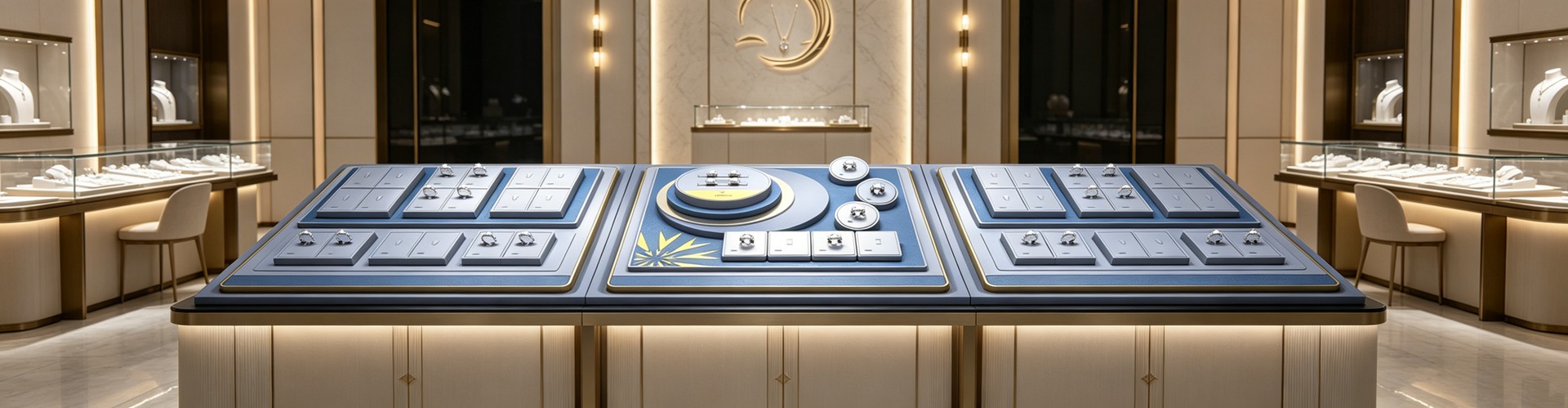
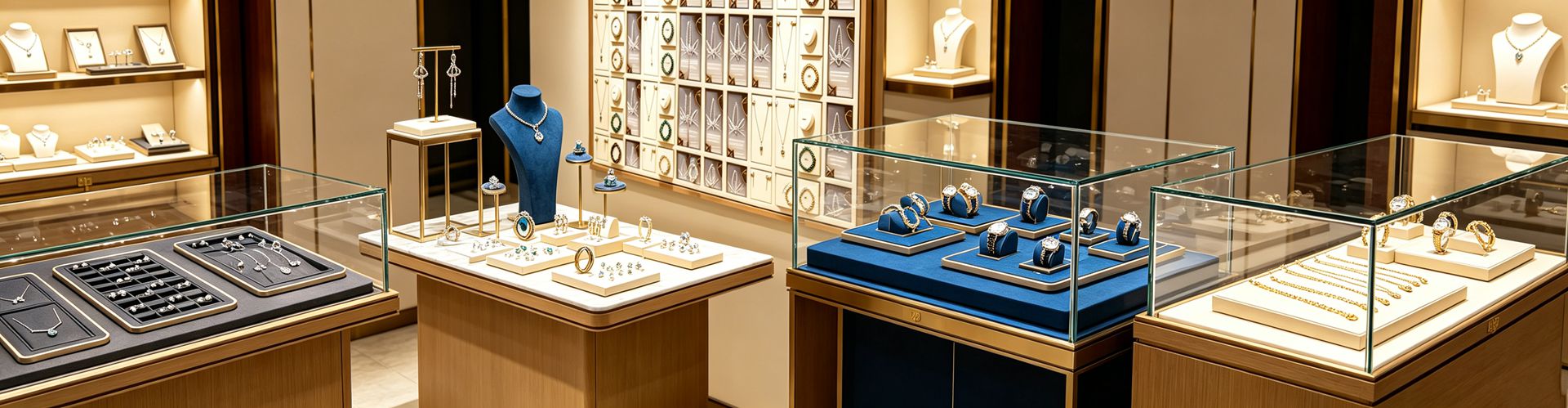
It is no longer a static case but a set of dynamic demonstration tools. A rotating turntable lets the gem refract light through 360 degrees, a macro lens captures the cut, and a colour-tunable light bank restores true hue. In other words, the jewelry display prop moves from the counter to in front of the lens, and its audience changes from the human eye to the camera. A professional live-display system — turntable plus macro plus tunable light — costs roughly 20,000 to 50,000 yuan and lifts conversion by 30 to 50 per cent. That is the heart of cloud display: the prop serves the frame, not the passer-by.
Question 3: Categories perform so differently on stream — how do you adjust the display?
Think in three tiers. Tier one — gold, pearls, silver — takes over 35 per cent of live GMV with return rates below 20 per cent; the materials read clearly on camera. Tier two — jade and coloured stones — sits around 20 per cent of GMV with returns of 25 to 35 per cent; quality is hardest to judge on screen. Tier three — diamonds and high-end watches — under 10 per cent of GMV with returns above 40 per cent; clarity and movement simply do not survive the screen. The fix is O2O: set a "same-as-live" experience zone in-store, use a proper jewelry display stand and authentication service to convert online traffic into a high-trust offline sale. The prop and the store are two sides of one trust engine.
Question 4: They say minimalist, high-end jewelry packaging wins customers more easily. Does that still hold on a live stream?
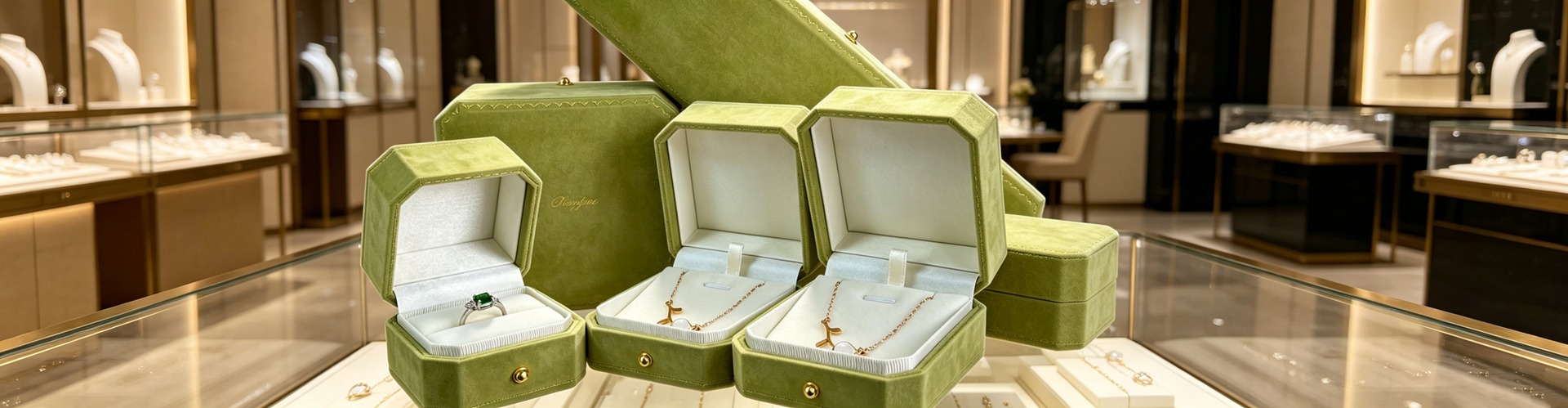
More than ever — but the reason shifts. A stream is real time; viewers ask while they watch and often stay for the whole session, so screen fatigue builds. The host usually holds the box, making packaging a supporting actor. Heavy foil and dense patterns blow out, blur into noise, even moiré under strong light, macro and a phone-sized screen. Minimalist matte colour with one clean mark lets the product lead, reads at thumbnail size, and behaves in hand. More importantly, restraint signals trust: in a trust-scarce live environment, "the product, not the frills" reads as honesty, especially for return-sensitive categories. Move the budget from surface craft to structural tolerance and lining — still the Junyimei approach. On screen, minimalism is not cheap; it gives the spotlight to the gem and the host.
Question 5: How should camera-ready packaging be designed so it does not sabotage the stream?
After the sale, viewers want the "unboxing twin." Three rules. First, line colour must contrast with the hero piece — a white pearl on cream velvet hides the product. Second, the structure must open smooth and close firm, and never stall on camera: magnetic one-hand open, damped hinge. Third, a reusable opaque jewelry pouch becomes a moving ad that still looks decent when photographed elsewhere. When Junyimei does jewelry box customization and small-batch flexible sampling, "survives the camera" is often written into acceptance.
Question 6: Small sellers cannot afford a pro studio — how do they win with display and packaging?
Three entry levels. Zero cost: window daylight plus a matte solid-colour cloth as background, phone on a macro stand. Low cost (a few hundred to a few thousand yuan): a small rotating display with a ring light and one jewelry display rack for depth. On the packaging side, start with an opaque reusable pouch and one clean mark; a few-yuan numbered card and QR verification page already carry trust. The numbers tell the story: the Shuibei live-commerce season went from 130 million yuan in 2023 to over 800 million in 2025, and its live bases now clear more than 10 billion yuan a year in GMV. Source merchants proved "origin plus live" works. Small brands do not need everything at once — build display props and packaging as one system, slowly.
This is original content. Copyright belongs to Shenzhen Junyimei.
Junyimei — present every jewel and timepiece at its best.
主播把一枚戒指举到镜头前,灯光一打,弹幕里瞬间刷出几个"已拍"。可是三天后,这枚戒指有四分之一概率被原路退回——这就是珠宝直播的怪现状:屏幕能把货卖出去,却常常留不住。
问一:为什么珠宝在直播间卖得动,却在屏幕上"看走眼"?
决策路径根本不同。线下是"看—摸—试—买"的渐进式,平均要花四十五分钟;直播是"听—看—问—抢"的脉冲式,观众平均三点二分钟就下单。屏幕是个被压缩的展示空间,净度、色泽、工艺、证书全靠画面在几秒内讲清楚。好处是成交快,代价是信任成本高、退货率高企——二〇二五年直播手饰退货率高达百分之三十四点七,主因是材质感知偏差和尺寸不适配。所以直播间的"陈列"不是柜台里那套,是屏幕里的"云陈列":货要在一个被相机重新定义的空间里被看懂。
问二:直播间的"珠宝陈列架"到底长什么样?
它不再是静态展柜,而是一组动态演示道具。可旋转展示台让宝石三百六十度折射光线,微距镜头捕捉切工细节,色温可调灯组还原真实色泽。换句话说,珠宝陈列道具从柜台里被搬到了镜头前,而且服务的对象从人眼变成了相机。一套专业直播展示系统(旋转台加微距加可调灯)投入约两万到五万元,能把转化率提升三到五成。这正是"云陈列"的核心:陈列要为画面服务,不是为路过的人服务。
问三:不同品类在直播间表现差那么多,陈列怎么调?
看三梯队。第一梯队黄金、珍珠、银饰,直播成交占比超过三成五,退货率低于两成——材质直观、容易在镜头前讲清;第二梯队翡翠、彩宝,成交占比约两成,退货率两成五到三成五,种水色最难辨;第三梯队钻石和高端腕表,成交占比不到一成,退货率超过四成,净度和机芯通过屏幕最难判断。对策很清楚:低适配品类走 O2O,门店设"直播同款体验区",用专业珠宝摆台加鉴定服务把线上流量导到线下高信任成交。陈列道具和门店不是两件事,是同一套信任工程的两边。
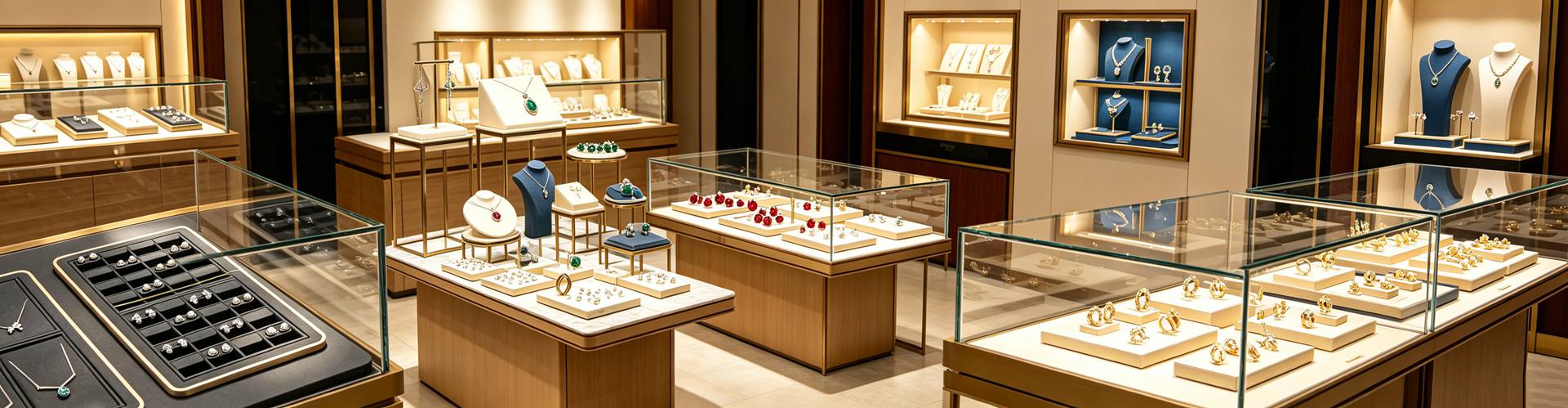
问四:都说高端简约的珠宝首饰品包装设计,更容易被顾客青睐。放到直播间,这句话还成立吗?
更成立,只是理由变了。直播是实时的,观众边看边问,常整场挂着看,长时间盯屏会产生视觉疲劳;主播又常常手持演示,包装天然是配角。满版烫金和细密印花在强光、微距加手机小屏的三重夹击下,容易过曝、糊成噪点甚至摩尔纹;极简的纯色哑光加一枚干净标识,留白让货当主角、缩略图可辨、手持也不抢戏。更关键的是信任:直播环境里"靠货本身、不靠花哨"的克制感,本身就是一种信任信号,尤其对退货敏感的品类。把预算从表面工艺挪到结构公差与内衬,依然是深圳骏依美做珠宝盒定制与小批量柔性打样的思路。结论:屏幕时代,简约不是省钱,是把落点让给货和主播。
问五:上镜包装要怎么设计,才不拖直播的后腿?
直播间成交之后,观众要的是"拆箱同款"。包装上镜有三要点。第一,内衬颜色要和主推珠宝拉开明度差——白珍珠配米白绒布等于把货藏起来。第二,结构要开得顺、关得牢,且在镜头前不卡壳:磁吸单手开、铰链阻尼稳。第三,可复用又不透光的首饰袋当移动广告,离店后在别处被拍到仍然体面。饰品包装盒和珠宝包装设计按"上镜友好"倒排预算最稳:先换内衬色,再调开合结构,最后才上烫金缎带。深圳骏依美把"上镜不翻车"写进验收,正是顺着这条顺序。
问六:中小商家没预算搭专业直播间,陈列和包装怎么以小博大?
三档起步。零成本:窗边自然光加一块纯色哑光桌布当背景,手机支架开微距;低成本(几百到几千元):一只可旋转小展示台加环形补光灯,再摆一张珠宝展示架做层次;包装侧先用不透光可复用首饰袋加一枚干净标识,几十元级的编号卡和二维码验真页也能撑住信任。数据很说明问题:水贝直播季二〇二三年一点三亿、二四年四亿、二五年超八亿,直播基地年 GMV 合计已超一百亿元——源头商家靠"产地加直播"已经跑通。中小品牌不必一步到位,把陈列道具和包装当一套系统慢慢搭,反而更稳。
本文为原创内容,版权归深圳骏依美所有,转载请注明出处。
骏依美——让每一件珠宝与腕表,都被更好地呈现。