Static and Dust: Daily Routines for Keeping Jewellery Cabinets Crystal Clear静电与微尘:珠宝展柜保持通透的日常功课
The two things jewellery counters fear most are both invisible: static and dust. No matter how brightly the glass is polished, a thin layer of grey dust settles again within a day or two; after a few days, acrylic trays feel rough to the touch and show fine scratches and dust specks under the light; velvet linings absorb dust until their colour turns grey and the pieces placed on them look dirty. Many shop owners blame the cleaning problem on "dusty air" or "glass that will not stay clean", but the real cause is static. In dry conditions, glass and acrylic easily accumulate charge, and static pulls airborne dust firmly onto the surface — the more you wipe, the more it attracts, forming a vicious cycle. Treat static and dust as a pair, and the counter can keep its "just renovated" clarity for the long term.
First Understand: Why Dust Loves the Counter
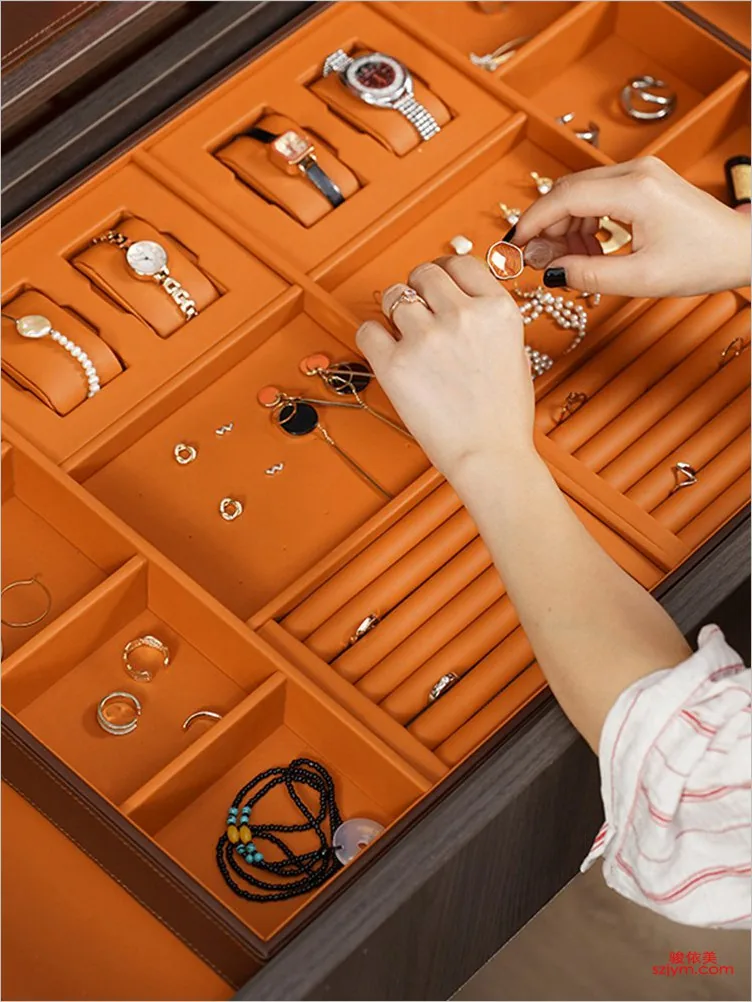
Dust is everywhere, but jewellery counters attract it especially because of their materials. Glass, acrylic and velvet are all prone to static: glass and acrylic are insulators, so friction or air movement charges their surfaces, and instead of dissipating, the charge holds fine dust onto them; velvet has a rough, dense fibre surface where dust settles deep into the pile, making it harder to clean than a flat plane. On top of this, counter lighting is open and warm, convection around spotlights is stronger, and dust settles more easily. Air conditioners and ceiling fans are accomplices too: they lift dust from floors and ceilings and circulate it to settle over the counters. Once these mechanisms are understood, the answer is clear — not "wipe more often", but "generate less static, accumulate less dust, clean more systematically".
Anti-Static Is the First Line of Defence
Controlling static starts at the source and with the right tools. At the source, keep humidity around the counter between 40 and 60 percent; in dry seasons use a humidifier or lightly mist the cabinet air several times a day — more moisture means less static. Place anti-static mats under trays and at the bottom of the cabinet to reduce friction charging. Gloves matter too: staff handling pieces should wear cotton or anti-static gloves, which transfer far less charge than bare hands. For tools, there are anti-static dusting brushes and anti-static sprays: the brush's fibres generate no friction charge and can sweep loose dust away instead of holding it; the spray forms an ultra-thin anti-static film on glass and acrylic, robbing dust of its magnetic attraction, so a dry cloth flick removes it. Choose sprays with mild ingredients and no silicone or alcohol, to avoid residue or damage to plating.
Clean in Levels: Dry Flick, Damp Wipe, Deep Clean
Counter cleaning cannot be done with one cloth from start to finish; it must be graded by how dirty the surface is. For daily floating dust, use a microfiber dry cloth or an anti-static brush with light flicks — no water needed; while dust is still sitting on the surface, dry brushing is the most efficient and least damaging. For fingerprints, grease and water spots, wipe gently with a slightly damp soft cloth, then dry with a dry cloth; the key is to leave no water film, as dried films leave white marks on glass. Velvet and linings take a different route: brush along the pile with a soft brush to lift dust from the nap, and treat stubborn stains with a velvet-specific cleaner on the spot — never soak the whole piece, or the pile will collapse and deform. Schedule one deep clean per week: move trays and pieces aside, wash the cabinet walls with glass cleaner, vacuum corners with a narrow nozzle, brush out prop grooves, then check screws, slots and pads for looseness.

Different Materials, Different Care
Each common material in the counter has its own temperament. Glass is the hardest yet shows dirt most easily — a fingerprint appears with a single touch; use glass cleaner with a microfiber cloth and finish by drying in one direction for a streak-free result. Acrylic is softer than glass and fears scratches most: no paper towels or rough cloths on dry surfaces, because once a scratch appears it can never be fully removed, only reduced by polishing and prevented by dust control; always combine cleaning with anti-static spray, wiping while spraying. Metal and plated surfaces take a slightly damp soft cloth, and never cleaners containing acid or ammonia, which eat through plating. Velvet and leather avoid water and sun; dusting with a brush comes first, damp cloth only as a supplement. Develop a "one cloth per material" habit: separate cloths for glass, metal and velvet, so oil from metal cloths never smears onto glass and makes it worse.
Build Cleaning into the Business Rhythm
For cleaning to truly work, it must be built into a fixed daily, weekly and monthly rhythm, not done only when the counter visibly turns grimy. The ten minutes before opening are golden time: flick dust, remove water marks, check glass clarity and lining flatness, and restore the counter to its morning state with minimal effort. During business hours, do only spot treatment when customers are few, focusing on the try-on area and the glass near the till, rather than wiping repeatedly in front of customers, which makes the counter look chronically unclean. One deep clean after closing each week, from surfaces to props to lighting to corners; one major clean each month, emptying and sanitising all trays, air-drying them, applying anti-static treatment and auditing consumables. Turn cleaning into an executable schedule, and counter clarity stops depending on luck and starts depending on system.
Static and dust are invisible, yet day after day they wear away the premium feel of the counter. Starting with anti-static, cleaning by level, caring by material and executing by rhythm turns these four moves into one system that keeps the counter bright and clear, so the light of the jewellery is never dimmed by a layer of dust. Shenzhen Junyimei focuses on jewellery display and counter props, offering anti-static trays, cleaning tools and cabinet consumables — welcome to consult about solutions matched to your existing counters.
Original article by Shenzhen Junyimei (lbobo.com). Reprints welcome; please credit the source. Professional display props: https://www.lbobo.com
珠宝柜台最怕的两样东西,都是看不见的:静电和微尘。玻璃柜擦得再亮,过一两天又蒙上一层细灰;亚克力托盘放几天,表面发涩,灯光下一看满是尘点;绒布衬垫吸了灰尘后颜色发灰,货品放上去显得脏。很多店主把这归结为"灰大""擦不干净",其实真正的源头是静电——干燥环境下玻璃和亚克力容易积累电荷,把漂浮的灰尘吸在表面,越擦越脏,形成恶性循环。把静电和微尘当作组合来治理,柜台才能长期保持"刚装修好"的通透感。
先搞懂:灰尘为什么只爱落在柜台上
灰尘无处不在,但珠宝柜台格外招灰,和材料特性有关。玻璃与亚克力是绝缘体,摩擦或空气流动都会让表面带电,电荷不消散,把细尘牢牢吸住;绒布表面纤维密集,灰尘落进去就嵌在绒缝里。柜台里的射灯是开放暖光源,附近对流更强,灰尘更容易沉降;空调和吊扇也会把积尘卷起来,在柜台上方循环。对策也因此清晰——不是"多擦几遍",而是"少生电、少积尘、勤清尘"。
防静电是第一道防线
治理静电,从源头和工具两头下手。源头方面,保持柜台附近湿度在百分之四十到六十之间,干燥季节用加湿器或喷雾定时补水,湿度上来,静电自然减少;柜台内侧和托盘底部铺防静电垫,减少摩擦起电;店员收拾货品尽量戴棉质或防静电手套,减少电荷转移。工具方面,防静电除尘刷的刷毛不产生摩擦电荷,能把浮尘轻轻扫掉;防静电喷剂喷在玻璃和亚克力表面,形成极薄的抗静电膜,让灰尘失去附着的磁力,之后干布一拂就掉。喷剂要选成分温和、不含硅油和酒精的,避免残留或腐蚀镀层。
除尘要分级:干拂、湿擦、深清
柜台清洁不能一把抹布从头擦到尾,要按脏污程度分级处理。日常浮尘用超细纤维干布或防静电除尘刷轻拂即可,不沾水——灰尘停在表面时干拂最省力,也最不伤表面;手印、油渍和水渍处用微湿软布轻擦,再用干布收干,重点是不留水膜;绒布和内衬则用软毛刷顺着绒向轻刷,把绒缝里的灰刷出来,顽固污渍用绒布专用清洁剂局部处理,不要整块打湿。每周安排一次深度清洁:移开托盘和货品,用玻璃水擦柜壁、吸尘器窄嘴吸柜角、软刷清道具凹槽,最后检查一遍螺钉、卡位和绒垫有没有松动。
道具材质不同,清洁方式也不同
柜内常见材质各有脾气。玻璃最硬但最显脏,要用玻璃清洁剂配超细纤维布,擦完用干布往同一方向收干才没有水痕;亚克力比玻璃软,最怕刮,不能用纸巾和粗糙布料干擦,划痕一旦产生就无法完全消除,只能靠抛光修复、防尘防患,清洁时配合防静电喷剂边喷边擦;金属件和镀层用微湿软布即可,切勿用含酸或含氨的清洁剂;绒布和皮面避水避晒,以刷子除尘为主。还要养成"一物一布"的习惯:擦玻璃、擦金属、擦绒布的布分开用,避免交叉污染。
把清洁排进营业节奏里
清洁要见效,得排进每日、每周、每月的固定节奏,而不是等柜面脏到肉眼可见才动手。每日开门前十分钟是黄金时间:拂尘、收水渍、检查玻璃透明度和绒衬平整度,让柜台恢复晨间状态;营业中只在顾客少时做局部处理,重点擦试戴区和收银台附近,避免当着顾客反复擦拭,反而显得柜台长期不洁;每周关店后做一次深度清洁,从柜面到道具、从灯光到边角过一遍;每月做一次大扫除,把托盘全部搬出清空、消毒、晾干,顺便做防静电处理和易耗件盘点。把清洁变成可执行的排班,柜台通透就不再靠运气,而是靠制度。
静电和微尘虽然看不见,却在日复一日地磨损柜台的高级感。从防静电着手、按级别除尘、按材质保养、按节奏执行,一套组合做下来,柜台才能长期明亮通透,货品的光芒才不会被一层薄灰挡住。深圳骏依美专注珠宝陈列与柜台道具,提供防静电托盘、除尘工具及各类展柜耗材,欢迎结合门店现有柜台咨询配套方案。
原创声明:本文由深圳骏依美(lbobo.com)原创,欢迎转载,请注明出处。专业珠宝陈列道具,欢迎咨询:https://www.lbobo.com