Mechanical Watches Hate Humidity Too机械表也怕潮:展柜里的湿度
At a mechanical-watch counter, the real enemy isn't a quiet floor — it's the humid south wind. The few watches in the case carry moisture in their movements that's harder to fight than dust.
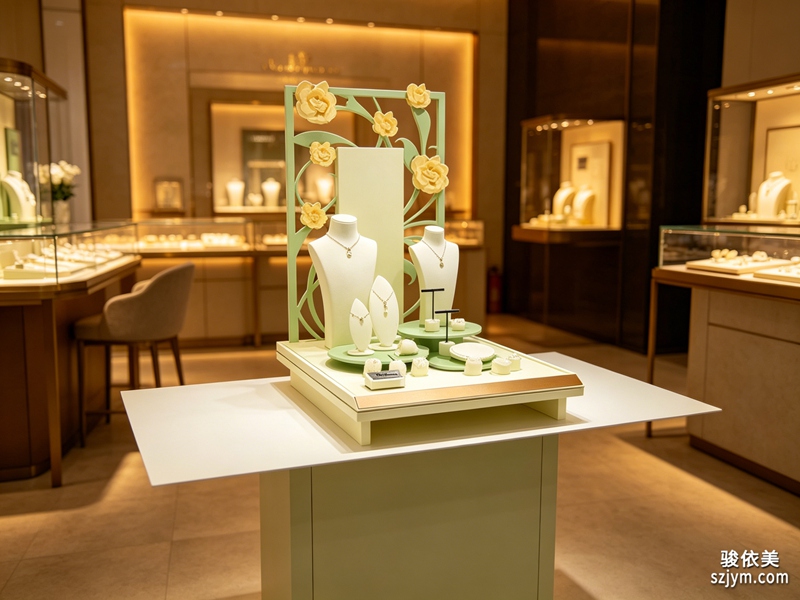
Start with a full display unit like "Jewelry Display Window CH7". Cream-white, geometric, holding a necklace bust, a pendant tray and dedicated stands for watches and bracelets. It looks clean, yet its back panel and hollow structure trap humidity best. In the south's return-of-spring damp, a film of mist forms on the inside of the glass and you can feel the wet near the dial. Our fix: two small color-changing silica packs in the case — blue to pink means recharge in the oven — plus invisible moisture sheets tucked in the back-panel seam, swapped monthly.
 The "Jewelry Display Set TP04" is a green wavy tray for bracelets and necklaces. Its trouble is the velvet absorbing water. Once the wavy grooves dampen, a metal chain laid on top dulls within half a day and won't polish back. When the tray isn't holding stock, we cover it with a thin velvet cloth — blocks dust and humidity alike. Monday morning, lift that cloth to air the surface; don't leave it sealed.
Lighted boxes such as "Jewelry Box SH16" are popular now. The embedded light is bright, but the LEDs shed heat and a sealed box condenses water inside. We switch them on only with a customer, and turn them off half an hour before closing so the box dries overnight. The velvet pad inside the watch should be thin — thick pile soaks up moisture and dries slower.
A hygrometer is non-negotiable. Many shops judge by feel and get it wrong. A ten-dollar digital gauge in the case, with the red line at 55–60 percent; above that, run a dehumidifier on low and pull slowly — never aim it straight at the watches. Mechanical movements hate sudden dry-wet swings more than steady damp.
The "Jewelry Display Set TP04" is a green wavy tray for bracelets and necklaces. Its trouble is the velvet absorbing water. Once the wavy grooves dampen, a metal chain laid on top dulls within half a day and won't polish back. When the tray isn't holding stock, we cover it with a thin velvet cloth — blocks dust and humidity alike. Monday morning, lift that cloth to air the surface; don't leave it sealed.
Lighted boxes such as "Jewelry Box SH16" are popular now. The embedded light is bright, but the LEDs shed heat and a sealed box condenses water inside. We switch them on only with a customer, and turn them off half an hour before closing so the box dries overnight. The velvet pad inside the watch should be thin — thick pile soaks up moisture and dries slower.
A hygrometer is non-negotiable. Many shops judge by feel and get it wrong. A ten-dollar digital gauge in the case, with the red line at 55–60 percent; above that, run a dehumidifier on low and pull slowly — never aim it straight at the watches. Mechanical movements hate sudden dry-wet swings more than steady damp.
 We built it into the open-close routine. The opener checks the silica color and the hygrometer before any light goes on; the closer logs a reading at night. Two looks a day, no judgment calls, and the watches stay quiet. Another myth: a watch in a display box is safe. Leather straps mold fastest; a sample that sits unmoved should get one airing day a week in a ventilated spot — better than sealed forever. Steel bracelets cope, but the case-back gasket ages and lets humidity in to rust the movement, and that repair is pricey.
In the end moisture control isn't buying one machine. Watch the CH7 back panel, the TP04 velvet grooves and the SH16 lit box; add a hygrometer and two silica packs, and even the south wind lets you sleep.
This is original content. Copyright belongs to Shenzhen Junyimei.
We built it into the open-close routine. The opener checks the silica color and the hygrometer before any light goes on; the closer logs a reading at night. Two looks a day, no judgment calls, and the watches stay quiet. Another myth: a watch in a display box is safe. Leather straps mold fastest; a sample that sits unmoved should get one airing day a week in a ventilated spot — better than sealed forever. Steel bracelets cope, but the case-back gasket ages and lets humidity in to rust the movement, and that repair is pricey.
In the end moisture control isn't buying one machine. Watch the CH7 back panel, the TP04 velvet grooves and the SH16 lit box; add a hygrometer and two silica packs, and even the south wind lets you sleep.
This is original content. Copyright belongs to Shenzhen Junyimei.
Junyimei — present every jewel and timepiece at its best.卖机械表的柜台,最怕的不是没客人,是南风天。柜里那几只表,机芯里的水汽比灰尘更难缠。 先说「珠宝陈列橱窗CH7」这类整组展具。米白色调、几何造型,里面项链人模、吊坠托盘、还有手表与手链的专用展架都齐。看着干净,可它的背板和中空结构最容易藏湿。南方回南天,玻璃内壁起一层水雾,表盘凑近了都能感觉得到潮气。我们的做法是柜里常备两小包变色硅胶,蓝色变粉就烘了再用;背板缝里塞不易发现的防潮片,每月换一次。
「珠宝陈列列套台TP04」是绿色波浪纹托盘,手链项链都往上摆。它的问题是绒面吸湿。波浪纹的沟槽一旦返潮,放上去的金属链子半天就泛暗,擦都擦不回来。台面不摆货时,盖一层薄绒布,既挡灰也隔潮。星期一一早开店,先把昨天盖着的布掀开透风,别闷着。
带灯的「首饰盒SH16」现在用得多。盒子里嵌了灯,亮是亮,可灯珠发热,密闭一久盒内反而凝水。我们一般只在对客时点亮,关店前半小时就熄,让盒里干着过夜。盒内放表的绒垫也别用太厚的,厚绒吸饱水汽更难干。
湿度计得有。很多店靠手感判断,错了。柜里放一个十几块的电子温湿度计,红线划在百分之五十五到六十,超了就开除湿机低档慢慢抽,别对着表直吹。机械表怕骤干骤湿,忽冷忽热比一直潮更伤。去年梅雨季,隔壁街一家店疏于看湿度,连着几天回南天过后,三只长期不动的样表表盘内侧起了一层雾,皮表带边角也发了霉,最后整批送厂开盖烘干,柜台上空了小半周,那之后才肯在每台柜里摆湿度计。
我们把这事排进了开关店流程。早班的人开灯前先看硅胶颜色和湿度计,晚班打烊记一笔读数,一天两看,不用凭感觉。还有一种误区,觉得表放展示盒里就安全。其实皮表带最怕霉,长期不动的样表,每周抽一天让它在通风处歇半天,比一直关着强。钢带好些,可表背胶圈久了也会老化,潮气钻进去生锈,修起来贵。
说到底,防潮不是买台机器就完事。CH7的背板、TP04的绒槽、SH16的灯盒,三处盯紧,再配个湿度计和两包硅胶,南风天也能睡安稳。
本文为原创内容,版权归深圳骏依美所有。如需转载请注明出处。
骏依美——让每一件珠宝与腕表,都被更好地呈现。
The "Jewelry Display Set TP04" is a green wavy tray for bracelets and necklaces. Its trouble is the velvet absorbing water. Once the wavy grooves dampen, a metal chain laid on top dulls within half a day and won't polish back. When the tray isn't holding stock, we cover it with a thin velvet cloth — blocks dust and humidity alike. Monday morning, lift that cloth to air the surface; don't leave it sealed.
Lighted boxes such as "Jewelry Box SH16" are popular now. The embedded light is bright, but the LEDs shed heat and a sealed box condenses water inside. We switch them on only with a customer, and turn them off half an hour before closing so the box dries overnight. The velvet pad inside the watch should be thin — thick pile soaks up moisture and dries slower.
A hygrometer is non-negotiable. Many shops judge by feel and get it wrong. A ten-dollar digital gauge in the case, with the red line at 55–60 percent; above that, run a dehumidifier on low and pull slowly — never aim it straight at the watches. Mechanical movements hate sudden dry-wet swings more than steady damp.
We built it into the open-close routine. The opener checks the silica color and the hygrometer before any light goes on; the closer logs a reading at night. Two looks a day, no judgment calls, and the watches stay quiet. Another myth: a watch in a display box is safe. Leather straps mold fastest; a sample that sits unmoved should get one airing day a week in a ventilated spot — better than sealed forever. Steel bracelets cope, but the case-back gasket ages and lets humidity in to rust the movement, and that repair is pricey.
In the end moisture control isn't buying one machine. Watch the CH7 back panel, the TP04 velvet grooves and the SH16 lit box; add a hygrometer and two silica packs, and even the south wind lets you sleep.
This is original content. Copyright belongs to Shenzhen Junyimei.Junyimei — present every jewel and timepiece at its best.卖机械表的柜台,最怕的不是没客人,是南风天。柜里那几只表,机芯里的水汽比灰尘更难缠。 先说「珠宝陈列橱窗CH7」这类整组展具。米白色调、几何造型,里面项链人模、吊坠托盘、还有手表与手链的专用展架都齐。看着干净,可它的背板和中空结构最容易藏湿。南方回南天,玻璃内壁起一层水雾,表盘凑近了都能感觉得到潮气。我们的做法是柜里常备两小包变色硅胶,蓝色变粉就烘了再用;背板缝里塞不易发现的防潮片,每月换一次。
「珠宝陈列列套台TP04」是绿色波浪纹托盘,手链项链都往上摆。它的问题是绒面吸湿。波浪纹的沟槽一旦返潮,放上去的金属链子半天就泛暗,擦都擦不回来。台面不摆货时,盖一层薄绒布,既挡灰也隔潮。星期一一早开店,先把昨天盖着的布掀开透风,别闷着。
带灯的「首饰盒SH16」现在用得多。盒子里嵌了灯,亮是亮,可灯珠发热,密闭一久盒内反而凝水。我们一般只在对客时点亮,关店前半小时就熄,让盒里干着过夜。盒内放表的绒垫也别用太厚的,厚绒吸饱水汽更难干。
湿度计得有。很多店靠手感判断,错了。柜里放一个十几块的电子温湿度计,红线划在百分之五十五到六十,超了就开除湿机低档慢慢抽,别对着表直吹。机械表怕骤干骤湿,忽冷忽热比一直潮更伤。去年梅雨季,隔壁街一家店疏于看湿度,连着几天回南天过后,三只长期不动的样表表盘内侧起了一层雾,皮表带边角也发了霉,最后整批送厂开盖烘干,柜台上空了小半周,那之后才肯在每台柜里摆湿度计。
我们把这事排进了开关店流程。早班的人开灯前先看硅胶颜色和湿度计,晚班打烊记一笔读数,一天两看,不用凭感觉。还有一种误区,觉得表放展示盒里就安全。其实皮表带最怕霉,长期不动的样表,每周抽一天让它在通风处歇半天,比一直关着强。钢带好些,可表背胶圈久了也会老化,潮气钻进去生锈,修起来贵。
说到底,防潮不是买台机器就完事。CH7的背板、TP04的绒槽、SH16的灯盒,三处盯紧,再配个湿度计和两包硅胶,南风天也能睡安稳。
本文为原创内容,版权归深圳骏依美所有。如需转载请注明出处。骏依美——让每一件珠宝与腕表,都被更好地呈现。