The Air Inside Your Jewelry Box首饰盒里的微气候
A customer returns with a silver chain bought six months ago and asks whether the color has come off. The piece is fine. The box is fine. What went wrong is the air inside the box. Jewelry rarely loses to time; it loses to the moisture, sulfur and light it breathes while stored. Six questions, all of them asked daily at counters and buying desks.
Q1. The silver was kept in its box. Why did it still go dark?
That is not rust, it is tarnish: silver reacts with hydrogen sulfide in the air to form silver sulfide, and once the film passes roughly 100 nanometers it reads as pure black. The Canadian Conservation Institute notes that at any given sulfur concentration, tarnishing accelerates as relative humidity climbs, which is why silver is best stored below 50% RH. A 2021 test by the Institute of Metal Research measured 925 silver at 25 degrees Celsius: at 80% RH, sulfide coverage reached 12.7% in 72 hours, against only 1.3% at 40% RH. Ambient chemistry differs by orders of magnitude too, with urban air at roughly 0.2 to 1.5 ppb hydrogen sulfide and a humidity-controlled case below 0.02 ppb, a gap of about eight times in reaction rate. So the "fading" a customer describes is usually not a product fault. It is a jewelry box parked in a drawer next to the bathroom, a wardrobe during the rainy season, or a kitchen counter. Sterling silver sits at only 2.5 to 3 on the Mohs scale, so pieces stored together also scratch each other; dullness and hairlines tend to arrive as a pair.
Q2. So drier is always better, and more desiccant packs will fix it?
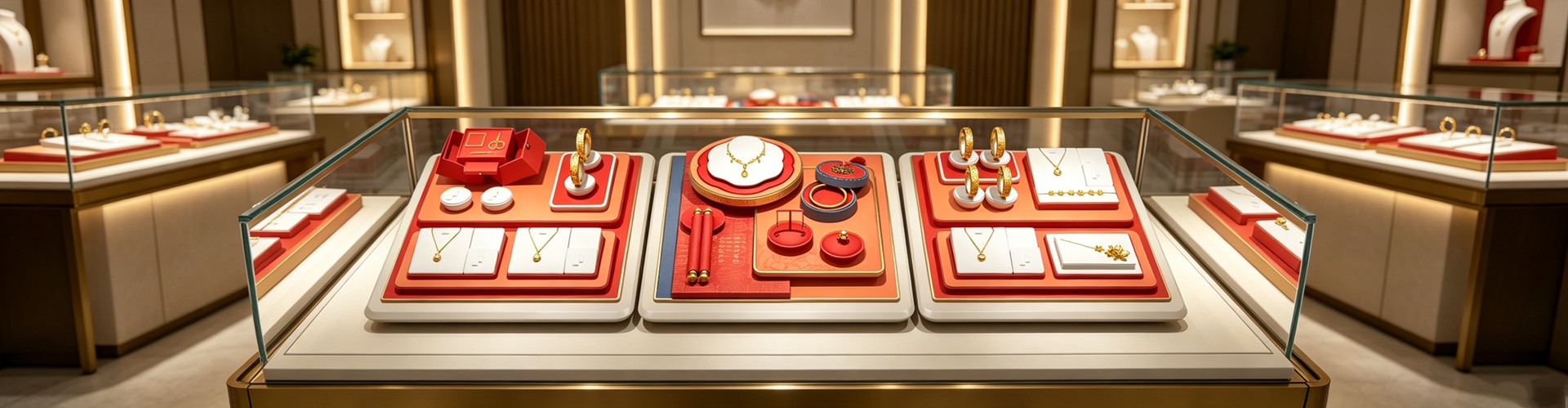
That is the most common mistake. Pearls are organic gems and want roughly 40% to 60% RH. Below 40% they lose water, craze and yellow; above 60% the organic layers age and the luster goes flat. GIA explicitly warns against keeping pearls and opals in overly dry safes. Opal itself holds free water, and rapid drying or heat can produce a web of fine cracks, so collectors aim for a stable 40% to 60% and avoid repeated wet-dry cycling. Silver, karat gold, malachite and lapis want the opposite: 40% to 50% or drier. No single box satisfies both curves. The right answer is not "drier" but zoning: seal metals with desiccant, keep pearls and opals in a breathable cotton pouch, and never seal them with a drying agent. Good jewelry box design splits into two micro-environments instead of dropping everything into one large velvet tray.
Q3. Can the box and the display props themselves harm the goods?
Yes, and this is the most underrated risk in the trade. Museums have maintained material exclusion lists for decades. Wool and wool felt emit volatile sulfur compounds that darken silver, silver plate and metal threads. Oak and similar hardwoods release acetic acid and formaldehyde that corrode metals. Cheap acidic board, latex tape, polyurethane foam and oil-based paint are all on the list, and even with low-VOC coatings, conservation practice calls for at least three weeks of curing inside a case before objects go in. Dyes are the sneakiest offender: under high humidity or accidental wetting, colorant migrates from fabric onto the object, which is why guidance specifies undyed cotton, linen, silk or polyester linings, washed first to remove sizing. Translated into jewelry terms: a "luxury" box combining a wood shell, felt lining, several adhesive layers and decorative metal parts can behave like a small emission chamber once closed, while a plain-looking box built from acid-free paper, undyed cotton, polyethylene foam and water-based glue has almost nothing to emit. The same logic applies to jewelry display props: avoid keeping organic materials and metals together long term, and add a sulfide-absorbing or activated-carbon cloth when you must.
Q4. People say restrained, high-end minimal packaging is what customers actually favor. Does the micro-climate support that?
It does, and on harder ground than aesthetics. The shorter the bill of materials, the fewer emission sources sealed inside the box. An ornate box often stacks sulfur-bearing felt, acidic board, oil-based adhesive, decorative metal trim, lamination and print solvents, all shut into the same few dozen milliliters of air where their effects compound. A matte solid-color box with an acid-free liner and one blind deboss may run three or four lines of materials in total. And a customer's verdict on "premium" often lands not at the first opening but at the third or the tenth: a year later, is the liner still flat and the silver still bright, or is the clasp loose, the flock pilled and the chain dark? Minimal is therefore not cheap. It moves budget from decoration to the parts nobody photographs: liner grade, lid fit, folding tolerance held inside 0.2 mm, sealing faces with no gaps. Shenzhen Junyimei writes those into sampling acceptance, because a factory confident enough to go minimal has to stand on measurable numbers rather than pattern work hiding flaws.
Q5. How should a store manage its counters and stockroom?
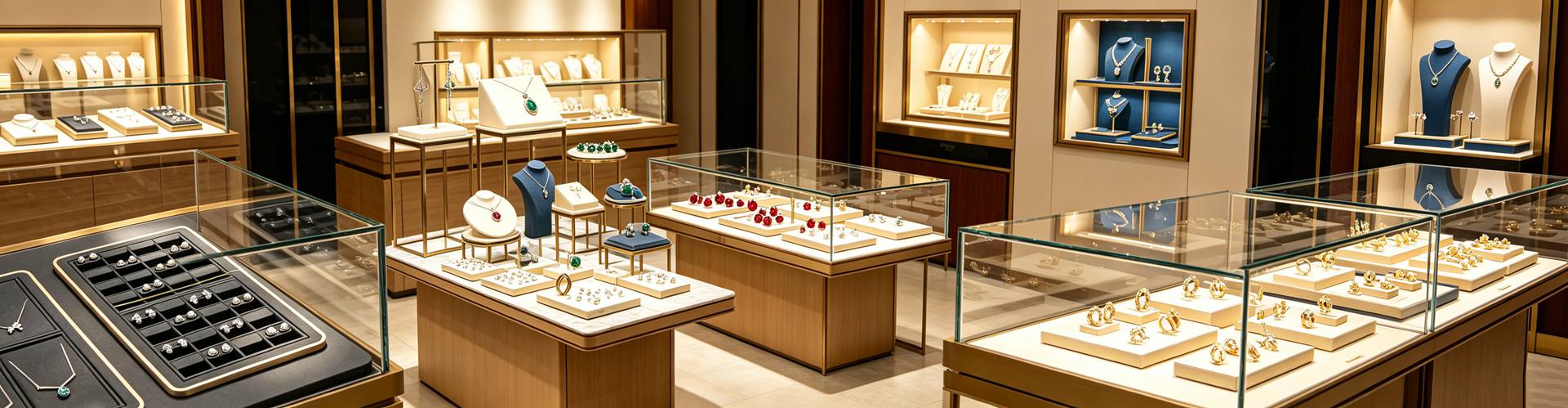
Three fronts. In the case: 15 to 25 degrees Celsius and 40% to 60% RH, with no pearls, opals or amber under accent spots, since ultraviolet light is the main driver of dial discoloration, strap aging and color-stone fading; keep organics and metals apart over the long run. In the stockroom: use activated-carbon anti-tarnish strips for silver and plated goods, and ask for sulfur-absorption test data when sourcing, on the order of 50 mg of hydrogen sulfide absorbed per gram. Treated tissue is cheapest but lasts only three to six months and largely fails above 60% RH, while carbon strips can run to 24 months; replace silica gel when it turns from blue to pink, roughly every three to six months. The economics matter: trade sources report unprotected silver losing 15% to 20% of perceived value within about six months, tarnished pieces generating roughly a third more return requests, and humidity held under 50% cutting tarnish formation by about 80%. The cheapest single fix is a care card in every order explaining that darkening is tarnish, that it is reversible, and how to clean it; suppliers report it removes 70% to 80% of tarnish-related returns, and one return's shipping pays for dozens of cards. A watch box follows the same rule: the original paper carton absorbs moisture and offers no magnetic shielding, so treat it as short-term transit only.
Q6. What can a small shop or an individual do on a budget?
Three tiers. Free: keep storage away from bathrooms, kitchens and windows; make sure pieces are fully dry before they go in (a leather strap can grow mold within 48 hours in damp air, and above 70% RH within a month); separate organics from metals; add a care card. Tens of yuan: silica gel with a humidity indicator card, activated-carbon strips for silver, and a breathable cotton pouch for pearls instead of a plastic bag, since plastic creates a condensing micro-environment that darkens metal faster; one opaque reusable jewelry pouch also solves light exposure. A hundred yuan and up: in humid regions add an electronic dry cabinet holding around 40%, or specify acid-free liners, undyed cotton, a sealing structure and individual compartments when you order custom jewelry boxes, so protection lives in the structure rather than in later repair work. Three classic traps: sealing pearls with desiccant, dye migration from flock under high humidity, and a wood-and-felt box that looks premium while quietly emitting. For mechanical watches, add one more: wind 20 to 30 turns every one to two months and keep at least 30 cm from magnetic sources.
A box is never a one-time container. It is the room your jewelry breathes in for most of the year, and fixing the room is what keeps the goods looking new.
This is original content. Copyright belongs to Shenzhen Junyimei.
Junyimei — present every jewel and timepiece at its best.
顾客拿着半年前买的银项链回来,问"是不是掉色了"。货没问题,盒子也没坏——问题出在盒子里那口空气。珠宝真正的对手很少是时间,而是它被收起来时呼吸的那点湿气、硫和光。下面六问,都是柜台与采购现场最常被追着问的。
问一:银饰明明放在盒子里,为什么还是变黑?
变黑不是生锈,是硫化:银与空气中的硫化氢反应生成黑色硫化银,膜厚超过约 100 纳米就呈纯黑。加拿大文物保护研究所指出,硫浓度相同时湿度越高硫化越快,银宜存放在 50%RH 以下。中科院金属研究所 2021 年实测:25℃、80%RH 下 925 银 72 小时表面硫化覆盖率达 12.7%,而 40%RH 同期仅 1.3%,差近十倍。环境浓度也有量级差——城市空气硫化氢约 0.2 至 1.5 ppb,恒湿展柜可低于 0.02 ppb,速率相差约八倍。所以顾客说的"掉色",多半不是货的问题,而是那只首饰盒被放在了浴室隔壁的抽屉、回南天的衣柜或厨房台面上。925 银硬度只有 2.5 至 3,混格存放还会互相划伤,发暗与花痕常常一起来。
问二:那是不是越干越好,多塞几包干燥剂就行?
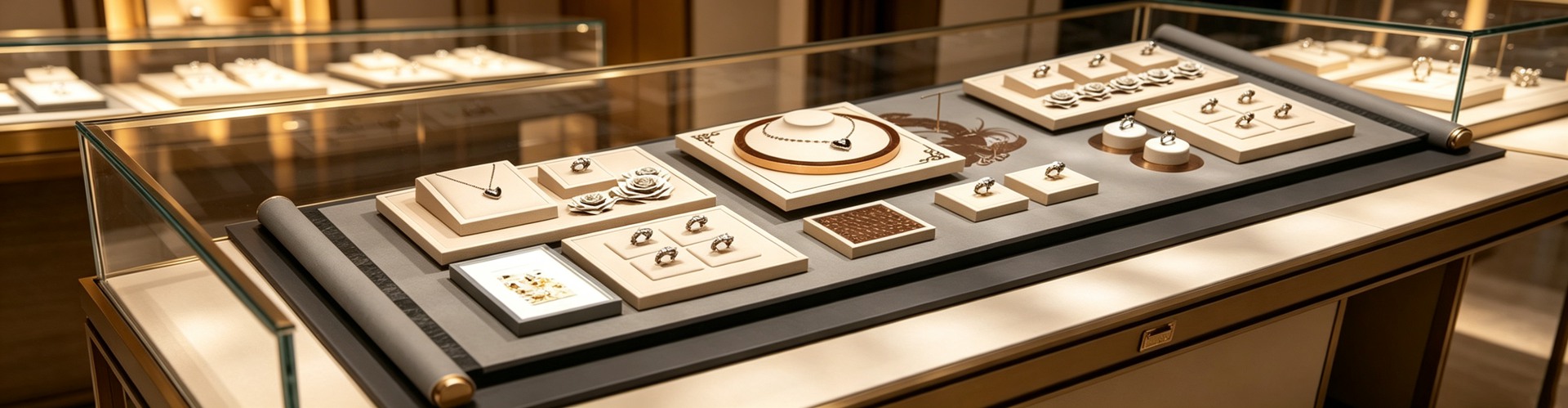
这是最常见的误区。珍珠是有机宝石,适宜相对湿度约 40% 至 60%:低于 40% 会失水干裂发黄,高于 60% 则有机质老化、光泽发闷。GIA 明确提醒珍珠与欧泊不宜存放在过于干燥的保险箱中;欧泊本身含游离水,快速干燥或受热会出现蛛网状龟裂,收藏级做法是维持 40% 至 60% 且稳定,最怕反复的干湿循环。反过来,银饰、K 金、孔雀石、青金石这类才需要 40% 至 50% 甚至更干。一只盒子不可能同时满足两套湿度,正确答案不是"更干"而是分区:金属件密封加干燥剂,珍珠欧泊单独放透气棉布袋、绝不与干燥剂同封。首饰盒设计要能拆出两个微环境,而不是一个大绒布槽装下所有。
问三:盒子和陈列道具本身,会不会反过来害货?
会,而且是行业里最被低估的一条。博物馆的材料排除清单做了几十年:羊毛与含毛毡会释放含硫挥发物,直接让银件、镀银件、金属绣线发黑;橡木等硬木释放乙酸与甲醛,对金属有腐蚀性;廉价酸性卡纸、乳胶胶带、聚氨酯泡棉、油性漆都在名单上,即便用低 VOC 漆,规范也要求柜内固化至少三周再上货。更隐蔽的是染料——高湿或意外受潮时,染色织物的颜色会迁移到货品表面,因此保护规范要求内衬用未染色的棉、麻、丝或涤纶,并先水洗去浆。翻译成珠宝行的话:木壳加毛毡内衬加多层胶加装饰金属件的"豪华盒",合盖后可能就是一个小型排放腔;而无酸纸、未染色棉、聚乙烯发泡内衬、水性胶的盒子看着朴素,排放源却极少。珠宝陈列道具同理,柜内不宜让有机材质与金属长期同处,必要时加吸硫布或活性炭布做被动净化。
问四:常说高端简约的珠宝包装设计更容易被顾客青睐,微气候能佐证吗?
能,而且比视觉那一层更硬:包装的材料清单越短,盒子里的排放源就越少。繁复盒往往叠着含硫毛毡、酸性卡纸、油性胶、装饰金属件、覆膜与印刷溶剂,合盖后被关进同一个几十毫升的空腔里互相加成;纯色哑面盒配无酸内衬、一处盲压,材料表可能只有三四行。顾客对"高级"的判断常常不在第一次开盒,而在第三次、第十次——一年后取出是内衬平整、银面明亮,还是卡扣松动、绒布起毛、链条泛黑。所以简约不是省钱,是把预算从装饰挪到看不见的地方:内衬材料等级、盖合贴合度、折边公差压在 0.2 毫米内、密封面不留缝。深圳骏依美的做法是把这些写进打样验收——敢做极简的工厂,底气必须落在可测数字上,而不是靠花纹遮丑。

问五:门店的柜台和库房该怎么管?
分三块看。柜内:15 至 25℃、40% 至 60%RH,重点光位不放珍珠、欧泊、琥珀等有机宝石,紫外线是表盘泛色、皮带老化、彩宝褪色的主因,有机材质与金属尽量不长期同柜。库房:银饰与镀件用活性炭防氧化条,采购时看吸硫测试报告(每克吸收硫化氢 50 毫克以上这一量级),处理纸最便宜但只管 3 至 6 个月、60%RH 以上基本失效,活性炭条可做到 24 个月;硅胶干燥剂蓝变粉就换,节奏 3 至 6 个月。这笔账不小:行业资料显示未受保护的银饰约半年内感知价值掉 15% 至 20%,已变色件产生的退货请求要多出约三分之一,而把库房湿度压到 50% 以下,硫化形成可减少八成左右。最便宜的一招是随货放一张保养卡,讲清变黑是硫化、可逆、怎么擦——供应链方统计能消掉七八成的变色类退货,一次退货运费就够印几十张卡。手表盒同理,原装纸盒吸湿又不防磁,只适合短期过渡。
问六:小店和个人,低成本怎么落地?
分三档。零成本:收纳位远离卫生间、厨房与窗边;货完全干透再入盒(皮表带在潮湿环境 48 小时就可能发霉,超过 70%RH 一个月长毛);有机宝石与金属分格;随货一张保养卡。几十元档:硅胶干燥剂配湿度指示卡,银饰加活性炭防氧化条,珍珠改用透气棉布袋而不是塑料袋——塑料袋会在表面制造结露的微环境,反而更快变黑;一只不透光的可复用首饰袋顺带解决遮光。百元到几百元档:南方潮区上电子防潮箱,把湿度稳在 40% 上下;或在做珠宝盒定制时直接指定无酸内衬、未染色棉、密封结构与独立分格,把保护写进结构而不是靠事后补救。三个常见坑:珍珠与干燥剂密封同放、绒布染料在高湿下迁移、木盒配毛毡看着高级实则是排放源。机械表再加一条:每一到两个月上链 20 至 30 圈,并与磁场保持 30 厘米以上。
盒子从来不只是"装一次"。它是珠宝一年里三百多天呼吸的那个房间——把房间修好,货才会一直像新的。
本文为原创内容,版权归深圳骏依美所有,转载请注明出处。
骏依美——让每一件珠宝与腕表,都被更好地呈现。