The Rise of Smart Jewelry: Technology and Aesthetics Reshaping the Wearing Experience智能珠宝崛起:科技与美学的融合重塑佩戴体验
1. Defining Smart Jewelry and the Market Wave
In 2026, smart jewelry has transitioned from concept to mainstream adoption. According to global wearable device market reports, the smart jewelry category is growing at an annual rate of 28.5%, with the market projected to surpass $18 billion by 2027. Unlike traditional jewelry, smart jewelry embeds micro-sensors, NFC chips, Bluetooth modules, and even biometric monitoring elements beneath shells of precious metals and gemstones, giving accessories both decorative and functional appeal. From rings that track heart rate and bracelets that record sleep, to pendants enabling one-touch emergency alerts, technology is quietly integrating into every piece of daily-worn jewelry. Behind this wave lies consumers' deep identification with the concept of "wearable living"—jewelry is no longer merely a symbol of status and wealth, but an extension of health management and digital life.
Notably, the target audience for smart jewelry is expanding from early tech enthusiasts to fashion consumers and the premium gifting market. Brands have realized that if smart functionality compromises the aesthetic value of jewelry, consumers will not buy in. Therefore, integrating electronic components within millimeter-scale spaces without sacrificing design has become the core challenge for the entire industry. This also raises entirely new requirements for jewelry packaging and display: showcasing smart jewelry requires accommodating charging interfaces, interactive demonstrations, and anti-theft security, prompting a fundamental rethink of traditional jewelry box and display stand design logic.
2. Core Technology Drivers: From Chip Miniaturization to Flexible Material Innovation
The realization of smart jewelry relies on three technological pillars: chip miniaturization, flexible circuits, and wireless charging. In 2026, TSMC and Samsung have begun mass-producing 3-nanometer process chips, reducing sensor module dimensions to just 2 square millimeters—small enough to be embedded within the setting of a 3-carat gemstone. The maturation of flexible PCB (printed circuit board) technology allows circuits to conform to curved ring walls, bracelet links, and even pendant surfaces without fracturing during bending. These breakthroughs make smart jewelry visually almost indistinguishable from traditional jewelry, with wearers perceiving the technology's presence only when actively activating functions.
Wireless charging represents another critical component. Since smart jewelry typically lacks USB ports, magnetic wireless charging is widely adopted. This directly influences jewelry packaging design: many brands are embedding magnetic charging bases inside jewelry boxes, making the box both a storage container and a charging station. This "packaging as accessory" trend requires jewelry box wholesalers and brands to collaborate deeply at the product design stage, elevating packaging suppliers from mere container providers to comprehensive solution partners. The strength of design and customization capabilities is becoming the dividing line between ordinary packaging factories and premium packaging service providers.
Furthermore, materials science is empowering smart jewelry. Conductive nano-coating technology enables precious metals like gold and silver to serve as integral circuit conductors, eliminating additional wiring; thermochromic gemstones can change color based on body temperature, serving both decorative and physiological indicator functions. The application of these cutting-edge materials gives jewelry designers unprecedented creative dimensions, also bringing new inspiration to jewelry display props and display stands—dynamic colors, tactile feedback, and light-shadow interaction are becoming the new language of display design.
3. The Art of Design Balance: Invisible Technology and Wearing Comfort
The greatest design challenge for smart jewelry lies in "invisible technology"—making electronic components completely disappear beneath aesthetic expression. Taking smart rings as an example, the Oura Ring Gen 4 encapsulates a temperature sensor, infrared LED, and accelerometer within a 7.9-millimeter-thick titanium alloy band, appearing identical to a simple metal ring. The core of this design philosophy is that technology serves the experience rather than becoming a炫耀 badge. Consumers are purchasing a beautiful piece of jewelry; the smart features are an added delight, not the purchase rationale itself.
Wearing comfort is equally critical. Jewelry contacts the skin over a much larger area than watches or wristbands, meaning any slight heat or foreign sensation is amplified. Therefore, smart jewelry universally employs low-power chips and intermittent sampling strategies, keeping surface temperature within ±0.3°C of body temperature. Additionally, water resistance generally meets IP68 rating, ensuring daily handwashing, showering, and even swimming without removal. These engineering details may seem inconspicuous but directly determine market success. For watch display props and jewelry pouches, the waterproof and dustproof characteristics of smart jewelry also mean that display and storage can be more flexible, without the excessive protection required for delicate electronic devices.
4. Expanding Consumer Scenarios: From Health Monitoring to Emotional Interaction
Application scenarios for smart jewelry are rapidly extending. Health monitoring is the most mature domain: smart rings can continuously track heart rate variability, blood oxygen saturation, and temperature fluctuations, providing more precise data for female cycle prediction and sleep quality analysis than wrist-worn devices. Research indicates that fingers have abundant blood vessels and thinner skin, giving optical sensors approximately 40% higher signal quality than wrists. This advantage positions smart rings uniquely in medical-grade wearables, with some products having obtained FDA Class II medical device certification.
Emotional interaction is another exciting direction. NFC-enabled smart pendants can store digital information—a simple tap against a phone reads preset voice messages, photos, or videos—transforming jewelry into a digital vessel for emotions. Some brands have launched "memory bracelets" where each smart bead links to a memory, allowing wearers to revisit stories associated with each bead through a mobile app. This model of binding physical jewelry to digital memories is reshaping the meaning of jewelry as a gift: it is no longer just a valuable object, but an emotional journey that can be repeatedly touched and revisited.
Safety features are equally significant. Smart bracelets with built-in SOS buttons can automatically send location information and distress notifications to preset contacts after three long presses—a feature highly appreciated among elderly individuals living alone and women navigating nighttime environments. For jewelry retailers, these feature-rich smart jewelry products require interactive demonstration during store display, and traditional jewelry display stands are being upgraded to smart display systems integrating charging, demonstration, and anti-theft functions, presenting product iteration opportunities for the jewelry props industry.
5. New Challenges in Packaging and Display: The Exhibition Aesthetics of Smart Jewelry
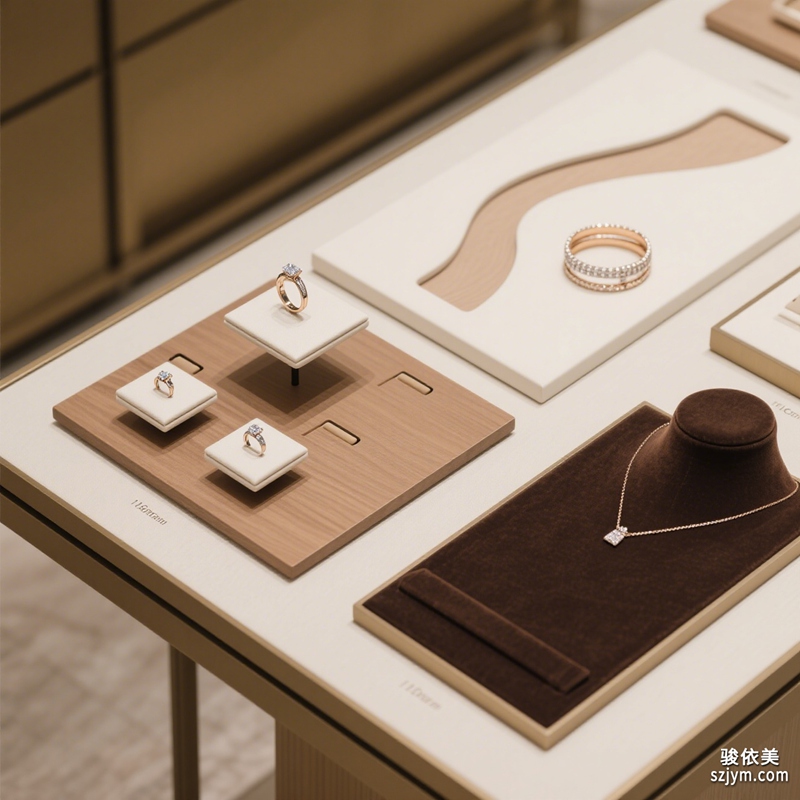
The rise of smart jewelry poses unprecedented challenges for the packaging and display industry. First, the display must solve the problem of "how to make consumers perceive technological functions." Traditional static displays cannot reflect the interactive nature of smart jewelry, and an increasing number of brands are deploying interactive display stations in stores: smart rings placed on jewelry display stands with sensor bases automatically trigger nearby screens to play product function demonstrations when picked up; smart bracelets are displayed on magnetic charging display stands, ensuring each exhibit is fully charged and ready for hands-on experience at any time.
Second, the trend toward intelligent packaging is becoming pronounced. Packaging boxes for premium smart jewelry must not only protect the product but also integrate charging functionality, NFC authentication, and digital manuals. Some brands embed wireless charging coils in the base of jewelry boxes, enabling automatic charging when jewelry is placed inside; NFC tags inside the box lid can be read via smartphone, displaying product authenticity, care guides, and warranty information. This intelligent packaging design and customization demand is driving traditional packaging factories toward electronic and intelligent transformation.
Looking ahead, the integration of smart jewelry with packaging and display will deepen further. AR augmented reality technology allows consumers to scan products on jewelry display stands with their phones, seeing 3D interactive demonstrations of smart functions on screen; modular jewelry prop design enables stores to flexibly adjust layouts based on different smart jewelry display needs. Jewelry box wholesalers and display prop manufacturers must closely monitor this trend and proactively develop intelligent packaging and interactive display product lines to secure favorable positions in the smart jewelry industry chain. The fusion of technology and aesthetics is not merely the evolutionary direction of jewelry itself, but a comprehensive upgrade of the entire jewelry ecosystem—from products to packaging, from display to retail experience.
This article is original content, copyrighted by Shenzhen Junyimei. Please indicate the source when reprinting.
Junyimei — Making every piece of jewelry and watch presented better. Specializing in jewelry boxes, jewelry display stands, watch display props. Shenzhen-owned factory, custom design supported. Inquiries welcome!
一、智能珠宝的定义与市场浪潮
2026年,智能珠宝已从概念走向普及。根据全球可穿戴设备市场报告,智能珠宝品类年增长率达到28.5%,预计2027年市场规模将突破180亿美元。与传统珠宝不同,智能珠宝在贵金属与宝石的外壳之下,嵌入了微型传感器、NFC芯片、蓝牙模块甚至生物监测元件,使饰品兼具装饰性与功能性。从戒指追踪心率、手链记录睡眠,到吊坠实现一键紧急求助,科技正在悄然融入人们日常佩戴的每一件饰品中。这一浪潮背后,是消费者对"佩戴即生活"理念的深度认同——珠宝不再仅仅是身份与财富的象征,更是健康管理与数字生活的延伸入口。
值得注意的是,智能珠宝的目标客群正在从早期科技爱好者扩展到时尚消费者与高端礼品市场。品牌方意识到,如果智能功能破坏了珠宝的美学价值,消费者不会买单。因此,如何在毫米级的空间内集成电子元件而不牺牲设计感,成为整个行业面临的核心命题。这也对珠宝包装与陈列提出了全新要求:智能珠宝的展示需要兼顾充电接口、交互演示和防盗安全,传统首饰盒与珠宝陈列架的设计逻辑正在被重新审视。
二、核心技术驱动:从芯片微型化到柔性材料创新
智能珠宝的实现依赖于三大技术支柱:芯片微型化、柔性电路与无线充电。2026年,台积电与三星已量产3纳米工艺芯片,使传感器模组的体积缩小至2毫米见方,完全可以嵌入一枚3克拉大小的宝石底座中。柔性PCB(印制电路板)技术的成熟,让电路可以贴合弧形戒壁、手链链节甚至项链吊坠的曲面,而不会在弯折中断裂。这些技术突破使得智能珠宝在外观上与传统珠宝几乎无异,佩戴者只有在主动激活功能时才会感知到科技的存在。
无线充电则是另一个关键环节。由于智能珠宝通常不具备USB接口,磁吸式无线充电被广泛采用。这直接影响珠宝包装设计:许多品牌开始在首饰盒内嵌磁吸充电底座,使盒子既是收纳容器也是充电站。这种"包装即配件"的趋势,要求珠宝盒批发商与品牌方在产品设计阶段就进行深度协同,从单纯的包装供应商升级为整体解决方案提供者。设计与定制能力的强弱,正成为区分普通包装工厂与高端包装服务商的分水岭。
此外,材料科学也在为智能珠宝赋能。导电纳米涂层技术使金、银等贵金属本身成为电路导体的一部分,省去了额外导线;温感变色宝石可以根据体温改变颜色,兼具装饰与生理指标提示功能。这些前沿材料的应用,让珠宝设计师拥有了前所未有的创作维度,也为珠宝道具与珠宝摆台的展示方式带来了新的灵感——动态色彩、触感反馈和光影互动正在成为陈列设计的新语言。
三、设计美学的平衡之道:科技隐形与佩戴舒适
智能珠宝最大的设计挑战在于"隐形科技"——让电子元件完全消失在美学表达之下。以智能戒指为例,Oura Ring第四代产品将温度传感器、红外LED和加速度计全部封装在7.9毫米厚的钛合金环体内,外观与一枚简约的金属戒指别无二致。这种设计哲学的核心是:科技服务于体验,而非成为炫耀的标签。消费者购买的是一件美丽的珠宝,智能功能只是额外的惊喜,而非购买理由本身。
佩戴舒适度同样至关重要。珠宝与皮肤的接触面积远大于手表或手环,任何微小的发热或异物感都会被放大。因此,智能珠宝普遍采用低功耗芯片和间歇性采样策略,将表面温度控制在体温±0.3°C以内。同时,防水性能普遍达到IP68级别,确保日常洗手、淋浴甚至游泳时无需摘下。这些工程细节看似不起眼,却直接决定了产品的市场成败。对于手表陈列道具和首饰袋而言,智能珠宝的防水防尘特性也意味着展示与收纳环节可以更加灵活,不必像精密电子设备那样过度防护。
四、消费场景拓展:从健康监测到情感交互
智能珠宝的应用场景正在快速延伸。健康监测是最成熟的领域:智能戒指可以连续追踪心率变异性、血氧饱和度和体温波动,为女性生理周期预测和睡眠质量分析提供比手腕佩戴更精准的数据。研究表明,手指血管丰富且皮肤较薄,使得光学传感器的信号质量比手腕高出约40%。这一优势让智能戒指在医疗级可穿戴领域占据独特地位,部分产品已获得FDA二类医疗器械认证。
情感交互是另一个令人兴奋的方向。NFC智能吊坠可以存储数字信息,轻触手机即可读取预设的语音留言、照片或视频——这让珠宝成为情感的数字容器。一些品牌推出"记忆手链",每颗智能珠子可关联一段回忆,佩戴者通过手机APP可以回顾与每颗珠子对应的故事。这种将物理饰品与数字记忆绑定的模式,正在重塑珠宝作为礼物的意义:它不再仅仅是一件贵重物品,而是一段可以反复触碰和回味的情感旅程。
安全防护功能同样不容忽视。内置SOS按钮的智能手镯在长按三次后可自动向预设联系人发送位置信息和求助通知,这一功能在独居老人和夜间出行女性群体中获得了高度认可。对于珠宝零售商而言,这些功能丰富的智能珠宝在门店展示时需要互动演示环节,传统的珠宝陈列架正在升级为集成充电、演示和防盗功能的智能展示系统,这为珠宝道具行业带来了产品迭代的机遇。
五、包装与陈列的新挑战:智能珠宝的展示美学
智能珠宝的兴起对包装与陈列行业提出了前所未有的挑战。首先,展示环节需要解决"如何让消费者感知科技功能"的问题。传统的静态陈列无法体现智能珠宝的交互特性,越来越多的品牌开始在门店部署互动展示台:智能戒指放置在带有感应底座的珠宝摆台上,消费者拿起戒指时,旁边的屏幕自动播放产品功能演示视频;智能手链通过磁吸式珠宝陈列架进行充电展示,确保每件展品电量充足,随时可供体验。
其次,包装的智能化趋势日益明显。高端智能珠宝的包装盒不仅需要保护产品,还要集成充电功能、NFC防伪验证和数字说明书。一些品牌在首饰盒底部嵌入无线充电线圈,消费者将珠宝放入盒中即可自动充电;盒盖内侧的NFC标签可通过手机读取,显示产品真伪、保养指南和保修信息。这种智能包装的设计与定制需求,正在推动传统包装工厂向电子化、智能化方向转型。
展望未来,智能珠宝与包装陈列的融合将更加深入。AR增强现实技术可以让消费者通过手机扫描珠宝陈列架上的产品,在屏幕上看到智能功能的3D交互演示;模块化珠宝道具设计使门店可以根据不同智能珠宝的展示需求灵活调整布局。珠宝盒批发商与陈列道具制造商需要密切关注这一趋势,提前布局智能包装与互动展示的产品线,才能在智能珠宝时代的产业链中占据有利位置。科技与美学的融合不仅是珠宝本身的进化方向,更是整个珠宝生态体系从产品到包装、从陈列到零售体验的全面升级。
本文为原创内容,版权归深圳骏依美所有,转载请注明出处。
骏依美——让每一件珠宝与腕表,都被更好地呈现。专注珠宝盒、首饰盒、珠宝陈列架、手表陈列道具等包装产品的设计与生产,深圳自有工厂,支持来图定制打样,欢迎咨询合作!