The Sensory Marketing Revolution in Jewelry Retail: How Five-Sense Synergy and Intelligent Display Reshape Consumer Experience珠宝零售的感官营销革命:五感协同与智能陈列重塑消费体验
1. The Rise of Sensory Marketing: From Product Display to Experience Economy
Jewelry retail in 2026 is undergoing a profound paradigm shift. As online shopping becomes the norm, the core value of physical stores is no longer simple display and sale, but rather creating immersive sensory experiences that screens cannot replicate. Sensory marketing has emerged as a key differentiator for jewelry brands, systematically engaging consumers visual, tactile, olfactory, auditory, and even gustatory senses to build multi-layered brand narratives within store spaces.
Research indicates that multi-sensory shopping environments can extend consumer dwell time by over 40% and increase purchase conversion rates by 25% to 35%. For high-ticket jewelry categories, this sensory immersion is particularly critical because jewelry consumption is fundamentally an emotional decision, and emotions are driven by sensory experiences. When a customer walks into a jewelry store, the color temperature of lighting, the texture of display cases, the fragrance in the air, and the rhythm of background music all silently influence her purchasing decisions.
In this trend, jewelry display stands and props are no longer merely functional carriers but become important mediums for sensory storytelling. The choice of materials, whether warm wood or cold metal, delicate velvet or transparent acrylic, directly determines the tonal quality consumers perceive about the jewelry.
2. Color Psychology and Spatial Narrative in Visual Merchandising
Vision is the most critical sensory channel in jewelry retail. Color psychology research shows that warm lighting (2700K-3000K color temperature) makes gold and warm-toned gemstones appear richer and more luxurious, while cool lighting (4000K-5000K) better highlights the crisp brilliance of diamonds and white precious metals. An increasing number of boutique jewelry stores are adopting tunable intelligent lighting systems that dynamically switch light environments based on different jewelry display requirements.
Spatial narrative is an advanced dimension of visual merchandising. Excellent jewelry stores plan their display layouts following a four-stage Explore-Focus-Immerse-Decide circulation: entrance areas use jewelry display tables to create ambiance and guide customers naturally inward; core display zones use display stands to create visual focal points highlighting featured collections; VIP areas employ more intimate and luxurious prop arrangements to foster exclusivity.
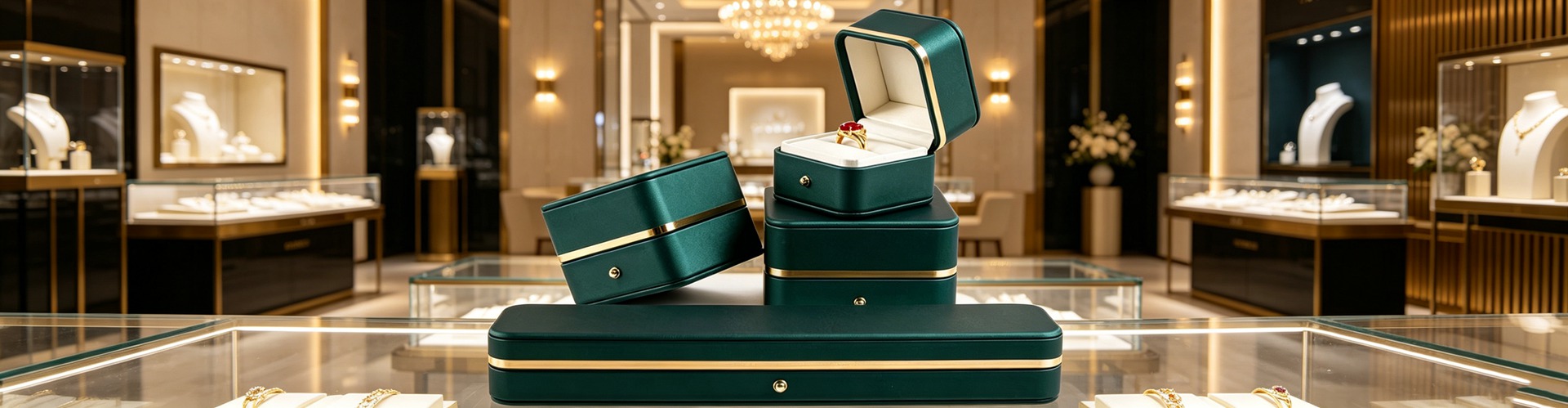
Color strategy equally applies to the selection of jewelry boxes and terminal display props. Dark velvet lining can make light-colored gemstones more striking, while light satin is better suited to showcase the depth of dark gemstones. Though this principle of color contrast is simple, it is often overlooked in practice, significantly diminishing display effectiveness.
3. Tactile Experience and Material Dialogue: Letting Fingertips Convey Quality
If vision attracts, then touch converts. The uniqueness of jewelry consumption lies in its almost universal accompaniment by the try-on action. When a consumer slides a ring onto her finger, when she admires the drape of a necklace in the mirror, tactile feedback instantly completes the emotional leap from liking to wanting.
This principle extends to packaging and display props as well. A jewelry box lined with fine calfskin conveys quality signals far more powerfully than any product description. This is why premium jewelry brands are extremely particular about their choices of watch display props and jewelry boxes. The tactile feel of materials, the reassuring weight, the damping resistance of opening mechanisms, every tactile detail endorses the brand value.
In 2026, tactile design innovation is moving toward material mixing. The combination of metal and leather, the collision of acrylic and solid wood, the contrast of ceramic and velvet. These material dialogues not only enrich tactile layers but also create more visually compelling display effects. The design and customization of jewelry props is evolving from standardized products to scenario-based solutions.
4. Intelligent Display Technology: Digital Empowerment of Offline Experience
Technology is injecting new vitality into jewelry displays. AR virtual try-on mirrors have moved from concept to mainstream adoption, allowing consumers to preview different rings and necklaces on themselves through mirror displays without physically wearing them. This technology not only improves try-on efficiency but, more importantly, reduces the risk and psychological barrier of trying on high-value jewelry.
Intelligent jewelry display stands represent another noteworthy direction. Display props with built-in RFID chips can track in real time the pick-up frequency, dwell time, and try-on conversion rate of each piece of jewelry, providing stores with precise data support. When the system detects that a particular piece is frequently picked up but never purchased, store managers can make targeted adjustments to pricing strategies or sales approaches.
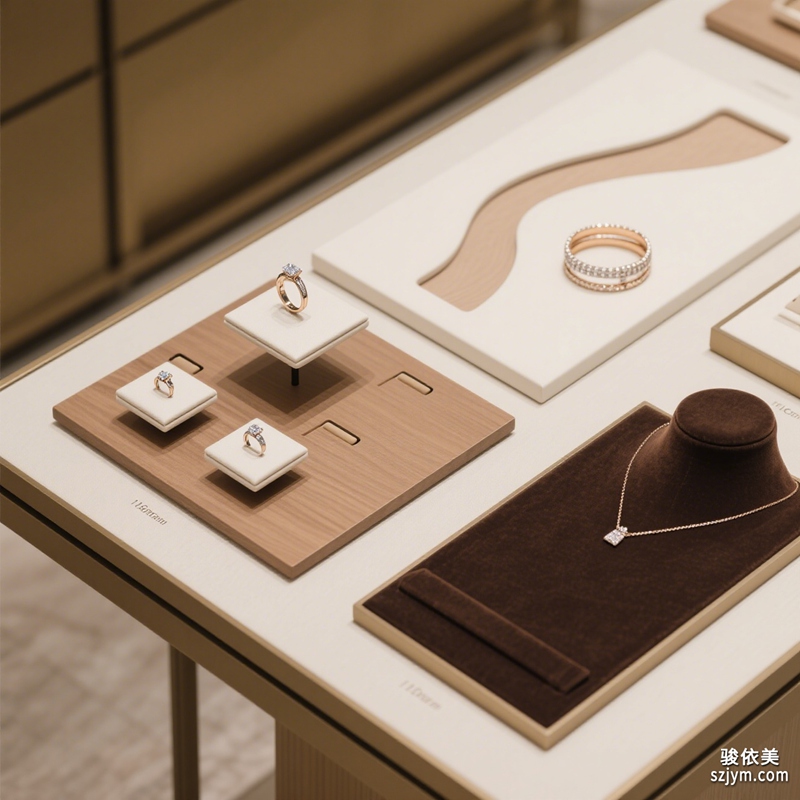
Digital signage and dynamic display screens are also transforming how jewelry display tables present products. Traditional static paper price tags and product descriptions are being replaced by high-definition electronic screens capable of displaying 360-degree rotating images, origin stories, and macro videos of craftsmanship details. This fusion of digital and physical gives each piece of jewelry its own digital identity.
5. Packaging Design: The Final Touchpoint of Sensory Experience and Brand Extension
If the store is the main stage for sensory experience, then packaging is the finale and continuation of that experience. When a consumer leaves the store with beautifully packaged jewelry, the moment of opening the box. The touch of the ribbon, the texture of the lining, even a subtle fragrance. All extend and reinforce the sensory memory established in the store.
Jewelry packaging innovation in 2026 shows three clear trends: First, the scaled application of sustainable materials, from biodegradable pulp to recycled fiber fabrics, where environmental attributes are becoming an important part of brand storytelling. Second, the ultimate design of unboxing ceremony, with magnetic flip covers, multi-layer drawers, and hidden lighting innovations that turn the unboxing process itself into a miniature theater. Third, the deep integration of personalization, from laser engraving to custom color schemes, where packaging is evolving from standardized accessories to independent carriers of brand expression.
The synergistic design of jewelry packaging and display stands is also receiving increasing attention. When store display props and consumer packaging maintain visual language consistency, brand recognition is significantly enhanced. This consistency of sensory experience from store to home is a key strategy for premium jewelry brands building long-term consumer relationships.
This article is original content, copyrighted by Shenzhen Junyimei. Please indicate the source when reprinting.
Junyimei — Making every piece of jewelry and watch presented better. Specializing in jewelry boxes, jewelry display stands, watch display props. Shenzhen-owned factory, custom design supported. Inquiries welcome!
一、感官营销的崛起:从产品展示到体验经济
2026年的珠宝零售正在经历一场深刻的范式转变。当线上购物已经成为常态,线下门店的核心价值不再是简单的"展示与销售",而是打造无法被屏幕复制的沉浸式感官体验。感官营销(Sensory Marketing)正成为珠宝品牌差异化竞争的关键武器,它通过系统性地调动消费者的视觉、触觉、嗅觉、听觉甚至味觉,在门店空间中构建多层次的品牌叙事。
研究表明,多感官协同的购物环境能使消费者停留时间延长40%以上,购买转化率提升25%至35%。对于高客单价的珠宝品类而言,这种感官沉浸尤其重要——珠宝消费本质上是一种情感决策,而情感恰恰由感官体验所驱动。当一位顾客走进珠宝门店,灯光的色温、展柜的材质、空气中的香氛、背景音乐的节奏,每一个细节都在无声地影响她的购买决策。
在这一趋势下,珠宝道具和珠宝陈列架不再只是功能性的承载工具,而成为感官叙事的重要媒介。材质的选择——是温润的实木还是冷峻的金属,是细腻的绒布还是通透的亚克力——直接决定了消费者对珠宝品质的感知基调。
二、视觉陈列的色彩心理学与空间叙事
视觉是珠宝零售中最核心的感官通道。色彩心理学研究表明,暖色调灯光(2700K-3000K色温)能让黄金和暖色宝石显得更加浓郁华贵,而冷色调灯光(4000K-5000K)则更能突显钻石和白色贵金属的清冽闪耀。越来越多的精品珠宝店开始采用可调色温的智能照明系统,根据不同品类珠宝的展示需求动态切换光环境。
空间叙事是视觉陈列的进阶维度。优秀的珠宝门店会按照"探索-聚焦-沉浸-决策"四阶段动线规划陈列布局:入口处用珠宝摆台营造氛围感,引导顾客自然深入;核心展示区用珠宝陈列架打造视觉焦点,突出主推系列;VIP区域则用更加私密和奢华的道具布置,营造专属感。
色彩策略同样适用于珠宝盒批发和终端陈列道具的选择。深色丝绒内衬能让浅色宝石更加夺目,而浅色缎面则适合衬托深色宝石的浓郁。这种色彩对比的原理虽简单,却在实际执行中常常被忽视,导致陈列效果大打折扣。
三、触觉体验与材质对话:让指尖传递品质
如果说视觉负责吸引,那么触觉则负责转化。珠宝消费的独特性在于,它几乎总是伴随着"试戴"这一核心动作。当消费者将一枚戒指滑上手指,当她在镜子前端详一条项链的垂坠感,触觉反馈在瞬间完成了从"喜欢"到"想要"的情感跃迁。
这一原理同样延伸到包装和陈列道具。一个内衬细腻小牛皮的首饰盒,其触感传递的品质信号远胜于千言万语的产品描述。这也是为什么高端珠宝品牌在手表陈列道具和首饰盒的选择上极为讲究——材质的触感、重量的沉稳感、开合机构的阻尼手感,每一个触觉细节都在为品牌价值背书。
2026年,触觉设计的创新方向正朝着"材质混搭"发展。金属与皮革的组合、亚克力与实木的碰撞、陶瓷与丝绒的对比——这些材质对话不仅丰富了触觉层次,也在视觉上创造了更有张力的陈列效果。珠宝道具的设计与定制正在从标准化产品走向场景化解决方案。
四、智能陈列技术:数字化赋能线下体验
技术正在为珠宝陈列注入新的活力。AR虚拟试戴镜已经从概念走向普及,消费者无需实际佩戴,就能通过镜面显示屏预览不同戒指、项链在自己身上的效果。这种技术不仅提升了试戴效率,更重要的是降低了高价值珠宝的试戴风险和心理门槛。
智能珠宝陈列架是另一个值得关注的方向。内置RFID芯片的陈列道具能够实时追踪每件珠宝的拿起次数、停留时间和试戴转化率,为门店提供精准的数据支撑。当系统发现某件珠宝被频繁拿起但从未成交,店长可以针对性地调整定价策略或销售话术。
数字标牌和动态展示屏也在改变珠宝摆台的呈现方式。传统静态的纸质价签和产品说明正在被高清电子屏取代,能够展示珠宝的360度旋转图像、产地故事、工艺细节微距视频等丰富内容。这种数字与实体的融合,让每一件珠宝都有了自己的"数字身份"。
五、包装设计:感官体验的最终触点与品牌延伸
如果说门店是感官体验的主舞台,那么包装就是这场体验的谢幕与延续。当消费者带着精心包装的珠宝离开门店,打开首饰盒的那一刻——丝带的触感、内衬的质感、甚至淡淡的香气——都在延续和强化门店中建立的感官记忆。
2026年的珠宝包装创新呈现出三个明确趋势:第一,可持续材料的规模化应用,从可降解纸浆到再生纤维织物,环保属性正成为品牌叙事的重要组成部分;第二,开箱仪式感的极致设计,磁吸翻盖、多层抽屉、隐藏式灯光等结构创新,让开箱过程本身成为一种微型剧场;第三,个性化定制的深度整合,从激光刻字到专属配色,包装正在从标准化附属品进化为品牌表达的独立载体。
珠宝包装与珠宝陈列架的协同设计也日益受到重视。当门店陈列道具与消费者带走的包装在视觉语言上保持一致,品牌识别度将得到显著增强。这种从门店到家庭的感官体验一致性,正是高端珠宝品牌构建长期消费者关系的关键策略。
本文为原创内容,版权归深圳骏依美所有,转载请注明出处。
骏依美——让每一件珠宝与腕表,都被更好地呈现。专注珠宝盒、首饰盒、珠宝陈列架、手表陈列道具等包装产品的设计与生产,深圳自有工厂,支持来图定制打样,欢迎咨询合作!