Immersive Jewelry Retail Experience: 2026 Display Design Trends and Sensory Marketing Innovation沉浸式珠宝零售体验:2026年陈列设计新趋势与感官营销革新
1. The Rise of Immersive Retail: A Paradigm Shift from Display to Experience
The jewelry retail industry in 2026 is undergoing a profound transformation. Traditional counter-style displays are being replaced by immersive experiential spaces, where consumers no longer settle for viewing jewelry through glass showcases but expect to enter a world they can touch, feel, and interact with. This paradigm shift from "display" to "experience" is redefining the design logic of jewelry retail spaces.
Globally, leading jewelry brands are investing heavily in creating immersive retail concept stores. Cartier's new experiential space at Place Vendome in Paris integrates craftsmanship demonstrations, interactive try-ons, and cultural storytelling, allowing customers to stroll through a brand history gallery and learn about each piece's design inspiration under the guidance of professional jewelers. Tiffany's flagship renovation on Fifth Avenue in New York similarly centers on immersion, amplifying the brilliance of diamonds through light installations and interactive screens.
Behind this trend is a fundamental shift in consumer behavior. According to Bain & Company's latest report, over 68% of luxury consumers say the richness of the shopping experience directly influences their purchasing decisions, a 15-percentage-point increase from 2023. For jewelry, a high-ticket category with strong emotional attributes, the value of experience is even more pronounced. Consumers need to build deep brand awareness and emotional connection before purchasing, and immersive spaces are the ideal medium for forging such connections.
In the Chinese market, this trend is equally significant. Chow Tai Fook, Lao Feng Xiang, and other traditional brands are accelerating store upgrades, introducing open-style jewelry display stands and interactive experience zones. The retail terminals in Shenzhen's Shuibei jewelry industry base are undergoing similar transformations, with an increasing number of brands focusing on the design aesthetics and functional innovation of jewelry display stands as an essential component of brand image communication.
2. Sensory Marketing: The Five-Senses Design Philosophy for Jewelry Display
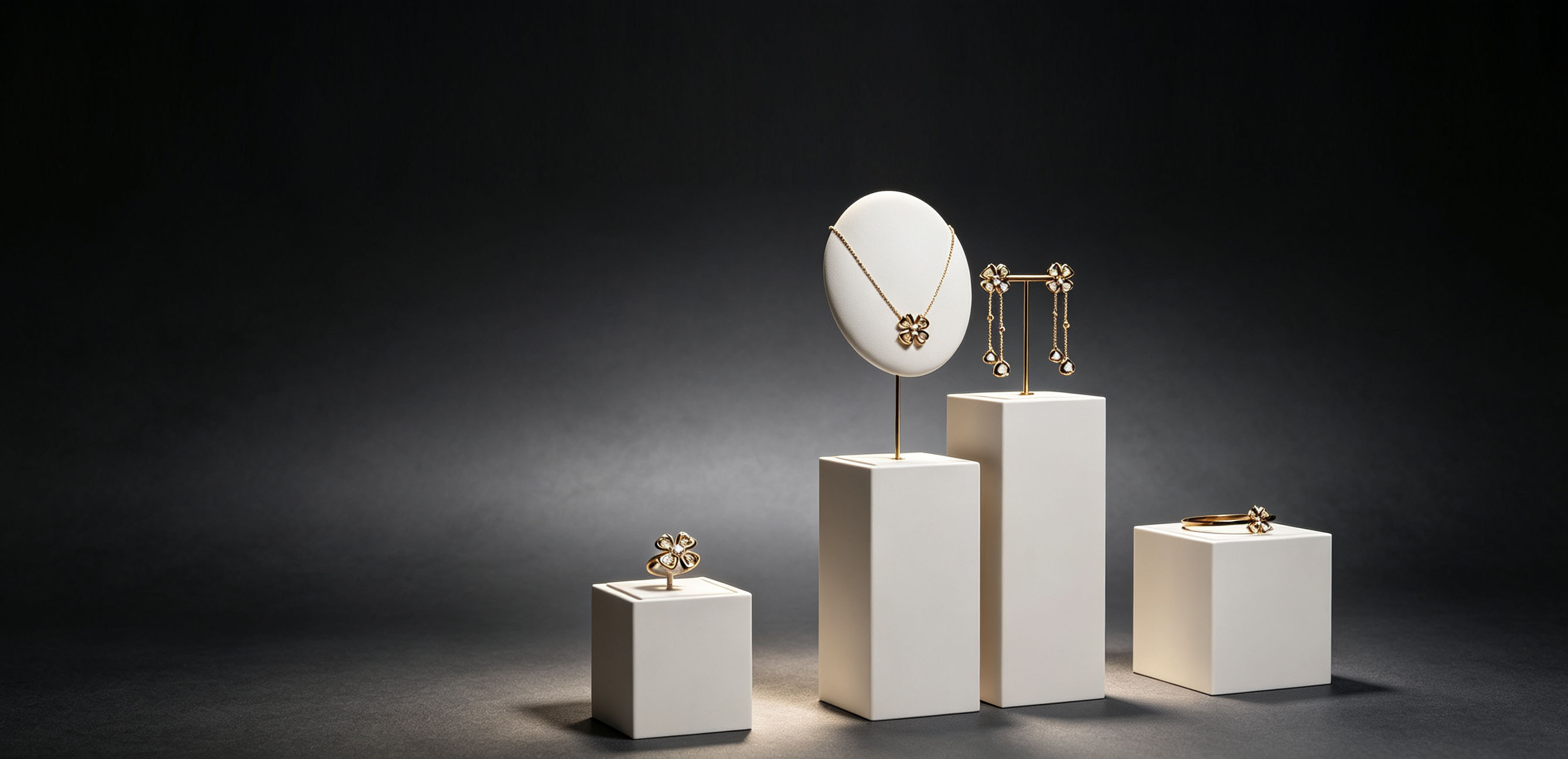
The core of immersive retail lies in sensory marketing, creating memorable brand experiences through the comprehensive design of sight, touch, smell, sound, and taste. In jewelry retail spaces, every dimension of five-senses design is crucial, and the selection and arrangement of jewelry display props form the physical foundation of sensory marketing.
In the visual dimension, lighting design is the soul of jewelry display. The latest trend in 2026 is the adoption of smart lighting systems with adjustable color temperature that automatically adjust light angle and warmth based on different jewelry categories. Diamonds require cool white light to enhance fire and brilliance, gold jewelry suits warm yellow light for a lustrous glow, and colored gemstones need neutral light sources for true color reproduction. Professional jewelry display stand design also considers the reflective properties of base materials, matte black velvet absorbs excess reflections to highlight the gemstone, while light silk creates a soft complementary effect.
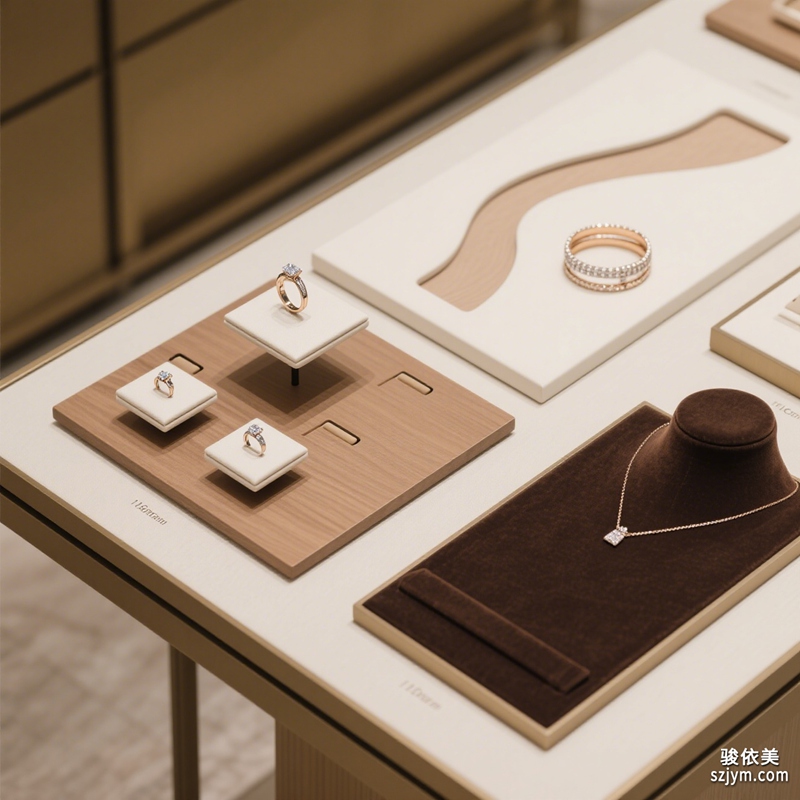
In the tactile dimension, more brands are emphasizing the physical contact experience between consumers and products. Open-style jewelry display racks allow customers to directly pick up jewelry from jewelry boxes to feel the weight and texture, while try-on areas feature carefully calculated mirror angles and lighting to ensure consumers see the best wearing effect. The extension of tactile experience also includes the materials of display props themselves, warm wood, fine leather, cool metal, different materials of jewelry display props convey different brand tones.
3. Digital Display: Technology Empowers New Dimensions of Jewelry Presentation
Technology is transforming jewelry retail display at an unprecedented pace. Augmented Reality (AR) try-on technology has moved from concept to mainstream adoption, allowing consumers to simply raise their hand in front of a smart mirror to see real-time wearing effects of different rings, necklaces, and earrings without trying each one individually. This technology not only improves shopping efficiency but also solves the biggest pain point of online jewelry sales, the inability to try on.
Virtual Reality (VR) technology is also rapidly advancing in jewelry display applications. Several pioneering brands have created virtual jewelry museums where consumers put on VR headsets to journey to gemstone origins, understanding the complete path from rough stone to finished product. This immersive narrative presents brand stories in an entirely new way, significantly enhancing consumer brand loyalty and purchase intent.
Smart jewelry display stands represent another noteworthy technological direction. Display stands with built-in RFID chips can track the location and status of each piece in real time. When a customer picks up an item, the adjacent screen automatically displays detailed product information, design inspiration, craftsmanship features, and pricing. This seamless information delivery method maintains the tactile advantage of physical retail while incorporating the information richness of digital technology.
Big data and artificial intelligence are also playing increasingly important roles in jewelry display strategies. By analyzing consumer movement patterns, dwell time, and interaction behaviors within stores, AI systems can optimize jewelry display stand layouts and product assortments, placing the most popular styles in the most prominent positions while dynamically adjusting display schemes based on foot traffic characteristics at different times. This data-driven display strategy is helping retailers achieve significant improvements in conversion rates.
4. Sustainable Aesthetics: Innovative Applications of Eco-Friendly Materials in Jewelry Display Props
Sustainable development has become an unavoidable core issue in the jewelry industry, and this trend has profoundly influenced the design direction of jewelry display props and packaging products. In 2026, an increasing number of brands require suppliers to provide environmentally certified display props, with every环节 from material sourcing to manufacturing needing to meet sustainability standards.
In material innovation, reclaimed wood, bamboo fiber composites, and biodegradable plastics are replacing traditional MDF and acrylic. These eco-friendly materials not only reduce environmental burden but also impart jewelry display stands with unique natural textures and warm qualities, creating interesting contrasts with the luxurious character of jewelry. Some high-end brands have even started using recycled metals for watch display props, embedding sustainability into every detail.
The sustainable transformation of packaging design is equally remarkable. Traditional jewelry boxes mostly use leather wrapping and sponge lining, while new-generation eco-friendly jewelry boxes are starting to use mushroom mycelium materials, recycled paper pulp, and vegetable-tanned leather. These materials significantly reduce carbon footprint while maintaining protective performance. Shenzhen, as an important base for the jewelry packaging industry, has many factories that have invested in eco-friendly material R&D and production, providing green packaging solutions for global brands.
5. The Future of Customization: Brand Differentiation and Personalized Display
In a market where product homogenization is increasingly severe, customization has become a key strategy for brands to stand out. Jewelry retail space design in 2026 increasingly emphasizes personalization and differentiation. Brands are no longer satisfied with standardized display solutions but pursue bespoke display systems deeply aligned with their brand DNA.
Custom jewelry display props, with design and customization services, are rapidly growing. From the size, material, and color of display stands to surface treatment processes, every detail can be exclusively designed according to the brand's visual identity system. Some luxury brands even create unique display installations for specific product collections, such as rotating display tables for high jewelry lines, embedded lighting systems for wedding ring collections, and adjustable-angle watch display props for timepiece lines.
Modular design is an important direction within the customization trend. Detachable and reconfigurable jewelry display stand systems allow retailers to flexibly adjust display schemes based on different store sizes and layouts, while also quickly switching display themes for seasonal marketing campaigns. This flexibility not only reduces display costs but also maintains consistency in brand image.
Looking ahead, immersive jewelry retail experiences will continue to evolve at deeper levels. As consumer demands for experience quality continue to rise, jewelry brands and display prop suppliers need to collaborate more closely to create retail spaces that are both beautiful and functionally excellent. In this process, professional design and customization capabilities will become core competitiveness, and Shenzhen, as a major global hub for jewelry packaging and display props, will play a pivotal role in this trend.
From sensory marketing to digital empowerment, from sustainable aesthetics to personalized customization, jewelry retail display design in 2026 is undergoing a comprehensive revolution. This revolution is not only changing how consumers interact with jewelry but also redefining the value of jewelry retail spaces, they are no longer merely sales venues but stages for brand storytelling, bridges for consumer emotional connection, and carriers of craftsmanship aesthetics heritage.
This article is original content, copyrighted by Shenzhen Junyimei. Please indicate the source when reprinting.
Junyimei — Making every piece of jewelry and watch presented better. Specializing in jewelry boxes, jewelry display stands, watch display props. Shenzhen-owned factory, custom design supported. Inquiries welcome!
一、沉浸式零售崛起:从展示到体验的范式转变
2026年的珠宝零售行业正经历一场深刻的变革。传统的柜台式陈列正在被沉浸式体验空间所取代,消费者不再满足于隔着玻璃橱窗远远观望,而是期望走进一个能够触摸、感受、互动的珠宝世界。这种从"展示"到"体验"的范式转变,正在重新定义珠宝零售空间的设计逻辑。
在全球范围内,头部珠宝品牌纷纷投入巨资打造沉浸式零售概念店。卡地亚在巴黎旺多姆广场开设的全新体验空间,将珠宝工艺展示、试戴互动和文化叙事融为一体,顾客可以在品牌历史长廊中漫步,在专业珠宝师的指导下了解每件作品的设计灵感。蒂芙尼在纽约第五大道的旗舰改造项目同样以沉浸式为核心,通过光影装置和互动屏幕将钻石的璀璨光芒放大到极致。
这一趋势的背后是消费者行为的根本性变化。根据贝恩咨询的最新报告,超过68%的奢侈品消费者表示,购物体验的丰富程度直接影响其购买决策,这一比例较2023年提升了15个百分点。对于珠宝这种高客单价、情感属性极强的品类而言,体验的价值更加突出。消费者需要在购买前建立深度的品牌认知和情感连接,而沉浸式空间正是构建这种连接的最佳载体。
在中国市场,这一趋势同样显著。周大福、老凤祥等传统品牌正在加速门店升级,引入开放式珠宝陈列架和互动体验区。深圳水贝珠宝产业基地的零售终端也在进行类似的改造,越来越多的品牌开始关注珠宝陈列架的设计美学和功能创新,将其视为品牌形象传达的重要组成部分。
二、感官营销:珠宝陈列的五感设计哲学
沉浸式零售的核心在于感官营销——通过视觉、触觉、嗅觉、听觉和味觉的全方位设计,创造令人难忘的品牌体验。在珠宝零售空间中,五感设计的每一个维度都至关重要,而珠宝道具的选择和布置则是感官营销的物理基础。
视觉维度上,灯光设计是珠宝陈列的灵魂。2026年的最新趋势是采用可调色温的智能照明系统,根据不同珠宝品类自动调节光线的色温和角度。钻石需要冷白光突显火彩,黄金饰品适合暖黄光呈现温润光泽,彩色宝石则需要中性光源还原真实色彩。专业的珠宝摆台设计也会考虑底座材质的反光特性,哑光黑色绒面能吸收多余反光、突出宝石主体,而浅色丝绒则能营造柔和的映衬效果。
触觉维度上,越来越多的品牌开始注重消费者与产品之间的物理接触体验。开放式珠宝陈列架允许顾客直接拿起首饰盒中的饰品感受重量和质感,试戴区的镜子角度和灯光经过精心计算,确保消费者看到最佳佩戴效果。触觉体验的延伸还包括陈列道具本身的材质——温润的实木、细腻的真皮、清冷的金属,不同材质的珠宝道具传递不同的品牌调性。
三、数字化陈列:科技赋能珠宝展示新维度
科技正在以前所未有的速度改变珠宝零售的展示方式。增强现实(AR)试戴技术已经从概念走向普及,消费者只需在智能镜前抬手,就能实时看到不同戒指、项链、耳环的佩戴效果,无需逐一试戴。这项技术不仅提升了购物效率,更解决了线上珠宝销售的最大痛点——无法试戴。
虚拟现实(VR)技术在珠宝展示中的应用也在快速推进。一些先锋品牌已经打造了虚拟珠宝博物馆,消费者戴上VR头显即可穿越到宝石产地,了解从原石到成品的完整旅程。这种沉浸式叙事将品牌故事以全新的方式呈现,大幅提升了消费者的品牌忠诚度和购买意愿。
智能珠宝陈列架是另一个值得关注的技术方向。内置RFID芯片的陈列架能够实时追踪每件饰品的位置和状态,当顾客拿起某件饰品时,旁边的屏幕自动显示该产品的详细信息、设计灵感、工艺特点和价格。这种无缝的信息传递方式既保持了实体零售的触感优势,又融入了数字化的信息丰富度。
大数据和人工智能也在珠宝陈列策略中发挥着越来越重要的作用。通过分析消费者在店内的行走路线、停留时间和互动行为,AI系统能够优化珠宝摆台的布局和产品组合,将最受欢迎的款式放在最醒目的位置,同时根据不同时段的客流特征动态调整陈列方案。这种数据驱动的陈列策略正在帮助零售商实现转化率的显著提升。
四、可持续美学:环保材料在珠宝道具中的创新应用
可持续发展已成为珠宝行业不可回避的核心议题,而这一趋势也深刻影响了珠宝道具和包装产品的设计方向。2026年,越来越多的品牌开始要求供应商提供环保认证的陈列道具,从材料采购到生产制造的每个环节都需要符合可持续发展标准。
在材料创新方面,再生木材、竹纤维复合材料和生物降解塑料正在取代传统的密度板和亚克力。这些环保材料不仅降低了对环境的负担,还赋予了珠宝陈列架独特的自然纹理和温暖质感,与珠宝的奢华气质形成有趣的对比。一些高端品牌甚至开始使用回收金属制作手表陈列道具,将可持续理念贯彻到每一个细节。
包装设计的可持续转型同样引人注目。传统的首饰盒多采用皮革包裹和海绵内衬,而新一代环保首饰盒开始使用蘑菇菌丝体材料、再生纸浆和植物鞣制皮革。这些材料在保证保护性能的同时,大幅降低了碳足迹。深圳作为珠宝包装产业的重要基地,许多工厂已经投入环保材料的研发和生产,为全球品牌提供绿色包装解决方案。
五、定制化未来:品牌差异化与陈列个性化
在产品同质化日益严重的市场环境中,定制化已成为品牌脱颖而出的关键策略。2026年的珠宝零售空间设计越来越强调个性化和差异化,品牌不再满足于标准化的陈列方案,而是追求与品牌基因深度契合的专属展示系统。
定制化珠宝道具的设计与定制服务正在快速发展。从陈列架的尺寸、材质、颜色到表面处理工艺,每个细节都可以根据品牌的视觉识别系统进行专属设计。一些奢侈品牌甚至会为特定产品系列打造独特的展示装置,如为高级珠宝系列设计旋转式展示台,为婚戒系列设计嵌入式灯光系统,为腕表系列设计可调节角度的手表陈列道具。
模块化设计是定制化趋势中的重要方向。可拆卸、可重组的珠宝陈列架系统允许零售商根据不同门店的面积和布局灵活调整陈列方案,同时也能根据季节性营销活动快速变换展示主题。这种灵活性不仅降低了陈列成本,还保持了品牌形象的统一性。
展望未来,沉浸式珠宝零售体验将继续向更深层次发展。随着消费者对体验品质要求的不断提升,珠宝品牌和陈列道具供应商需要更紧密地合作,共同打造既美观又功能完善的零售空间。在这个过程中,专业的设计与定制能力将成为核心竞争力,而深圳作为全球珠宝包装和陈列道具的重要产业基地,将在这一趋势中扮演关键角色。
从感官营销到数字化赋能,从可持续美学到个性化定制,2026年的珠宝零售陈列设计正在经历一场全方位的革新。这场革新不仅改变了消费者与珠宝互动的方式,更重新定义了珠宝零售空间的价值——它不再仅仅是销售场所,而是品牌故事讲述的舞台、消费者情感连接的桥梁、以及工艺美学传承的载体。
本文为原创内容,版权归深圳骏依美所有,转载请注明出处。
骏依美——让每一件珠宝与腕表,都被更好地呈现。专注珠宝盒、首饰盒、珠宝陈列架、手表陈列道具等包装产品的设计与生产,深圳自有工厂,支持来图定制打样,欢迎咨询合作!