Small Cases, Big Shift: Women Reshape Watchmaking女表撑起腕表市场
The most crowded display case at Geneva this year did not hold a minute repeater. It held a 28mm watch.
Rolex added 28mm and 34mm Oyster Perpetual models, and the 18-karat yellow gold 28mm with a green stone dial drew a permanent scrum. Cartier brought out an oval Baignoire bangle studded with Clous de Paris across both case and dial, plus several very small Tanks. Audemars Piguet shrank the Royal Oak into a Mini. After more than two decades in which bigger meant better, the 28-to-37mm band has quietly taken the wrist back.
This is not nostalgia cycling through on schedule. It sits on top of one of the few rising lines in an otherwise contracting industry.
The one line still going up
Start with the macro picture. According to the Federation of the Swiss Watch Industry, Swiss watch exports have now posted two consecutive years of decline, cumulatively down roughly 4.5% from the 2023 peak. A category that leaned heavily on male buyers for decades is running into the ceiling of a saturated installed base. Deloitte's 2025 study of the industry found 43% of executives negative on their main export markets, more than 80% naming trade measures as a disruptive force and over 90% citing geopolitical tension. The United States accounts for 16.8% of Swiss watch exports; tariffs swung from a threatened 31% to an actual 39% before settling at 15%, turning shipment planning into a guessing game. In Asia, exports to mainland China fell 26% in 2024 and Hong Kong, China fell 19%.
The women's segment reads completely differently. McKinsey data shows women's share of high-price watch spending climbing from 28% in 2015 to 39% in 2025. Morgan Stanley and LuxeConsult put it more bluntly: women's timepieces now generate roughly 35% of Swiss luxury watch revenue, a share that has grown about 40% since 2019. At individual houses the skew is sharper still — Bulgari's female clientele already exceeds 60% of its total customer base. Business Research Insights values the global luxury women's watch market at about US$31.48 billion in 2026, rising toward US$40.02 billion by 2035.
In a shrinking market, in other words, this is one of the few boxes still expanding.

The variable that changed is who pays
What rewired the industry is not that women started wearing watches. They always did. What changed is who signs for them.
Deloitte's 2025 research produced the watershed number: 68% of women's luxury watch purchases are now self-purchases, up from 45% in 2018. In seven years the category moved from something you wait to receive to something you buy on a Tuesday. That tracks a deeper structural shift — women now make up more than 40% of high-net-worth individuals globally. When income, seniority and decision power move up together, the wrist stops being a gift slot and becomes a statement.
Once the decision-maker changes, the product logic has to follow. The old industry playbook for women was mechanical: take a men's model, shrink it to 26mm, ring it with diamonds, call it a ladies' collection. That playbook is finished. Maria Laffont, chief product officer at Tag Heuer, describes a significantly better-informed and more confident female audience, fluent in movements, materials and design codes, with preferences extending in both directions at once — toward smaller, refined pieces and toward larger, more technical ones. Her answer is a broader spectrum of proportions and materials rather than tighter gender segmentation. At the same show, houses historically associated with women — Van Cleef & Arpels, Chanel — pushed models aimed at men. The gender label is loosening from both ends.
Why small cases became the hard currency
The demand data is already visible at resale. On Chrono24, searches for 28-to-34mm women's watches jumped 35% year on year, sales of small-case mechanical models rose more than 25%, and pieces with mother-of-pearl dials grew close to 40% as a share of transactions. Across Asian markets, 32 to 36mm is now treated as the sweet spot for most wrists.
The drivers are more interesting than the numbers. Brynn Wallner, founder of Dimepiece, notes that non-traditional collectors gravitate to these styles first: a woman buying her first watch wants something smaller, more versatile, easy to wear, something that goes with everything without shouting. Melanie Chud, president of retail at the 1916, adds the commercial half of the argument — the killer feature is stackability with the bracelets already in a customer's wardrobe. When a salesperson lays the small watch next to her own bangles, the look on her face is the close.
Pop culture supplied the accelerant. Younger buyers are thrifting small vintage pieces and raiding grandmothers' jewelry boxes, which is how the industry ended up with the half-affectionate label "grandma watches." Timothée Chalamet wears a slim Cartier Panthère or a 34mm Jaeger-LeCoultre. Serena Williams took a miniature Royal Oak to the Met Gala. Men are retreating in size too: buyers with 16.5cm wrists are walking away from 41mm cases toward 36mm for an unglamorous reason — it slides under a cuff and still looks natural with a T-shirt. Show-off value out, quiet self-reward in, from both sides.
Supply, however, did not keep up
The awkward part is that the segment growing fastest is also the one most likely to be out of stock. Swatch Group's 2025 annual report shows mechanical movement capacity utilization falling to 68% in the second half of 2025 from 81% in 2023, with ladies' calibers disproportionately affected. In March 2025 Sellita announced a 14-week delay on its SW100 and SW200 ladies-sized movements because of component shortages from Asian subcontractors. The harder constraint is people: between Q3 2024 and Q1 2026, at least four Swiss factories in the Vallée de Joux and La Chaux-de-Fonds reported unplanned shutdowns of two to five weeks caused by skilled labor shortages in gem-setting. Small does not mean simple. Movements have to be thinner — Bulgari's 2025 Octo Finissimo caliber measures 2.23mm — and stones sit denser, so labor content per piece goes up, not down.
Meanwhile certified pre-owned and grey channels keep expanding and cannibalizing primary sales, which is exactly why brands are scrambling to internalize the secondary market instead of pretending it does not exist.
The quiet consequence: how these watches are stored and shown
The first people to notice that something no longer fits are rarely the designers. It is the retail floor.
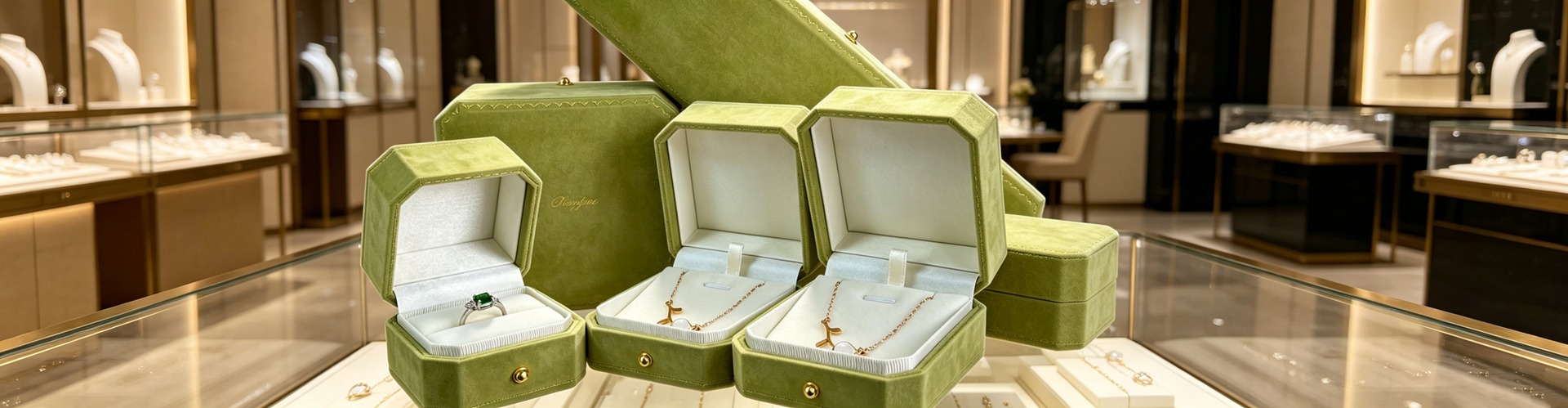
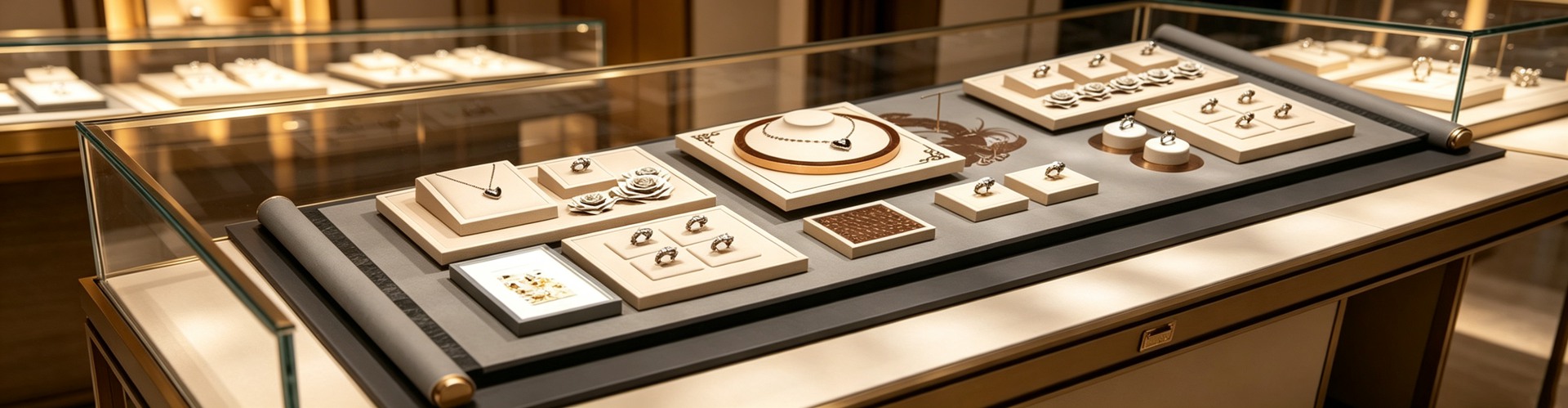
A 42mm watch and a 28mm watch live very different lives on the same jewelry display stand. One still reads from a meter away; the other simply disappears. As small cases take a bigger share of the assortment, the arithmetic behind watch display props has to be redone: narrower pillows, steeper presentation angles, tighter light. Without that, a mother-of-pearl dial never shows the pink-violet shift that sold it in the first place. Factory order books already reflect the shift — demand for pillows cut for 38-to-42mm cases is softening while 28-to-36mm cores and interchangeable inserts become the growth line. Because these watches are now styled as jewelry, clients are also asking for a watch box that grows jewelry compartments: one slot for the watch, one for the bracelet, sometimes merging outright with the jewelry box into a single hybrid case. Custom houses in Shenzhen such as Junyimei are being briefed on compartment layouts, not on new patterns.
The 68% self-purchase figure carries a subtler consequence. Unboxing is no longer a performance for someone else; it is a private confirmation. Under gift logic, packaging only has to look appropriate at the moment of handover. Under self-reward logic, it has to be something the owner chooses to keep. Those are different engineering briefs. The second one demands hinges that survive two hundred openings, a finish that still looks intentional on a dressing table a year later, and enough restraint that nobody throws it out. There is an unromantic truth here: a box that gets kept is cheaper than any media buy.
The point: no longer a shrunken men's watch
Put the threads together and the real meaning of this cycle is not that a women's market was discovered. It never went missing; it was treated as a derivative of the men's line. The turn is that the industry finally stopped shrinking men's watches and started engineering dedicated movements, proportions, design languages — and presentation — for a different customer.
LuxeConsult's Müller expects 2026 to be one of the most challenging years in recent memory: a strong franc, high gold prices, production overcapacity and extreme concentration around a handful of names. Growth in a year like that is not distributed evenly. The brands that get product, capacity and presentation right on small formats simultaneously will take the segment. Presentation is usually the cheapest of the three to fix, and the one most often skipped.
This is original content. Copyright belongs to Shenzhen Junyimei.
Junyimei — present every jewel and timepiece at its best.
2026 年日内瓦表展上最抢镜的不是三问,也不是万年历,而是一枚 28 毫米。
劳力士给蚝式恒动新增 28 毫米与 34 毫米两个尺寸,18K 黄金配绿色宝石表盘的那枚 28 毫米几乎被围得水泄不通;卡地亚拿出椭圆形 Baignoire 手镯表与数枚更小的 Tank;爱彼把皇家橡树做成了 Mini。过去二十多年"越大越气派"的腕间审美,正被 28 至 37 毫米这个区间悄悄收回去。
这不是审美轮回。它背后是一条在行业下行期罕见地向上的曲线。
一条逆势的曲线
先看大盘。瑞士钟表工业联合会的数据显示,2025 年以来该国钟表出口额已连续两年负增长,相较 2023 年的峰值累计下滑约 4.5%。一个长期依赖男性消费者的品类,正直面存量见顶。德勤 2025 年研究显示,43% 的高管对主要出口市场持负面看法。美国占瑞士钟表出口 16.8%,关税从 39% 调到 15%,出货节奏被政策拉成过山车;2024 年对中国内地出口下滑 26%、中国香港下滑 19%。
但女表这一格是另一副面孔。麦肯锡统计显示,2025 年女性在高价腕表消费中的占比已从 2015 年的 28% 升至 39%。摩根士丹利与 LuxeConsult 测算更直接:女性腕表贡献瑞士奢华腕表收入约 35%,该比重自 2019 年以来增长 40%。个别品牌更极端——宝格丽女表客群占比已超整体客群的 60%。Business Research Insights 预测,全球奢华女表市场 2026 年估值约 314.8 亿美元,2035 年将增至 400.2 亿美元。
换句话说,在整体收缩的市场里,女表是少数还在扩张的板块。
关键变量不是"卖给谁",而是"谁付钱"
真正改变行业逻辑的不是女性开始戴表——她们一直在戴。变的是谁掏钱。
德勤 2025 年的研究给出一个分水岭式的数字:女性奢华腕表购买中 68% 已是自购,2018 年这个比例只有 45%。七年时间,腕表从"等着被送"变成了"自己下单"。这与另一组数据吻合:女性已占全球高净值人群四成以上。收入、职位与话语权同时上移,腕间的诉求自然从"礼物"升级为"表达"。
决策链一变,产品逻辑就得跟着变。过去的标准动作是:把男款缩到 26 毫米,加一圈钻,命名为"女士系列"。这一套现在失效了。泰格豪雅产品官 Maria Laffont 的观察颇具代表性:女性受众明显更懂行、更自信,对机芯与设计语言有独立判断,偏好还在两端同时延展——既要更小更精致的,也要更大更技术流的。豪雅的应对是拉宽比例与材质的光谱,而不是继续按性别切分产品线。同一届表展上,梵克雅宝与香奈儿反而在推面向男性的款式——性别标签正从两个方向同时松动。
小表径为什么突然成了硬通货
转向已经写进成交数据。Chrono24 平台上,28 至 34 毫米小表径女表搜索量同比激增 35%,小表径机械表销量同比增长超 25%,含珍珠母贝表盘的款式成交占比提升近 40%。在亚洲市场,32 至 36 毫米被普遍视作女性手腕的黄金区间。
更有意思的是驱动力。Dimepiece 创始人 Brynn Wallner 的判断是,非传统藏家最先被这类风格吸引——第一次买表的女性想要的是一枚更小、更百搭、日常戴得住而不过分张扬的东西。美国 the 1916 集团零售总裁 Melanie Chud 补了一句更销售层面的话:小表的关键卖点是"可叠戴"。当店员把小表和顾客自己的镯子叠在一起给她看,那一刻脸上的光才是成交信号。
流行文化又推了一把。年轻女性在二手店淘老表,甚至翻出祖母首饰盒里的旧款,业内半开玩笑称之为"奶奶表"。塞雷娜·威廉姆斯在 Met Gala 选了迷你款皇家橡树,蒂莫西·柴勒梅德常戴 34 毫米的积家。男性这边也在回撤:腕围 16.5 厘米的买家放弃 41 毫米转向 36 毫米,理由朴素——正装能藏进袖口,休闲戴也自然。从"炫耀"到"悦己",两性走到了同一个方向。
但产能这一格,没跟上
需求转向的同时,供应链偏偏在小表这里拖后腿。斯沃琪集团 2025 年报显示,机械机芯产能利用率在 2025 年下半年降至 68%(2023 年为 81%),女装机芯受影响尤其明显。Sellita 在 2025 年 3 月宣布 SW100、SW200 两款女装尺寸机芯延期 14 周。更棘手的是人——2024 年三季度到 2026 年一季度,汝拉谷与拉绍德封至少四家表厂因镶嵌工序缺技工,出现 2 到 5 周非计划停产。小尺寸不等于简单:机芯要更薄(宝格丽 Octo Finissimo 2025 年款仅 2.23 毫米),宝石镶得更密,工时反而更贵。
于是最有增长的那一格,也成了最容易断供的那一格;与此同时认证二手与灰市持续扩张,正从一手渠道抢走成交——这也解释了品牌为何急着把二级市场内化。
被顺带改写的,是收纳与呈现
尺寸下探,最先觉得"不对劲"的往往不是设计师,而是柜台和货架。
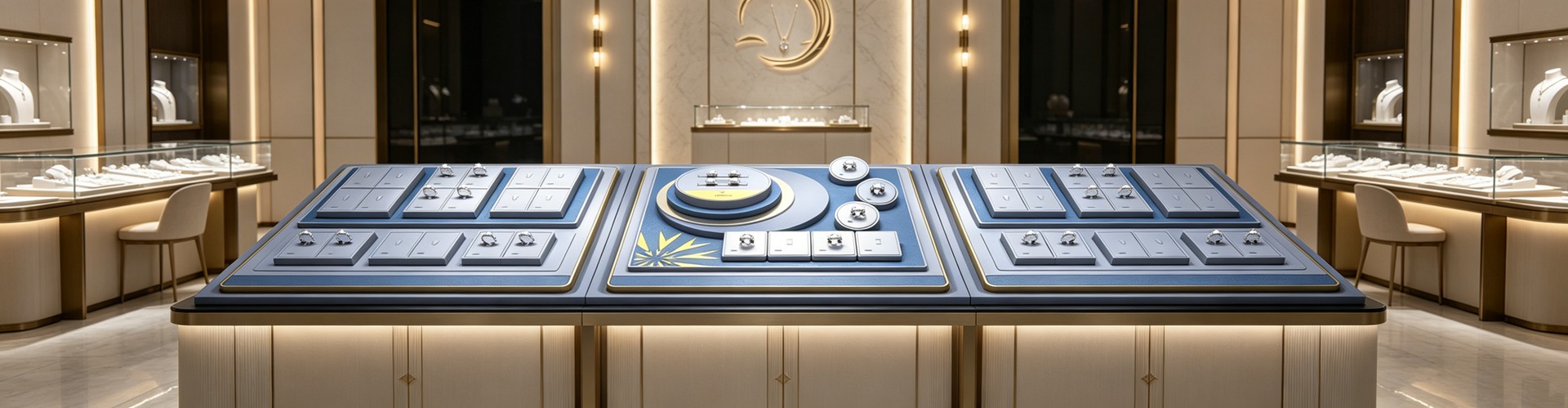
一枚 42 毫米表和一枚 28 毫米表,在同一块珠宝摆台上是两种命运。前者一米开外仍有存在感,后者会直接从视线里"消失"。小表占比上升,手表陈列道具的逻辑就得重算:枕芯直径要缩、抬升角度要加、聚光更集中,否则再好的贝母表盘也照不出那层粉紫渐变。工厂端订单结构已经在动——按 38 至 42 毫米开的老枕芯需求下降,28 至 36 毫米小枕芯与可换芯结构成了新增量;因为小表被当首饰叠戴,客户开始要求手表盒里长出首饰格:一格放表,一格放手链,甚至与首饰盒合流成一件混合收纳。深圳骏依美这类做珠宝盒定制的工厂,近来接到的正是"格位重排"的活儿,而不是单纯换个花纹。
自购比例升到 68%,还带来一个更隐蔽的变化:开箱不再是给别人看的场面,而是给自己的确认。送礼逻辑下,包装的任务是"体面";悦己逻辑下,任务变成"愿意留着"。两者对首饰盒设计的要求完全不同——前者靠视觉冲击一次性交差,后者要经得起两百次开合、在梳妆台上常驻而不显廉价。行业里有个不太浪漫的判断:一只被留下来的盒子,比任何广告位都便宜。
结论:终于不再是男表的缩小版
把线索拼起来,这一轮增长的含义并不是"女性市场被发现了"——她们从未消失,只是长期被当成附属需求。真正的转折是,行业终于停止把女表当男表的缩小版,开始为它配专属机芯、专属比例、专属设计语言,以及专属的呈现方式。
LuxeConsult 的 Müller 预判 2026 年可能是近年最艰难的一年:强势瑞郎、金价高企、产能过剩、品牌高度集中。增量不会平均分配。谁能同时把产品、产能与呈现三件事在小尺寸上做对,谁才吃得到这一轮——而"呈现"往往是最便宜、也最容易被跳过的一环。
本文为原创内容,版权归深圳骏依美所有,转载请注明出处。
骏依美——让每一件珠宝与腕表,都被更好地呈现。