Why Jewelry Belongs in Everyday Life Scenes让珠宝住进生活里
Walk into most jewelry stores and the first thing you see isn't the jewel — it's a single ring lying alone on black velvet. But what the shopper is really imagining is herself wearing it to dinner. Contextual merchandising puts the jewelry back into a life, instead of on a pedestal — grouped not by category but by "who wears this, and where."
Q1 (shopper): I just want something I can wear every day — why is everything displayed like a museum piece?
A: Traditional jewelry display has long followed a category logic — a gold zone, a diamond zone, a silver zone, cases stuffed with pieces. That "warehouse" layout is easy for staff to count but traps the customer at the "what is this" stage, never the "what would I look like wearing this" stage. Younger buyers don't want specs; they want relatability. Nakassi's 2025 data shows over 75% of Gen Z use social feeds of real people wearing jewelry in everyday settings to guide purchases, and Pinterest "stacked rings" searches rose 34% since 2023. The 2025 jewelry retail trends report agrees: millennials and Gen Z are shopping for stories, experiences and emotions, not ornaments. Stage a necklace inside a "weekend brunch knit" vignette and the customer recognizes herself in three seconds — far more useful than counting the stone's facets on black velvet. When Shenzhen Junyimei advises stores on jewelry display props, the first question is rarely "which slot does this fill" but "who wears this, and where."
Q2 (store owner): My shop is tiny. Doesn't scene-building cost a fortune?
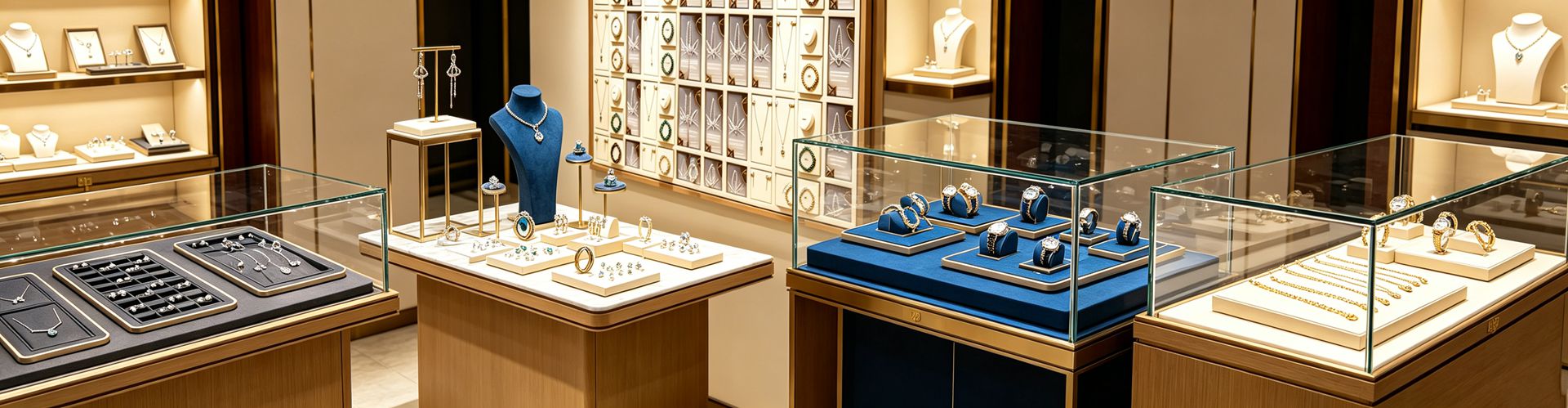
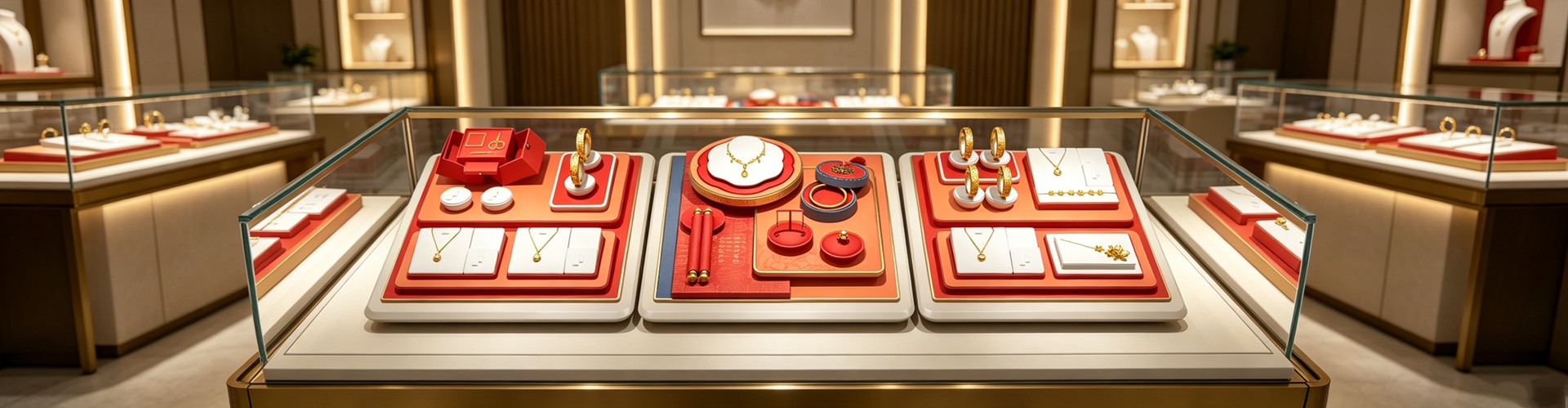
A: Not if you understand what it is. Contextual merchandising isn't about buying props; it's about saying one line of life on the customer's behalf. RetailRevealed, citing RetailTimes 2024, found immersive, styled-real settings lifted average dwell time by 33% and basket size by 22% versus standard setups, and over 70% of UK shoppers said they're more likely to buy when they see a product in a tasteful real environment. London's Situ Live rebuilt just a few "micro-apartment" corners (a lounge, a kitchen) and saw dwell +27% and conversion +19%. For a single store, one jewelry display stand, a backdrop cloth and a mirror make a "morning vanity" vignette. You don't need to replace every jewelry display shelf — just move daily-wear pieces into the lifestyle zone and keep high-ticket items in the VIP area. The real cost is the thinking, not the fixtures.
Q3 (visual merchandiser): How do I know a scene actually works?
A: Three signals. First, dwell: themed displays can increase the number of shoppers lingering over eight seconds in a zone by as much as 280%. Second, attachment rate: in home retail, scenario marketing lifted bundled purchase rate by 52% and average ticket from 8,000 to 15,000 yuan in a "light-luxury living room" scene — jewelry unit prices differ, but the logic is identical: put a necklace, earrings and ring into one "Friday dinner" scene and the customer wants the set. Third, repeat visits: stores that refresh scenes every two weeks see 23% more footfall and 19% higher return rates (ENDVR). Scenes aren't permanent sets; they're monthly content. Rotate jewelry display props every 30–45 days (commute / date / travel), and use an opaque reusable jewelry pouch to carry the "after-you-buy" scene home as a moving billboard.
Q4 (why high-end minimal packaging wins favor): What does that have to do with contextual display?
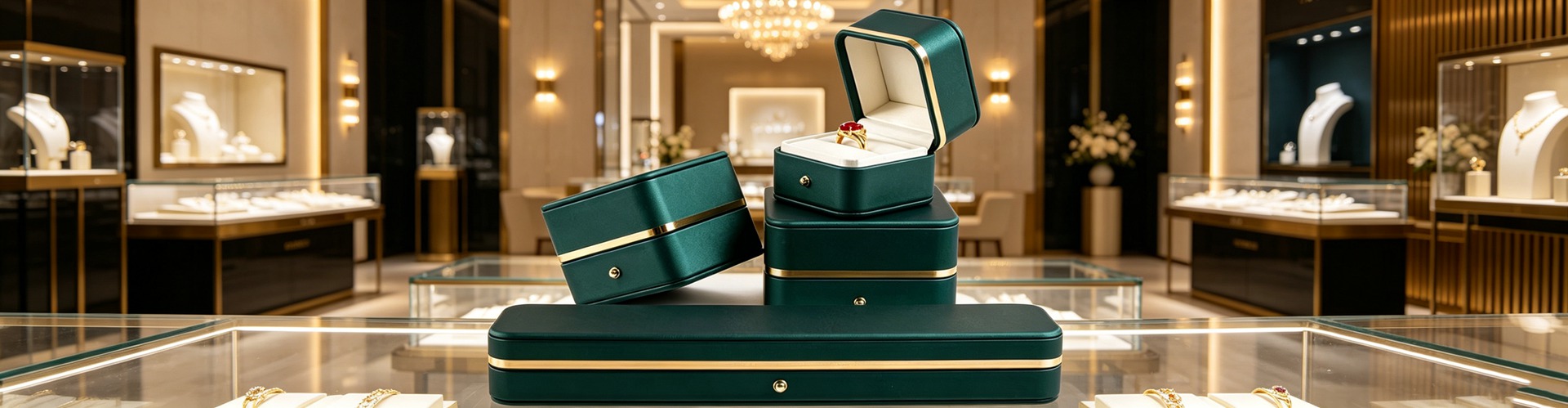
A: Everything, and it proves the point in reverse. Ornate, busy props and boxes tend to "belong" to only one scene — a baroque gold case fits a wedding but not a commute, so you rebuild the whole thing when the scene changes, a sunk cost. A plain matte jewelry packaging design and jewelry box is a clean canvas that gets "borrowed" by many lifestyles — home, commute, gala — reused again and again from one investment. On camera too (customer selfies, social check-ins): dense gold-foil patterning fights the background and steals the spotlight from "the life being worn," while plain matte with one clean mark keeps the wearer as the hero. Same budget logic underneath — move money from surface ornament to structural tolerance (fold edge <0.2mm, snug lining, calibrated magnet). Shenzhen Junyimei applies exactly this in custom jewelry boxes: minimal isn't cheap, it delegates tolerance to structure, so both the prop and the box hold up in every new scene.
Q5 (operations): Won't scenes make the store look messy and less premium?
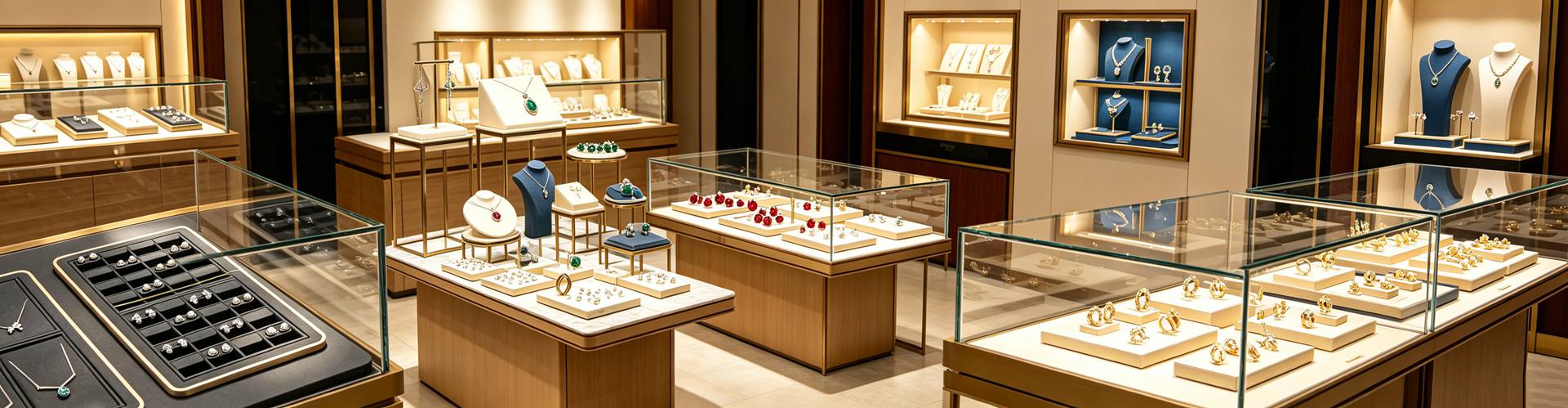
A: The opposite — what looks messy is "everything crammed with no theme." The 2025 high-end jewelry trend stresses a cohesive design language: display trays, mirrors, walls and packaging share color and material so they whisper "this is considered." So scene-building isn't dumping life props into the case; it's curating a recognizable slice of life with restraint — a coaster the size of a business card, a lipstick, a book, enough to imply a morning without shipping in a breakfast table. Jeweller.HK calls this vignette styling: small, curated scenes showing how jewelry lives in daily life, not piles. The key is negative space — each scene tells one story, the product is always the hero. On the jewelry display shelf, the more matte and quiet the prop, the brighter the goods.
Q6 (getting started): Where does a small brand begin?
A: Three tiers, start free. ① Free: regroup existing jewelry display shelves by lifestyle (commute / date / gift) instead of category, add a handwritten scene card explaining "what occasion this suits." ② Tens of yuan: add an opaque reusable jewelry pouch and a numbered card so the customer carries the "after-you-buy life" home as a moving ad; swap the jewelry gift box lining to a color with clear lightness contrast against the hero piece, so unboxing drops you into the scene. ③ Hundreds: commission Shenzhen Junyimei for small-batch flexible customization where the jewelry box design shares the counter's color language — open the box and the scene continues in hand. Avoid three traps: never refreshing scenes for half a year (shoppers assume "nothing changed"), overloading a vignette so props upstage goods, and leaving price tags in the scene to break immersion. Contextual display doesn't sell a pricier box; it sells a life that's easier to picture.
This is original content. Copyright belongs to Shenzhen Junyimei.
Junyimei — present every jewel and timepiece at its best.
顾客走进店,第一眼看到的往往不是珠宝,而是一块黑绒布上孤零零躺着的一枚戒指。可她脑子里想的是"我戴上它去赴约好不好看"。情景化陈列,就是把珠宝从"展品"变回"生活里的一员"——不再按品类列队,而是按"会被谁、在什么场合戴"来讲一句生活的话。
Q1(顾客视角):我就想买件能天天戴的,为什么柜台上总把首饰摆得像博物馆藏品?
答:传统珠宝陈列长期沿用品类逻辑——金区、钻区、银区分区,展柜按件数塞满。这种"仓库式"摆法对店员盘点方便,却让顾客卡在"功能识别"这一步,难以想象佩戴后的样子。年轻买家要的不是规格,是代入感:Nakassi 2025 调研显示,75% 以上的 Z 世代靠社媒上"真人日常佩戴"画面做购买决策,Pinterest"叠戴戒指"搜索自 2023 年来涨了 34%;珠宝零售业 2025 趋势报告也指出,千禧与 Z 世代买的早已不是 ornament,而是 story、experience、emotion。把一件项链搭进"周末 brunch 的针织衫领口"这样的小景,顾客三秒就能对号入座——这比在黑绒布上数它有几颗碎钻有用得多。深圳骏依美在给门店配珠宝陈列道具时,常建议先问"这件货会被谁、在什么场合戴",而不是"它该占哪个格子"。
Q2(店主视角):我店小,做场景是不是很烧钱?
答:不必。情景化陈列的核心不是堆道具,而是"替顾客讲一句生活的话"。RetailRevealed 援引 RetailTimes 2024 的数据:沉浸式、有格调的真实场景,比标准陈列平均让顾客多停留 33%、篮值高 22%;超过 70% 的英国受访者表示,在"有格调的真实环境"里看到产品更愿意买。伦敦 Westfield 的 Situ Live 只用几个"微公寓"小景(客厅角、厨房角),就换来停留 +27%、转化 +19%。对单店而言,一组首饰展台 + 一块背景布 + 一面镜子就能搭出一个"晨间妆台"小景;珠宝展示架不必全换,只要把日常款挪到生活场景区、把高客单款留在 VIP 区,分区即分层。成本大头其实是"想清楚讲什么场景",不是买多少道具。
Q3(陈列师视角):怎么判断一个场景搭得对?
答:看三个信号。第一,停留时长——主题陈列能让在某区域停留超 8 秒的顾客数量最多增加 280%(shopper behavior 研究);第二,连带——家居行业的场景化营销数据显示,套系购买率能因"轻奢客厅场景"提升 52%、客单价从 8000 跃到 15000 元,珠宝虽单价不同,逻辑一致:把项链、耳环、戒指放进同一个"周五晚宴"小景,顾客自然想凑齐;第三,复访——每两周刷新一次场景的门店,客流高 23%、复访高 19%(ENDVR)。换句话说,场景不是一劳永逸的布景,而是按月迭代的内容。珠宝摆台的小景建议 30–45 天轮换一次主题(通勤 / 约会 / 旅行),用不透光可复用首饰袋把"买走之后的样子"也做成移动小景。
Q4(为什么说高端简约包装更易被青睐):这和情景化陈列有什么关系?
答:关系很大,而且正好反向印证。繁复花哨的陈列道具和包装,往往只"长"在某一种场景里——巴洛克金雕展柜配得了婚礼却配不了通勤,换景就得整套重做,沉没成本高。纯色哑光的珠宝包装设计与首饰盒,像一块干净的画布,能被居家、通勤、晚宴多种生活场景反复"借走"当背景,一次投入多次复用。到了镜头前(顾客自拍、社媒打卡)也一样:满版烫金细密印花在小景照里和背景打架、抢了"被佩戴的生活"的主角位,而纯色哑光 + 一枚干净标识,让照片里的主角永远是"戴着它的那个人"。这背后是同一套预算逻辑——把钱从表面花纹挪到结构公差(折边 <0.2mm、内衬贴合、磁力标定),深圳骏依美做珠宝盒定制时就坚持这条:简约不是省钱,是把容错交给结构,这样道具和盒子才能在每一个新场景里都站得住。
Q5(运营视角):情景化会不会让店看起来乱、显得不高级?
答:恰恰相反,乱的是"没主题的全塞"。高端珠宝 2025 趋势强调"统一的设计语言"——展柜、镜子、墙面到包装,色彩材质一致才发出"这很讲究"的潜意识信号。所以做场景不是往柜里堆生活杂物,而是用克制的元素搭出"可识别的生活切片":一张名片大小的杯垫、一支口红、一本书,足够让人脑补出一个晨间场景,而不必真搬来一桌早餐。Jeweller.HK 提出的 vignette styling(小景造型)正是这个思路——用小而精的策展式场景,展示珠宝如何融入日常,而非堆砌。关键是"留白":每个场景只讲一件事,主角永远是货。珠宝陈列架上的小景,道具越哑光、越不抢戏,货越亮。
Q6(落地视角):小品牌从哪一步开始?
答:三档起步,零成本先动。①零成本:把现有珠宝展示架按"生活方式"而非"品类"重新分组(通勤款 / 约会款 / 礼赠款),加一张手写场景卡,讲清"这件适合什么场合戴"。②几十元级:配不透光可复用首饰袋 + 编号卡,让顾客把"买走后的生活"也带回家当移动广告;饰品包装盒内衬换一个和主推货拉开明度差的颜色,开箱即入戏。③百元级:找深圳骏依美做小批量柔性定制,首饰盒设计与柜台小景同一套色彩语言,盒子一打开,场景在手里延续。三坑要避开:场景半年不换(顾客默认"货也没换")、小景里塞太多道具喧宾夺主、把价签条码留在小景里破坏代入感。记住,情景化陈列卖的不是"更贵的盒子",而是"更好懂的生活"。
本文为原创内容,版权归深圳骏依美所有,转载请注明出处。
骏依美——让每一件珠宝与腕表,都被更好地呈现。