The Ninety Seconds After the Sale成交后那九十秒
The most overlooked stretch of time in a jewelry store is the minute or two after the customer has already paid, standing at the counter, waiting for the box. Every bit of lighting, display and sales talk was built to win the sale. After the sale, nobody is in charge. Yet the memory the customer carries out of the door often freezes right there.
Q1: The money is already paid. Does the last minute really matter?
It matters out of all proportion. The peak-end rule, formulated by Nobel laureate Daniel Kahneman, holds that people do not average an experience when they recall it. They judge it by two points: the moment of strongest feeling, and how it ended. Nielsen Norman Group research pushes this further, and counter-intuitively: an experience that was objectively longer and more troublesome can still be remembered more warmly, provided the ending was pleasant. Jewelry buying already has a long decision chain, with repeated try-ons, price comparison and family consultation, so the emotional peak usually happens at the mirror. The ending, however, is the payment and the wrap. IKEA putting an ice cream at the exit and restaurants offering something sweet with the bill run on exactly the same logic. The cost of getting it wrong has been measured: roughly 89 percent of shoppers say a bad waiting experience makes them less likely to come back. Those ninety seconds generate no new revenue, but they decide whether the sale gets retold, recommended and repeated.
Q2: How fast should wrapping be, and when does patience run out?
The thresholds are unusually clear. Statistics on United States retail waiting times in 2026 put the actual average wait at six to twelve minutes, while tolerance has compressed to under five to seven. At three minutes about 21 percent are already frustrated; at five minutes 58 percent consider leaving; eight minutes is the average abandonment threshold; at ten minutes as many as 82 percent simply walk away. A separate 2026 dataset found 73 percent of shoppers abandon a purchase when a queue passes five minutes, and 40 percent have left a store empty-handed because of lines. A jewelry counter carries an extra burden: the customer is not queueing to pay, but waiting after paying, which is far harder to bear. A workable benchmark is 60 to 90 seconds for a standard single-piece wrap, and no more than three minutes for elaborate gift presentation. When it will take longer, say so. Research shows that a wait without visible progress feels about 36 percent longer, while customers given real-time progress perceive the wait as roughly 35 percent shorter. "It will take me about two minutes, please have a seat" costs nothing and effectively removes a third of the time.
Q3: Should wrapping happen in front of the customer, or in the back room?
Both, with a clear division of labour. Wrapping in view delivers certainty. The customer watches the exact piece she chose go into the box, close and get sealed, and any worry about a swap dissolves on the spot, which matters most at high ticket values. Tiffany turned in-store wrapping into a choreographed sequence: the piece settles into the blue box, the white satin ribbon is drawn, the corners are gathered, the knot is tied, the ends fall. The sequence itself is a brand asset. Back-room wrapping delivers efficiency and concealment: outer gift paper, removal of price tags, invoices sealed separately. Those chores should not be spread out in front of a customer. The practical compromise is to keep three steps on the counter, and move the outer layer backstage. The workstation deserves rethinking too. A wrapping station should sit within the customer's line of sight but clear of the main aisle, and never beside the try-on mirror, where it competes for the closing spot. Consumables belong in compartments ordered by use, so that boxes, inserts, seals, cards and pouches each have a place. Hunting for supplies is what actually eats the ninety seconds. Forty centimetres of clear counter surface improves delivery quality more than one more display prop.
Q4: People say restrained, high-end minimal jewelry packaging wins customers over more easily. Does that hold at the wrapping stage?
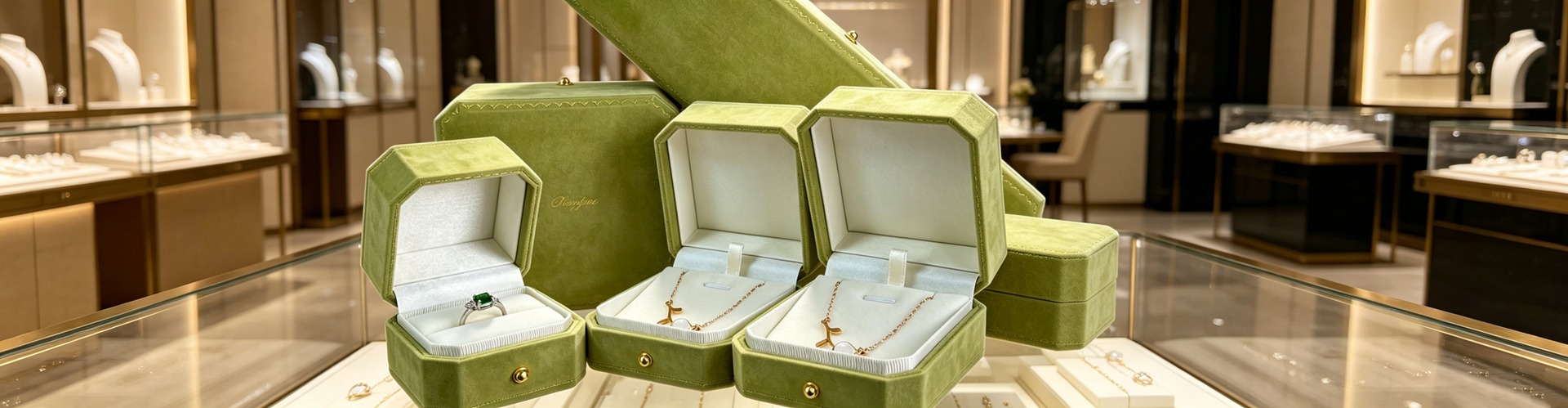
It holds, and here the reason has nothing to do with looking good. It is repeatability. The real cost of elaborate packaging is not material but labour. Hand-tied ribbon bows, folded tissue rosettes and aligning nested boxes take a practised hand forty seconds, while a newcomer needs three minutes and still ends up crooked. Seasonal temporary staff can only be trusted with the simplest structure. Worse, this performance often happens in full view, and one slip, one lopsided knot, one creased sheet of tissue turns everything previously said about luxury into amateurism. A minimal structure inverts the problem: one magnetic closure, one seal, one card, and any member of staff can reach the same standard in 30 to 60 seconds. Simplicity therefore moves quality out of individual craft and into structural parameters, which are measurable: whether magnetic force is calibrated by the gram, whether folded edges hold within 0.2 millimetres, whether the insert grips the piece. That is precisely the logic of shifting budget from surface decoration to structure and tolerance, and Shenzhen Junyimei writes "closure completed by one person, one hand, within 60 seconds" into its acceptance terms. Corroboration exists on the demand side: about 26 percent of consumers would pay someone else simply because they cannot wrap, and 35 percent say some gifts are inherently hard to wrap. If customers already pay for that difficulty, a brand should not leave it sitting on its own counter.

Q5: In peak holiday season, wrapping becomes the bottleneck. What then?
Start by admitting it is a cost. The global gift-wrapping products market was worth roughly 20.4 billion dollars in 2024 and is projected to reach about 31.3 billion by 2030. Some 71 percent of consumers say they would pay someone else to wrap for them, 52 percent prefer custom-designed paper, and Americans spend around 56 dollars on wrapping over the holidays while devoting roughly three hours to doing it themselves. Retail wrapping in the United States commonly costs two to sixteen dollars, whereas the jewelry trade treats it as complimentary. Free does not mean costless; the cost is simply hidden inside labour and waiting. Four practical moves. First, build a stock of half-finished components: tissue pre-folded, ribbon pre-tied into slip loops, common box sizes pre-matched to categories, so nobody hunts for a box mid-transaction. Second, separate the wrapping station from the till, so payment and packing stop running in series. Third, run two lanes, a quick wrap that leaves immediately and a full gift presentation collected shortly after by ticket. Fourth, stock opaque reusable pouches generously: around 87 percent of people reuse gift bags, which makes a pouch better value than disposable paper and keeps working for the brand after the customer leaves.
Q6: A small store with no budget. What comes first?
Work backwards from what the customer can perceive. Tier one costs nothing: strip price tags, barcodes and promotional stickers off the box, seal invoices and warranty cards separately, write the wrapping motion down as three fixed steps with matching wording, and state the wait out loud. Tier two costs tens of yuan: arrange consumables in compartments ordered by use, keep a small buffer of pre-folded tissue and pre-tied ribbon, and add a handwritten card. Surveys value a handwritten note at roughly twelve dollars in perceived worth, which makes it the cheapest and least copyable element in the whole presentation. Tier three runs to a few hundred: a dedicated wrapping surface, opaque reusable pouches and numbered cards, so that presentation continues after the customer walks out. Foil stamping, embossing and satin ribbon always come last. Three common traps: putting the wrapping station beside the try-on mirror and stealing the closing spot, handing complex wrapping to temporary staff at peak, and using transparent carrier bags, which look fine in store and spoil the surprise on the way home.
The last ninety seconds at the counter are the only ninety seconds in the shop that require no persuasion at all. They create no sale. They decide what shape the sale takes in memory.
This is original content. Copyright belongs to Shenzhen Junyimei.
Junyimei — present every jewel and timepiece at its best.
珠宝店里最容易被忽略的一段时间,是顾客已经付完钱、站在柜台前等着拿走那只盒子的一两分钟。前面所有的灯光、陈列、话术都在争取成交,成交之后反而没人管了。可顾客带走的记忆,往往就定格在这九十秒里。
问一:顾客都付钱了,最后这一两分钟还重要吗?
重要,而且重要得不成比例。诺贝尔经济学奖得主丹尼尔·卡尼曼提出的「峰终定律」指出,人回忆一段经历时并不做加总平均,而是靠两个点定性:情绪最强烈的那个瞬间,以及结束时的感受。尼尔森·诺曼集团的研究给出更反直觉的结论——即便一段体验客观上更长更麻烦,只要结尾愉快,回忆里的评分反而更高。珠宝决策链条本来就长,情绪峰值多半发生在试戴镜前;而「结尾」就是收银与打包这段时间。宜家把甜筒放在出口,就是同一套逻辑。代价也被量化过:约 89% 的顾客在经历一次糟糕的等待后会降低再来的意愿。这九十秒不产生新的销售,却决定这笔销售会不会被复述、被推荐、被再来一次。
问二:打包到底该多快,顾客多久开始不耐烦?
阈值相当清晰。2026 年针对美国零售等待时间的统计显示,实际平均等待为 6 至 12 分钟,而顾客的心理容忍线已经压到 5 至 7 分钟以内:等到 3 分钟时约 21% 已开始烦躁,5 分钟时 58% 考虑离开,8 分钟是平均放弃阈值,10 分钟时高达 82% 直接走人。另一组数据显示,73% 的购物者排队超过 5 分钟会放弃购买。珠宝店还多一层特殊:顾客不是排队买单,而是付完钱还得等,格外难忍。可用的经验值是单件常规包装控制在 60 到 90 秒,复杂礼赠不超过 3 分钟;一旦预计更久,就必须把进度说出来。研究显示,缺少可见进度会让等待感觉长出约 36%,而拿到实时进度的顾客感知等待缩短约 35%。一句「我大概两分钟包好,您先坐」,成本为零,效果等于把时间砍掉三分之一。
问三:该在顾客面前包,还是拿到后场包?
两种都对,关键是分工。当众包装的价值在于确定性:顾客亲眼看着自己挑的那一件进盒、闭合、贴签,「会不会被换货」的疑虑当场消解,这对高客单尤其关键。蒂芙尼把店内包装做成了一套有编排的动作——珠宝入蓝盒、取白缎带、绕盒收角、打结、缎带尾端自然垂落,过程本身就是品牌资产。后场包装的价值在于效率与遮蔽:外层礼盒纸、价签清理、发票另封,这些琐碎动作不适合摊在顾客眼前。折中做法是把关键三步留在台面上完成,外层包装转到后场。工位也要重新想:包装台应在顾客视线内但不挡主通道,绝不能设在试戴镜旁抢位置;耗材抽屉按取用顺序分格,盒、内衬、封签、卡片、首饰袋各归其位——找东西才是真正吃掉九十秒的元凶。柜台一侧留一块净台面,比多摆一件珠宝陈列道具更能提高交付质量。
问四:常说高端简约的珠宝首饰品包装设计更容易被顾客青睐,从打包这一环看成立吗?
成立,而且这一环给出的理由与「好看」无关,是可复制性。繁复包装真正的成本不在材料,在人手:手打缎带蝴蝶结、棉纸折花、多层套盒对齐,熟手四十秒能出效果,新手三分钟还容易歪;旺季临时补的人手只能上最简单的结构。更要命的是这套动作常常发生在顾客眼前,一次手滑、一个歪结、一张压皱的棉纸,就把前面所有关于「高级」的铺陈讲成了业余。反过来看极简结构:一处磁吸、一枚封签、一张卡,任何一名店员都能在 30 到 60 秒内包出同一水准。这意味着简约把「品质」从个人手艺转移到了结构参数上——磁力有没有按克标定、折边有没有控制在 0.2 毫米以内、内衬与货贴不贴合,都是可测的数字。这正是把预算从表面工艺挪到结构与公差的思路,深圳骏依美在验收时会把「单人单手 60 秒内完成闭合」写进条款。旁证也在:约 26% 的消费者愿意付费只因为「自己不会包」,35% 说有些礼物本身就难包。既然消费者都在为难度付费,品牌就不该把这份难度留在自己柜台上。
问五:节日旺季打包成了瓶颈,怎么破?
先承认它是成本。全球礼品包装用品市场 2024 年约 204 亿美元,预计 2030 年增至约 313 亿美元;71% 的消费者表示愿意花钱让别人替自己包,52% 偏好定制化包装纸,美国人节日期间亲手包装平均耗时约三小时。美国零售端包装收费普遍在 2 到 16 美元,而珠宝行业惯例是免费——免费不等于没有成本,只是成本被藏进了人力与等待里。四条可执行做法:一是备半成品库,棉纸提前折好、缎带预先做成可套的活结、常用规格的饰品包装盒按品类预配,杜绝现场找盒;二是把包装工位从收银台拆出来,避免收银与打包串行阻塞;三是开双通道,简装即走与礼赠精包分流,精包给号稍后取;四是备足不透光、可复用的首饰袋——约 87% 的人会重复使用礼袋,它比一次性包装纸更划算,也在离店之后继续替品牌曝光。
问六:小店零预算,先改哪一步?
按顾客能感知到的顺序倒排。第一档零成本:价签、条码、优惠贴纸一律移出盒体,发票保单另封;把打包动作写成固定三步并统一话术;主动报出等待时间。第二档几十元:耗材按取用顺序分格摆放,建立预折棉纸与预扣缎带的小库存,再加一张手写卡——有调研把手写卡的感知价值算到约 12 美元,是整套包装里最便宜也最难被复制的一处。第三档百元级:独立包装台面、不透光可复用首饰袋、带编号的卡片,让首饰盒与珠宝包装设计延续到离店之后。烫金、压凹、丝带永远排在最后。三个常见坑:包装台设在试戴镜旁抢了成交位;旺季让临时人手上复杂包装;用透明手提袋——在店里好看,在路上就是剧透。
柜台前的最后九十秒,是全店唯一不需要说服顾客的九十秒。它不创造成交,只决定这次成交在顾客记忆里是什么形状。
本文为原创内容,版权归深圳骏依美所有,转载请注明出处。
骏依美——让每一件珠宝与腕表,都被更好地呈现。