How the Holiday Calendar Rewrites Your Jewelry Displays节日节奏定柜台
Walk into almost any jewelry store and you'll notice an open secret: business rarely arrives at a steady pace — it arrives on the calendar's schedule.
Q1: Why do jewelry stores boom and lull with the seasons?
A: Jewelry is, by nature, an occasion-driven purchase. The Diamond Producers Association found a telling split: by value, only 12% of diamonds are bought for "no occasion," while a whopping 88% are tied to an event — a wedding, an anniversary, a birthday, or a holiday. Retail is an event-driven business, and holidays are the densest cluster of those events. The weight of the calendar shows in the numbers. The Christmas season alone accounts for about 33% of a typical jewelry retailer's annual sales, versus 24% for the average merchant; add Valentine's Day and Mother's Day, and those three windows represent nearly half of all natural-diamond jewelry purchases in a year. There's also a quieter force amplifying every peak: self-gifting. A recent survey found that 80% of American adults now buy fine jewelry for themselves, with Millennials leading the charge — so when Valentine's or Mother's Day draws near, the person browsing may be shopping for the person in the mirror as often as for a partner or a mom. That self-buying habit also smooths the troughs: a store that markets "treat yourself" node-specific messaging turns what used to be a quiet week into a secondary peak, which is exactly why the calendar discipline pays even outside the big three holidays. In other words, your best weeks are scheduled for you by the holidays. The first job of any store isn't chasing new styles — it's pinning the year's holiday calendar behind the counter and planning stock, displays, and packaging around it.
Q2: Which dates actually deserve advance preparation?
A: Three peaks line up through the year, per the NRF and the Natural Diamond Council, and a couple of smaller ones are worth a place on the plan. Valentine's Day: in 2026 U.S. consumers were projected to spend a record $7 billion on jewelry for the occasion — the top category by value — with Valentine's accounting for roughly 7% of annual diamond demand and nearly half of all proposals falling between November and February. Mother's Day: NRF projected $7.5 billion in jewelry spend for 2026, the highest single-year jewelry figure in its survey cycle, inside a record $38 billion total Mother's Day. Christmas: the one-third-of-the-year anchor. The secondary windows matter too — graduations (April to June, around $119 average spend) and Father's Day (masculine pieces like engraved cufflinks) are smaller but useful for clearing specific inventory. The crucial detail is the timeline: search intent for each holiday typically starts climbing 6 to 8 weeks out and surges in the final two weeks, with peak windows like Jan 15–Feb 10 for Valentine's, Mar 20–May 5 for Mother's Day, and Nov 1–Dec 15 for Christmas. That means restocking, redisplay, and repackaging must launch a month ahead, not three days before. In China the rhythm is similar but the dates differ: Douyin's 2026 "520" data showed jewelry group-buy spending up 177% week-on-week before the day, with live-stream exposure crossing ten million and sales up more than 8x; that same "520" window saw orders from post-95 consumers up 57% and from over-50s up 76%, proving the romantic economy now spans all ages. The Qixi festival routinely posts 200%+ jumps in jewelry group-buys in the ten days before. Wedding season, June through September, is the natural home of engagement and bridal bands.
Q3: How do you rotate packaging for holidays without a warehouse of dead boxes afterward?
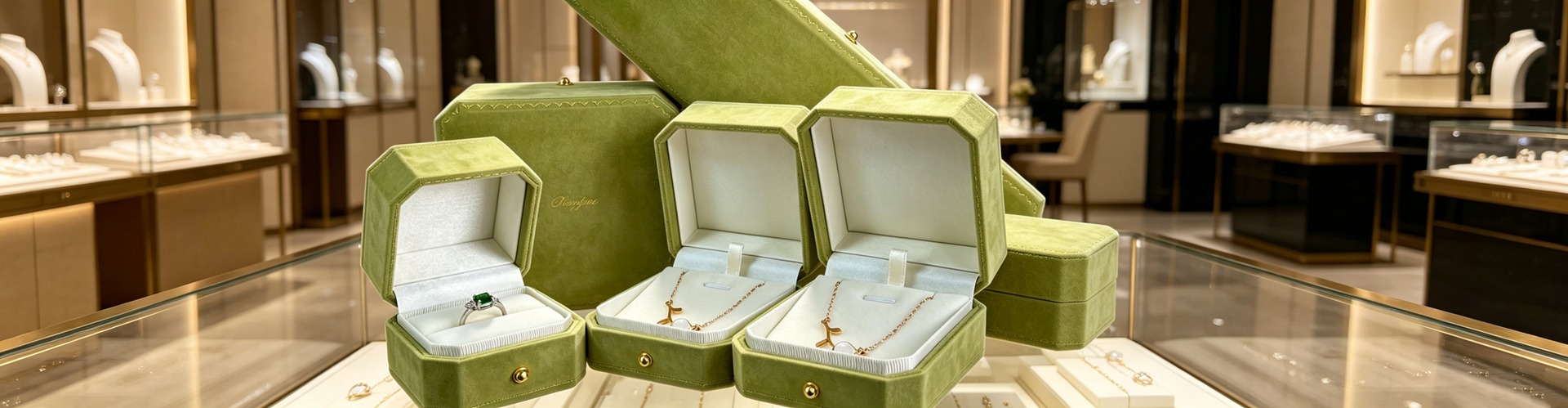
A: This is where "high-end minimalism" earns its keep on the calendar. A box covered in busy, full-bleed holiday art sells for two weeks and then loses its context — you've re-tooled and reprinted a whole batch for one node, and the leftovers become dead stock that nobody wants in January. The smarter move splits the "box" from the "holiday skin": keep a plain, matte, universal jewelry box as the body, and add a swap-in belly band, sleeve, or card printed with one clean mark for the holiday window. The body sells all year and reuses; the skin comes off when the date passes, with almost no overstock. The logic is cousins with the "modular gift box" idea regulators push for sustainability, but the motive here isn't compliance — it's business agility. The math is brutal: re-tooling a full printed box for one festival can mean a new die, new plates, and a batch you're stuck holding, while a belly band is a single print run you simply stop ordering the moment the date passes. A themed box might enjoy a six-week shelf life; the plain body enjoys twelve months. Multiply that across four or five nodes a year and the capital trapped in seasonal artwork dwarfs whatever you saved on the "cheaper" busy box. You can run a short flexible batch with a partner like Shenzhen Junyimei, a few hundred pieces in a new color or mark to test the market before scaling, exactly the way a direct-to-consumer brand might pivot a "treat yourself or someone you love" message and watch reach expand by 40% without touching the box itself. Minimalism, again, isn't cheapness; it moves the cost of seasonal trial-and-error off the structure and onto a slip of paper.
Q4: Should display props change scenes with the holidays?
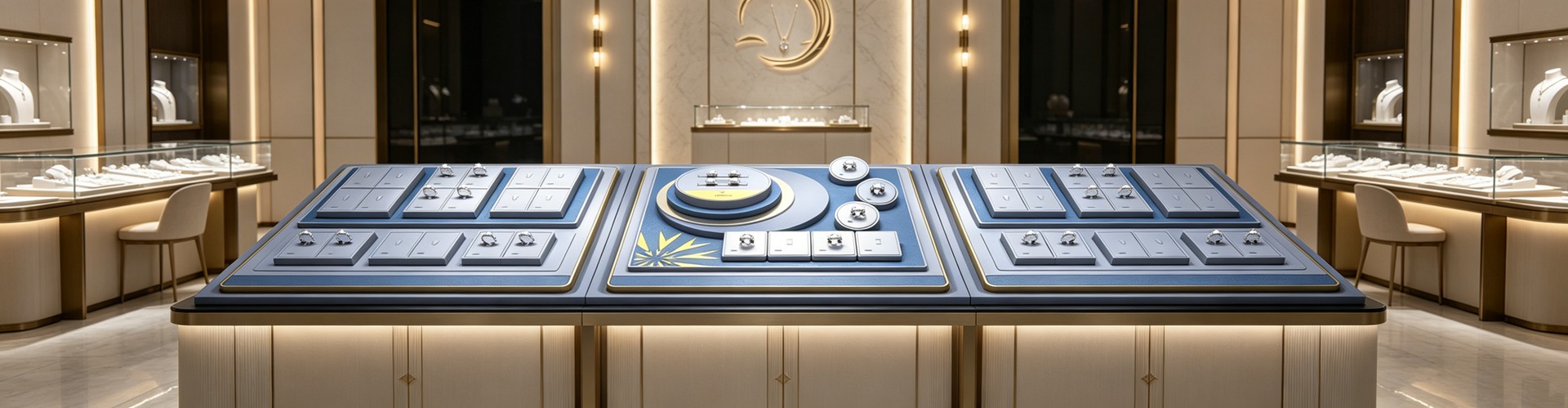
A: Yes — and what changes is the scene, not the goods. For Valentine's, hand the hero visual to red and hearts under warm light that reads as promise; for Mother's Day, switch to birthstones and layering pieces with softer light; for Christmas, let diamond statement pieces take center stage under cool white that pulls out the fire. Your jewelry display props and display stands are the emotional switch — same inventory, a different底板 color, a shifted rhythm of shelves, one more patch of negative space, and the customer reads "this is the moment to buy" instead of "same as always." The cautionary tale is the store that never changes: the brain filters repeated, familiar stimuli automatically, and a window unchanged for over five weeks stops driving foot traffic. Holidays are the most natural excuse to break that visual numbness — you don't renovate, you let the display stand wear three faces in a month, and the China data shows why it pays: during the "520" surge, jewelry livestreams alone drove sales up more than 8x, which means the counter that looks alive for the moment captures the spike while the static one watches it pass.
Q5: How do you get ceremony without waste at the holidays?
A: Ceremony doesn't come from nested boxes; it comes from one detail that gets remembered. The handwritten card is the cheapest and most irreplaceable touch — the one element in the whole package that can't be copied and is most likely to be photographed. Behavioral research on gifting puts this plainly: during holiday seasons, "effort signaling" matters more than price, so a personal note outperforms a thicker box every time. An opaque, reusable jewelry pouch is the moving billboard that keeps talking after the gift leaves the store. A fixed slot for the certificate, warranty, and numbered card lets the recipient pick up the "identity" on first open. As for restrained ornament: one fewer nested layer means one less unit of shipping volume and one less lump of post-holiday guilt — which lines up neatly with the growing number of customers who say packaging shouldn't be over the top. A package's终点 is never being opened; it's being looked at again, mentioned once more.

Q6: Tight budget — how do you keep pace with the calendar?
A: Three tiers, starting small, and a four-phase rhythm behind them. The zero-cost tier: switch your tags, posters, and cards from "always-on" to "node-specific," handwrite a holiday card, move the hero piece to the right-hand golden wall — all doable today. The few-dollars tier: produce swap-in belly bands and an opaque reusable pouch printed with one mark; the pouch keeps working after the holiday, the band comes off. The hundred-dollar tier: use a flexible short-run line like Shenzhen Junyimei's, a few hundred pieces in a new color or mark as a sample, run a round of feedback in your mini-program or live stream, then decide which set to scale. Behind the tiers sits the same 4-phase playbook the best gift-season operators use: Signal 6–8 weeks out (finalize lines, seed content), Surge in the final two weeks (push the node-specific story), Convert at the counter (let the display stand wear the holiday face), and Retain after (the reusable pouch and handwritten card keep the relationship alive). The key is planning 6–8 weeks ahead — search intent begins then, and if you move three days before the date, the traffic is already eaten by competitors who laid out earlier. Holidays aren't a sprint; they're an exam written on the calendar months in advance.
This is original content. Copyright belongs to Shenzhen Junyimei.
Junyimei — present every jewel and timepiece at its best.
走进任何一家珠宝店,你都会发现一个心照不宣的事实:生意从来不是匀速来的,它跟着日历走。
Q1:为什么珠宝店的客流和业绩会在一年里大起大落?
A:因为珠宝本质上是"为场合而生"的商品。钻石生产商协会(DTC)的研究有个扎心数字——按金额算,只有 12% 的钻石是"没有理由"买下的,剩下 88% 都对应一个明确的事件:婚礼、纪念日、生日,或者一个节日。零售本就是"事件驱动"的生意,而节日是其中最大、最密集的一串事件。看几个刻度就明白节日的分量:圣诞季贡献了珠宝零售商全年约 33% 的销售额,而普通零售商只有 24%;把情人节、母亲节和圣诞加在一起,几乎占了全年天然钻石珠宝购买量的一半。换句话说,柜台一年里最好的那几周,是被节日本身排好的——你不是在为淡季发愁,你是在为旺季没接住而发愁。对门店来说,第一件该做的事不是追新款,而是把这一年的节日日历贴在收银台后面,照着它排货、排陈列、排包装。
Q2:一年里哪些节点最值得提前动手?
A:按美国零售联合会(NRF)和天然钻石协会(NDC)的数据,三个高峰依次排开。情人节:2026 年美国消费者预计在珠宝上花创纪录的 70 亿美元,是当天消费金额最高的品类;NDC 统计情人节约占全年钻石需求的 7%,且近一半的求婚发生在 11 月到次年 2 月之间,情人节正卡在求婚季尾巴上。母亲节:2026 年 NRF 预计珠宝支出 75 亿美元,是调查周期里最高的单年珠宝数字,总母亲节消费冲到 380 亿美元;45% 的消费者计划买珠宝送妈妈,人均 284.25 美元。圣诞:不用多说,占全年约三分之一。更关键的是"时间轴"——各大节日的搜索意图通常在节前 6–8 周就开始抬升,最后两周集中爆发。这意味着备货、改陈列、换包装都要提前一个多月启动,而不是节前三天才贴海报。放到国内,节奏相似但节点不同:抖音生活服务 2026 年"520"数据显示,节前一周珠宝首饰团购消费同比暴涨 177%,5 月 15 日多场直播曝光破千万、带动销售额同比增长超 8 倍;七夕节前十日内珠宝团购也常出现 200% 以上的增幅。婚季(6–9 月)则是钻戒与对戒的天然主场。
Q3:包装怎么跟着节日换,才不会节后堆一仓库卖不掉的盒子?
A:这是"高端简约更受青睐"在节奏维度上最实在的理由。繁复、满版节日图案的礼盒,节前确实喜庆,但节日一过就失去语境,成了谁也不想要的库存——你为每一个节点重新开模、重新印一整批盒子,资金压在货上、仓库压在盒上。更聪明的做法是把"盒身"和"节日皮肤"拆开:用纯色哑光的通用首饰盒做主体,只在节日窗口加上可更换的腰封、封套或贺卡,印一枚干净的标识即可。盒身全年可卖、可复用,节日皮肤节后撤下就好,几乎零积压。这思路其实和环保法规倡导的"模块化礼盒"同源,但出发点不是合规,是生意的敏捷——你能用深圳骏依美的小批量柔性产线,几百只起订换色换标先跑市场反馈,再决定要不要放大。简言之,简约不是省钱,是把"换季的试错成本"从结构挪到一张纸上。
Q4:陈列道具要不要跟着节日换场景?
A:要,而且换的是"场景"不是"货"。情人节把主视觉交给红与心形、暖光打在许诺感上;母亲节换成生辰石与层叠款、灯光偏柔;圣诞则让钻石陈述款站 C 位、冷白光把火彩逼出来。这里的珠宝陈列道具和珠宝展示架,承担的是"情绪开关"——同一批货,换个底板的颜色、换个层板的节奏、换一处留白,顾客读到的就是"这个节点该买"而不是"老样子"。反面教材是全年一套陈列不动:人脑对重复熟悉的刺激会自动过滤,橱窗超五周没变化,进店增量就归零。节日恰恰是打破这套"视觉麻木"最天然的由头——你不需要重新装修,只需要让珠宝展示架在一个月里换三张脸。
Q5:节日包装既要仪式感又不想要浪费,怎么平衡?
A:仪式感不靠层叠套盒堆出来,靠"那一处被记住的细节"。手写贺卡是目前最便宜也最不可替代的一处——它是整套包装里唯一无法被复制、最可能被拍下来的一笔;不透光、可复用的首饰袋,则是离店之后还在替你说话的移动广告位。证书、保卡、编号卡固定在一个位置,让收礼人第一次打开就拿到"身份"。至于克制的繁复:少一层套盒,既少一分运输体积,也少一分节后当垃圾的愧疚——而这正好接住越来越多顾客"包装别太夸张"的期待。包装的终点从来不是被拆开,是被再看一眼、再提起一次。
Q6:中小品牌预算有限,怎么用最小成本跟住节日节奏?
A:分三档,从小做起。零成本的一档:把价签、海报、贺卡的主题从"常销"切到"节点",手写一张节日贺卡、把主推款挪到右侧黄金墙,今天就能做。几十元的一档:做一批可换的腰封和一只印一枚标识的不透光可复用首饰袋,节日一过袋还在用,腰封撤下即可。百元级的一档:用深圳骏依美的小批量柔性产线,几百只起订换色换标打样,先在小程序或直播间跑一轮反馈,再决定放大哪一套。关键是提前 6–8 周规划——搜索意图在那时候就开始了,等你节前三天动手,流量早被提前布局的竞品吃掉了。节日不是突击,是日历上早就写好的考试。
本文为原创内容,版权归深圳骏依美所有,转载请注明出处。
骏依美——让每一件珠宝与腕表,都被更好地呈现。