Why Jewelry Brands Are Popping Up in Cities快闪店里的珠宝课
In the first half of 2026, China opened 2,130 pop-up stores, up 44.9 percent year on year; the average number of active pop-ups per month rose from 113 in the first half of 2024 to 355, nearly tripling in two years. The global pop-up retail market reached about 12 billion US dollars in 2025, up 35 percent, and is forecast to top 15 billion in 2026. While permanent stores still compete on location, jewelry brands have quietly made the temporary shop their new home ground. Industry data adds a telling point: 80 percent of retailers who ran a pop-up called it a success, and 58 to 67 percent planned to open another, evidence that the timed store has become a repeatable experience product line rather than a one-off stunt.
Q1. Why are jewelry brands suddenly obsessed with pop-ups?
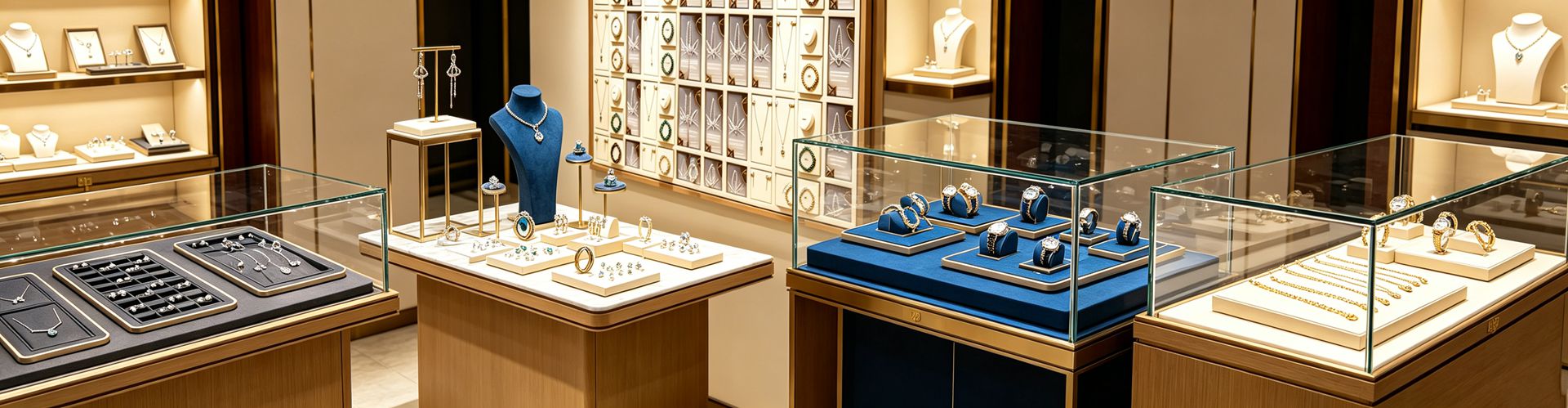
For a brand, opening a permanent store is expensive, slow, and risky; a pop-up tests the market, makes noise, and reaches Gen Z at a fraction of the cost. It is not a stall but a timed brand experience. Separate data shows 51 percent of brands intended to raise experiential-marketing spend between 2024 and 2026, with pop-ups as the core vehicle. Jewelry already has proof points: Shenzhen Shuibei's "Pearl Bar" pop-up drew 2,100 visitors in two weeks, 68 percent of whom had never bought pearls, and still converted 31 percent online at an average ticket of 4,700 yuan with a 1-to-4.6 ROI; designer label Yvmin moved its "Metal Garden" into Chengdu SKP, pulling 17,000 visitors in five days, with an average dwell of 22 minutes and high-ticket items making up 43 percent of sales; HEARTS & GEMS ran a 72-hour pop-up in Hangzhou with 1.13 million yuan in sales, a top ticket of 58,000 yuan, and 2.4 million social impressions. The shared lesson: in-person experience cut high-end price sensitivity by about 10 percent and dropped returns from 12 to 4 percent. Shenzhen Junyimei notes the shift plainly: a pop-up turns packaging and display from a back-office cost into a front-line customer-acquisition tool, and whether the props are placed well or the box photographs well is written straight into that day's numbers. The temporary store also feeds the channel after it closes: founders of other categories report making sales for the whole following month from people they met in person, because once a shopper trusts the brand and the quality, buying online feels safe. A pop-up is thus top-of-funnel for e-commerce, not a rival to it.
Q2. Why can't a pop-up just reuse a permanent counter's props?
A permanent counter stays for years, so its props can be heavy. A pop-up typically runs 15 to 30 days, then moves from a mall atrium to a cultural district, with the space, footprint, and traffic flow all changing. Props must be modular, knock-down, and easy to ship, assembled like Lego into different scenes. One brand's "1 plus 3" playbook rents an 80 to 120 square-meter atrium and cuts fixed cost by 30 percent through revenue-share plus a guarantee. Shenzhen Junyimei builds knock-down jewelry display props and jewelry display stands for such clients: one frame with swappable panels and shelves serves multiple cities. Modularity also means the same props are reused across cities and waste falls, which dovetails with a brand's sustainability story; a knock-down frame that ships flat saves the freight that would otherwise erase the pop-up's margin. The cautionary tale is equally clear: hauling a permanent counter's heavy props to a pop-up eats the margin in setup and freight alone, and the look sags before closing day, with customers remembering the cables on the floor rather than the jewelry.
Q3. How does the time limit turn a passer-by into a buyer?
A pop-up sells the scarcity of "miss it and it's gone." One Gen Z study compares three formats: a regular store averages 45 minutes of dwell, 8.5 percent conversion, and 12 percent spontaneous sharing; an open pop-up 20 minutes, 24.3 percent, 35 percent; a timed-and-limited pop-up 12 minutes, 41.7 percent, 68 percent. The shorter the dwell, the higher the conversion and sharing, because the deadline flips people from comparing prices to claiming ownership. Worth noting, a pop-up is not "shorter is better"; it is the combination of timed, limited, and place-bound that triggers ownership. A bare time limit without an exclusive product reads like a clearance sale, not a cultural moment, and scarcity turns cheap. But a short dwell also sets a hard bar: the product must be the hero in seconds, and props and packaging cannot steal the scene, so a visitor understands within seconds what this is and why it is worth buying now. Yet a short dwell is not an excuse to skip trust: the same study shows conversion still hinges on try-ons and staff who know the brand, because compression without credibility just produces a queue for the next stall. The pop-up trades time, not substance.
Q4. Why does high-end minimalism win in a pop-up?
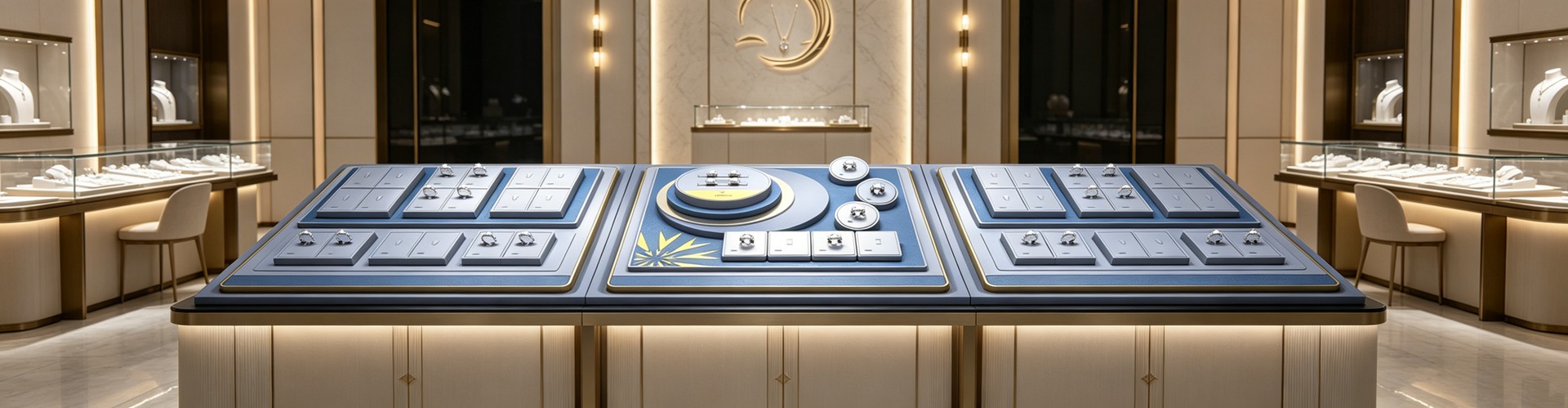
Pop-up crowds are mixed, dwell times are short, and everyone films with a phone, so a brand must be recognizable within seconds. All-over foil and dense patterns turn to noise, even moire, under mall lighting on a small screen; a solid matte color with one clean mark reads from five meters and survives a thumbnail. This is exactly the path Shenzhen Junyimei insists on: minimalism is not cheapness, it is moving budget from surface ornament to structural tolerance, edge fold within 0.2 millimeters and batch color difference visible at a glance. A second overlooked point: pop-up lighting is mixed in color temperature and uncontrolled in angle, so a busy box surface throws highlight noise that fights the jewelry for the brightest spot on screen; a plain matte surface hands the light back to the product. Shenzhen Junyimei bakes these on-site unknowns into box tolerances and surface choices before a single unit ships. Putting a solid-color box on a pop-up table is a public demonstration of quality control; jewelry box customization here means building identity into physical specs, not just adding a logo, so the box itself becomes a mobile business card. Minimalism also pays off logistically: fewer fragile decorations means less to break in transit and faster setup on a tight retail window, which matters when the whole activation may run two weeks and every day closed is a day of rent paid for nothing.
Q5. How should pop-up packaging be designed to be carried away and shared?
A pop-up lives on social media. Packaging should be light, portable, and worth keeping as a limited keepsake; a customer who carries it and posts it is a moving ad. The cheapest high-leverage move is an opaque, reusable jewelry pouch printed with one clean mark, a few to a dozen yuan, still speaking for the brand after leaving the store. A limited-edition jewelry gift box becomes proof of the visit; people photograph the minimal box as much as the piece inside. A limited box paired with a numbered card also turns one pop-up into a collectible memory, and some customers collect different cities' limited boxes. Jewelry packaging design here budgets backwards and should reserve that "city memory" landing spot: swap the pouch and lining color first, then consider foil and ribbon, spending every cent on being seen and taken. The pouch in particular does double duty: it is both the post-event ad and the prop for the unboxing video customers film at home, so a plain, well-made pouch out-performs a fancy one that photographs muddy under a phone flash.
Q6. How can a small brand run a pop-up on a tiny budget?
You do not need a whole atrium floor. Share a mall market slot, borrow exhibition traffic, or rent modular props, and you can start for a few thousand yuan. An even lighter move is to borrow a mature market or shared retail space, bringing only one modular prop set and a batch of pouches to open on a few square meters. Packaging leverages just as cheaply: an opaque reusable pouch plus a numbered card plus a QR verification page prevents swap-outs and becomes social currency. Shenzhen Junyimei supports small-batch flexible production, a few hundred pouches with swapped color, mark, and lining, tested for one round of feedback before scaling, even letting a few hundred pouches land before the formal packaging so the "carried away" loop runs first. The economics flatter the format too: roughly 54 percent of pop-up owners report higher sales than in traditional retail space, because the temporary store concentrates spend on experience rather than square footage, and a small brand can out-flex a large one that is locked into a lease.
The conclusion is plain: a pop-up is won not by square meters but by three things, being remembered, being carried, and being re-shared; when the booth is torn down and the props boxed, the box and the pouch are the only things still speaking for you.This is original content. Copyright belongs to Shenzhen Junyimei.
Junyimei — present every jewel and timepiece at its best.
2026年上半年,全国新开快闪店2130家,同比增长44.9%;月均在营快闪店从2024年上半年的113家增至355家,两年增长近三倍。全球快闪店市场规模2025年约120亿美元、同比增长35%,预计2026年突破150亿美元。当正式门店还在比谁地段好,珠宝品牌已经悄悄把“临时店”当成了新主场。据行业统计,80%开过快闪店的零售商认为它成功,58%到67%计划再开一家——这说明限时店已从一次性营销,变成一条可复制的体验产品线,而不是临时凑热闹。
一问:珠宝品牌为什么突然爱开快闪店?
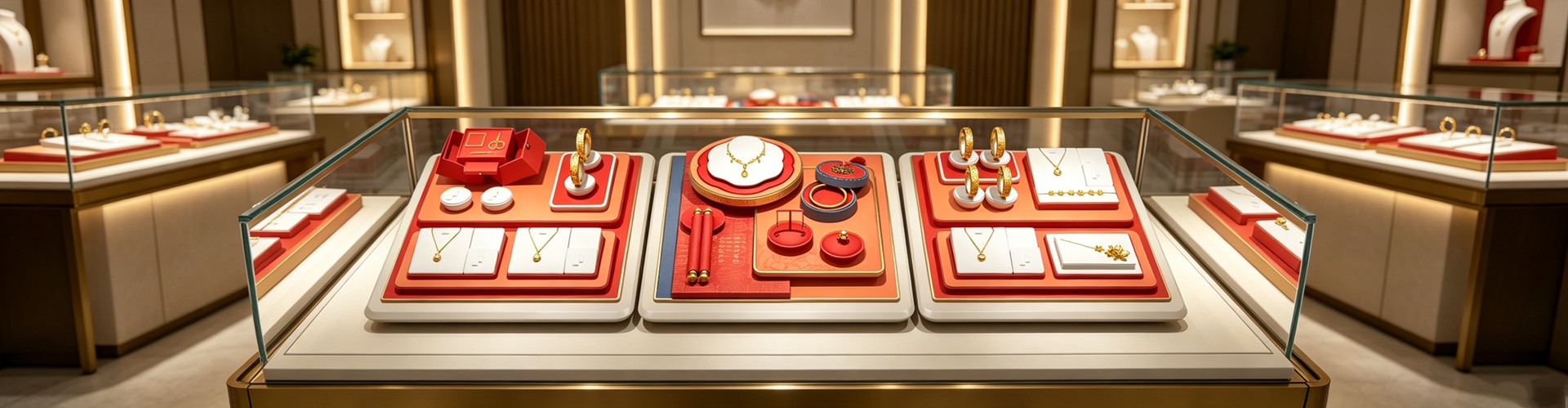
对品牌来说,开一家正式门店投入大、周期长、风险高;快闪店用低得多的成本测试市场、制造话题、接住Z世代。它的本质不是“摆摊”,而是一场限时品牌体验。行业数据还显示,51%的品牌计划在2024至2026年间增加体验式营销投资,快闪店正是其中的核心载体。珠宝行业已经有样板:深圳水贝的“Pearl Bar”珍珠快闪两周吸引2100人到店,其中68%此前从未买过珍珠,最终线上转化率达到31%,客单价均值4700元,ROI高达1比4.6;设计师品牌Yvmin把“金属花园”搬进成都SKP,5天1.7万客流、平均停留22分钟、高客单产品成交占比43%;HEARTS & GEMS在杭州湖滨银泰做72小时快闪,三天卖出113万元、最高客单价5.8万元、社交平台话题曝光240万。一条共同经验是:线下体验把高端价格敏感度降低约10%,退货率从12%降到4%。深圳骏依美在旁观察到一个变化——快闪店让包装与陈列从“后台成本”变成了“前台获客武器”,道具摆得对不对、盒子好不好拍,直接写进当天业绩。
二问:快闪店的陈列道具,为什么不能照搬常驻柜台?
常驻柜台一用三五年,道具可以重;快闪店通常只开15到30天,今天是商场中庭、下周是文旅街区,场地、面积、动线全在变。道具必须模块化、可拆装、好运输,像乐高一样拼出不同场景。某品牌的“1加3”打法租用80到120平方米中庭、用流水分成加保底把固定成本降了30%。深圳骏依美给这类客户做可拆装的珠宝陈列道具与珠宝展示架:同一套骨架配可换面板与层板,一套道具能连打多城。模块化还意味着同一批道具跨城复用、浪费更少,正好和品牌的可持续叙事对得上。反面教训也很清楚——拿常驻柜台的重道具去快闪,光搭建和运输就吃掉利润,展陈颜值还没撑到闭店就先塌了,顾客记住的不是珠宝而是满地线缆。
三问:限时性怎么把“路过”变成“下单”?
快闪店卖的就是“错过即亏”的稀缺感。一份Z世代消费研究把三类场景放在一起对比:常规门店平均停留45分钟、转化率8.5%、顾客自发分享率12%;开放式快闪20分钟、24.3%、35%;限时限量快闪12分钟、41.7%、68%。停留越短,转化和分享反而越高——因为限时把人从“比价”模式切到了“占有”模式。值得注意的是,快闪店不是越短越好,而是“限时加限量加限地”组合才触发占有欲;如果只是单纯缩短营业时间、却没有独家货,顾客读到的只是清库存的促销感,稀缺变成廉价。但凡停留短,就提出硬要求:货必须第一时间当主角,道具和包装不能抢戏,几秒内要让顾客看懂“这是什么、为什么值得现在买”。
四问:高端简约在快闪店为什么更吃香?
快闪店人流杂、停留短、人人举手机拍,品牌要在几秒内被认出。满版烫金、细密印花在商场混光加手机小屏下,容易糊成噪点甚至摩尔纹;纯色哑面加一枚干净标识,五米外可辨、缩略图也清楚。这正是深圳骏依美一直坚持的思路:高端简约不是省成本,是把预算从表面花纹挪到结构公差——折边误差小于0.2毫米、批次色差一眼可查。还有一个被忽略的点:快闪店灯光色温混杂、角度不可控,繁复盒面在射灯下高光噪点直接跟珠宝抢“画面最亮点”;纯色哑面把光让给货。深圳骏依美把这类现场不可控因素,提前做进盒子公差与表面工艺的选择里。敢在快闪现场放纯色盒,等于公开演示品控;珠宝盒定制在这里不是简单加个logo,而是把识别做进物理指标,让盒子本身成为品牌的移动名片。
五问:快闪店的包装,怎么设计才“带得走、晒得出”?
快闪店的生命在社媒。包装要轻、便携、能当限定纪念——顾客拎着走、拍着发,就是移动广告。最划算的一步,是一只用不透光、可复用首饰袋,只印一枚干净标识,几元到十几元,离店之后还在替品牌说话。限定版饰品包装盒则成为打卡证据,有人会专门为一枚素圈配的极简盒拍照;限定版包装加编号卡,还能把一次快闪变成可收藏的纪念,甚至有人专门收集不同城市的限定盒。珠宝包装设计在这里要倒着排预算,还要预留这张“城市记忆”的落点:先换袋子和内衬颜色,再考虑烫金与缎带,把每一分钱花在“被看见、被带走”上。
六问:小品牌怎么用小预算开快闪?
不必包下整层中庭。共享商场市集位、借展览流量、用模块化道具租赁,几千元就能起步;更轻的做法是借成熟市集或共享零售空间,只带一套模块化道具和一批袋子,摊几平方米就能开张。包装侧同样可以低成本撬动:不透光可复用首饰袋加编号卡加二维码验真页,既防掉包又成社交货币。深圳骏依美支持小批量柔性生产——几百只换色、换标、换内衬,先跑一轮反馈再放量,甚至让几百只袋子先于正式包装到位,先把“被带走”这条链路跑通。结论很朴素:快闪店拼的不是面积,而是“被记住、被带走、被再晒”这三件事;当展位拆掉、道具装箱之后,盒子和袋子是唯二还替你说话的东西。
本文为原创内容,版权归深圳骏依美所有,转载请注明出处。
骏依美——让每一件珠宝与腕表,都被更好地呈现。