When China's Jewelry Capital Learned to Live Stream水贝的云端货架
On the afternoon of August 14, 2026, on the fifth floor of Shuibei No.1 in Luohu, Shenzhen, an event called the "E-commerce Live-streaming Season" was underway. On stage were operations managers from Douyin and Taobao; in the audience sat executives from Chow Tai Fook, Laofengxiang's peers, and Glamond. A decade ago, such a gathering would have been about gold prices, wholesale margins, and export orders. Today, the keywords were "city IP," "virtual host," and "over two million viewers in a single session."
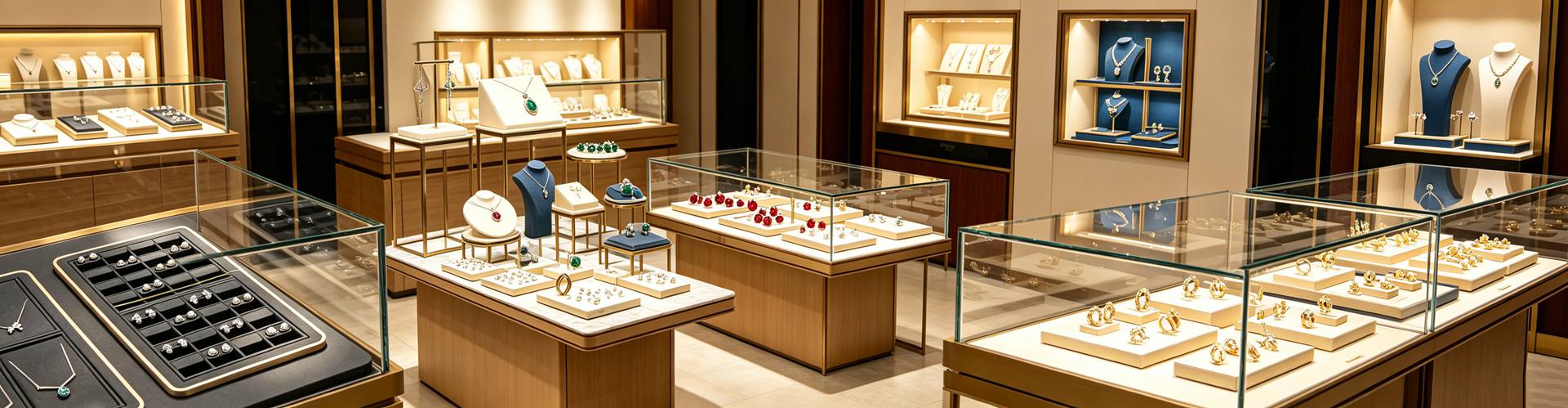
Shuibei is living through the quietest yet most thorough transfer of power in its history.
A number people underestimate
Shuibei is China's largest and most complete gold-and-jewelry cluster: over 9,000 enterprises, more than 70,000 workers, and an annual industrial scale above 200 billion yuan. But the figure worth pausing on is another: since the first E-commerce Live-streaming Season launched in 2023, related sales climbed from 130 million yuan to 800 million yuan in 2025; and the recent "Shuibei Love · Romantic Qixi" live session topped 1 billion yuan across two platforms.
In three years, an industrial belt built to serve wholesalers and counters grew an entirely new channel inside live rooms. What it sells is not cheapness, but trust that is "what you see is what get."
From world factory to cloud storefront
For four decades, Shuibei's core advantage was comprehensiveness and speed: raw materials, design, manufacturing, testing, and packaging all in one place, able to answer any global order. That capability earned it the title "world factory."
But live commerce rewired how goods meet people. In the past, a ring would not face an end consumer until it sat under counter lighting in a department store. Now, still being polished by a craftsman, it is already pushed onto millions of phone screens by a camera. The host explains the craft, reads out the price, the certificate, the gram weight—and the purchase link hangs below.
This is not merely "one more sales channel." It pulls the power to explain pricing and tell brand stories out of the layered distribution system and puts it directly into the hands of the source. Shuibei stops being the backstage "others design, we OEM" role and starts facing the market and telling its own stories.
Platforms enter, counters never close
Platforms are the accelerant. Douyin launched the "Heartbeat Shuibei" city IP with four privileges—mall×search, top-creator sourcing, trending charts, and category upgrades. Taobao enabled "Shuibei virtual hosts" for 24-hour non-stop streaming. When a store can broadcast at 3 a.m. via a digital persona, the concept of store hours collapses.
Earlier experiments already show numbers: Taobao's "Live China" brought nearly a hundred accounts into Shuibei, with a single session drawing over two million viewers and driving seven-figure sales. For small merchants, this means reaching a national audience without betting on a prime-location storefront.
A national shift, concentrated in one district
What happens in Shuibei is a concentrated version of a national turn. China's online jewelry market has grown into the hundreds of billions of yuan, with live commerce the fastest-rising slice. For decades the country's jewelry trade was described in terms of tonnage and store count; today the unit of momentum is the viewer and the second. The districts that learn to convert attention into trust—not just clicks into orders—will own the next decade of the category. Shuibei's bet is that manufacturing depth, once hidden behind wholesale counters, is itself a story worth telling directly to the people who will wear the result.
People changed more than goods
When the channel changed, the people on the floor had to change too. Luohu's "Live-streaming Elite Training Plan," built on AI night schools, has trained 129 e-commerce hosts with over 80 percent employment and a top monthly income above 30,000 yuan. At a recent job fair, 45 companies posted over 800 positions, 259 of them live-commerce related, with "one-person company" incubation on top.
The jewelry sales profession is shifting from a script-reciting clerk who waits for customers to a hybrid role that understands product, content, and empathy. A host must be craft explainer, emotional value, and trust broker at once—a microcosm of the industry moving from extensiveness to value depth.
Why jewelry, of all categories
Live commerce is not new; what is new is jewelry's embrace of it. Jewelry is a high-consideration, trust-sensitive purchase—exactly the kind long thought to resist online selling. Live rooms close that gap by recreating, in compressed form, what a good counter used to provide: a person who explains, a light that shows the fire of a stone, a certificate read aloud. For a category where return rates online have run as high as 15 to 20 percent, the host's real job is to shrink the distance between "looks good on screen" and "looks good in hand." That is why the most successful jewelry live rooms invest less in hype and more in proof: macro lenses, calibrated lighting, and an unhurried comparison of two pieces side by side.
Culture becomes the new moat
Live commerce amplifies not just sales but cultural expression. At the event, a heritage-themed show brought chasing, filigree, and Zheng's gold-smithing onto the stage. Glamond partnered with "China in Intangible Heritage," Chow Tai Fook with "National Treasure," and Laofu with the Summer Palace, activating Chinese aesthetics through "cultural IP + jewelry." The 2026 jewelry design competition received 442 original submissions from 12 countries and regions, with winners entering mass-production talks with top brands.
The screen rewards coherence: a piece with a real story, a maker who can name the technique, and a box that looks like it belongs to the same world. Audiences may forgive a higher price far more readily than they forgive a mismatch between the narrative and the object in hand.
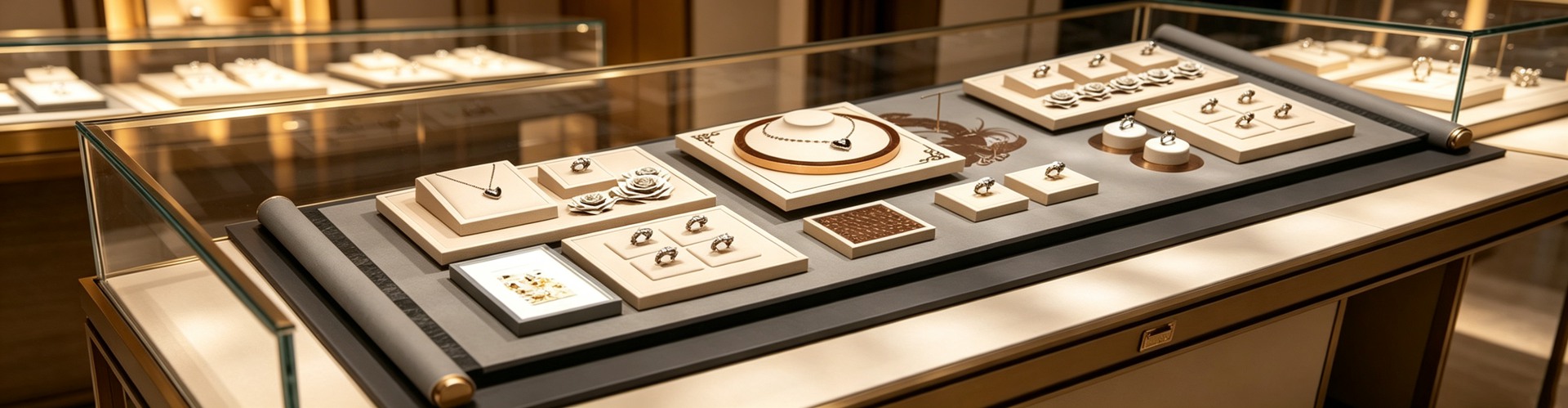
When "OEM" starts growing "original," Shuibei's narrative shifts from "I can make it" to "I understand Chinese aesthetics."
The box becomes part of the broadcast
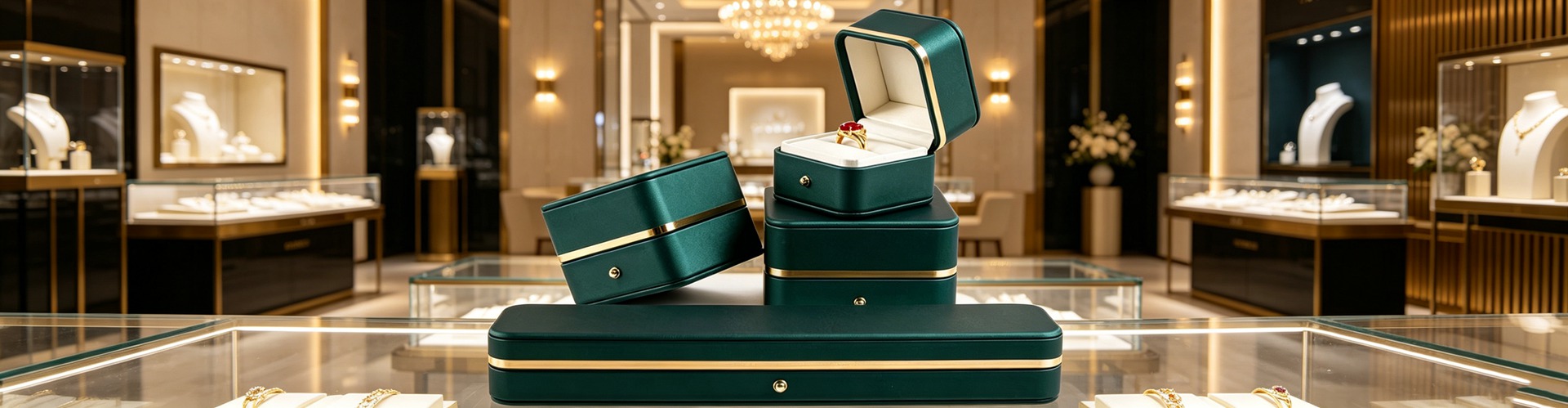
One quiet consequence of moving sales online is that the package is no longer a backstage item—it is now on camera. Viewers watch the host open the box, lift the jewel from its cushion, and slip it into a pouch. That moment is where a brand is either confirmed or quietly undermined. A flimsy lid, a misaligned hinge, or a garish interior does more damage live than it ever did in a silent shipping carton. The same discipline that defines good physical retail—structure before surface, tolerance over ornament—now defines good live retail. The box must read well in a thumbnail, survive a parcel's journey, and still look intentional when a customer films their own unboxing three days later.
A sober note for the industry
Behind the spectacle, a few facts deserve clarity. First, screens magnify everything and conceal everything: impulsive live-commerce decisions average just 3.2 minutes, far shorter than calm offline comparison, which also pushes up jewelry return rates. Traffic brings orders but not trust, which still must be earned through materials, certificates, and long-term reputation. Second, the late-2025 gold tax reform ended the "price valley," making pure low-price volume models unsustainable; the pivot must be to design, craft, and culture. Third, live commerce decentralized traffic but not brands—being able to make goods now requires being able to make content, raising the survival bar for small merchants.
The gap between a polished live persona and the product that arrives is where reputations are won or lost. A host can promise everything in three minutes; the box, the certificate, and the after-sales policy are what the customer actually receives. Brands that treat the live room as the start of a relationship rather than a one-night sale are the ones building durable equity. In a category where a single bad unboxing video can outrank a month of broadcasts, the unglamorous back-end—packaging integrity, traceable sourcing, responsive service—is the real moat.
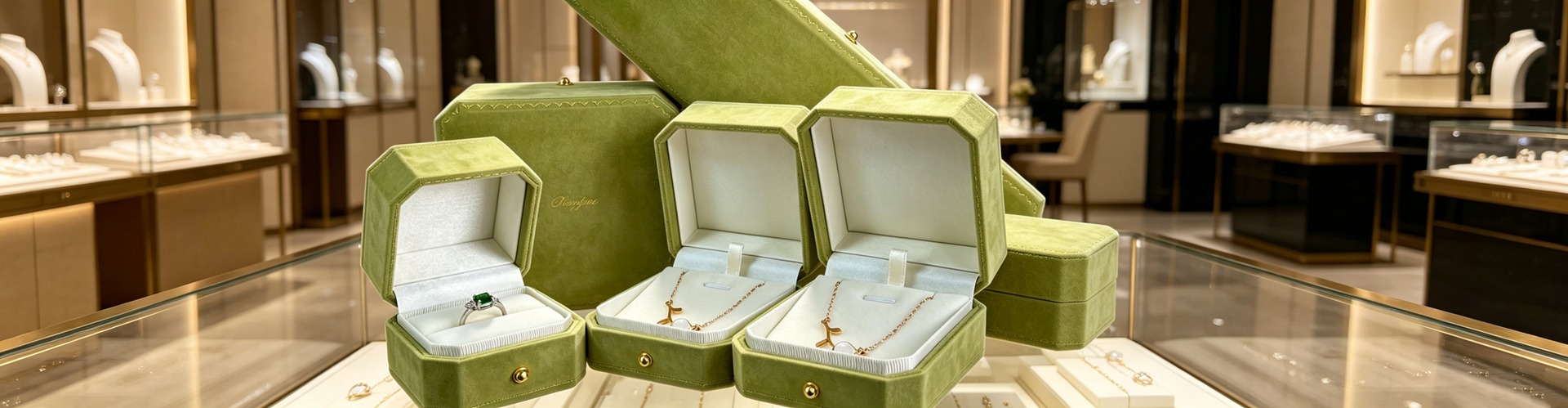
Yet however the channel evolves, the goods ultimately land in a box, leave in a pouch, and get opened in front of a camera. Live commerce moved "unboxing" and "display" from offline counters to the cloud; what consumers see through the screen is never a lone jewel but the jewel plus its entire container and ritual. A structurally solid jewelry box that holds up under harsh light, survives shipping, and speaks for the brand on camera is the invisible closer of the live room; an opaque, reusable jewelry pouch completes a mobile reveal in the host's hand, carrying the brand out of the screen into daily life. Jewelry packaging design thus ceases to be an appendage and becomes part of the content. In Shenzhen, Shenzhen Junyimei shifts budget from ornament to structural tolerance, keeping packaging dignified even under macro-close, strong light—perhaps the most plain yet hardest definition of "good packaging" in the live-streaming era.
Shuibei's story continues. From world factory to cloud storefront, it took three years to prove that in the jewelry business, the real shelf was never inside the glass case, but on everyone's phone screen.
This is original content. Copyright belongs to Shenzhen Junyimei.
Junyimei — present every jewel and timepiece at its best.
2026年8月14日下午,深圳罗湖水贝壹号五楼。一场名为“电商直播季”的专场推介会正在进行。台上是抖音和淘天的运营经理,台下坐着周大生、周六福、甘露珠宝的负责人。十年前,这样的场合谈的只会是金价、批零差价和出口订单;今天,关键词换成了“城市IP”“数字人主播”和“单场观看超两百万人次”。
水贝正在经历它建镇以来最安静、却也最彻底的一次权力转移。
一个被低估的数字
水贝是中国规模最大、产业链最完整的黄金珠宝集聚区:现有企业9000余家,从业人员7万余名,年产业规模超2000亿元。但真正值得玩味的,是另一组数字——自2023年首届电商直播季启动以来,相关销售额由1.3亿元一路增至2025年的8亿元;而刚刚过去的“水贝之恋·浪漫七夕”直播专场,双平台总销售额超过10亿元。
三年时间,一个原本只服务于批发商和柜台的产业带,硬生生在直播间里长出了一条新渠道。它卖的不是便宜,而是“所见即所得”的信任。
从世界工厂到云端卖场
过去四十年,水贝的核心竞争力是“全”和“快”:从原料、设计、加工到检测、包装,一站式完成,全球订单都能在这里找到供应链答案。这套能力支撑了它“世界工厂”的地位。
但直播改变了货与人的连接方式。过去,一颗戒指要等到出现在百货柜台、被灯光照亮,才第一次面对最终消费者;现在,它还在师傅手里打磨,就已经被镜头怼到了千万人的手机屏幕上。主播一边讲解工艺,一边把价格、证书、克重念出来,下单链接就挂在屏幕下方。
这不是简单的“多了一个卖货渠道”。它把定价的解释权、品牌的叙事权,从层层分销体系里抽出来,直接交到了源头手里。水贝不再是“别人设计、我来代工”的幕后角色,而开始学会自己面对市场、自己讲故事。
平台入场,柜台永不打烊
在这场蜕变里,平台是加速器。抖音电商推出“心动水贝”城市IP,配套商城×搜索、头部达人溯源、热点冲榜四大权益;淘天集团则启用“水贝数字人主播”,实现24小时不间断直播。当一家店铺可以靠数字人做到“凌晨三点仍在开播”,传统柜台的营业时间概念就被彻底打破了。
更早的探索已经跑出数据:淘天“直播中国”联动近百个账号走进水贝,单场观看超200万人次,带动成交破百万元。对中小商户而言,这意味着不用再押注一个黄金地段的门店,也能触达全国客群。
人的重构比货更剧烈
渠道变了,岗位上的人也得变。罗湖区“直播菁英人才培育计划”依托AI夜校,已累计培养电商直播人才129人,就业率超80%,每月最高直播收入超过3万元;招聘会上,45家企业一次性放出超800个岗位,其中直播相关259个,还配套“一人公司”创业孵化。
珠宝销售这个职业,正在从“背话术、等客来”的营业员,转向“懂产品、会内容、能共情”的复合角色。一个主播要同时是工艺讲解员、情绪价值和信任中介——这恰是行业从粗放走向价值深耕的缩影。
文化成为新的护城河
直播放大的不只是销量,还有文化表达。推介会上,非遗主题秀《非遗之韵》把錾刻、花丝、郑氏金银细工搬上舞台;甘露珠宝携手《非遗里的中国》、周大生联名“国家宝藏”、周六福合作颐和园,用“文化IP+珠宝载体”激活中式美学。2026珠宝首饰设计大赛收到来自12个国家和地区的442件原创投稿,获奖作品已进入与头部品牌的量产对接。
当“代工”开始长出“原创”,水贝的叙事就从“我能做”变成了“我懂中国审美”。
留给行业的清醒
热闹之下,有几个事实需要被看清。其一,屏幕会放大一切,也会掩盖一切:直播间的冲动决策平均只有3.2分钟,远低于线下的从容比对,这也推高了珠宝品类的退货率。流量能带来订单,却买不来信任,后者仍要靠材质、证书和长期口碑来兑现。其二,2025年底黄金税收新政终结了“价格洼地”,单纯靠低价走量的模式难以为继,必须转向卖设计、卖工艺、卖文化。其三,直播去中心化了流量,却没有去中心化品牌——会做货更要会做内容,中小商户的生存门槛反而被抬高了。
而无论渠道怎么变,货最终要落到一只盒子里、被一只袋子带走、在镜头前被拆开。直播把“开箱”和“陈列”从线下柜台搬到了云端,消费者隔着屏幕看到的,从来不是孤零零的珠宝,而是珠宝加它整套的容器与仪式。一只结构扎实、强光下不穿帮、运输中不塌损、镜头前替品牌说话的首饰盒,才是直播间看不见的成交推手;不透光、可复用的首饰袋在主播手持的瞬间完成一次移动露出,把品牌带出屏幕、带进日常生活。珠宝包装设计因此不再是货品的附庸,而是内容的一部分。在深圳,深圳骏依美把预算从花纹挪到结构公差,让包装在微距强光下依然体面——这恰恰是直播时代对“好包装”最朴素也最硬的定义。
水贝的故事还在继续。从世界工厂到云端卖场,它用三年时间证明:珠宝这门生意,真正的货架,早已不在玻璃柜里,而在每个人的手机屏幕上。
本文为原创内容,版权归深圳骏依美所有,转载请注明出处。
骏依美——让每一件珠宝与腕表,都被更好地呈现。