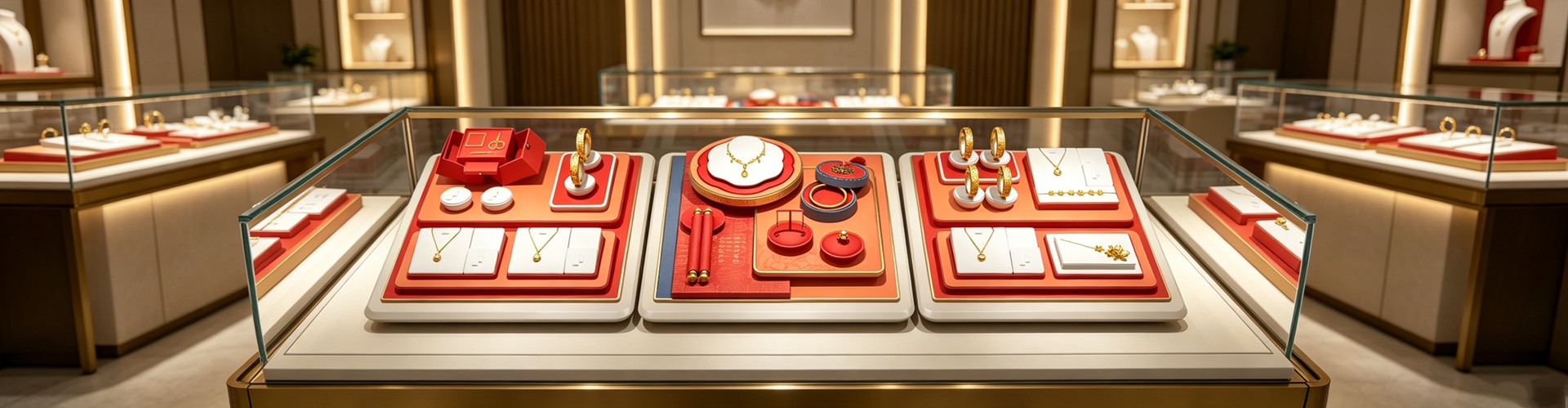
For decades, when Chinese consumers thought of fine jewelry, they pictured a gilded storefront and a counter that priced everything by the gram. Then came Singles' Day 2026, and a quiet but unmistakable signal: original designer jewelry crossed 100 million RMB in GMV for the first time, up nearly 50 percent year on year. Searches for the word "design" rose 50 percent. Light jewelry, neo-Chinese style, and tech-crossover became the three breakout aesthetics. For the first time the industry could see it clearly — pricing power is quietly migrating from grams and materials to design and taste.
This shift is structural, not sentimental. The China Gems and Jade Association forecasts national jewelry retail above 780 billion RMB in 2026, with Gen Z approaching 23 percent of spending. Yet growth is no longer a solo act for the big chains. The market has moved from a single "pyramid" to an "ecological rainforest" — international luxury houses localizing, heritage gold shops launching youthful sub-brands and signing avant-garde designers, and independent designers thriving inside tight-knit circles. A wave of brands capturing "emotional value for the price" accelerated: POPOP, Pop Mart's lightweight-luxury jewelry line, deconstructs IPs like LABUBU and DIMOO into non-repeating wearable pieces and has opened nine stores nationwide, with its Chengdu IFS branch welcoming over a thousand shopping groups on opening day; the exhibition-style buyer store VOIR LAB works with nearly 100 domestic and overseas designer brands and refreshes assortments at least monthly; Eastern-aesthetic newcomers like Bailan, Baodeyi, and Xianyuan posted strong results on minimalist design and high repurchase; Junpei and Baolan lean on heritage craft to sit alongside international houses in top malls. They are the industry's most important source of innovation, and for three years its most underestimated force.
At the root is a relocation of design's value. Designers used to be supporting actors who "prettified" a product. Today a successful independent designer is the brand's core asset and its traffic source. The value lives not only in the finished object but in the concept, the story, and the whole aesthetic system behind it. When brands partner with galleries, museums, and fashion media, design gets discussed and valued at the level of art and culture. A piece of jewelry no longer sells just its gold weight — it sells a materialized point of view, which is exactly why young buyers pay for "one of a kind" rather than for a weight table. Commercially, this flips the old math. A gram of gold is priced by a global spot quote no brand controls; a point of view is priced by the brand that owns it. That move from a commodity margin to a brand margin is the quiet reason investors and retailers alike have stopped treating design as decoration and started treating it as strategy. When the margin lives in the idea and not the metal, the designer stops being a cost center and becomes the profit center — and the whole incentive structure of the industry tilts accordingly.
The numbers argue louder than adjectives. Across the 2026 shopping festival, original designer jewelry passed 100 million RMB, up nearly 50 percent; daily searches for "design" rose 50 percent in both volume and frequency. Light jewelry — precise craft at accessible prices — became a mainstream style with nearly 100 million RMB in sales and double-digit growth; OOAK's "Levis Lace" series alone broke 10 million RMB, with over 20,000 pieces sold above 500 RMB each. Neo-Chinese styles shone too, with bead-and-natural-stone designs up close to 50 percent. YOOMOO turned apple cores and peels into hairpins; MAXIU folded plum blossoms and fans into earrings. HEFANG, Ciga Long, and Lazy Suri supplied half the viral livestream hits, while debutant Xuchun cleared a million on its first festival. Even "future-tech" found a breakout — wearable-tech earring label OF HUNGER grew over 200 percent year on year. Small but beautiful, for the first time, proved itself at scale.
Why now? Four gears meshed at once. First, Gen Z wants individuality, not matching sets; niche culture turns "small" into "identity," and matching someone else feels worse than overpaying. Second, Douyin, Xiaohongshu, and Bilibili let small brands bypass multi-tier distribution and reach users directly; livestreaming became a stage to show craft and tell a brand story, not just a checkout. Third, mature supply chains in Shuibei and Panyu, with CNC and precision electroforming now standard, let indie labels execute complex designs once reserved for majors, sharply lowering the barrier to original production. Fourth, the spine of demand shifted from "bridal necessity" to "self-pleasure," opening everyday-wear occasions entirely and giving design far more room to play.
Of course, the rise has an underside. Independent designer brands enjoy high margins but limited scale; their pain points cluster around homogenization, raw-material price swings, and rent and labor costs. The more telling detail is a mismatch in footsteps: since 2025, leading chained retailers have pursued "store-closing for efficiency," shutting weak street shops and counters to reinvest in experience stores in prime catchments. Yet a batch of designer-style players expanded against the tide — POPOP's nine stores, VOIR LAB in several luxury malls. Capital is re-betting too: 2026-2030 industry investment theses name "emerging design brands and digital-native forces" as a priority, viewing labels built on originality, accessible-luxury pricing, and strong social operations as high-resilience assets through the cycle. What survives repeats the same formula: differentiated cultural design, online traffic operations, high-margin niche categories, and turning "one purchase" into "a relationship" through private-domain care.
The real moat is not a single hero product but a community. Unlike chained retailers that measure success in transactions, designer brands measure it in relationships. They run private WeChat groups where members see sketches before launch, vote on colorways, and co-create limited runs; they turn buyers into a standing audience that shows up for every drop. This is why repurchase and word-of-mouth — not discounting — carry the model. When a customer helps design the piece, the endowment effect kicks in and the object becomes "mine" long before it is worn. The brand stops being a vendor and becomes a member of the customer's taste tribe, which is a far harder position for a price-cutting competitor to dislodge.
Not every label wearing the "designer" badge will last. The 2026 shakeout is precisely a test of authenticity. Brands that chase trends with shallow styling get exposed the moment the aesthetic rotates; those anchored in a coherent point of view — a recognizable silhouette, a material they own, a story they can tell without a press release — compound trust over years. Looking toward 2026-2030, the winning shape looks less like a pyramid and more like a federation: a few scaled houses at the top, a long tail of distinctive studios beneath, and supply chains flexible enough to serve both. Design has earned a seat at the pricing table. The question is no longer whether it matters, but which designers will still be named a decade from now.
What makes the moment possible is a quiet reorganization of the value chain. A studio with no factory of its own can still launch a collection: design lives in the studio, prototyping is handled by flexible suppliers in Shuibei and Panyu, sales happen on Douyin and Xiaohongshu, and presentation is outsourced to a custom-box maker. The barrier that once protected big houses — control of production — has been unbundled and reassembled as a service. That lowers the cost of trying, which is exactly why so many new names appear each season. It also raises the cost of being forgettable, because the same infrastructure is available to everyone. In a market this open, only a point of view travels.
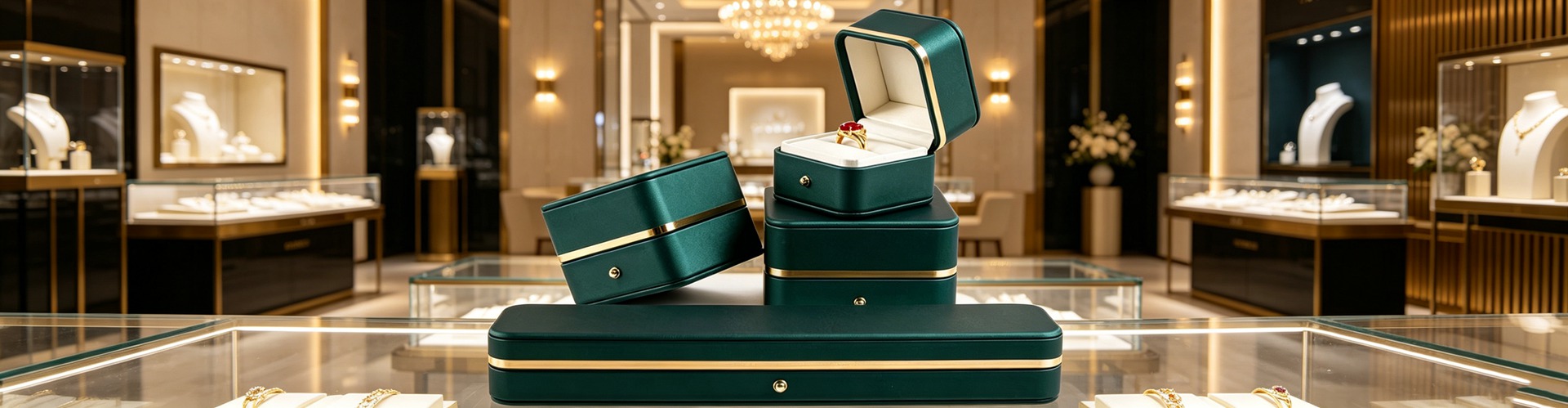
One overlooked detail: designer brands don't sell gold, they sell attitude. When the product is already a strong statement, packaging cannot upstage it or undercut it. Jewelry packaging design and custom jewelry boxes therefore become the brand's "second business card" — restraint on the surface, a smooth opening, lining colors tuned to the brand's aesthetic, all speaking for the label. Many new names move budget from ornament to structural tolerance, precisely on this logic. And a customization-focused supply chain like Shenzhen Junyimei can absorb that "even one piece must be perfect" demand through small-batch flexible prototyping — designers see the box before finalizing, far cheaper than tooling first and rescuing later. As pricing power hands itself to design, the bar for presentation quietly rises. The studios that win will be those who treat the box, the card, and the unboxing as part of the design language rather than an afterthought — because in a category where the product is a point of view, the package is the first sentence the customer reads.
This is original content. Copyright belongs to Shenzhen Junyimei.
Junyimei — present every jewel and timepiece at its best.
过去提到珠宝,人们脑中先浮现的是金店的金字招牌和按克计价的柜台。但 2026 年的天猫双11,一个安静却清晰的新信号出现了——原创设计师饰品的成交额第一次冲过亿元,同比增长近 50%。当"设计"二字的日均搜索量较去年上涨 50%,当轻珠宝、新中式、科技风成为三大爆发风格,行业第一次清楚地看到:珠宝的定价权,正从"克重与材质"悄悄移交给"设计与审美"。
这种迁移不是情绪,而是结构。中国珠宝玉石首饰行业协会预测,2026 年全国珠宝首饰行业零售总额将突破 7800 亿元,其中 Z 世代消费占比有望逼近 23%。但增长早已不是头部连锁品牌的独角戏。市场格局正从一座"金字塔"变成一片"生态雨林"——国际奢侈品牌深耕本土化,老牌金店用年轻子品牌和先锋设计师突围,而独立设计师品牌则在特定圈层里活得有声有色。一批精准捕捉"情价比"的新势力加速涌现:泡泡玛特旗下轻奢珠宝 POPOP 把 LABUBU、DIMOO 等 IP 解构成不撞款的可穿戴珠宝,全国已落 9 店,成都 IFS 店开业当天迎千组消费者;展览型买手店 VOIR LAB 合作近 100 家国内外设计师品牌,各店保持每月至少一次上新;白岚、宝得意、显愿等东方美学新锐凭极简设计与高复购跑出亮眼业绩;君佩、宝兰等深耕古法工艺,借非遗与国际视野在高端商场与国际大牌同台。它们是市场创新最重要的源头,也是过去三年里最被低估的一股力量。
变化的根本,是设计价值的位移。过去设计师是"美化产品"的配角,今天成功的独立设计师本身就是品牌的核心资产与流量来源。设计的价值不只落在最终那件产品上,更在于它背后的概念、故事与一整套美学体系。当品牌开始与画廊、美术馆、时尚媒体合作,设计就被抬到了艺术与文化的层面去讨论和估值。一件首饰卖的不再只是金重,而是一种"看法的物化"——这也是为什么年轻消费者愿意为"独一无二"而非"克重表"买单。
数据比形容更有说服力。2026 双11 期间,原创设计师饰品成交额破亿、同比近 50%;"设计"一词的日均搜索人数与频次较去年均增加 50%。轻珠宝风以精致工艺和亲民价格成为主流,累计销售额近亿元、同比双位数增长;代表性品牌 OOAK 凭"列维斯蕾丝系列"成交突破千万元,其中单价超 500 元的首饰售出超 2 万件。新中式同样亮眼,珠串、天然石款式成交同比增长接近 50%。尤目把苹果核与苹果皮做成发卡,麻秀将梅花、折扇融进耳钉;HEFANG、Ciga Long、Lazy Suri 等设计师品牌在达人直播里撑起半数爆款,新晋品牌"叙春"首战双11 即成交破百万。连"未来科技风"都跑出黑马——电子穿戴耳饰品牌 OF HUNGER 确收成交同比增速超 200%。小而美,第一次在规模上证明了自己。
为什么是现在?四个齿轮同时咬合。其一,Z 世代要个性不要撞款,圈层文化让"小众"变成"身份",撞款比贵更丢人;其二,抖音、小红书、B站等内容平台让小品牌绕过多级分销直达用户,直播不只是卖货,更是展示工艺、讲述品牌故事的场;其三,水贝、番禺等产业带供应链成熟,CNC 与精密电铸普及,让中小品牌也能把过去只有大牌才做得出的复杂设计落地,原创的生产门槛被显著拉低;其四,消费主线正从"婚嫁刚需"转向"悦己时尚",日常佩戴的场景被彻底打开,设计有了更大的发挥余地。
当然,逆势而起的背后也有暗线。独立设计师品牌毛利高,但规模有限;痛点集中在同质化、原料价格波动、线下租金与人力成本。更值得玩味的是"脚步"的错位:当头部连锁品牌自 2025 年起主动"关店增效"、关闭低效街边店与专柜、转投核心商圈体验店时,一批设计师风格玩家却在逆势拓店——POPOP 全国 9 店、VOIR LAB 进驻多家重奢商场。资本也在重新下注:2026-2030 行业投融资趋势明确把"新锐设计品牌与数字化原生势力"列为重点,主打原创、轻奢定价与强社媒运营的品牌,被视为穿越周期的高韧性资产。活下来的核心,被反复验证为同一组词:差异化文化设计、线上流量运营、高毛利特色品类,以及把"一次购买"变成"一段关系"的私域经营。
一个常被忽视的细节是:设计师品牌卖的不是金子,是态度。当产品本身已是强表达,包装就不能抢戏,也不能拖后腿。首饰盒设计与珠宝盒定制,因此成了设计师品牌的"第二张名片"——盒面的克制、开合的顺滑、内衬配色与品牌美学是否同频,都在替品牌说话。很多新锐品牌选择把预算从花纹挪到结构公差,正是这个逻辑。而像深圳骏依美这样专注定制的供应链,恰好能在小批量柔性打样上承接这种"一件也要讲究"的需求:设计师先看盒子再定稿,比先开模再救火,省下的远不止成本。当珠宝的定价权交给设计,呈现这件事的门槛,反而被悄悄抬高了。
本文为原创内容,版权归深圳骏依美所有,转载请注明出处。
骏依美——让每一件珠宝与腕表,都被更好地呈现。