When the Jewelry Box Comes Full Circle让珠宝盒转起来
For decades, a jewellery box's job ended the moment the customer walked out the door. The box went into a drawer; the pouch into a closet. By 2026, a growing number of jewellery brands are asking a different question: what if the box came back? The "circular loop" is rewriting what packaging is for.
Q1. Why are jewellery brands suddenly talking about bringing boxes back?
Because the maths of packaging has changed. The global market for circular and reusable packaging systems was about USD 46 billion in 2026 and is projected to reach USD 75.6 billion by 2034 at a 6.4% CAGR; the broader reusable packaging market already exceeded USD 150 billion in 2026 and is heading toward USD 250 billion-plus by 2035. The Ellen MacArthur Foundation reports that 400+ companies have committed to making all packaging reusable, recyclable or compostable. And yet 92% of plastic packaging is still single-use — exactly the gap the loop is meant to close. For jewellery, this is different from an EU PPWR compliance deadline: PPWR is "you must comply," while the loop is a brand choosing to turn packaging into an asset that returns. When a box can be recollected and reused, it stops being a one-off cost and becomes a repeat touchpoint.
Q2. Will customers actually send the box and pouch back?
Yes — if it pays and it's painless. Loop's system with Carrefour in France spans 345 stores and 370+ products on a deposit-return model with an 89% return rate; by 2025 Loop UK had processed over 2 million container returns, each container averaging 7.3 use cycles. Schemes without a deposit or with inconvenient drop-off points fall to 30%–50%. Jewellery gives concrete cases: Daniella Draper's "Give Back and Grow" plants a tree for every returned package and has planted 23,500 so far; Brazil's Bagatiba runs a "Triple R" programme that rewards customers with a 25% discount for donating unwanted metal jewellery from any brand; Astor & Orion uses recycled metals and offers store credit for take-back. The lesson is simple — incentive and convenience are the two wheels the loop rolls on.
Q3. What makes a package actually "loop"?
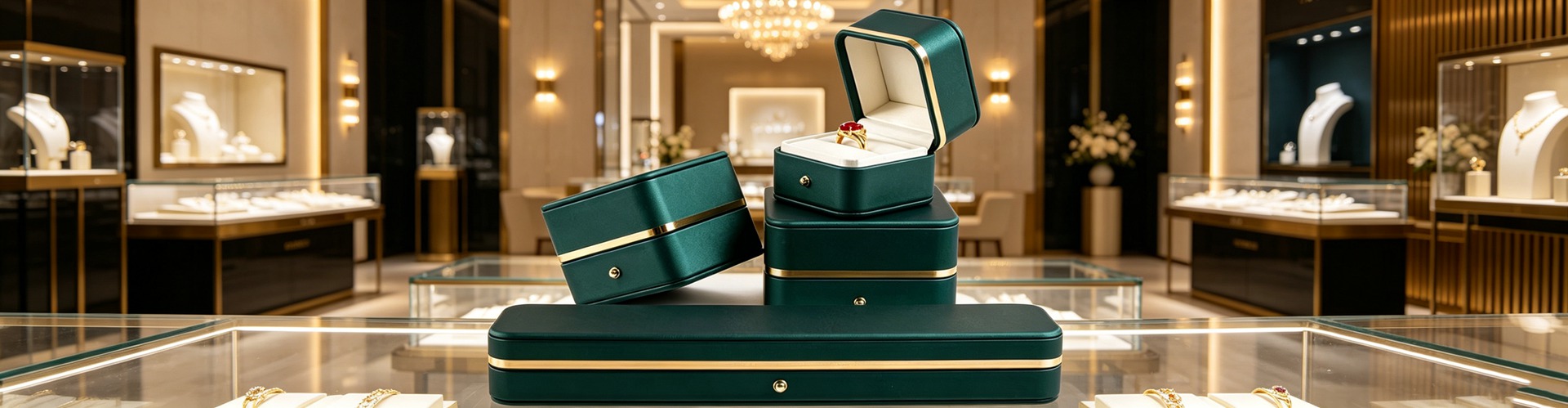
Three hard criteria. Durability first: it must survive many open-close-clean-ship cycles without collapsing, so hinges, liners and folds are engineered for reuse, not just for the unboxing moment. Cleanliness second: avoid mixed materials (paper + plastic + metal foil glued together is a sorting nightmare) and volatile solvent glues that leave smells and raise recycling cost. Standardisation third: one box type, one material spec, easy to recollect and redistribute. This is where Shenzhen Junyimei fits — small-batch flexible sampling can produce jewellery boxes and pouches that are both presentable and built to come back, turning "circular" from a slogan into real tolerances and material grades.

Q4. Why do premium, minimalist packages do better inside the loop?
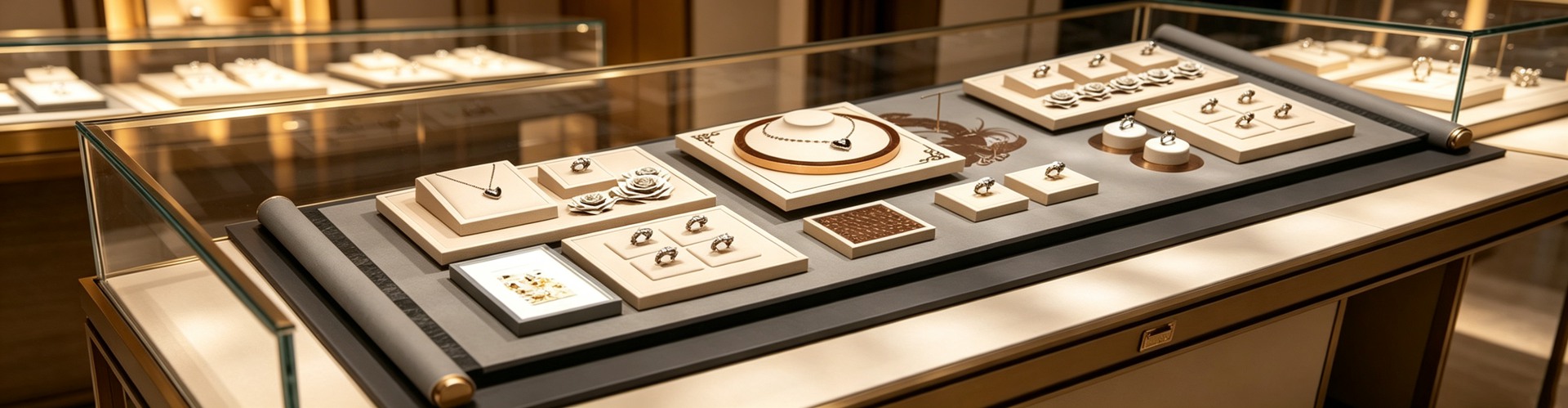
Because simple is easy to recover. An ornate box stacks ribbons, metal foils, layered card and plastic windows — every layer is a sorting headache and a point of wear. A plain matte box with one clean mark is easy to clean, has fewer parts to fail, and stays presentable across many cycles. More importantly, minimalism moves the budget from surface decoration to structure and tolerance — fold accuracy, hinge stability, liner resilience — which is exactly what decides how many times a box comes back. Brands that copy a minimalist render at the lowest price cut not the decoration but the lifespan. And it echoes a truth we keep returning to: high-end, minimalist jewellery packaging design is more readily favoured by customers — and, in the loop era, more readily favoured by the brand itself.
Q5. What roles do the pouch and the box play in the loop?
Different jobs, same asset logic. The pouch is the mobile end: a customer carries it through streets and offices, a cheap rented billboard for the brand; made reusable with a single clean mark, it is both greener and seen again and again. The box is the fixed end: many customers keep it on the dresser as long-term storage, a free in-home display for the brand. To make both loop, treat them as durables — washable, stackable, uniformly recoverable. That is jewellery packaging design planned ahead: the box's life does not end at opening, it begins another round.
Q6. How can a small jewellery brand start its own loop cheaply?
Three tiers, no heavy assets up front. Tier one, zero cost: place a packaging take-back bin in store and offer a small credit for any returned box or pouch, building the habit that "boxes can come back." Tier two, tens of dollars: swap a paper bag for a durable reusable pouch with one clean mark customers want to keep. Tier three, around a hundred dollars: partner with a flexible supplier like Shenzhen Junyimei for standardised, washable, marked boxes that can be recollected and redistributed. Real templates exist — Bagatiba trades a 25% discount for metal in circulation, mittag offers a direct discount for a "naked" eco-packaging option, Daniella Draper turned one tree into 23,500 returns. A loop need not burn cash; first it burns the willingness to treat packaging as an asset, not waste.
This is original content. Copyright belongs to Shenzhen Junyimei.
Junyimei — present every jewel and timepiece at its best.
过去,珠宝盒的使命在顾客推开店门那一刻就结束了——盒子被塞进抽屉,袋子被丢进柜子。可到了2026年,越来越多的珠宝品牌开始问一个新问题:能不能让盒子再回来?"循环闭环"正在改写包装的角色。
问一:为什么珠宝品牌现在开始谈"让盒子回来"?
因为包装的账本变了。全球循环与可重复使用包装系统市场2026年约460亿美元,预计以6.4%的年复合增速在2034年达到756亿美元;更广义的可重复使用包装大盘2026年已超1500亿美元,向2035年2500亿美元以上演进。艾伦·麦克阿瑟基金会的数据显示,已有400多家企业承诺到2025年实现包装100%可重复使用、可回收或可堆肥。而今天92%的塑料包装仍是一次性——这正是闭环要填的坑。对珠宝行业而言,这股趋势和8月初的欧盟PPWR合规不是一回事:PPWR是"你必须达标"的法规,闭环是品牌主动把包装变成"会回来的资产"。当一只盒子能被回收复用,它就不再只是一次性的成本,而是一次持续的品牌触点。
问二:顾客真的愿意把盒子袋子送回来吗?
愿意,但前提是"值"且"方便"。Loop与法国家乐福的闭环系统已在345家门店铺开、覆盖370多款商品,采用押金制,回收率高达89%;英国Loop到2025年处理超过200万次容器回收,平均每个容器周转7.3次。没有押金、回收点又不顺手的体系,回收率会掉到30%—50%。放到珠宝圈,案例更具体:英国品牌Daniella Draper的"Give Back and Grow"让顾客退回任何包装就种一棵树,已种下2.35万棵;巴西品牌Bagatiba的"Triple R"项目鼓励消费者捐出任意品牌旧金属首饰,回馈下次购买25%折扣;Astor & Orion则用回收金属做首饰,并提供以旧换新抵积分。结论很清楚——激励加便利,是闭环跑起来的两个轮子。
问三:什么样的包装才"转得起来"?
三条硬指标。一是耐用:能经受多次开合、清洁、运输而不塌不裂,铰链、内衬、折边都要按"长期复用"设计,而不是"开箱那一刻好看"。二是干净:忌用混合材料(纸加塑加金属贴片缠在一起最难分拣),忌用刺鼻胶水和挥发性溶剂,否则回收清洗成本高、气味还残留。三是标准化:同款盒型统一尺寸与材质,便于集中回收与再分发。这也是深圳骏依美的强项——小批量柔性打样,可以为品牌做出既体面又能反复使用的饰品包装盒和首饰袋,把"可循环"从口号做进公差与材料等级里。
问四:为什么高端简约的珠宝包装,在循环闭环里反而更占优?
因为简单就是好回收。繁复盒子往往堆叠丝带、金属贴片、多层卡纸和塑料窗,每多一层都是一次"分拣噩梦",也是一次"损耗点";而纯色哑面、一枚干净标识的极简盒,表面易清洁、配件少、老化慢,转好几轮还体面。更关键的是,简约把预算从表面花纹挪到结构与公差——折边正不正、铰链稳不稳、内衬回弹如何,这些才是决定盒子能"回来几次"的硬指标。照极简效果图、按最低价选厂翻车的品牌,省的不是花纹,是寿命。这也正应了一句话:高端简约的珠宝首饰品包装设计,更容易被顾客青睐——在闭环时代,它更容易被品牌自己青睐。
问五:首饰袋和饰品包装盒,在闭环里各自扮演什么角色?
分工不同,但都是"离店后还在替你说话"的资产。首饰袋是移动端:顾客拎着它走街串巷、进出办公室,是一只盒子的廉价续租广告位;做成可重复使用、只印一枚标识的素袋,既环保又被反复看见。饰品包装盒则是固定端:很多顾客会把盒子留在梳妆台当长期收纳,等于品牌在别人家免费驻了一个展位。要让两者"转得起来",袋子和盒子都得从一次性思维改成耐用品思维——可清洗、可叠放、可统一回收。这正是珠宝包装设计该提前规划的事:不是盒子的终点在拆开,而是它还能再回来。
问六:中小珠宝品牌怎么低成本启动自己的闭环?
三档起步,别一上来就建重资产。第一档零成本:门店放一个包装回收箱,退回任意品牌旧盒旧袋给小额抵扣或积分,先养成"盒子能回来"的习惯。第二档几十元级:把普通纸袋换成耐用的可复用首饰袋,配一枚干净标识,顾客愿意留、愿意带。第三档百元级:与深圳骏依美这样的柔性供应链合作,做标准化、可清洗、带标识的饰品包装盒,统一回收再分发。真实样本就在眼前——Bagatiba用25%折扣换来金属流通,mittag用"裸买环保包装"直接减100元新台币,Daniella Draper用一棵树撬动2.35万次回流。闭环不一定烧钱,它先烧的是品牌愿不愿意把包装当资产而不是垃圾。
本文为原创内容,版权归深圳骏依美所有,转载请注明出处。
骏依美——让每一件珠宝与腕表,都被更好地呈现。