Jewelry Becomes Luxury's Last Growth Engine珠宝逆势增长真相
Open any luxury earnings report this season and you will find a strangely divided picture. Fashion houses are still negotiating between traffic and taste. Handbag brands are being asked to justify the prices they raised. The watch industry is only now emerging from destocking and a soft secondary market. Jewelry, alone, still has a growth story to tell.
The numbers carry more weight than adjectives. For the quarter ending 30 June 2026, Richemont posted sales of EUR 6.329 billion, up 20% at constant currency against a market consensus of just 11%. Its jewelry division, comprising Cartier, Van Cleef & Arpels, Buccellati and Vhernier, delivered EUR 4.732 billion, a 24% jump and the seventh consecutive quarter of double-digit growth. Specialist watchmakers grew 8%. The remaining businesses, including Chloe and Alaia, grew 9%. Respectable results, all of them, and all left far behind.
The full year sharpens the contrast. For the twelve months to 31 March 2026, Richemont's sales rose 11% at constant currency to EUR 22.4 billion, with operating profit up 23% to EUR 4.5 billion. Jewelry contributed EUR 16.54 billion, or 54% of group revenue, at a 30.5% operating margin. Specialist watchmakers, at actual rates, fell 4% to EUR 3.15 billion. Fashion, accessories and other divisions declined 2% and closed the year with an operating loss of EUR 96 million. One company, two climates.
This is not an isolated case. LVMH grew organic revenue by just 1% in the first quarter of 2026, with fashion and leather goods down 2% while watches and jewelry rose 7%, led by Tiffany, Bulgari and Chaumet. At Kering, Gucci comparable sales slipped 2% in the second quarter. Geographically, Richemont's opening quarter saw the Americas up 27%, Japan up 36%, Europe up 11% and Asia-Pacific up 21%, with mainland China returning to double-digit growth for the first time in ten quarters.
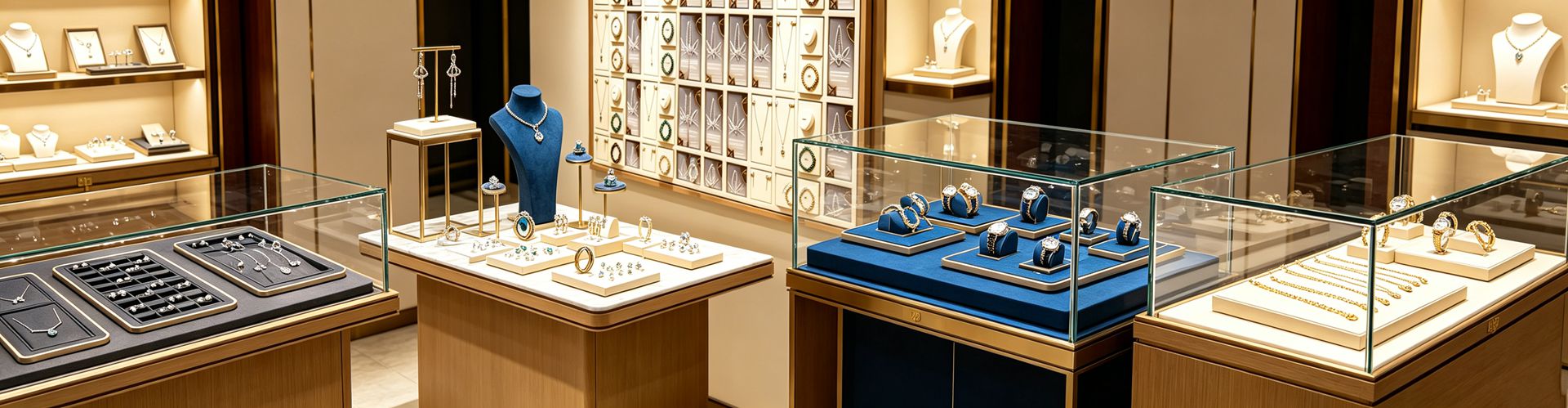
"Jewelry is doing well" is far too blunt a conclusion
In the same reporting season, Pandora posted organic growth of just 2%, with like-for-like sales essentially flat. Same category, different price band, entirely different fate. What is actually growing is not jewelry as a class, but the narrow upper layer of it that can sustain a brand narrative. The middle and entry tiers have not shared in this rally.
China illustrates the split even more plainly. Chow Tai Fook reported revenue of HKD 94.398 billion for the year to March 2026, up a modest 5.3%. Yet operating profit climbed 27.8% to HKD 18.85 billion and profit attributable to shareholders surged 52.2% to HKD 9.004 billion. Single-digit revenue, fifty-percent profit growth. The gap came from rising gold prices, a higher share of high-margin signature collections, and the pruning of underperforming stores. Meanwhile Laopu Gold has continued to expand its voice through premium heritage-craft gold positioning.
What matters most is the shift in how investors now read these results. Capital markets have started separating the gold-price windfall from genuine brand capability. If a jeweler's growth is merely a function of the metal price, it will not earn a brand multiple. That act of separation is forcing the industry to answer a harder question: strip out raw material inflation, and what is left?
The growth model has changed: stores are no longer just shops
The densest activity of 2026 has been in retail space. Piaget opened a new flagship at 16 Place Vendome in Paris, double its previous footprint. Pandora launched its first Italian flagship in Milan. Chow Tai Fook unveiled a high jewelry collection of more than one hundred pieces in Shanghai, presented through an immersive exhibition exploring materials, motifs and construction drawn from Chinese dress.
What these projects share is not expansion or a facelift, but a change of function: the store has moved from being a point of sale to being a long-term vessel for client relationships. In a high-ticket, low-frequency business, a single transaction is worth far less than a sustained relationship. Brands are using exhibitions, workshop experiences and dedicated services to extend dwell time, because dwell time is the raw material of relationships.
Consumer data supports the pivot. Industry surveys in China show that consumers born after 1990 now account for 47% of jewelry spending, with online transactions at 35% of the total and livestream commerce driving 62% of incremental sales. In their decision hierarchy, design and visual appeal rank first at 37%, while investment value ranks only fifth at 8%. This generation is not governed by gram weight. It pays for design, craft, story and credible certification.
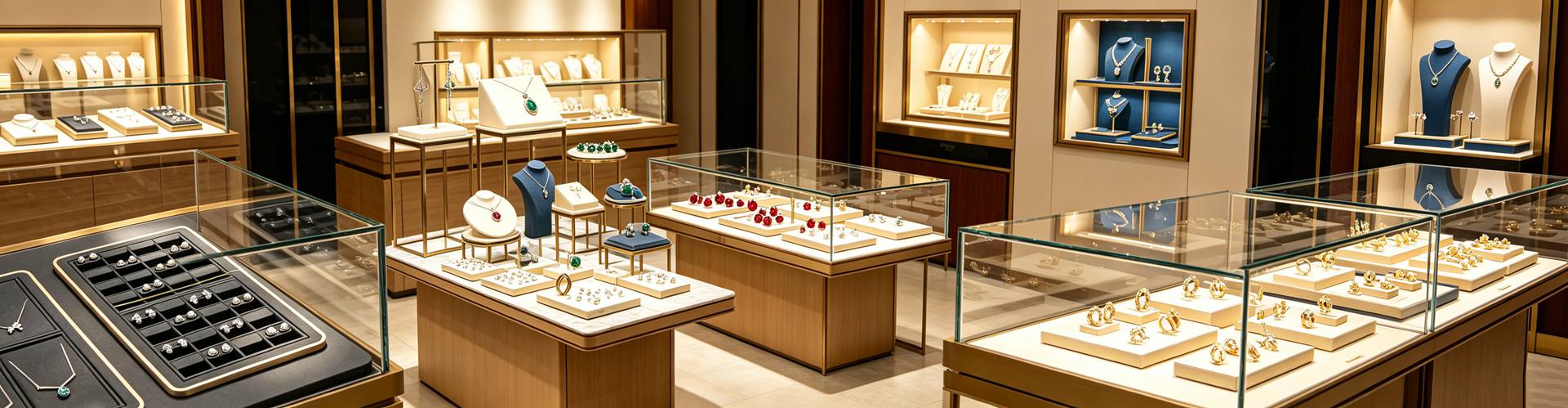
Channels are shifting, and delivery is gaining weight
The global online jewelry market is projected to reach USD 85.7 billion in 2026, growing at roughly 13% compound annually, with online penetration now near 25% of total jewelry sales, up from under 15% five years ago. But online is no easy road. Average conversion in jewelry e-commerce runs at only 1.19% to 1.5%, while return rates reach 16.9% to 20%. Once information becomes fully transparent, the old margin built on information asymmetry disappears, and competition returns to design, service and trust.
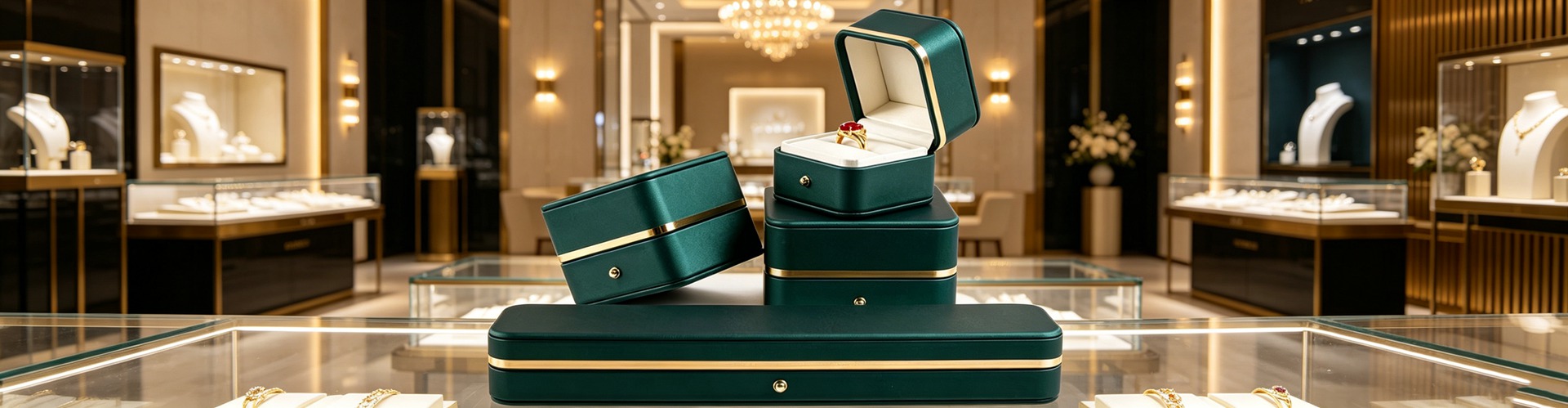
That is why the moment a client actually receives the piece is being taken seriously again. When a jewel's premium rests increasingly on creativity and culture rather than material, every physical touchpoint that carries it participates in the pricing. A display riser decides which piece a customer's eye settles on. A jewelry pouch decides whether the ceremony survives the walk out of the store. The structure and materials of a bespoke jewelry box shape the few seconds of unboxing in which a buyer silently judges whether the purchase was worth it. Packaging design, in turn, is no longer surface work: it must serve brand narrative, transit protection and sustainability compliance at once. In an online business with returns approaching one in five, a single damaged arrival can erase every gain made upstream.
None of this claims that the box matters more than the jewel. It simply acknowledges that in experience-led consumption, perceived value is built by the entire chain, and the most overlooked link is usually the first to fail.
Resilience is not immunity
Jewelry has carried through this cycle not because it is inherently recession-proof, but because in uncertain conditions it satisfies three needs at once: emotional, aesthetic and financial. Yet the weighting among those three is being rewritten. Judgments about value retention have moved away from metal price and gram weight toward a composite assessment of scarcity, craftsmanship, brand recognition and liquidity.
Put differently, the barrier to entry has risen. The money that used to come from simply sitting on material appreciation is disappearing. The money still available belongs to brands that can keep proving their worth. That is harder, but far more durable. For every link in the supply chain, the real examination is no longer whether the quarter sold well, but whether the client, once out the door, still wants to come back.
This is original content. Copyright belongs to Shenzhen Junyimei.
Junyimei — present every jewel and timepiece at its best.
翻开这一季的奢侈品财报,你会看到一幅罕见的分裂图景:时装屋还在流量与审美之间反复试探,手袋品牌被迫重新证明涨价之后自己还值这个价,腕表行业刚从去库存与二级市场回落的阵痛里缓过神来。唯独珠宝,还在讲一个完整的增长故事。
数字比形容词有说服力。历峰集团截至2026年6月30日的第一财季,销售额63.29亿欧元,按固定汇率同比增长20%,而市场一致预期只有11%。其中由卡地亚、梵克雅宝、Buccellati与Vhernier组成的珠宝部门,单季收入47.32亿欧元,大涨24%,这已是它连续第七个季度录得双位数增长。同期专业制表部门增长8%,包含蔻依、Alaïa在内的其他板块增长9%——都不算差,但都被珠宝远远甩在身后。
把时间拉长看更清楚。历峰截至2026年3月31日的整个财年,总销售额按固定汇率增长11%至224亿欧元,营业利润增长23%至45亿欧元。珠宝部门贡献了165.4亿欧元,占集团总收入的54%,营业利润率高达30.5%;相比之下,专业制表部门实际汇率口径下滑4%至31.5亿欧元,时装与配饰及其他部门下滑2%,全年还录得9600万欧元营业亏损。一个集团内部,两种气候。
这不是孤例。LVMH在2026年第一季度整体有机收入仅增长1%,时装与皮具下降2%,腕表与珠宝却增长7%,蒂芙尼、宝格丽与尚美表现居前。开云旗下古驰二季度同店销售下滑2%。区域上,历峰第一财季美洲增长27%,日本增长36%,欧洲增长11%,亚太增长21%——中国市场时隔十个季度重返双位数增长区间。
但"珠宝很好"是个太粗的结论
同一份财报季里,Pandora的有机增长只有2%,同店销售基本持平。同样是珠宝,价格带不同,命运完全不同。真正在增长的不是"珠宝"这个品类,而是珠宝里最高端、最有品牌叙事能力的那一层。中低价带并没有分享到这轮红利。
中国市场把这种分化演绎得更直白。周大福截至2026年3月底的财年收入943.98亿港元,同比增长5.3%,看起来温和;但营业利润增长27.8%至188.50亿港元,股东应占溢利大涨52.2%至90.04亿港元。收入个位数、利润五成,差额来自哪里?来自金价上行、高毛利标志性系列占比提升,以及低效网点的收缩。与此同时,老铺黄金凭借高端古法黄金定位,在金价周期里继续放大声量。
值得注意的是资本市场的态度变化:投资者已经开始把"金价红利"和"品牌自身能力"拆开来算。一家珠宝公司的增长如果只是金价的函数,那它拿不到品牌溢价的估值。这个拆分动作,正在倒逼整个行业回答一个更硬的问题——去掉原材料涨价,你还剩下什么?
增长方式变了:门店不再只是卖场
2026年以来最密集的动作,几乎都发生在零售空间。伯爵在巴黎旺多姆广场16号启用新旗舰店,面积比此前扩大一倍;Pandora在米兰开出意大利首家旗舰店;周大福在上海发布包含超过100件作品的"中国高级定制"高级珠宝系列,并用沉浸式展览来呈现中国服饰里的材质、纹样与结构。
这些项目的共同点,不是面积扩张或形象翻新,而是功能置换:门店从"销售终端"变成"客户关系的长期载体"。在高客单、低频次的生意里,一次成交的价值远不如一段可持续的关系。品牌开始用展览、工坊体验、专属服务把顾客的停留时间拉长,因为停留时间才是关系的原材料。
消费端的数据支持了这个转向。中宝协的调研显示,90后、00后已占珠宝消费的47%,线上交易占比35%,直播电商贡献了62%的增量成交。而在他们的决策排序里,款式设计与颜值排第一(37%),保值投资只排到第五位、占比8%。这一代人不再被"克重"绑架,他们为设计、工艺、故事和合规证书埋单。
渠道在变,交付的分量在变重
全球线上珠宝市场预计在2026年达到857亿美元,复合增速约13%,线上渗透率已接近整体珠宝销售的25%,而五年前还不到15%。但线上不是坦途:珠宝电商的平均转化率只有1.19%到1.5%,退货率高达16.9%至20%。信息高度透明之后,靠信息差赚钱的模式基本失效,剩下的竞争回到设计、服务与信任本身。
这也是为什么,"顾客拿到手的那一刻"重新被认真对待。当一件珠宝的溢价越来越依赖创意与文化,而不是材质本身,那么承载它的每一个物理接触点,都在参与定价。柜台里的珠宝摆台决定顾客视线停在哪一件上,一只首饰袋决定作品离开门店时是否还保持仪式感,珠宝盒定制的结构与用料,则直接影响开箱那几秒钟顾客对"值不值"的判断。同理,珠宝包装设计如今不再只是外观工程,它得同时满足品牌叙事、运输保护与可持续合规三重要求——尤其在退货率接近两成的线上生意里,一次破损就足以抵消所有前端投入。
这不是把包装说得比珠宝重要,而是承认一个事实:在体验型消费里,价值感是被完整链路共同构造的,而链路上最容易被忽略的一环,往往最先出问题。
结论:韧性不等于免疫
珠宝之所以能穿越这一轮周期,不是因为它天然抗跌,而是因为在不确定的环境里,它同时满足了三种需求:情绪的、审美的和保值的。但这三种需求的权重正在重排——保值的判断标准已经从金价与克重,转向稀缺性、工艺、品牌认可度与流通性的综合评估。
换句话说,珠宝生意的门槛提高了。过去躺在材质增值上就能挣的钱,正在消失;未来能挣的,是品牌持续自证价值的钱。这更难,但也更结实。对整个产业链上的每一环来说,真正的考题不是"这一季卖得好不好",而是"顾客离柜之后,还愿不愿意回来"。
本文为原创内容,版权归深圳骏依美所有,转载请注明出处。
骏依美——让每一件珠宝与腕表,都被更好地呈现。