6 Questions Brands Ask Before Customizing a Jewelry Box珠宝包装盒定制前,品牌方最常问的 6 个问题
Among the "first touchpoints" between a brand and its customer, the jewelry box is often felt and seen before the product itself. More brands now realize that the open-and-close feel and inner lining of a ring box or necklace box directly shape how customers judge the brand's tier. Here are the six questions brands ask most before customizing jewelry packaging.
Q1: What should you decide first when customizing a jewelry box?
Material and structure come first. Ring boxes, necklace boxes, bangle boxes and earring boxes each need a different closure and insert: ring boxes often use flip-top magnetic lids, necklace boxes tend toward drawers or two-piece lids, and bangles need a larger inner diameter with soft padding. Lock down "what goes inside and how it opens" before discussing looks, to avoid endless sampling.
Q2: What are the mainstream jewelry box materials in 2026?
Tactile paper, linen-textured board and matte cardboard remain the volume mainstream; high-end lines favor vegan leather and molded pulp inserts. Industry research shows textured, touch-me materials make the unboxing feel more premium—a clear reason custom packaging has rebounded this year.
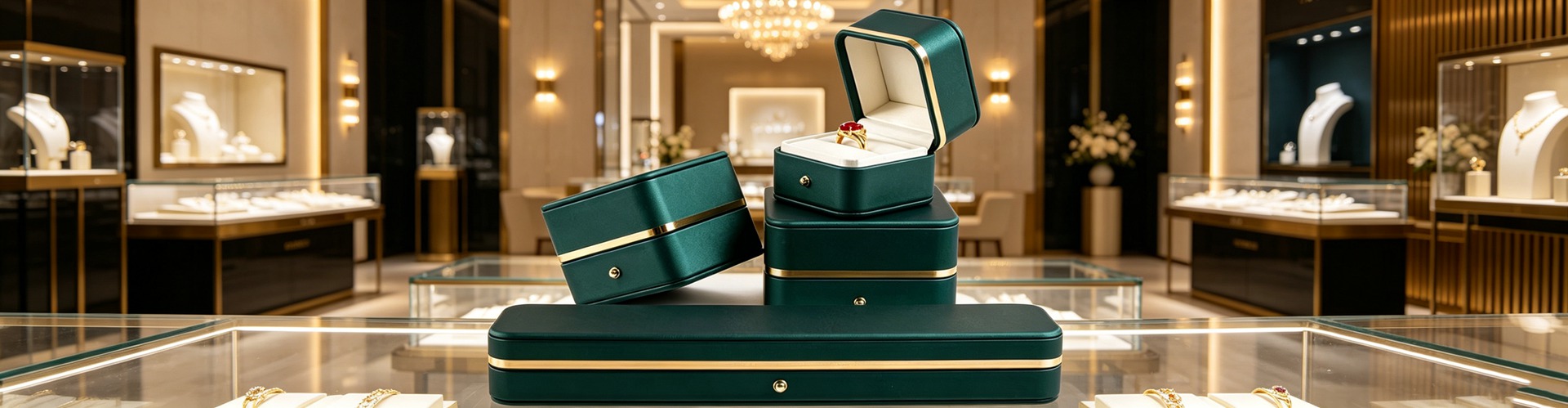
Q3: How do you make packaging feel more premium?
Three moves work best: a magnetic closure that delivers a satisfying click; a minimal foil or blind-embossed logo that doesn't shout; and negative space that lets the jewelry be the hero. Many brands are moving from stark black-and-white to "warm minimalism" in low-saturation tones (hazy off-white, misty blue) and actually look more confident for it.
Q4: Is small-batch customization realistic, or are MOQs high?
Digital printing has made small-batch, multi-version runs the norm. Brands can print a VIP client's name or a date on the box without the cost and high MOQ of traditional plate-making. For a young brand, testing 200-500 units before committing to volume is far safer than overstocking.
Q5: Is sustainable packaging a real trend or just marketing?
It's a requirement. In 2026, boxes using FSC-certified paper, bagasse fiber and biodegradable inserts are mainstream; replacing plastic foam with molded pulp cuts carbon and signals values to younger, lifestyle-driven buyers. Transparently stating soy inks and recycled content often earns a higher brand premium.
Q6: How do packaging and in-store display share one brand tone?
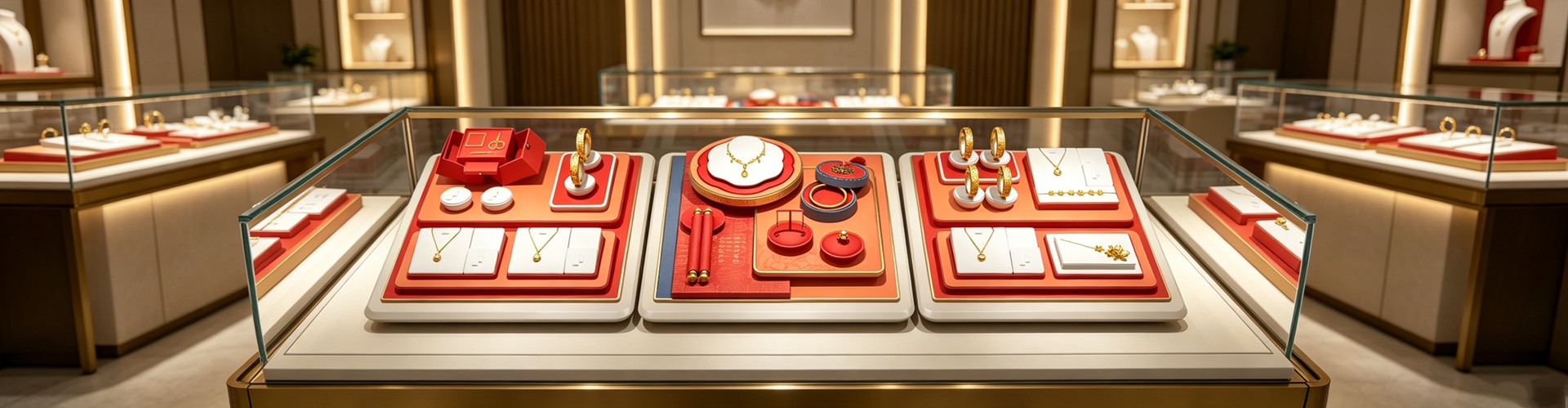
Put the counter display and the box in the same color and material language: hazy off-white box, same-tone velvet props; foil logo on the box, foil logo on the counter. When the visual is consistent from "seen" to "taken home," brand recall rises sharply.
As a jewelry box factory focused on custom jewelry packaging and wholesale jewelry boxes, we suggest treating packaging as a long-term asset, not a one-time consumable—it shows up in the customer's hands every day.
© 2026 LBOBO. This article is for reference only; please credit the source when reposting.
LBOBO — professional custom jewelry packaging, crafting a premium unboxing experience for your brand. Contact us for wholesale and custom jewelry box services.
在品牌与消费者见面的"第一触点"里,珠宝包装盒往往比产品本身更早被摸到、被看到。越来越多珠宝品牌意识到,一枚戒指盒或项链盒的开合手感、内衬质感,直接决定了顾客对品牌档次的判断。下面整理了品牌方在定制珠宝包装盒前最常提出的 6 个问题。
Q1:定制珠宝包装盒,最先要确定的是什么?
材质与结构是第一优先级。戒指盒、项链盒、手镯盒、耳钉盒的开合方式与内衬都不同:戒指盒常见翻盖磁吸,项链盒多为抽拉或天地盖,手镯盒则需要更大的内径与软垫支撑。先把"装什么、怎么开"定下来,再谈外观,才能避免反复打样。
Q2:2026 年主流的珠宝盒材质有哪些?
触感纸、亚麻纹裱纸、素面纸板依然是走量的主流;高端线更偏爱环保皮(vegan leather)与再生纸浆模塑内托。行业研究显示,带纹理的触感材料能让开箱瞬间更有"高级感",这也是今年定制包装明显回暖的方向。
Q3:怎样让包装的高级感更强?
三点最见效:一是磁吸开合带来的"咔哒"手感;二是极简烫金或盲压 logo,克制不喧宾夺主;三是留白,让珠宝本身成为视觉主角。很多品牌从纯黑纯白转向"暖极简"的低饱和色(雾感米白、雾霾蓝),反而更显自信。
Q4:小批量定制可行吗?起订量会不会很高?
数字印刷成熟后,小批量、多版本已经成为常态。品牌可以为 VIP 客户在盒面印制专属姓名或纪念日期,无需承担传统制版的高成本与高起订量。对刚起步的品牌来说,先做 200–500 个测试市场反应,比一次性压货更稳妥。
Q5:可持续包装是真趋势还是营销概念?
是刚需。2026 年采用 FSC 认证纸张、甘蔗渣纤维、可降解生物基内托的珠宝盒已成为主流,用再生纸浆替代塑料泡棉既能减碳,也能向注重生活方式的年轻客群传递品牌态度。透明标注大豆油墨、回收材料比例,往往能换来更高的品牌溢价。
Q6:包装和门店陈列如何统一品牌调性?
把柜台陈列与包装盒放在同一套色彩与材质语言里:盒面用雾感米白,陈列道具也用同色系绒面;盒内烫金,柜台 logo 同样烫金。当顾客从"看到"到"带回家"的每一步视觉一致,品牌记忆度会显著提升。
作为专注珠宝盒定制与首饰盒批发的珠宝盒工厂,我们建议品牌把包装视为长期资产而非一次性耗材——它每天都会在顾客手中出现。
© 2026 LBOBO. 本文内容仅供参考,转载请注明出处。
LBOBO —— 专业珠宝包装定制,为您的品牌打造高级开箱体验。欢迎咨询首饰盒、珠宝盒批发与定制服务。