Craft Now Outvalues the Material工艺正在超越材质
On 28 February 2026, Laopu Gold pushed through its first price revision of the year. An 18.2-gram hand-worked pure-gold gourd pendant jumped from RMB 33,624 to RMB 43,380 overnight — a rise of RMB 9,756, or roughly 29 percent. That same afternoon, the brand's online flagship sold out a RMB 627,500 filigree gold bowl and a RMB 500,000 gold ornament within ten minutes of opening, with more than thirty pieces cleared the instant they went live. Outside, the queue still stretched into the mall atrium.
It was not an isolated move. Since January, Linzhao, Junpei and Baolan have all issued repricing notices, with core products up 20 to 30 percent — steeper than the 18 to 25 percent round of October 2025. An industry that priced by the gram for decades is learning to price by the piece. What underwrites that shift is not the gold price. It is craft.
From RMB 13bn to RMB 300bn: a curve built by hand
Start with the numbers. According to Frost & Sullivan, China's heritage-technique gold jewellery market grew from RMB 13 billion in 2018 to RMB 157.3 billion in 2023 — a five-year compound annual growth rate of 64.6 percent. Estimates place 2024–2025 somewhere between RMB 200 billion and RMB 300 billion. For context, the Gems & Jewelry Trade Association of China puts the entire Chinese jewellery market at around RMB 900 billion for 2025. One sub-category now accounts for close to a third of the whole.
Corporate figures are steeper still. Laopu Gold reported full-year 2025 sales of roughly RMB 31.37 billion against RMB 9.80 billion in 2024 — growth of about 220.3 percent — with revenue up around 221.0 percent to RMB 27.30 billion. Over the same window, Linzhao and Baolan each closed financing rounds in the hundreds of millions, while premium newcomers opened flagship doors in Qingdao, Tianjin, Shanghai, Nanjing, Shenzhen and Hangzhou. Chow Tai Fook, Lao Miao and Lao Feng Xiang have all launched heritage-craft lines of their own.
The context makes this more remarkable. In 2025, bars and coins outsold gold jewellery by volume in China for the first time — investment beat adornment. Yet craft-led gold rose in both units and price. The World Gold Council's 2025 study of Chinese gold jewellery consumption named heritage-technique and hard-pure gold the core profit drivers for retailers. When a category's margin is being squeezed by raw material costs, workmanship is what wins it back.
800°C and seven thousand years
"Craft premium" is an easy phrase to hollow out. On the bench, it is extremely specific.
Under China's group standard for heritage-technique gold, a qualifying piece must be made using two or more traditional fine-metal techniques — repoussé, filigree, chasing, blue-enamelling and others — and must show the matte, sanded surface texture of imperial-era goldwork. This is not pattern transfer; it is the stacking of operations. One Linzhao pendant, weighing 58 to 60 grams, carries a stated production lead time of 13 to 15 months. Over a year, for a single piece.
Enamel tells the same story. Silver-bodied enamelling is millennia old. Compared with the traditional copper body, silver is lighter and kinder against skin — but far less forgiving. Its low melting point demands precise control of a firing curve near 800°C: the glaze must fuse fully and bond to the silver, without warping the body, flooding the surface or cracking on cooling. Only repeated firings followed by successive rounds of hand polishing produce that dense, porcelain-smooth finish. Layering painted, three-dimensional and translucent enamel techniques opens the door to genuine personalisation — pets, initials, private dates fired permanently into the glaze, turning a piece into a vessel for memory.
Lacquer goes back further. A technique with more than seven thousand years of history, long confined to vessels, is now entering jewellery: wood-bodied brooches, pendants with working magnifying lenses, necklaces that borrow from stained glass. Mineral pigments and hand polishing yield a soft, low lustre that reads as both Eastern and international. Tellingly, these pieces have drawn strong interest at overseas fairs. Cultural depth is not an export barrier; it is the passport.
Heritage as an IP portfolio, not a campaign
For years, "heritage collaboration" meant one limited drop and a press release. In 2026 the playbook changed.
Zhou Liu Fu has brought four nationally designated intangible heritage crafts — bamboo weaving, Song brocade, Ru porcelain and Chaozhou wood carving — into its brand system as a long-term IP matrix, rolled out across more than 4,000 stores. Its signature series draws on a Chaozhou gilded wood carving motif: openwork filigree base, hand-drawn wire foliage, and a hinged mechanism in the lower pendant that opens to reveal a rotating interior scene. That is not ornament applied to metal; it is the logic of through-carving translated into gold.
Chow Tai Seng works with a museum IP to reproduce the signature red of a Forbidden City famille-rose vase in high-temperature enamel, with forms drawn from holdings across 27 provincial museums and finished with repoussé, chasing and setting. Luk Fook has translated Tang dynasty artefact motifs through the same craft vocabulary. TSL has partnered with a national-level Su embroidery inheritor, using hand engraving to reproduce the texture of silk stitching in gold. Lao Miao is now eight generations of product deep into its own heritage line, positioned squarely around "cultural expression you can actually wear daily."
The convergence is unmistakable: from material-driven to culture-driven, from selling weight to selling value, aesthetics and scarcity. Analysts describe the underlying consumer shift as a move from functional utility toward symbolic value — buyers paying a premium for identity — reinforced by a "consumption as investment" mindset that suits high-net-worth allocation.
Not a China-only story
Look outward and the logic repeats almost exactly.
At Couture 2026, a veteran buyer called the originality on show the highest he had seen in his career. The hottest categories shared one trait — scarce and unrepeatable: rare coloured stones, one-off vintage, private bespoke. As one retailer put it, the inherent scarcity of vintage jewellery is precisely its appeal; clients want a collecting experience that cannot be duplicated.
US retail data points the same way. Demand for higher-end pieces has risen more than 12 percent while overall unit sales decline — the premiumisation everyone is now discussing. Buyers purchase less and spend more per item. The quiet-luxury value set lands on four words: craftsmanship, material quality, uniqueness, authenticity. When the question shifts from "whose logo is this" to "what are the materials and the handwork actually worth," craft stops being a cost line and becomes an asset.
Two hazards beneath the boom
A crowded lane breeds sameness. Analysts warn plainly that brands imitating the surface of a technique and the confidence of its pricing, without the service infrastructure or cultural substance behind it, will erode consumer trust and let bad money drive out good.
The trade association's prescription is a triple moat of culture, technique and ecosystem: stronger self-regulation, traceability and service standards spanning design, production, sale, after-care and buy-back, and differentiated pricing mechanisms matched to cultural and technical attributes. Premiumisation is not the goal in itself. The test is whether the value delivered keeps pace with the price — whether tradition genuinely becomes contemporary design, and whether workmanship genuinely becomes a better wearing experience, rather than stopping at a conceptual markup.
The second hazard is standards. The release of the industry's first group standard for grading lab-grown diamond rough filled a real gap, and signalled a direction: when a category inflates on storytelling, verifiable standards are the foundation of long-term credibility.
Before craft is valued, it has to be seen
One link in the chain is routinely overlooked. A piece that took fifteen months to make forms its first impression in perhaps forty seconds at a counter.
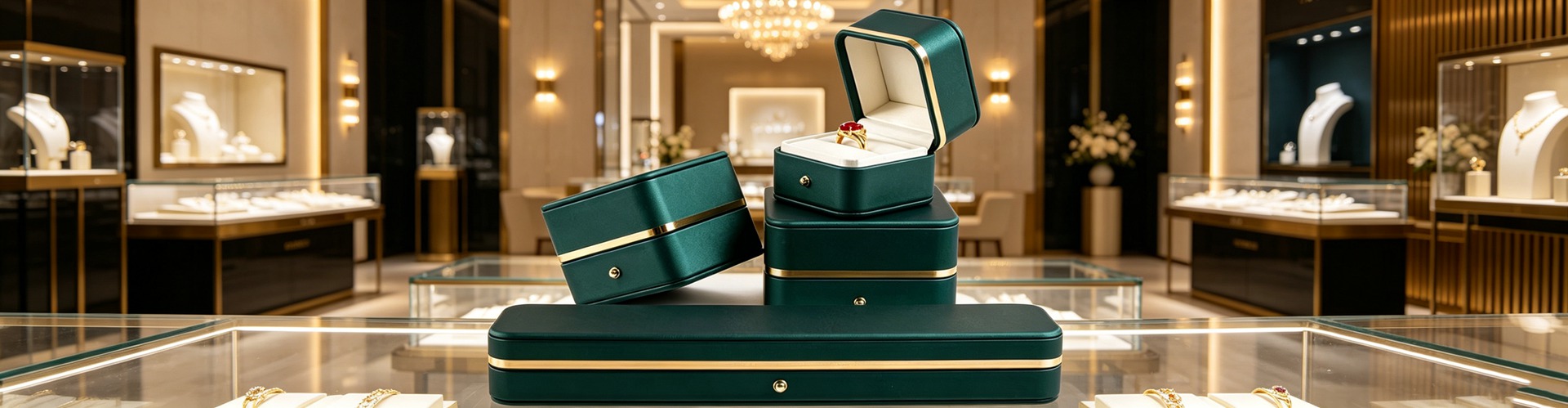
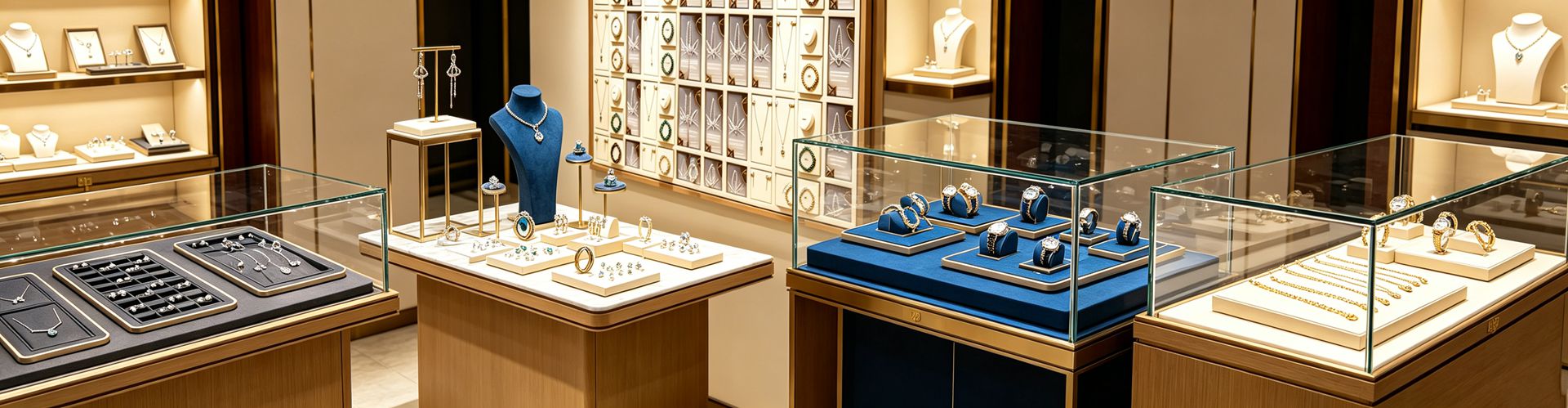
Selling craft-led jewellery works nothing like selling gold by weight. It requires a story about time, heat and touch — and the first line of that story is spoken by the display. The warmth of an enamel surface only appears under the right light angle. Filigree openwork needs negative space behind it or it collapses into visual noise. A matte sanded texture disappears entirely under the wrong reflection. This is why brands built on heritage technique increasingly bring jewelry display props and jewelry box design into the product development stage rather than treating them as an afterthought — tray material, riser height, the colour temperature of a velvet bed are all part of the craft narrative.
Packaging follows the same rule. Once a pendant is priced on culture and handwork rather than metal plus labour, a generic carton dilutes the entire premium in a single gesture. Custom jewelry boxes have moved from the back end of the transaction to the front of brand equity: the material, the resistance of the hinge, the lining structure, the first shaft of light at opening — each restates the claim that this object is different. Working across jewellery and watch presentation, the view at Shenzhen Junyimei is straightforward: good craft never lacks buyers. What it lacks is the setting that lets a buyer recognise it as craft within three seconds.
Craft outvaluing material is the clearest through-line in jewellery in 2026. But before craft can be priced, it has to be seen.
This is original content. Copyright belongs to Shenzhen Junyimei.
Junyimei — present every jewel and timepiece at its best.
2026年2月28日,老铺黄金启动年内首轮调价。一条18.2克的古法手工足金葫芦吊坠,券后价从33624元跳到43380元,一夜贵了9756元,涨幅约29%。当天下午,线上旗舰店开卖不到十分钟,62.75万元的花丝真言金碗、50万元的鸳鸯和合摆件相继售罄,超30款单品上架即被清空;线下门店的队伍依旧排到商场中庭。
这不是孤例。今年开年,琳朝、君佩、宝兰接连发出调价函,主力产品涨幅普遍在20%至30%之间,比2025年10月那轮的18%至25%更陡。一个长期按克重报价的行业,正在学会按“件”卖东西。支撑这个转变的不是金价,是工艺。
从130亿到3000亿
据弗若斯特沙利文数据,中国古法黄金珠宝市场规模从2018年的130亿元升至2023年的1573亿元,五年复合年增长率高达64.6%;2024至2025年估算在2000亿至3000亿元区间。而中宝协初步统计,2025年中国珠宝市场整体规模约9000亿元——一个细分品类,已吃下近三分之一的盘子。
企业端更陡。老铺黄金2025年全年销售业绩约313.75亿元,同比增长约220.3%;营业收入约273.03亿元,增幅约221.0%。同期琳朝、宝兰完成亿元级融资,周大福、老庙、老凤祥纷纷端出古法金系列。
背景值得玩味:2025年国内金条金币消费量首次超过金饰,投资压倒佩戴。但古法金做到了销量与价格同步抬升。世界黄金协会《2025年中国金饰消费趋势洞察》直接把古法金与硬足金列为零售商的核心利润来源。当品类毛利被金价挤压,只有工艺能把利润挣回来。
800℃与七千年:门槛有多具体
按《古法金饰品》团体标准,合格产品须由锤揲、花丝、錾花、烧蓝等两种及以上传统细金工艺制成,并呈现亚光砂状肌理。这不是纹样搬运,是工序堆叠。琳朝一款58至60克的吊坠,标注工期13至15个月——一年多,只为一件。
珐琅同理。银胎较铜胎更轻盈亲肤,却对釉料适配性和抗变形能力极为苛刻:银熔点低,需把约800℃的烧制温度曲线与时长控制到极精准,既要釉料充分熔融、与胎体紧密结合,又要避免变形、流溢与开裂。多次烧制加多道打磨,才有那层触感如瓷的釉面。而拥有七千多年历史的大漆,过去多用于器物,如今被做成木胎胸针、跨文化元素项链,以矿物颜料调色与手工打磨形成柔和光泽——在海外展会上,文化厚度反而成了通行证。
非遗不再是营销词
过去“非遗联名”常止步于一次限量发售,2026年打法变了。周六福把竹编、宋锦、汝瓷、潮州木雕四项国家级非遗整体引入品牌体系作长期IP矩阵,依托超4000家门店铺开;其木雕系列以镂空花丝铺底、手工勾丝立体花叶,吊坠下端甚至增设开合机关。周大生借高温珐琅复刻故宫釉彩红,造型取材27个省市博物馆藏品;六福转译唐代文物元素;谢瑞麟联合国家级苏绣传承人,以手工雕金复刻刺绣质感。路径趋同:从材质驱动转向文化驱动,从卖克重转向卖价值、卖审美、卖稀缺。
这不是中国独有的故事
2026年Couture高端珠宝展上,最热品类共享一个内核——稀缺且不可复制:稀有彩宝、复古孤品、私人高定。美国零售数据同向:高端珠宝需求上涨超12%,整体件数销量却在下滑。这就是premiumisation——买得更少,单件花得更多。静奢的价值主张恰好落在工艺、材质、独特性与真实性四个词上。当买家不再问“这是什么牌子”,而问“材料与手工到底值多少”,工艺就从成本项变成了资产项。
隐忧同样清晰。有分析师直言,若品牌只模仿工艺外观与高定价,缺乏配套服务与文化内涵,会出现劣币驱逐良币。行业建议构建“文化+技术+生态”三重护城河,并建立与工艺特性匹配的差异化定价机制。高端化本身不是目标,关键在价值能否配得上价格。
手艺被看见之前
还有一环常被忽略:一件耗时十几个月的作品,第一印象只在柜台前几十秒里完成。
工艺珠宝的销售逻辑与克重金饰截然不同,它要讲时间、火候与手感,而故事的第一句往往由陈列说出。釉面的温润需要合适光角才显形,花丝镂空需要留白背景才不糊成一团,砂面亚光在错误反光下会彻底消失。这正是越来越多非遗工艺品牌把珠宝陈列道具与首饰盒设计提前到产品开发阶段的原因——托盘材质、展台高度、绒面色温,本质都是工艺叙事的一部分。包装同理:当定价逻辑已从“原料加工费”转向“文化加手艺”,一只通用纸盒会瞬间稀释全部溢价感。珠宝盒定制正从售后环节前移为品牌资产,开合手感、内衬结构乃至开盒时的第一束光,都在替品牌复述那句“这件东西不一样”。作为深耕珠宝钟表呈现方案的服务方,深圳骏依美的体会很朴素:好手艺从不缺买家,缺的是让买家三秒内认出“这是手艺”的那个场。
工艺超越材质,是2026年珠宝行业最清晰的主线。而工艺要被定价,先得被看见。
本文为原创内容,版权归深圳骏依美所有,转载请注明出处。
骏依美——让每一件珠宝与腕表,都被更好地呈现。