Guochao Renaissance and Sustainable Design: The Structural Transformation of Jewelry Packaging in 2026国潮崛起与可持续设计:2026年珠宝包装行业的结构性变革之路
The jewelry industry in 2026 is experiencing an unprecedented cultural awakening. From Chow Tai Fook's Wanxiang Series leveraging Oriental aesthetics to generate 870 million HKD in first-quarter retail value, to major brands racing to integrate traditional cultural symbols into their product lines, Guochao has evolved from a marketing concept into a foundational logic permeating the entire industry chain. This cultural renaissance has a particularly profound impact on the jewelry packaging industry. Packaging is no longer merely a container for protection and transportation, but the first touchpoint carrying brand cultural narrative. The modernization and reconstruction of traditional patterns, the industrialization of intangible cultural heritage techniques, and the visual expression of regional cultural symbols are redefining the design language of jewelry packaging. Designers inspired by cloisonne craft textures for jewelry box linings, Song porcelain crackle glaze motifs for lid-and-base box surfaces, and Dunhuang ceiling patterns for display prop bases are no longer simply piling traditional elements, but deconstructing and recombining cultural genes into every structural detail of packaging.
Beyond the visual expression of Guochao narrative, packaging structure innovation is quietly transforming the consumer unboxing experience. Magnetic jewelry boxes are replacing traditional flip-top structures at an annual growth rate exceeding 25%, becoming the preferred choice for mid-to-high-end jewelry brands. The magnetic structure achieves automatic lid closure through hidden magnets, accompanied by a crisp magnetic separation sound upon opening, creating an auditory ritual feedback. This structure eliminates the visual interference of traditional clasps and hinges, making the box surface cleaner and more pure, leaving greater visual space for brand logo foiling and color expression. More importantly, the magnetic structure distributes force more evenly, effectively reducing the risk of accidental lid opening during transportation. For jewelry box wholesale, the popularization of magnetic structures means production lines need to upgrade from traditional hinge assembly to magnet embedding processes, raising new requirements for factory precision manufacturing capabilities.
If Guochao represents cultural upgrading, sustainability represents a materials revolution. In 2026, global demand for eco-friendly materials in jewelry packaging grew over 40% year-on-year, with the Chinese market being particularly active. Traditional jewelry packaging extensively uses EVA foam and PU synthetic leather as lining materials. While these materials are cost-effective and formable, they are difficult to degrade after disposal, creating a sharp contradiction with the ESG responsibilities increasingly emphasized by jewelry brands. Next-generation sustainable packaging solutions are breaking through in three directions. First, bio-based material substitution: biodegradable lining materials made from bamboo fiber, bagasse, and mushroom mycelium achieve complete degradation while maintaining cushioning performance. Second, recycled material application: velvet linings made from post-consumer recycled PET (rPET) offer nearly identical tactile experience to traditional microfiber but with a 60% lower carbon footprint. Third, structural lightweighting: optimizing internal packaging structure to reduce filling material usage while improving jewelry fixation through precise slot design.
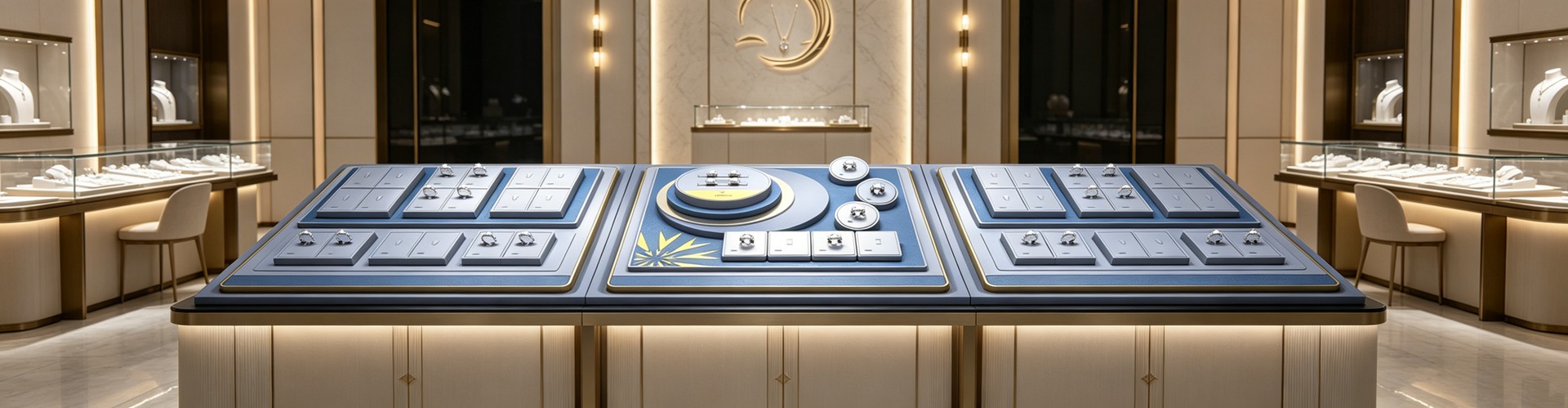
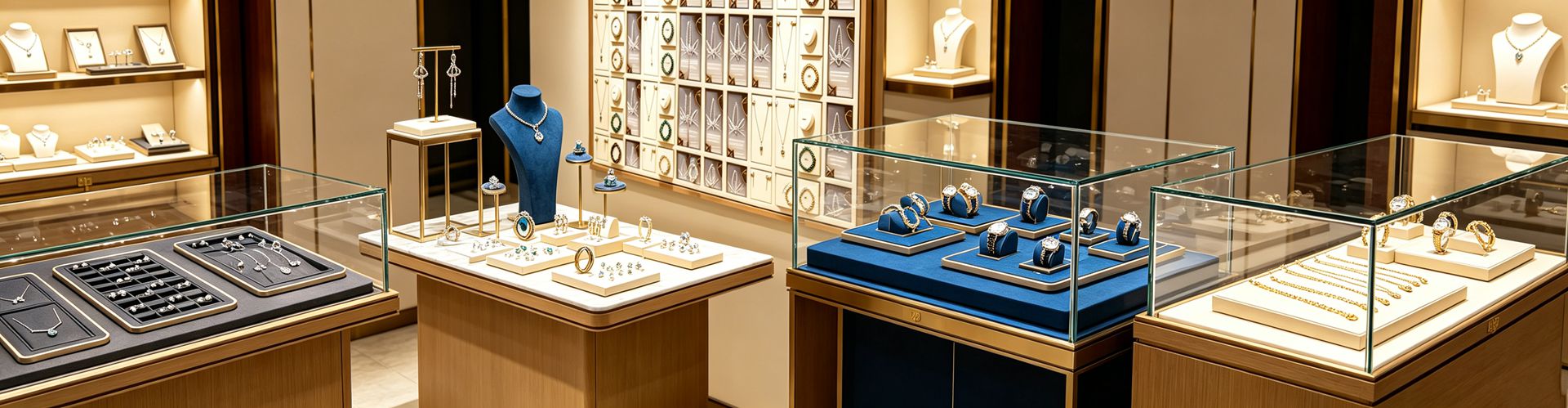
In jewelry retail scenarios, color is not merely an expression of visual aesthetics but a psychological tool influencing consumer purchasing decisions. The design of jewelry display racks in 2026 is evolving from pure display function to emotional design systems incorporating color psychology principles. Research shows that warm gold-toned display backgrounds enhance consumer value perception of gold jewelry, while cool blue-gray backgrounds strengthen the brilliance perception of diamond products. In jewelry display stand design, background color selection must precisely match the product category and brand positioning. For jewelry display racks and display stands, color scheme development should not rely on individual designer preferences but be based on systematic color psychology research of target customer groups and brand visual system specifications.
The jewelry packaging industry in 2026 stands at a critical inflection point from manufacturing to intelligent manufacturing. The deep integration of Guochao elements endows packaging with cultural narrative capability, the popularization of magnetic structures elevates the ritual sense of unboxing experience, the implementation of sustainable materials responds to the environmental demands of the era, and the application of color psychology strengthens the emotional influence of display spaces. The convergence of these four forces is driving jewelry packaging from standardized production toward personalized design and customization. In this transformation, packaging enterprises with full-chain design capabilities will gain growth opportunities far exceeding the industry average, while enterprises still stuck in low-cost competition models will face increasing survival pressure. The future of jewelry packaging is no longer a simple accessory, but an indispensable core component of the brand value chain.
Original content by Junyimei. All rights reserved. Please indicate the source when reprinting.
2026年的珠宝行业正经历一场前所未有的文化觉醒。从周大福万相系列以东方美学撬动8.7亿港元首季零售值,到各大品牌争相将传统文化符号融入产品线设计,国潮已从营销概念沉淀为贯穿产业链条的底层逻辑。这场文化复兴对珠宝包装行业的影响尤为深远——包装不再只是保护与运输的容器,而是承载品牌文化叙事的第一触点。传统纹样的现代化重构、非遗工艺的工业化转化、地域文化符号的视觉化表达,正在重新定义珠宝包装的设计语言。以传统景泰蓝工艺为灵感的首饰盒内衬纹理,以宋瓷开片釉为视觉母题的天地盖盒表面肌理,以敦煌藻井图案为设计蓝本的珠宝道具陈列底座——这些设计不再是简单堆砌传统元素,而是通过解构与重组,将文化基因植入包装的每一个结构细节之中。在这一趋势下,具备深度设计与定制能力的珠宝包装企业,正在从供应链后端的制造角色,升级为品牌文化叙事的共建者。
在国潮叙事的视觉表达之外,包装结构的创新正在悄然改变消费者的开箱体验。磁吸式珠宝盒正以每年超过25%的增速取代传统翻盖式结构,成为中高端珠宝品牌的首选方案。磁吸结构通过隐藏式磁铁实现盒盖的自动吸附闭合,开启时伴随清脆的磁力分离声,形成听觉层面的仪式感反馈。这种结构在外观上消除了传统扣位和铰链的视觉干扰,使盒体表面更加简洁纯粹,为品牌标识的烫金工艺和色彩表达留出更大的视觉空间。更重要的是,磁吸结构的受力分布更加均匀,在运输过程中能有效减少盒盖因震动而意外弹开的风险,对珠宝产品的运输安全提供了更可靠的保障。相比之下,传统翻盖式珠宝盒虽然在经典展示场景中依然有其不可替代的优势,但在开合顺滑度、现代感呈现和品牌调性匹配方面,已逐渐显现出代际差距。对于珠宝盒批发而言,磁吸式结构的普及意味着生产线需要从传统铰链装配向磁铁嵌入工艺升级,这对工厂的精密加工能力提出了新的要求。
如果说国潮是文化层面的升级,可持续则是材料层面的革命。2026年,全球珠宝包装行业对环保材料的需求同比增长超过40%,中国市场尤为活跃。传统的珠宝包装大量使用EVA泡棉和PU合成革作为内衬材料,这些材料虽然成本低廉且成型性好,但在废弃后难以降解,与珠宝品牌日益强调的ESG责任形成尖锐矛盾。新一代可持续包装方案正在从三个方向突破:第一,生物基材料替代——以竹纤维、甘蔗渣和蘑菇菌丝为原料的生物降解内衬材料,在保持缓冲性能的同时实现了完全降解,目前已在部分高端珠宝道具中投入使用;第二,再生材料应用——消费后回收PET(rPET)制成的绒布内衬,触感与传统超细纤维几乎无异,但碳足迹降低了60%以上;第三,结构减量化设计——通过优化包装内部结构,减少填充材料的使用量,同时通过精密的卡槽设计提升首饰的固定效果。这些材料创新对珠宝包装行业的设计与定制能力提出了更高要求,因为生物基材料的物理性能与传统材料存在差异,需要重新设计包装结构以适配新材料的特性。从首饰盒的内衬到珠宝陈列架的底座,从首饰袋的面料到手表陈列道具的支架,每一个环节都面临着材料替代与结构适配的双重挑战。
在珠宝零售场景中,色彩不仅是视觉审美的表达,更是影响消费者购买决策的心理学工具。2026年的珠宝陈列架设计正从单纯的展示功能,进化为融合色彩心理学原理的情绪设计系统。研究表明,暖金色调的陈列背景能提升消费者对黄金类饰品的价值感知,而冷色调的蓝灰背景则能增强钻石类产品的璀璨感认知。在珠宝摆台的设计中,背景色的选择需要与陈列产品的品类和品牌定位形成精准匹配——高端婚戒系列适合采用低饱和度的香槟金或珍珠白背景,营造优雅含蓄的选购氛围;时尚K金系列则适合采用高对比度的撞色方案,突出产品的设计感和年轻化定位。首饰袋的色彩设计同样遵循这一逻辑,品牌专属色的统一运用能够在消费者将首饰袋带出门店后,持续强化品牌识别度,实现低成本的长期品牌曝光。对于珠宝陈列架和珠宝摆台的设计而言,色彩方案的制定不应凭设计师个人偏好,而应基于目标客群的色彩心理学研究和品牌视觉系统规范,进行系统化的设计与定制。
2026年的珠宝包装行业正站在从制造到智造的关键拐点。国潮元素的深度融入赋予包装文化叙事能力,磁吸结构的普及提升了开箱体验的仪式感,可持续材料的落地实践回应了时代的环保诉求,色彩心理学的应用强化了陈列空间的情绪影响力——这四股力量的交汇,正在推动珠宝包装从标准化生产向个性化设计与定制方向全面转型。在这个转型过程中,具备全链条设计能力的包装企业将获得远超行业平均水平的增长机遇,而仍停留在低成本竞争模式的企业将面临越来越大的生存压力。无论是珠宝盒批发环节的品质升级,还是珠宝道具设计的场景化创新,亦或手表陈列道具的材质革新,每一个环节都蕴含着通过设计与定制能力构建竞争壁垒的机会。未来的珠宝包装不再是简单的附属品,而是品牌价值链中不可或缺的核心一环。
骏依美原创内容,版权所有。转载请注明出处。