Ancient Gold Craft and Geometric Minimalism Lead 2026 Gold Necklace Trends: The Aesthetic Shift of Young Consumers古法金与几何简约引领2026黄金项链潮流:年轻消费群体的审美转向
1. Three Directions Define the 2026 Gold Necklace Landscape
The 2026 gold necklace market is undergoing a profound aesthetic revolution. Industry data shows that this year's popular styles center on three major directions: ancient gold craftsmanship, auspicious pendant designs, and geometric minimalist design, with pure gold materials and 5G hard gold technology becoming mainstream choices. These three threads may appear independent, but they collectively point to a core trend: young consumers are redefining the value standards of gold jewelry — shifting from pure value preservation to "wearable culture" that combines cultural depth, aesthetic expression, and everyday wearability.
The revival of ancient gold craftsmanship is the most direct manifestation of this trend. Unlike traditional polished bright gold, ancient gold presents a warm, understated matte texture through hammering, engraving, filigree, and other handcraft techniques. This craft language, originating from imperial workshops, holds unique appeal for contemporary young consumers: it carries historical weight without being ostentatious; it satisfies cultural identity needs while aligning with the currently popular "quiet luxury" aesthetic. The gourd, fortune lock, and five-emperor coin ancient heritage series are highly favored for their deep cultural connotations, while "money on horseback" and zodiac pendants connect tradition with modernity through vivid design.
2. Geometric Minimalism: Gen Z's Gold Aesthetic Manifesto
If ancient gold represents a return to tradition, then geometric minimalist design is a manifesto for the future. Square sugar, small gold brick, and Mobius ring minimalist designs are rapidly gaining popularity among young consumers. These styles, paired with car-pattern or flash-sand craftsmanship, offer strong luster and versatility, perfectly aligning with Gen Z's "less is more" aesthetic philosophy and daily layering wearing needs.
The popularity of geometric minimalist series also reflects changes in consumption scenarios. In the past, gold necklaces were primarily viewed as "ceremonial jewelry" for formal occasions or festive periods, but today's young consumers are more inclined to treat them as part of their daily wardrobe. Snake bone chains, O-chains, and Chopin chains have become mainstream choices due to their comfortable wear and hair-friendly properties, while AB chains and other asymmetrical designs satisfy the personalization needs of layering. This means gold jewelry is transitioning from "collections in the safe" to "everyday items in the jewelry box" — a transformation that has profound cascading effects on the entire jewelry packaging and display industry.
3. From Product to Scene: Synchronized Upgrade of Display Aesthetics
As gold necklaces move from formal occasions to everyday wear, and as consumers shift from "buying gold for value preservation" to "choosing gold for self-pleasure," store display systems need to upgrade simultaneously. Traditional glass cabinet-style displays, while ensuring security, have inherent limitations in creating immersive shopping experiences. The new generation of consumers expects "touchable, try-on-able, photo-shareable" interactive display scenarios.
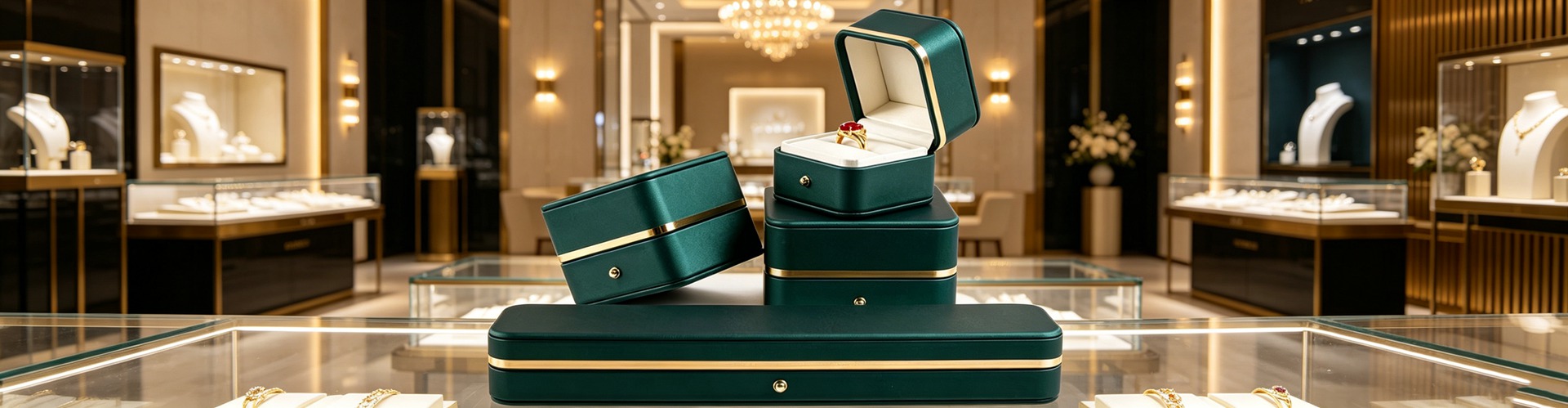
This requires jewelry tray design to evolve from simple support functions to scene-creation tools. High-density velvet trays can complement the warm texture of ancient gold with delicate tactile sensation, while matte metal frame trays can echo the design language of geometric minimalist series with cool, crisp lines. Rational jewelry display rack spatial layout can harmonize products of different styles and price ranges within a single visual system through staggered height and depth design, naturally guiding consumers from browsing to trying on along an experiential circulation path.
4. The Value Transition of Packaging: From Protection to Ritual
Changes in product form inevitably drive the evolution of packaging form. As gold necklaces expand from festive gifts to everyday consumer goods, their packaging also faces the need to transition from "grand ceremonial" to "everyday ceremonial." Traditional heavy brocade boxes, while conveying a sense of preciousness, appear overly formal and cumbersome in daily use scenarios. Young consumers prefer lightweight, reusable, design-forward packaging solutions.
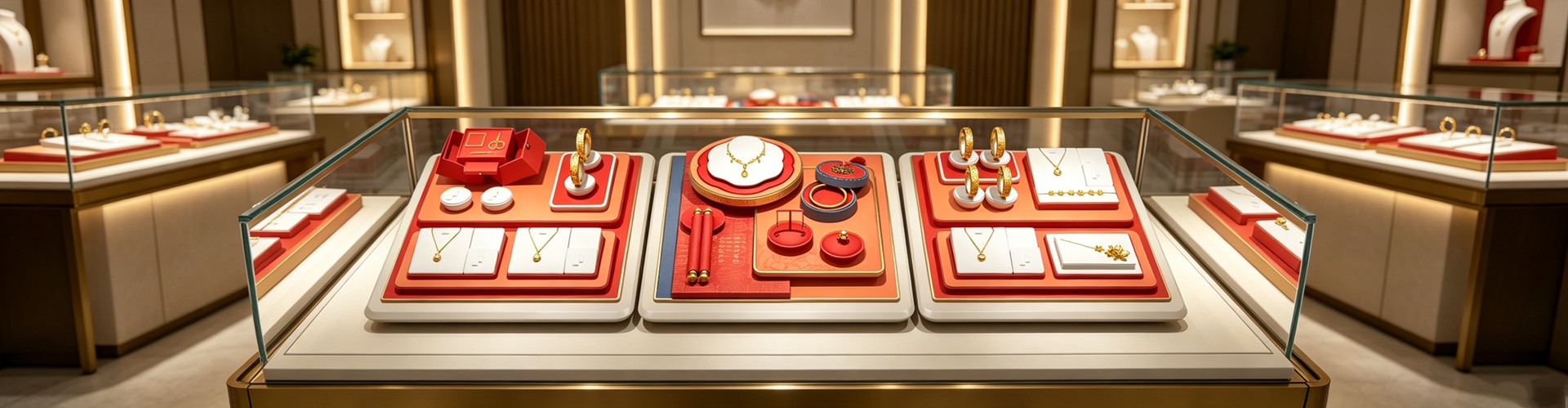
This demand has catalyzed a new round of growth in the jewelry box customization market. An increasing number of brands are designing exclusive packaging solutions for different product series: ancient gold series paired with wooden or paper gift boxes with Eastern charm, geometric minimalist series paired with minimalist acrylic or metallic-texture packaging. Packaging is no longer just a one-time shipping container but an organic component of the product experience — from the surprise of unboxing, to the practicality of daily storage, to the "visual appeal" for social sharing, every touchpoint strengthens the emotional connection between brand and consumer.
5. 5G Hard Gold Technology: Technology Empowers Design Freedom
At the craftsmanship level, the maturation of 5G hard gold and 3D hard gold technologies has provided designers with unprecedented creative freedom. 5G hard gold, through a special process formula, achieves hardness several times that of traditional pure gold while maintaining its fineness and texture. This means that complex shapes, hollow structures, and fine textures previously impossible due to material softness can now be realized on pure gold. From delicate butterfly wing textures to intricate four-leaf clover veins, from three-dimensional rose shapes to strongly geometric Mobius rings, 5G hard gold technology is expanding the design boundaries of gold jewelry.
Technological advancement is reflected not only in the products themselves but also extends to supporting packaging and display solutions. More refined shapes require more precise display angles, and more complex structures require more stable support solutions. Professional packaging enterprises are working closely with brands to design exclusive display props and packaging solutions for each new product, ensuring optimal presentation at every stage from factory to terminal.
6. Conclusion: Full-Chain Aesthetics Driven by Consumption Upgrade
The 2026 gold necklace trends, on the surface, reflect choices in style and craftsmanship, but essentially reveal the deep transformation of consumer values. When the younger generation replaces "value preservation" with "self-pleasure," "ceremony" with "everyday," and "wealth symbol" with "cultural identity," the entire gold jewelry industry is experiencing a full-chain aesthetic upgrade from products to packaging, from display to experience. In this upgrade process, packaging and display enterprises with design innovation capabilities, cultural understanding abilities, and rapid response capabilities will become key partners for brands in winning young consumers.
Original content by Junyimei. All rights reserved. Please indicate the source when reprinting.
一、三大方向定义2026黄金项链流行版图
2026年的黄金项链市场正在经历一场深刻的审美革命。行业数据显示,今年的流行款式集中在古法金工艺、吉祥寓意吊坠及几何简约设计三大方向,足金材质与5G硬金工艺成为主流选择。这三条线索看似各自独立,实则共同指向一个核心趋势:年轻消费者正在重新定义黄金饰品的价值标准——从纯粹的保值属性,转向兼具文化深度、审美表达和日常佩戴性的"可穿戴文化"。
古法金工艺的复兴是这一趋势最直观的体现。与传统的抛光亮面黄金不同,古法金通过锤揲、錾刻、花丝等手工技艺,呈现出温润内敛的哑光质感。这种源自宫廷造办处的工艺语言,在当代年轻消费者眼中具有独特的吸引力:它既有历史的厚重感,又不显张扬;既满足了文化认同的需求,又契合了当下流行的"低调奢华"审美。葫芦、福锁、五帝钱等古法传家系列因文化内涵深厚而备受青睐,而马上有钱、生肖吊坠等吉祥寓意类产品则通过生动的设计连接了传统与现代。
二、几何简约:Z世代的黄金审美宣言
如果说古法金是对传统的回归,那么几何简约设计则是对未来的宣言。方糖、小金砖、莫比乌斯环等极简造型设计正在年轻消费群体中迅速走红。这些款式搭配车花或闪砂工艺,光泽感强且百搭,完美契合了Z世代"少即是多"的审美哲学和日常叠戴的穿着需求。
几何简约系列的流行还折射出消费场景的变化。过去,黄金项链更多被视为正式场合或节庆时期的"仪式性饰品",而如今的年轻消费者更倾向于将其作为日常穿搭的一部分。蛇骨链、O字链及肖邦链因佩戴舒适、不易夹发成为主流链型选择,AB链等不对称设计则满足了叠戴的个性化需求。这意味着黄金饰品正在从"保险柜里的收藏品"转变为"首饰盒里的日常品"——这一转变对整个珠宝包装与陈列行业产生了深远的连锁影响。
三、从产品到场景:陈列美学的同步升级
当黄金项链从正式场合走向日常佩戴,当消费者从"买金保值"转向"选金悦己",门店的陈列体系也需要同步升级。传统的玻璃柜台式陈列虽然保证了安全性,但在营造沉浸式购物体验方面存在天然局限。新一代消费者期待的是"可触摸、可试戴、可拍照分享"的互动式陈列场景。
这就要求珠宝托盘的设计从单纯的承托功能进化为场景营造工具。高密丝绒材质的托盘能够以细腻的触感衬托古法金的温润质感,而哑光金属框架的托盘则能以冷峻的线条感呼应几何简约系列的设计语言。合理的珠宝陈列架空间布局能够通过高低错落的层次设计,让不同风格、不同价格带的产品在同一个视觉系统中和谐共存,引导消费者自然地完成从浏览到试戴的体验动线。
四、包装的价值跃迁:从保护到仪式
产品形态的变化必然带动包装形态的进化。当黄金项链从节庆礼品扩展为日常消费品,其包装也面临着从"隆重仪式型"到"日常仪式型"的转型需求。传统的厚重锦盒虽然彰显了贵重感,但在日常使用场景中显得过于正式和笨重。年轻消费者更倾向于轻量化、可重复使用、具有设计感的包装方案。
这一需求催生了首饰盒定制市场的新一轮增长。越来越多品牌开始为不同系列的产品设计专属的包装方案:古法金系列搭配具有东方韵味的木质或纸质礼盒,几何简约系列搭配极简风格的亚克力或金属质感包装。包装不再只是一次性的运输容器,而是产品体验的有机组成部分——从开箱时的惊喜感,到日常收纳时的实用性,再到社交分享时的"颜值担当",每一个触点都在强化品牌与消费者之间的情感连接。
五、5G硬金工艺:技术赋能设计自由
在工艺层面,5G硬金与3D硬金技术的成熟为设计师提供了前所未有的创作自由。5G硬金通过特殊的工艺配方,使黄金的硬度达到传统足金的数倍,同时保持了足金的成色和质感。这意味着此前因材质柔软而无法实现的复杂造型、镂空结构和细密纹理,如今都可以在足金材质上呈现。从精致的蝴蝶翅膀纹理到细腻的四叶草叶脉,从立体的玫瑰花造型到几何感强烈的莫比乌斯环,5G硬金工艺正在拓宽黄金饰品的设计边界。
工艺的进步不仅体现在产品本身,也延伸到了配套的包装与陈列方案。更精细的造型需要更精准的展示角度,更复杂的结构需要更稳固的承托方案。专业的包装企业正在与品牌方密切合作,为每一款新品设计专属的陈列道具和包装方案,确保产品从出厂到终端的每个环节都能呈现最佳状态。
六、结语:消费升级驱动下的全链路美学
2026年黄金项链的流行趋势,表面上是对款式和工艺的选择,本质上折射出的是消费价值观的深层变迁。当年轻一代消费者用"悦己"代替"保值",用"日常"代替"仪式",用"文化认同"代替"财富象征",整个黄金饰品行业都在经历一场从产品到包装、从陈列到体验的全链路美学升级。在这个升级过程中,具备设计创新能力、文化理解能力和快速响应能力的包装与陈列企业,将成为品牌赢得年轻消费者的关键合作伙伴。
骏依美原创内容,版权所有。转载请注明出处。