2026 Beijing International Jewelry Fair Opens: The Packaging and Display Revolution Behind a 900 Billion Yuan Market2026北京国际珠宝展启幕:九千亿市场背后的包装与陈列革命
1. A 900 Billion Yuan Market: The New Coordinates of the Jewelry Industry
On March 19, 2026, the Beijing National Convention Center welcomed the most anticipated industry event of the year — the 2026 Beijing International Jewelry Fair. Co-hosted by the China Gems & Jewelry Trade Association and the National Gemological Training Centre, the exhibition spans 22,000 square meters and gathers over 1,000 exhibitors, comprehensively covering diverse needs from mass consumption to cultural collection and high-end configuration. According to preliminary statistics from the CGJA, driven by high gold prices, China's jewelry market is expected to reach 900 billion yuan in 2025, a figure that not only demonstrates the industry's resilience but also highlights China's position as one of the world's largest jewelry consumption markets.
At the exhibition, behind the dazzling array of products — from source-supplied natural treasures to emotionally resonant design pieces and "wearable assets" with collection and investment value — a hidden yet crucial supply chain is emerging: jewelry packaging and display. As consumers shift their focus from price to experience, and as purchasing decisions move from value preservation to emotional value, an exquisite jewelry box is no longer just a container but the first chapter of brand storytelling.
2. Structural Differentiation: From Affordable Luxury to High-End Customization
This year's jewelry fair presents a clear trend of structural differentiation. On one hand, high-end consumption represented by fine jewelry and ancient intangible cultural heritage techniques is growing strongly, with the luxury jewelry market landscape being rewritten by the strong entry of Chinese domestic brands. On the other hand, light-weight, low-unit-price, fast-iterating affordable luxury and fast-fashion jewelry consumption is increasingly active. Meanwhile, as the younger generation becomes the backbone of jewelry consumption, product forms such as IP merchandise, cultural and creative products, national trend new Chinese style, and trendy toy collaborations that better inspire young consumers' enthusiasm show considerable growth potential.
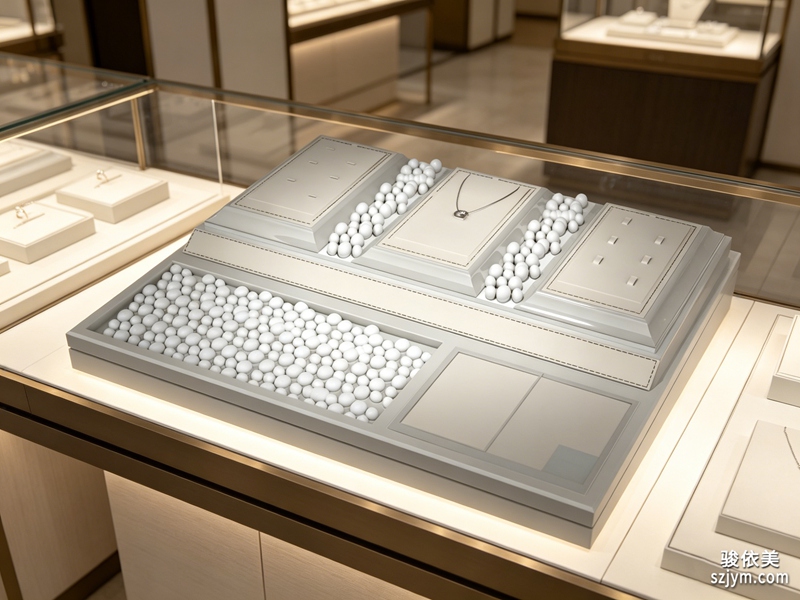
This differentiation places new demands on terminal store display systems. Traditional standardized display solutions can no longer simultaneously meet the needs of high-end custom clients and affordable luxury fast-consumption clients. Professional jewelry display props need to evolve from simple display functions to scene-creation tools, conveying the value positioning of products across different price ranges through the integrated design of materials, lighting, and layering. At the exhibition, multiple brands showcased new display concepts: embedding products in narrative scenes and using spatial storytelling to guide consumers from viewing to purchasing in an "immersive experience."
3. Packaging as Brand: From Functional Container to Emotional Carrier
At multiple forums and brand launches during this exhibition, the word "packaging" was repeatedly mentioned, no longer limited to traditional protection and transportation functions. More and more brands are treating packaging as an extension of product experience and a carrier of brand identity. From unboxing ceremony design to material craftsmanship refinement, from eco-friendly sustainable material selection to deep integration of cultural elements, packaging is undergoing a value transition from "supporting role" to "lead role."
As a representative enterprise among Shenzhen jewelry packaging manufacturers, Junyimei showcased its latest full-category packaging solutions during the exhibition. From premium gift boxes to everyday display props, from standardized products to deep customization solutions, its product line covers the entire chain of packaging needs from factory to terminal for jewelry brands. Notably, its watch display stand series adopts new composite materials and modular design concepts, significantly reducing logistics costs while maintaining display effectiveness, attracting attention from multiple exhibitors.
4. Cultural Empowerment: The Display Aesthetics of National Trend Jewelry
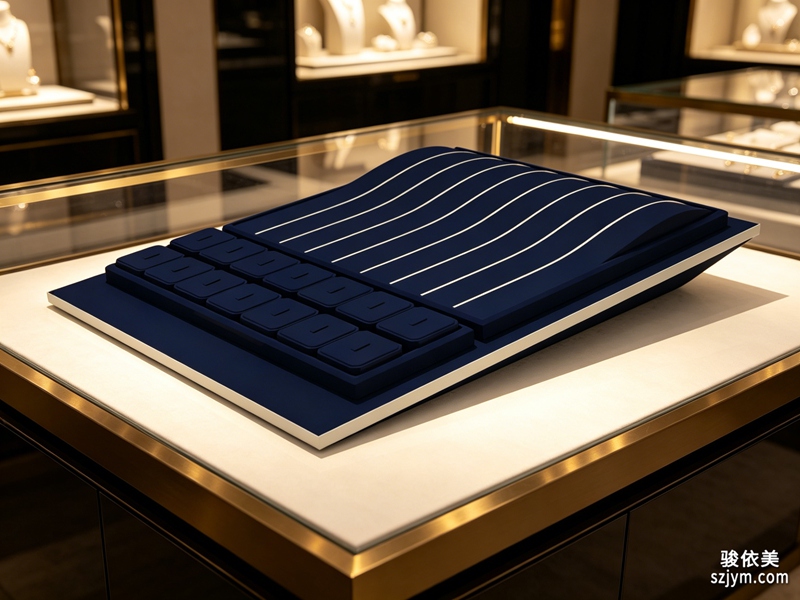
This year marks the opening year of the "15th Five-Year Plan," with the jewelry industry developing along the main lines of high-end, intelligent, green, international, and cultural orientation, deeply integrating into cultural power building and consumption upgrading. At the exhibition, the fusion of traditional crafts such as ancient gold, filigree inlay, and engraving with modern design language became a major highlight. These products have special requirements for the display environment: they need lighting color temperature control to present the warm texture of ancient gold, background material coordination to set off the exquisite details of filigree craft, and spatial circulation design to guide consumers' viewing rhythm.
In the "National Trend Jewelry Zone" of the exhibition, several brands turned the display itself into a work of art. Some brands adopted the borrowing-scenery technique of Chinese gardens, creating depth through hollow screens and mirror reflections; others integrated traditional mortise-and-tenon structures into display table design, making the display props themselves part of cultural expression. This trend of integrating cultural connotation into display design is extending from exhibitions to retail terminals, driving an aesthetic upgrade of the entire jewelry retail space.
5. Outlook: The Opportunity Window for the Packaging and Display Industry
The 2026 Beijing International Jewelry Fair is not only a grand gathering of products and brands but also a mirror reflecting industry transformation. As the jewelry market scale approaches 900 billion yuan, as consumption structure shifts from value preservation to emotional value and cultural identity, and as young consumers transition from price-sensitive to experience-driven, the jewelry packaging and display industry stands at an unprecedented opportunity window.
From exhibition feedback, packaging enterprises with design innovation capabilities, cultural understanding abilities, and rapid response capabilities are gaining increasing favor from brands. Whether creating exclusive unboxing ceremonies for high-end jewelry or designing standardized high-efficiency display solutions for affordable luxury fast-consumption products, professional packaging and display services are transitioning from "cost items" to "investment items" — investing in brand image, consumer experience, and conversion efficiency. In this new stage of shifting from scale competition to quality competition and from price competition to value competition, the professionalization of packaging and display capabilities will become a key element for jewelry brands to build differentiation barriers.
Original content by Junyimei. All rights reserved. Please indicate the source when reprinting.
一、九千亿市场规模:珠宝行业的新坐标
2026年3月19日,北京国家会议中心迎来了本年度最受瞩目的行业盛会——2026北京国际珠宝展。本届展会由中国珠宝玉石首饰行业协会与珠宝玉石首饰国检集团联合主办,展览面积达22000平方米,汇聚超过1000家参展企业,全方位覆盖大众消费、文化收藏、高端配置等多元需求。据中宝协初步统计,受金价高企的有力拉动,2025年我国珠宝市场规模有望站上9000亿元新台阶,这一数字不仅彰显了行业的强劲韧性,更凸显了中国作为全球最大珠宝消费市场之一的超大规模优势。
在展会现场,从源头直供的天然臻品到融合情感与创意的设计佳作,再到兼具收藏与投资价值的"可佩戴资产",琳琅满目的展品背后,一条隐秘而关键的产业链正在浮出水面——珠宝包装与陈列。当消费者的目光从价格转向体验,当购买决策从保值属性转向情感价值,一个精致的珠宝盒不再只是盛放饰品的容器,而是品牌叙事的第一章。
二、结构性分化:从轻奢快消到高端定制
本届珠宝展呈现出鲜明的结构性分化趋势。一方面,以高级珠宝、古法非遗技艺等为代表的高端消费增长强劲,珠宝奢侈品市场格局因中国本土品牌的强势切入而正在被改写。另一方面,轻克重、低客单价、款式迭代快、购买频次高的轻奢化、快销式珠宝饰品消费愈发活跃。与此同时,随着年轻一代成长为珠宝消费的中坚力量,IP周边、非遗文创、国潮新中式、潮玩联名等更能激发年轻消费者热情的产品形态增长潜力不可小觑。
这种分化对终端门店的陈列体系提出了全新要求。传统的标准化陈列方案已难以同时满足高端定制客户和轻奢快消客户的需求差异。专业的珠宝陈列道具需要从单一展示功能进化为场景营造工具,通过材质、灯光、层次的综合设计来传递不同价格带产品的价值定位。在展会上,多个品牌展示了全新的陈列理念:将产品嵌入故事场景,通过空间叙事让消费者在"沉浸式体验"中完成从观看到购买的转化。
三、包装即品牌:从功能容器到情感载体
在本次展会的多个论坛和品牌发布会上,"包装"一词被反复提及,且不再局限于传统的保护与运输功能。越来越多品牌将包装视为产品体验的延伸和品牌识别的载体。从开箱仪式感的设计到材质工艺的精雕细琢,从环保可持续的材质选择到文化元素的深度融入,包装正在经历一场从"配角"到"主角"的价值跃迁。
作为深圳珠宝包装厂的代表企业之一,骏依美在展会期间展示了其最新的全品类包装解决方案。从高端礼盒到日常陈列道具,从标准化产品到深度定制方案,其产品线覆盖了珠宝品牌从出厂到终端的全链路包装需求。值得关注的是,其展示的手表陈列架系列采用了新型复合材料和模块化设计理念,在保证展示效果的同时大幅降低了物流成本,受到多位参展商的关注。
四、文化赋能:国潮珠宝的陈列美学
今年是"十五五"规划开局之年,珠宝行业正以高端化、智能化、绿色化、国际化、文化化为发展主线,深度融入文化强国建设与消费升级大局。展会上,古法金、花丝镶嵌、錾刻等传统工艺与现代设计语言的融合成为一大亮点。这类产品对陈列环境有着特殊要求:需要通过灯光色温的控制来呈现古法金的温润质感,需要通过背景材质的搭配来衬托花丝工艺的精致细节,需要通过空间动线的设计来引导消费者的观赏节奏。
在展会的"国潮珠宝展区",多家品牌将陈列本身打造成了一件艺术品。有的品牌采用中式园林的借景手法,通过镂空屏风和镜面反射营造层次感;有的品牌将传统榫卯结构融入展台设计,让陈列道具本身成为文化表达的组成部分。这种将文化内涵融入陈列设计的趋势,正在从展会向零售终端延伸,推动着整个珠宝零售空间的美学升级。
五、展望:包装与陈列行业的机遇窗口
2026北京国际珠宝展不仅是一场产品与品牌的盛会,更是一面折射行业变革的镜子。当珠宝市场规模迈向九千亿,当消费结构从保值属性向情感价值和文化认同转型,当年轻消费者从价格敏感型向体验驱动型转变,珠宝包装与陈列行业正站在一个前所未有的机遇窗口前。
从展会的反馈来看,具备设计创新能力、文化理解能力和快速响应能力的包装企业,正在获得越来越多品牌的青睐。无论是为高端珠宝定制专属的开箱仪式,还是为轻奢快消品设计标准化的高效率陈列方案,专业化的包装与陈列服务都正在从"成本项"转变为"投资项"——投资的是品牌形象、消费体验和转化效率。在这个从规模竞争转向品质竞争、从价格竞争转向价值竞争的新阶段,包装与陈列的专业化能力将成为珠宝品牌构建差异化壁垒的关键一环。
骏依美原创内容,版权所有。转载请注明出处。